That is the short version, and it catches out owners who assume a like-for-like swap sits outside the rules. It does not. The standard applies to the new unit, not to the one coming out, and the notification is part of the job. How the thermal side of a replacement fits into the wider picture of heat, daylight and glazing choice is set out on our energy efficient rooflights page.
The sections below take the question apart: what counts as a replacement, what Part L actually asks of the new unit, how the paperwork is settled, and where older or protected houses get some latitude.
When a swap becomes a controlled fitting
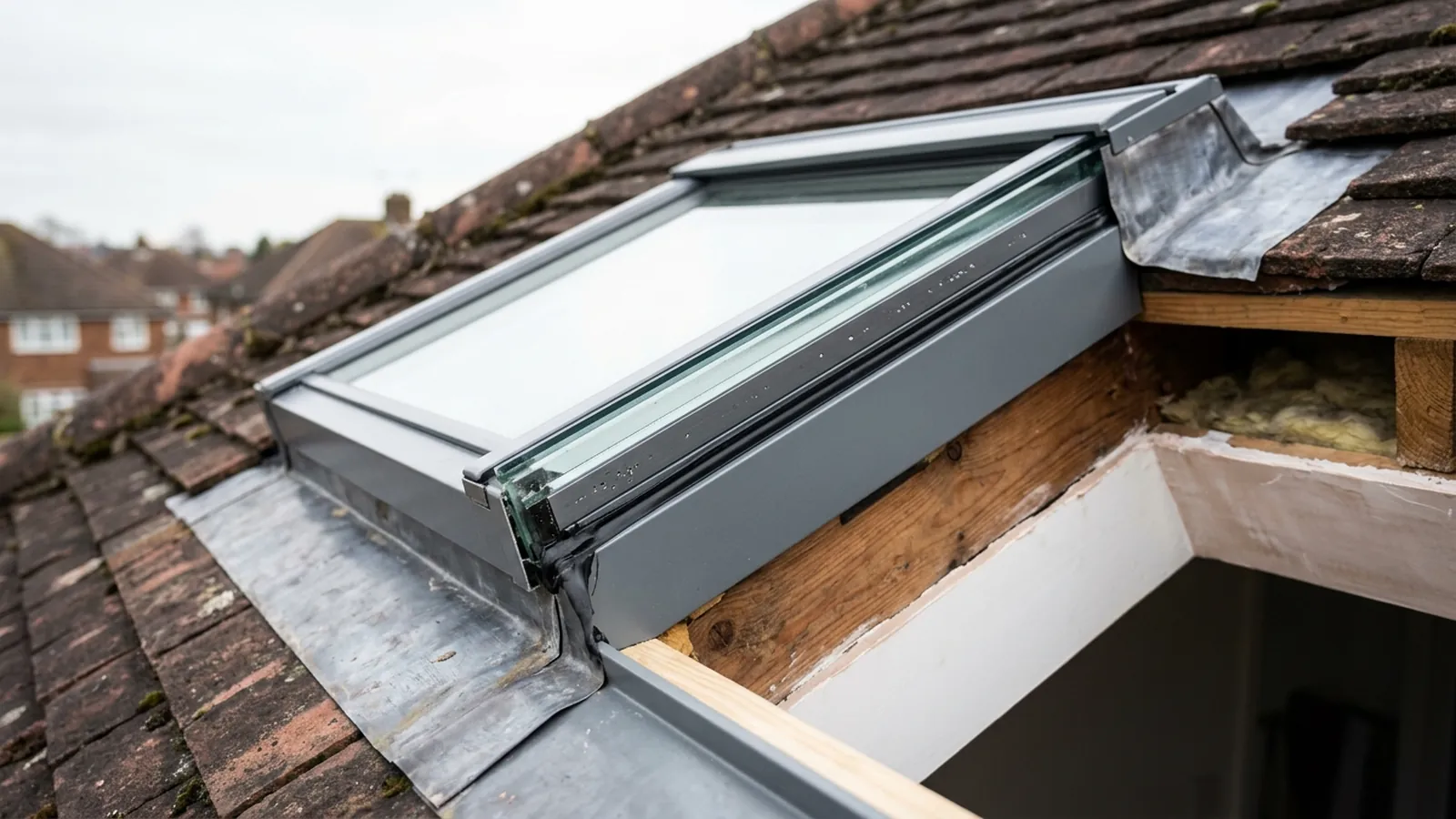
The regulations treat windows, roof windows and rooflights as controlled fittings. Take one out whole, frame and all, and fit another in its place, and you have carried out building work on a controlled fitting. That is true whether the new skylight is the same size, a different make or a better grade of glazing.
| The job | Part L thermal standard | Building Control route |
|---|---|---|
| Whole unit out, new unit in the same opening | Applies to the new unit | Notify, or self-certify through a scheme |
| Old dome or plastic flat rooflight swapped for a glazed unit | Applies to the new unit | Notify, or self-certify through a scheme |
| Glass unit changed, existing frame kept | Not normally triggered | Not normally notifiable; confirm locally if unsure |
| Opening enlarged or structure altered | Applies to the new unit | Notifiable, with structural detail |
The glass-only row is the one people ask about when a sealed unit mists. Keeping the frame and changing the glass is generally not a controlled replacement, but a tired frame usually means the whole unit is the better answer, and then the full standard applies.
How a sealed rooflight unit works and fails
- Outer and inner glass panes, with the outer pane facing the weather
- Low-emissivity coating on one inner face, reflecting heat back into the room
- Warm-edge spacer bar holding the panes apart, filled with desiccant to soak up trace moisture
- Primary seal against each pane, backed by the secondary seal around the edge
- Dry sealed cavity, the insulating layer between the panes
- Broken edge seal: moist air gets in and the desiccant becomes saturated
- Mist and droplets trapped between the panes; they cannot be wiped off and the sealed unit needs replacing
- Inset: condensation on the room-side face of the glass is a ventilation or humidity issue, not a failed unit
What Part L asks of the new rooflight
For a replacement in an existing home, the approved document sets a limiting U-value: the new unit must lose no more heat than that figure allows, measured for the whole unit and not just the centre of the glass. Roof windows and rooflights have their own lines in that table, separate from wall windows, because glazing laid to a slope or flat behaves differently.
The exact figure, and how to read the manufacturer's declared value against it, belongs in our answer on what U-value a new rooflight should have. The meaning of the number itself, whole-unit against centre-pane, is covered in rooflight U-values explained in plain terms. In practice, current double glazed roof windows from the main makers are built to meet the replacement standard, while the single skin and twin skin plastic domes found on many 1970s and 1980s flat roofs around Basingstoke fall well short of it.
The rule: the new unit has to meet the replacement standard, whatever the old one achieved. The exception: on a listed building, in a conservation area or on a house of historic character, Part L allows the standard to be balanced against the need to keep the building's character and to avoid moisture risk in traditional fabric, so the best reasonable performance may be accepted.
Ventilation, escape and the rest of the rules
Part L is not the only regulation a replacement touches. The broad test is that the new fitting must leave the house no worse than before on the other requirements. If the old roof window gave background ventilation, the new one should too, which is why our answer on whether a new rooflight needs a trickle vent is worth reading alongside this one. If a loft room relied on the old roof window as an escape window, the replacement must keep an opening that still serves that purpose.
Structure only enters the picture if the opening changes. Fitting the same width into the same trimmed hole leaves the trusses or rafters as they are. Going wider in a trussed estate roof is a different job, and it needs a designed opening before anything is cut.
How the paperwork is settled
There are two lawful routes. An installer registered with a competent person scheme for this work can self-certify it. Otherwise the job is notified to the local authority's Building Control team, which for most of the area we cover means Basingstoke and Deane, Hart, Test Valley or West Berkshire. On our replacements that notification is part of the service rather than something left to you.
- Survey. We measure the opening, note the roof covering and pitch, and check whether the old unit gave ventilation or escape.
- Specification. A replacement skylight is chosen whose declared whole-unit value meets the Part L standard, with the right flashing for the roof.
- Notification. Building Control is told about the work in the way the authority requires.
- Fitting. The new unit goes in, the insulation around the lining is made continuous, and the finish is made good.
- Record. You keep the completion paperwork with the house deeds, together with the product details for the unit fitted.
That last step matters more than it looks. A buyer's solicitor may ask whether replaced windows and rooflights were certified, and a missing record can slow a sale.
Does meeting Part L make the room warmer?
Meeting the replacement standard is a floor, not a target. A unit that just clears it will still be far warmer than a dated plastic dome, and you will notice less cold draught falling from it on a winter evening. Whether it shifts the figures on paper is a separate matter, covered in does a rooflight change a home's EPC rating? If you want to go past the minimum, the fuller guide to Part L and what it asks of a new rooflight explains where the extra performance comes from and when it earns its place.
The old rooflight sets nothing: the new one is judged against today's standard.
Infographic
Planning and Building Control: the questions in order
Is the house listed?
Yes: listed building consent is needed before any rooflight goes in.
No: next question.
Is it in a conservation area, or a flat or maisonette?
Yes: check with the council. A conservation-style rooflight is often the expected choice.
No: next question.
Will it sit within permitted development limits?
Usually yes when it projects no more than 150mm from the roof plane and stays below the highest part of the roof.
If not: a householder planning application.
Is the work notifiable under the Building Regulations?
A new rooflight, or a replacement that changes the structure, is. We notify Building Control for you.
Either way the glazing must meet current thermal standards.
Where to start with your own replacement
If your old rooflight is misted, draughty or simply dated, the useful first step is knowing what is in the roof: the opening size, the pitch, the covering and whether the frame is worth keeping. From that, the choice between a glass-only change and a full compliant replacement is usually obvious. Our workmanship guarantee runs for ten years, and it is not insurance backed. To have your roof looked at before any decision, arrange a survey of your rooflight.