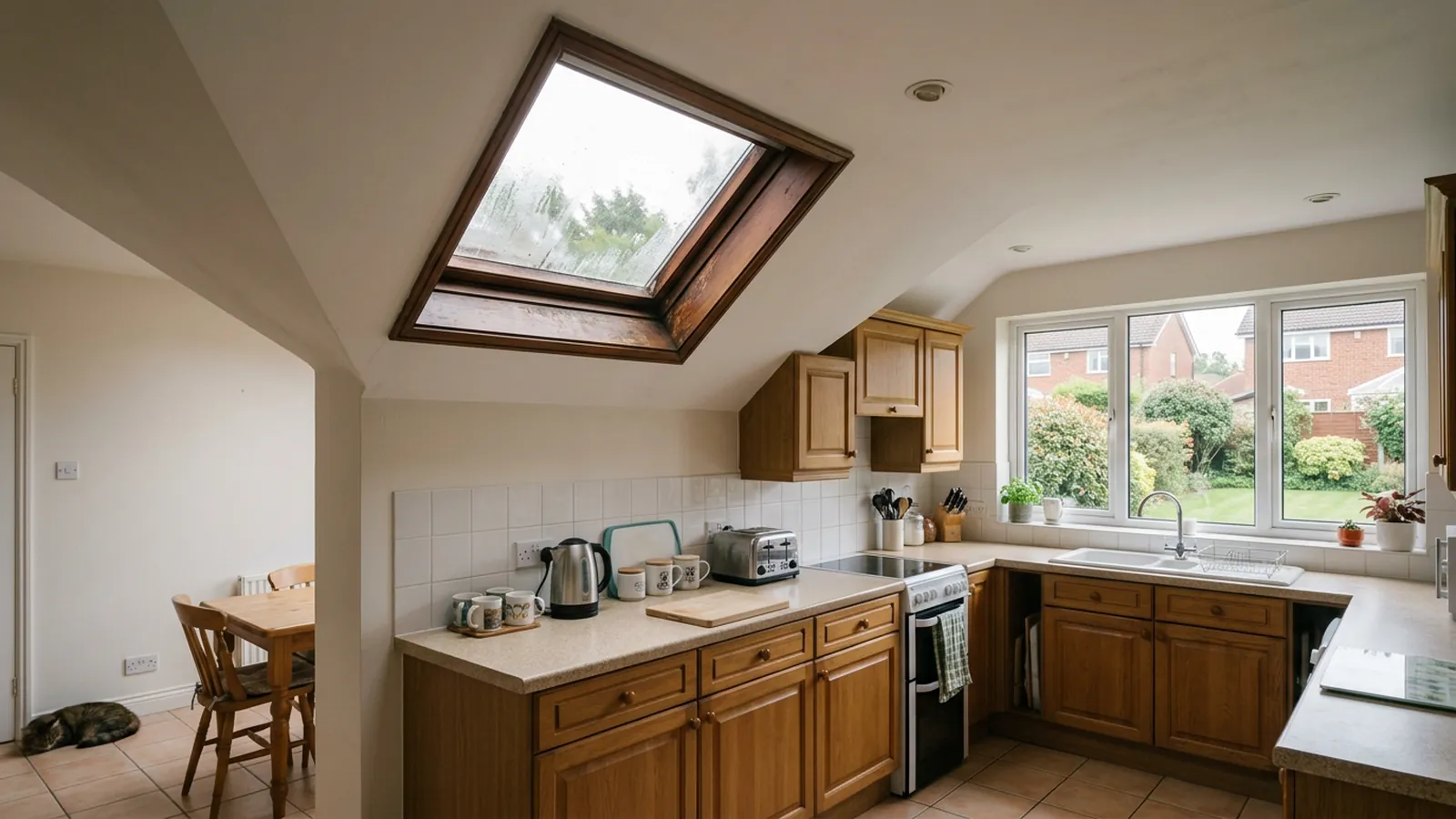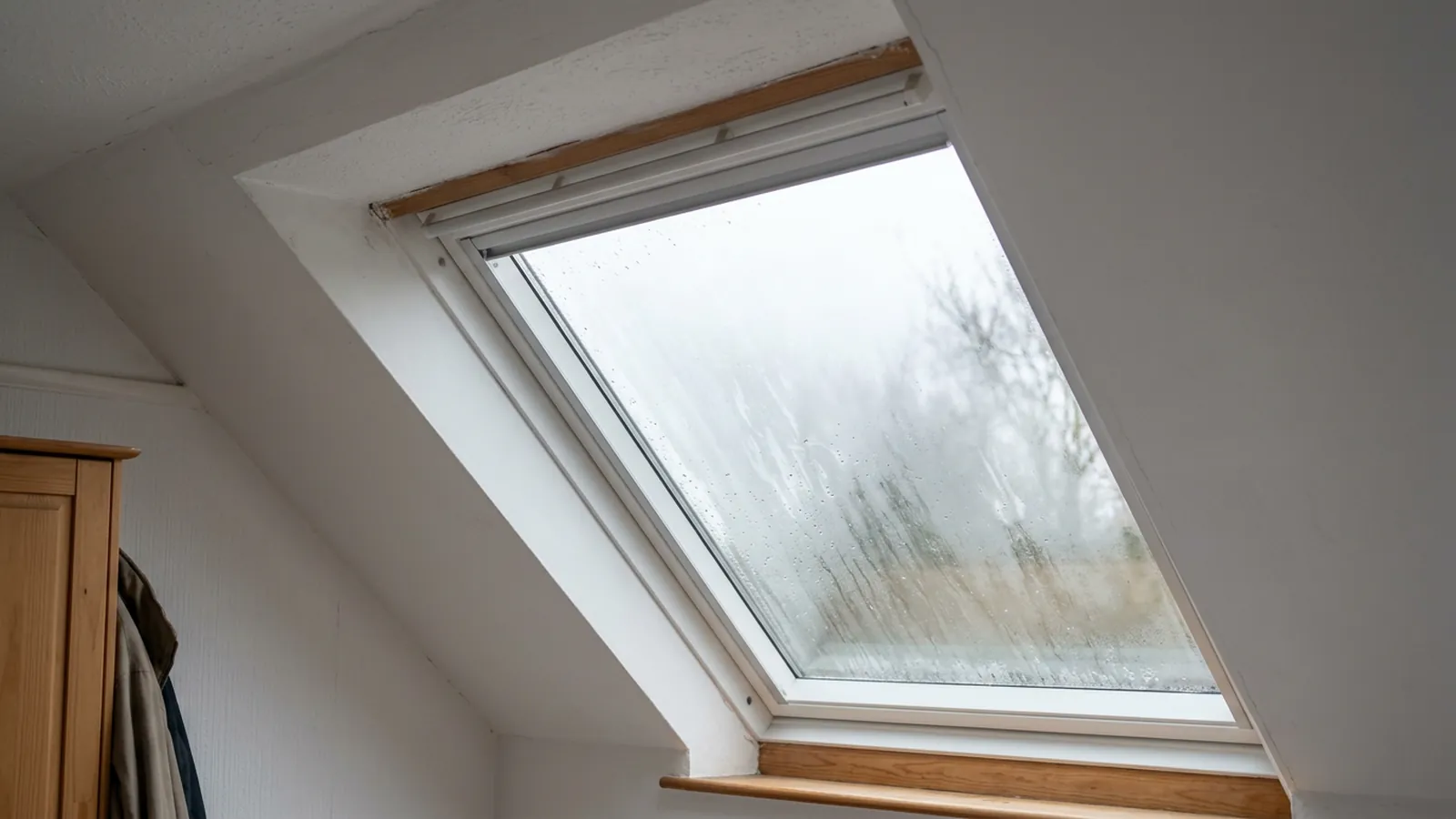
Understanding the cause matters because it decides the replacement. If the glass alone has given up, a new unit in the old frame can be enough; if the frame is feeding water to the edge of the glass, a new unit will go the same way. Our misted and failed rooflight replacement page covers the whole job; this answer stays on the single question of why the seal lets go in the first place.
How the unit is put together
Two or three panes are held apart by a hollow spacer bar that runs round the perimeter. The bar is filled with a desiccant, a granular drying agent, and pierced on its inner face so it can pull any moisture out of the air or gas trapped between the panes. Round the outside of the spacer run two seals: a primary seal of butyl that stops vapour creeping in, and a secondary seal, usually polysulphide, polyurethane or silicone, that bonds the panes together and gives the unit its strength.
While both seals hold, the desiccant only ever meets the tiny amount of vapour that diffuses through, and the cavity stays dry for many years. Once either seal opens, even by a hairline, the desiccant is asked to absorb far more than it was sized for. It saturates, and from then on the cavity air carries moisture that condenses on the cold inner face of the outer pane. That is the mist you see. Why it shows up on some days and not others is explained in our guide on why a rooflight mists between the panes.
How a sealed rooflight unit works and fails
- Outer and inner glass panes, with the outer pane facing the weather
- Low-emissivity coating on one inner face, reflecting heat back into the room
- Warm-edge spacer bar holding the panes apart, filled with desiccant to soak up trace moisture
- Primary seal against each pane, backed by the secondary seal around the edge
- Dry sealed cavity, the insulating layer between the panes
- Broken edge seal: moist air gets in and the desiccant becomes saturated
- Mist and droplets trapped between the panes; they cannot be wiped off and the sealed unit needs replacing
- Inset: condensation on the room-side face of the glass is a ventilation or humidity issue, not a failed unit
The five things that break the seal
| Cause | What happens at the edge | Where it shows up |
|---|---|---|
| Heat cycling | Gas in the cavity expands in sun and contracts at night, flexing the panes and working the seal back and forth | Any glazing facing the open sky, worst on south-facing slopes and flat roofs |
| Water at the edge | Rain or condensation sits against the secondary seal and slowly breaks its bond with the glass | Low-pitch rooflights, blocked drainage channels in the frame, bottom rail of the glazing |
| Sunlight on the seal | Ultraviolet reaching an exposed or poorly covered seal hardens and crazes it over time | Units where the frame cover or glazing bead has shrunk back or gone missing |
| Frame and roof movement | A twisted or sagging frame, or missing setting blocks, loads one corner of the unit | Older timber frames, openings with an uneven kerb, units fitted without packers |
| Age | Desiccant capacity is used up and seal materials lose flexibility | Every unit, eventually; sooner on the other four causes |
In practice these stack. A south-facing skylight on a shallow extension roof gets strong heat cycling and slow drainage together, and an early timber roof window on a 1970s estate house adds a frame that may have moved and bead covers that have shrunk. The seal rarely fails from one blow; it tires from several at once.
Why roof glazing fails before wall glazing
A vertical window sheds rain in seconds and spends much of the day in partial shade. Glazing in a roof faces the sky, so it takes the full heat of a summer afternoon and radiates heat away on a clear night, which makes its daily temperature swing larger. Every swing pumps the cavity and flexes the edge. Water also behaves differently: on a pitched roof window it runs off, but on a flat rooflight or a glazed lantern rail it can linger along the lower edge, and a seal that is wet for long spells loses its grip on the glass far sooner than one that dries quickly.
Worth knowing: a flat rooflight needs a built-in fall so water clears the glass. Where that fall is missing, because the kerb was built level or the roof has settled, water pools against the edge and the seal is under constant attack. Replacing the glass without correcting the fall treats the symptom only.
Signs that point to the cause
The pattern of the mist and the state of the frame often tell you which of the causes is at work, and that helps before anyone comes to look.
- A tide line along the lower edge suggests water has been sitting against the seal there. Check the drainage slots in the frame and the fall of the kerb.
- Mist spread evenly across the pane is more typical of an aged unit whose desiccant has simply run out.
- Mist concentrated in one corner hints at stress on that corner from frame movement or a missing packer.
- Staining or softness on the inside timber suggests the frame, not only the glass, is letting water in, and changes the replacement choice.
Our answer on how to know if a rooflight has failed covers the wider checks, including telling a failed unit from ordinary room condensation.
What the cause means for the replacement
If the frame is sound, square and draining properly, the failure is probably down to age or heat, and a new sealed unit in the existing frame is a sensible answer where the manufacturer supplies one. If the cause is water held at the edge, a warped frame or a kerb without fall, a new unit alone will be fighting the same conditions, so replacing the whole rooflight, and correcting the upstand where needed, is the longer-lasting route. The trade-offs between those two are set out in our guide to replacing the sealed unit or the whole rooflight.
One thing does not change: once the seal has gone, the cavity cannot be dried out and made good again, which our answer on whether misted rooflight glass can be cleared explains. Expected life, and what shortens it, is covered in how long a rooflight sealed unit lasts.
Getting the cause confirmed on your roof
From inside the room the mist looks the same whatever caused it. The answer sits on the roof: the drainage, the fall, the condition of the beads and covers, and whether the frame is still square. We look at all of that on a survey before quoting, so the replacement tackles the reason the unit failed rather than only the glass. New units and new rooflights we fit come with a 10-year workmanship guarantee, which is not insurance backed. If the glass above your landing or extension has clouded over, arrange a survey of the roof and we will show you what let the seal go.