Glass you stand on lives a harder life than glass above your head. It takes shoe soles, garden grit, leaf litter and the odd dropped pot, and it sits flat, so rain does little to rinse it. Keeping it bright is simple, but the order you do things in matters more than the product you buy. For how these units are specified and fitted in the first place, see our walk-on rooflight installation page.
Why a flat walk-on surface needs different care
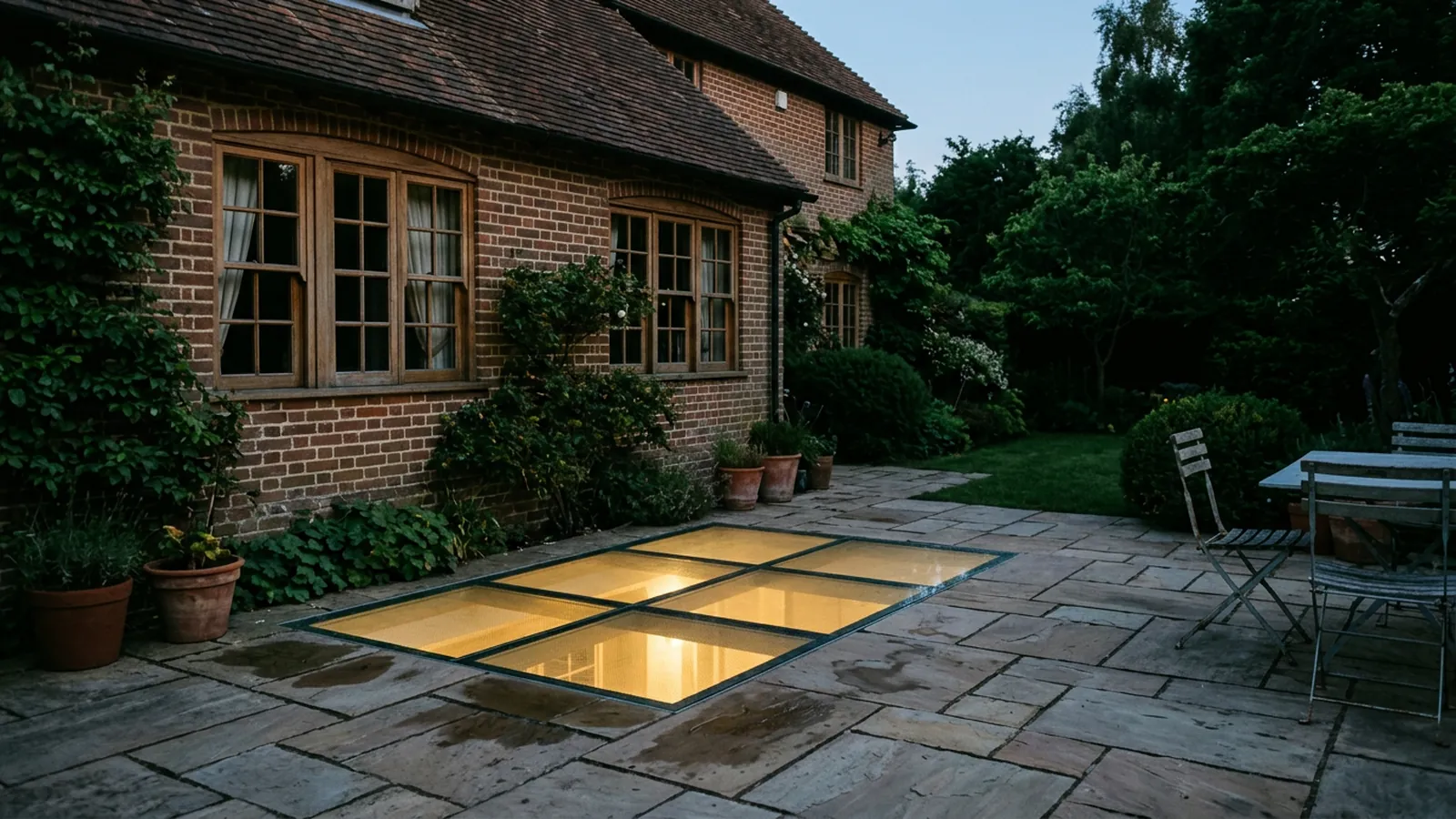
A pitched roof window sheds water, and most dirt goes with it. A walk-on rooflight sits level with, or just proud of, a terrace or flat roof, so whatever lands on it tends to stay. Dust dries into a film, pollen collects at the frame edge, and fine sand from paving joints gets tracked across the pane by feet.
That sand is the thing to respect. Toughened glass is hard, but grit under a sole or a scrubbing brush acts like sandpaper. Most scuffs on a walkable skylight come from dragging dirt across it, not from the glass being soft. Whether marks of that sort are a real risk is answered in does walk-on glass scratch?
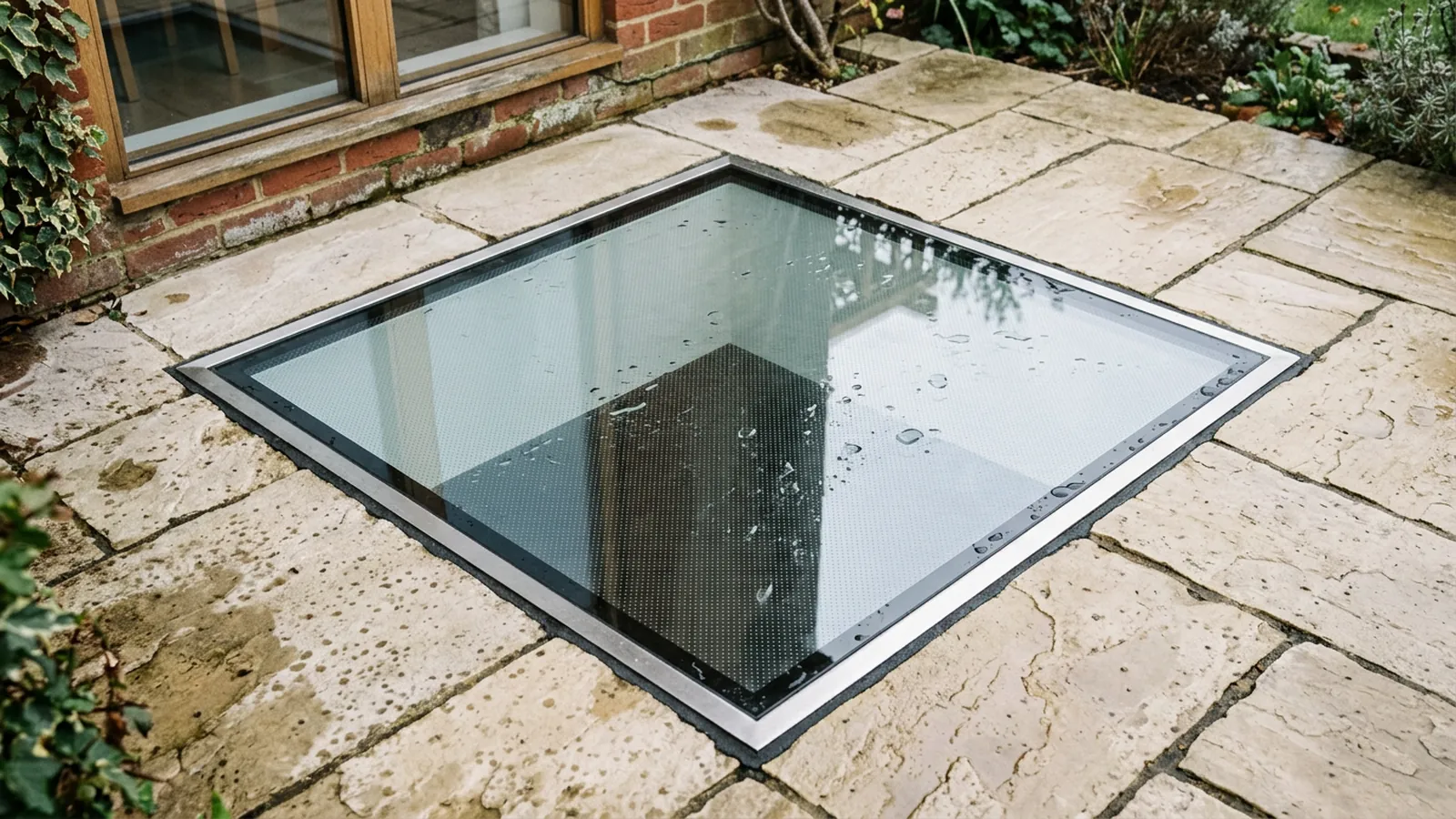
The top pane is also often textured. Walk-on units are usually specified with an anti-slip finish on the upper face, and that finish holds dirt in its surface in a way smooth glass does not. The guide on slip resistance on walk-on glass explains the finishes; for cleaning, the point is that a textured face wants a brush, not a cloth.
How a walk-on rooflight sits in a terrace
- Anti-slip fritted top surface, so the glass is safe to walk on when wet
- Laminated glass: several layers bonded with interlayers, so it stays in place if a layer breaks
- Sealed cavity between the laminated glass and the inner pane
- Inner pane, completing the insulated unit
- Frame carrying the glass, sealed at the edges
- Kerb around the opening, bedded to the roof structure
- Waterproofing dressed up the kerb and under the frame
- Paving on pedestals, finished level with the glass
A routine for the outside face
- Clear it dry. Sweep leaves and grit off with a soft broom, working towards the edge rather than across the middle.
- Wet it down. A watering can or hose on a gentle setting loosens what the broom left behind before anything touches the glass.
- Wash. Warm water with a small amount of washing-up liquid, applied with a soft-bristled brush or a sponge mop. On a textured top face, brush in two directions so the grooves of the finish get cleared.
- Rinse properly. Detergent left in an anti-slip texture dries as a dull bloom and can make the surface feel slicker when wet. Rinse until the water runs clear.
- Look at the edges. Lift debris out of the joint where the frame meets the paving, decking or membrane so rainwater can drain away as designed.
How often depends on where the unit sits. One under a tree or beside planters wants attention far more often than one in the middle of an open roof. Little and often is gentler on the glass than an occasional hard scrub.
What to leave in the shed
The rule: nothing abrasive and nothing sharp. That means no scouring pads, wire wool, powder cleaners, scraper blades or solvent cleaners on the glass or the frame. The exception is a product the glass maker names in its own care guidance, and that guidance, handed over with the unit, always takes precedence over general advice.
Keep a pressure washer's jet off the frame edge and the joints around it. A narrow high-pressure stream can force water into places the weathering detail was built to keep dry, and it can lift the finish on surrounding paving grout into the frame joint. If you use one on the rest of the terrace, keep the lance away from the rooflight and rinse the glass by hand.
Bleach-based patio cleaners and moss killers deserve the same caution. Rinse any overspray off the glass promptly and keep it away from the gaskets, which are rubber and last longer without harsh chemicals sitting on them.
Keeping the underside clear from the room below
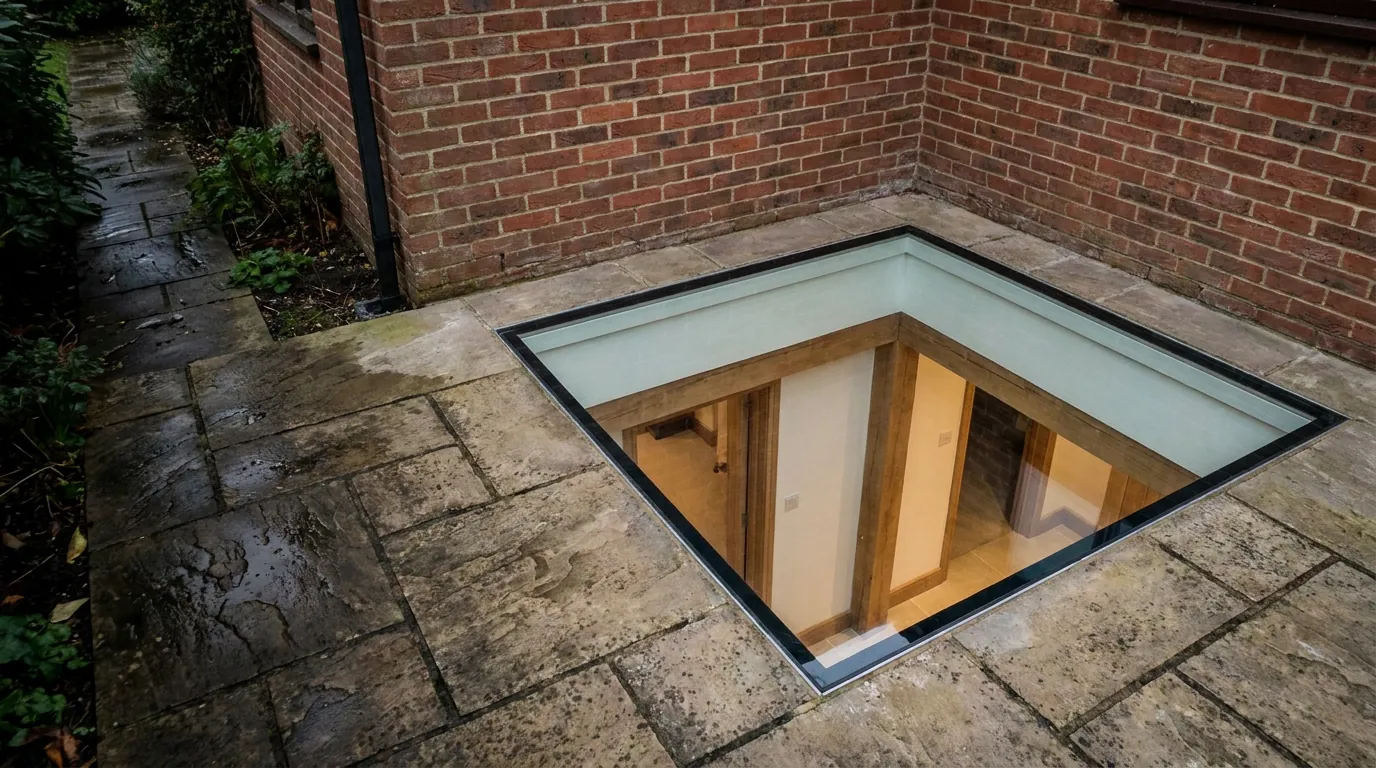
The inside face is sealed away from weather, so it collects only household dust and the occasional cooking film if it sits over a kitchen. A microfibre cloth, slightly damp, is all it needs. Over a lightwell or a tall space, a long-handled flat mop with a microfibre head saves climbing, and a stable platform is better than a stretch from a chair.
If the underside keeps looking cloudy soon after wiping, that is usually moisture from the room rather than dirt, and the answer lies in ventilation and heating, not cleaning. That is covered in do walk-on rooflights get condensation? Haze trapped between the panes is different again: no cloth reaches it, and it points to a unit whose seal has failed, which calls for a replacement unit rather than more polishing.
Grip, safety and a wet surface
Cleaning a walkable skylight means standing near, or on, wet glass. Wear shoes with a decent tread, rinse off all detergent, and let the pane dry before it goes back into use, particularly with children or pets about. A textured top face kept clean grips far better than one clogged with a film of old dirt, so regular washing does double duty. For how the glass behaves in rain, read is walk-on glass slippery when wet?
| Surface | Use | Avoid |
|---|---|---|
| Textured anti-slip top face | Soft-bristled brush, warm water, a little mild detergent, thorough rinse | Cloths that snag, strong detergent left to dry |
| Smooth top face | Sponge mop or soft brush, then a rubber squeegee | Scouring pads, blades, powders |
| Frame and gaskets | Damp cloth, clear debris by hand | Pressure washer jets, solvents, bleach left standing |
| Inside face | Damp microfibre cloth or long-handled flat mop | Glass sprays that drip onto ceilings and linings |
Choices at the design stage that make cleaning easier
A few decisions made before the rooflight goes in shape how much looking after it will need. A flush unit set level with paving lets you sweep straight across it, while one on an upstand gathers debris along its kerb; the trade-offs are laid out in flush or upstand walk-on rooflights. Placing the glass away from overhanging trees and planters saves a lot of sweeping. The choice of top-face finish also matters, since a finer texture is easier to brush clean than a coarse one while still giving grip.
On the flat-roofed kitchen extensions and roof terraces around Basingstoke, the survey is the moment to raise how the space will be used, so the specification suits the traffic and the upkeep you are happy with. If you are planning a walk-on unit and want those points settled before anything is ordered, arrange a roof survey and bring your questions about care along with the ones about fit.