Owners tend to ask this in one of two moods: either they are weighing up a first roof window and want to know what they are taking on, or they have lived with an old one for years and have never touched it. Both are fair starting points. If you are still at the planning stage, our skylight and rooflight installation page for Basingstoke homes explains how the roof decides the unit; this page is about living with it afterwards.
The short version is that upkeep depends on three things: where the unit sits (a pitched tiled slope or a flat roof), whether it opens, and whether it has a motor. A fixed rooflight on a pitched roof needs the least. An electric opening one on a flat extension roof needs a little more, mostly because leaves and grit collect on flat roofs.
What a year of upkeep looks like
Split the jobs into what you can do from inside the room and what belongs on the roof. Nearly everything useful happens from inside.
| Task | From inside | From the roof or a ladder |
|---|---|---|
| Glass | Wipe the inner pane with a soft cloth and mild soapy water; many roof windows rotate so the outer pane can be reached too | Rain rinses a pitched pane; a flat rooflight holds dirt longer and may want a gentle wash with a soft brush on a pole |
| Vent and filter | Vacuum the ventilation flap and take out any removable filter to rinse it | Nothing needed |
| Hinges and handle | Open and close the sash fully so it does not stiffen; follow the maker's guidance on lubrication | Nothing needed |
| Drainage and flashing | Look up for staining on the lining after heavy rain | Clear leaves and moss from the flashing gutter above a roof window, or from around the kerb of a flat rooflight |
Only go onto a roof if it is safe to do so. Where it is not, a look with binoculars from the garden tells you whether debris has gathered above the frame, and that is often enough.
Sizing a roof window to the truss bays
- Fink trussed rafter, factory made and designed to work as one whole frame
- W-shaped webs, joined at every node by pressed metal nail plates
- Tile covering on battens over the underlay
- Roof window set in the slope, fitted between trusses so the frame is untouched
- Narrow roof window sitting in the bay between two trusses
- Trusses at even 600mm centres along the roof
- No truss cut: the trusses either side of the window stay whole
- A wider window crosses a truss, so the cut needs designed trimming from an engineer or the truss maker
Glass, frames and the seals between them
Use plain warm water with a drop of washing-up liquid and a soft cloth or squeegee. Abrasive pads, scouring powders and pressure washers do more harm than good: they can scratch coatings on the glass and drive water past gaskets that were only ever meant to shed rain. Some modern panes carry a coating that helps rain lift dirt away; check the maker's leaflet before cleaning it, because it may ask for a specific approach.
The rubber gaskets around the sash should stay soft and sit flat. Wipe them when you clean the glass. A white timber roof window with a painted or lacquered finish benefits from a look at the frame too: if the finish is wearing through near the bottom rail, that is where condensation runs, and it is worth attending to before the timber marks. Wet glass on a cold morning is its own subject, and our answer on why skylights get condensation explains what drives it and how ventilation helps.
Flat roof rooflights: keep the kerb clear
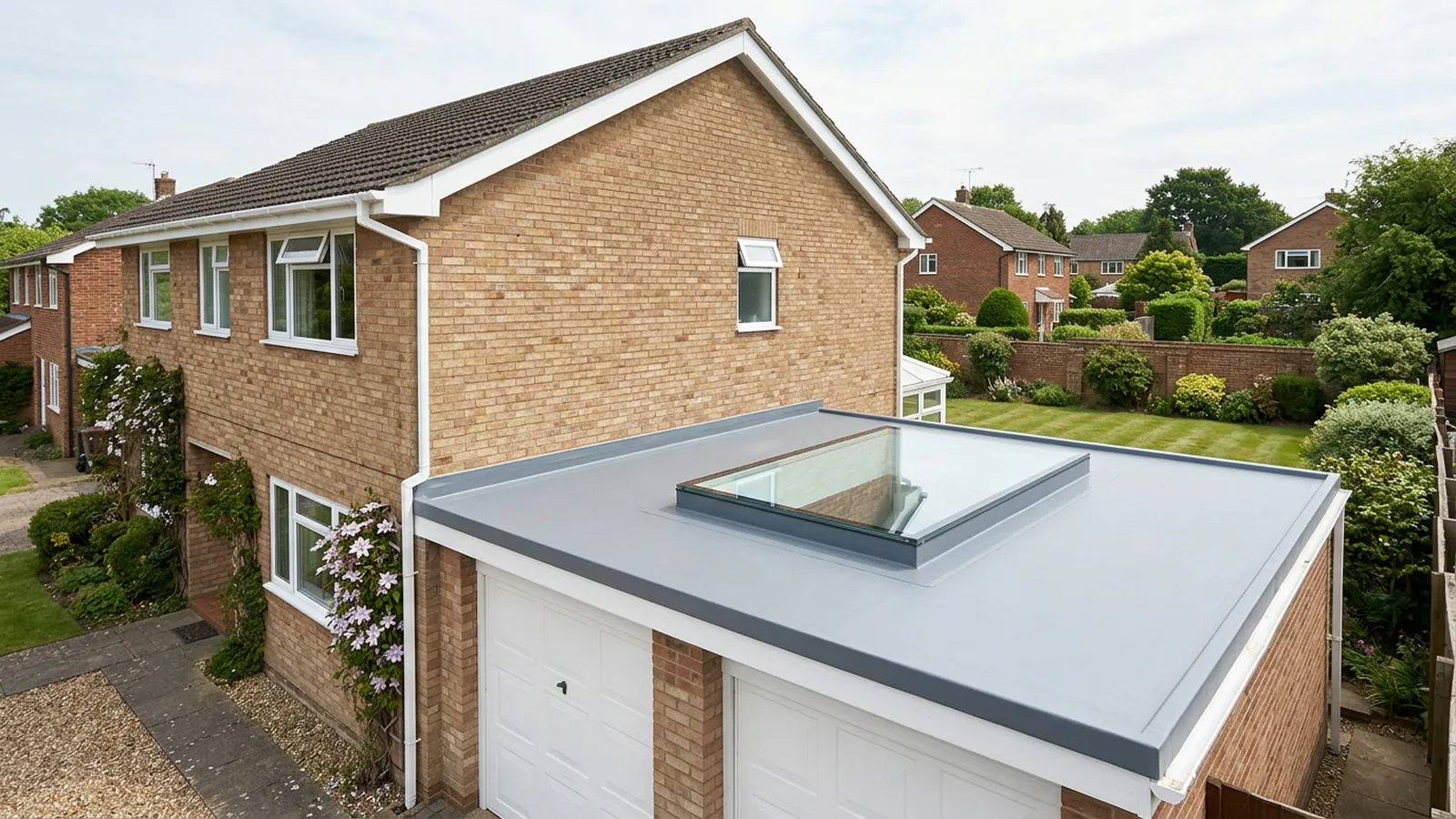
A rooflight on a flat roof sits on a raised upstand so rain runs off around it. Everything that blows onto an extension roof, from leaves to seed pods to grit, can gather against that upstand and hold water there. Clearing it each autumn is the single most useful thing you can do for a flat rooflight.
The rule: never stand, kneel or lean on a rooflight to reach something. The exception is a unit specified and supplied as walk-on glazing; ordinary flat glass rooflights and domes are not designed to take a person's weight.
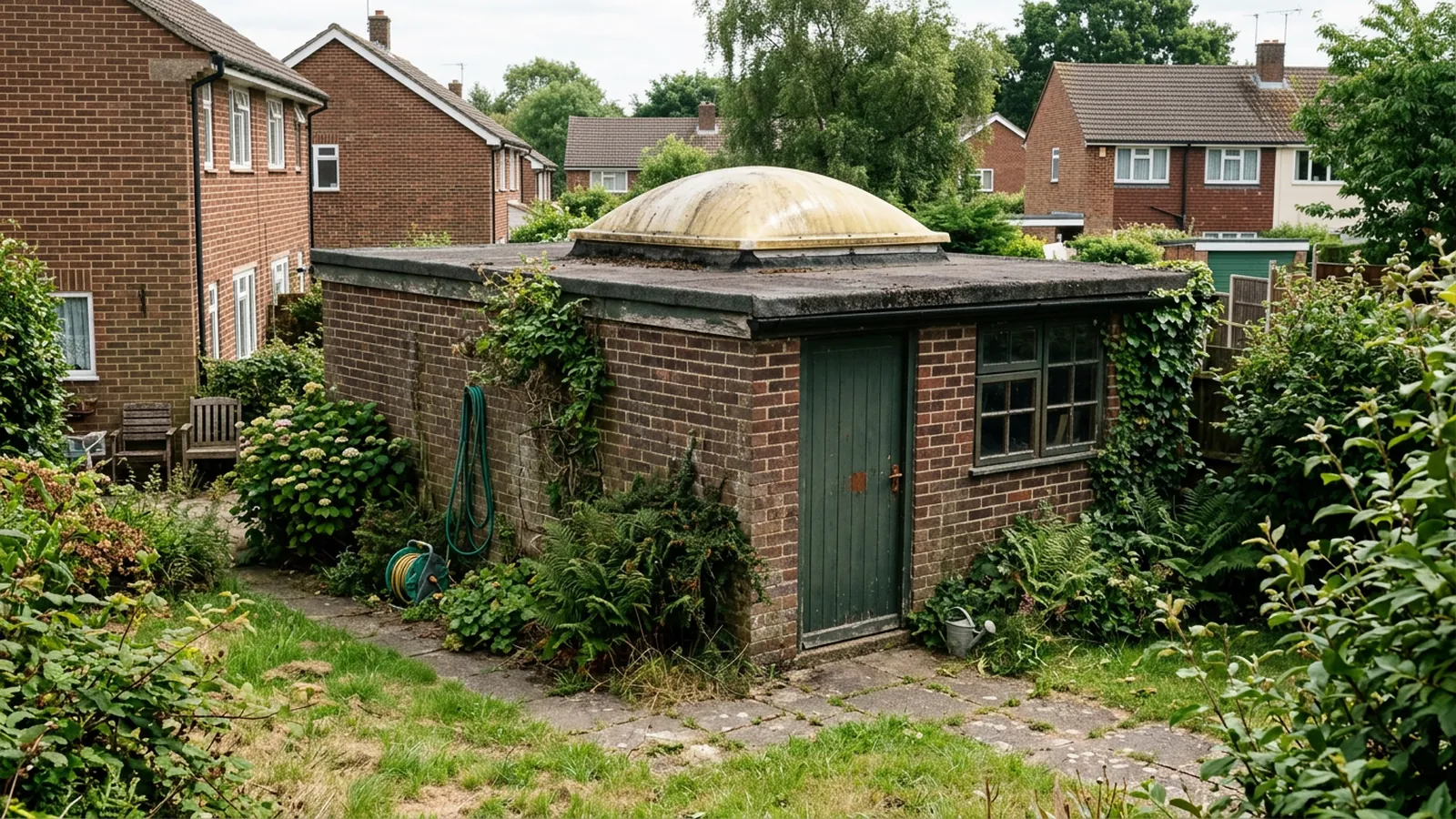
If your flat roof still has one of the old moulded plastic domes, cleaning will only go so far. The plastic clouds and turns brittle with sunlight, and no polish brings back its clarity. Our guide to replacing the plastic domes on 1970s and 1980s flat roofs covers what goes back in their place.
Electric and remote opening units
A motorised rooflight adds a few checks of its own. Keep the rain sensor clean, since a film of dirt can stop it closing the sash when the weather turns. Replace remote control batteries when the response slows. Run the window through a full open and close from time to time, so you notice early if it hesitates or stops short. Solar powered units want their small panel kept clear of moss and bird droppings. The manufacturer's manual is the authority on anything electrical; the motor housing is not something to open yourself.
When care stops being enough
Maintenance keeps a sound skylight working. It does not reverse wear on one that has run its course. These are the signs that a rooflight has moved past upkeep:
- Mist between the panes. Moisture inside a sealed double or triple glazed unit means the edge seal has failed, and wiping the surfaces cannot reach it.
- A frame that has softened. Timber that stays dark, feels spongy or no longer holds screws near the bottom rail has taken on water for some time.
- A sash that will not close tight. If the handle no longer draws the sash firmly onto its seals, draughts and rain follow.
- A clouded or crazed dome. Plastic that has yellowed, cracked or turned brittle is at the end of its useful life.
- Staining that returns after rain. Marks on the lining or ceiling that reappear after a downpour point to a problem with the flashing or the upstand.
How long a unit lasts before these appear depends on its type and how it was fitted, which we set out in how long skylights last. Deciding whether the moment has come is covered by when a rooflight should be replaced.
Which older roof windows need the closest eye
On the estates around Basingstoke, many roofs built in the 1970s and 1980s still carry the roof windows or domes they went up with. Early timber roof windows from that period often had single glazing or early double glazing, and their frames have spent decades taking the brunt of condensation. A house of that age deserves a closer check each year than a newer one does. Our guide to old roof windows by era helps you work out what yours is and what it was built to do.
Where a survey fits in
If you are unsure whether a tired skylight simply wants cleaning or has reached replacement, a look at it on the roof settles the matter. We survey before we quote, so you get a plain answer on the unit you have rather than a guess. When something new does go in, it comes with a 10-year workmanship guarantee (not insurance backed) and the care notes for that model. To have yours looked at, arrange a roof survey.