Glare is a fair worry, and it is a better one to raise before the roof is opened than after. The way to avoid it is part of the same thinking behind our skylight and rooflight installation around Basingstoke: work out the room and the roof first, then pick the glass and the spot that suit them.
Daylight from above is stronger than light through a wall window of the same size, because the glass faces the sky rather than the street. That strength is the reason people want a rooflight, and it is also why a badly placed one can be uncomfortable. The answer below breaks the problem into its causes, because each has its own fix.
What glare from a skylight actually is
Two different things get called glare. The first is direct sun: a pool of sunlight crossing a desk, a pillow, a kitchen worktop or a television, moving through the day as the sun moves. The second is contrast: a small, very bright opening in a ceiling that is otherwise in shade, so the eye keeps adjusting between the two. A room can have plenty of light and still feel harsh if that contrast is high.
Direct sun depends on which way the roof slope faces and how steep it is. Contrast depends on the size of the opening, the depth of the shaft between glass and ceiling, and how the linings are finished. Knowing which of the two you are worried about tells you where to start. A shaded slope, for instance, gives very little direct sun at all, as our answer on whether skylights work on a north-facing roof explains.
Sizing a roof window to the truss bays
- Fink trussed rafter, factory made and designed to work as one whole frame
- W-shaped webs, joined at every node by pressed metal nail plates
- Tile covering on battens over the underlay
- Roof window set in the slope, fitted between trusses so the frame is untouched
- Narrow roof window sitting in the bay between two trusses
- Trusses at even 600mm centres along the roof
- No truss cut: the trusses either side of the window stay whole
- A wider window crosses a truss, so the cut needs designed trimming from an engineer or the truss maker
Where the light lands matters more than how much comes in
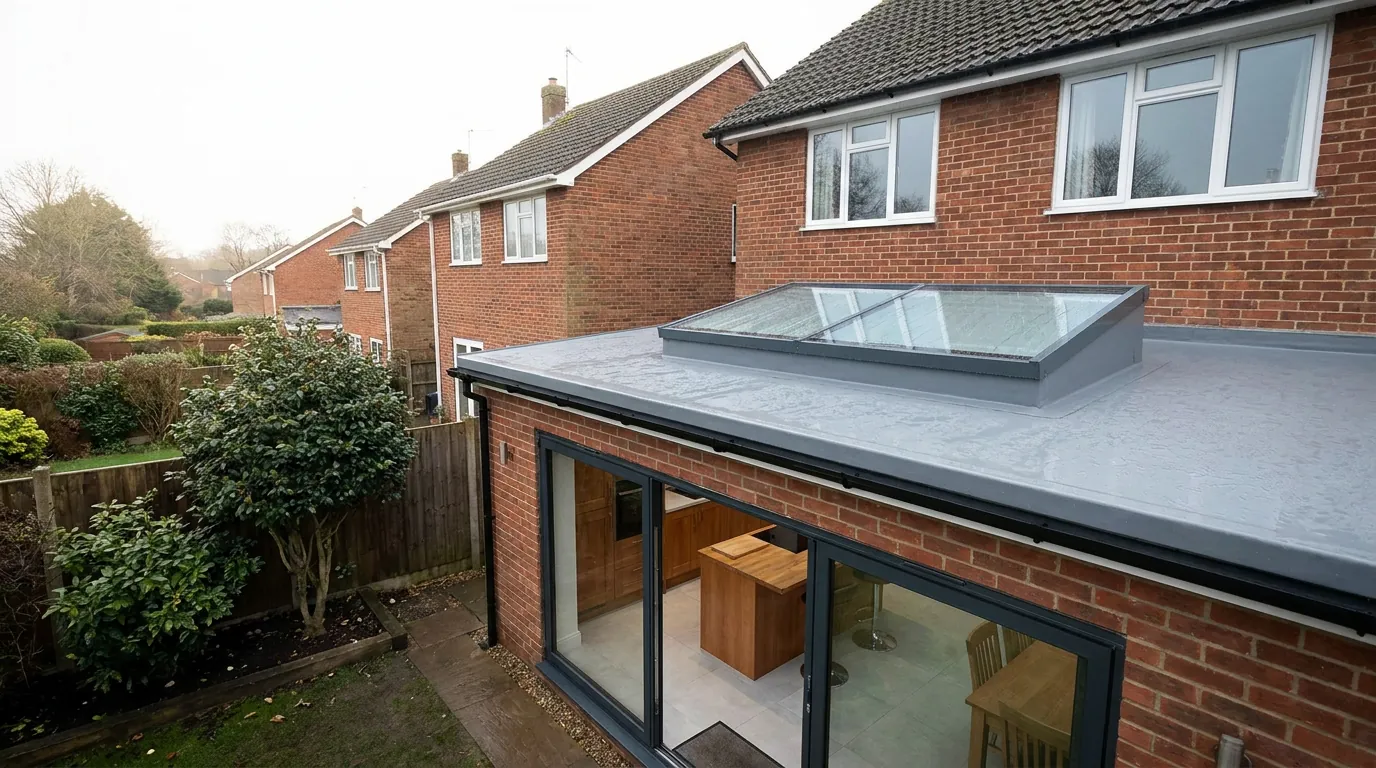
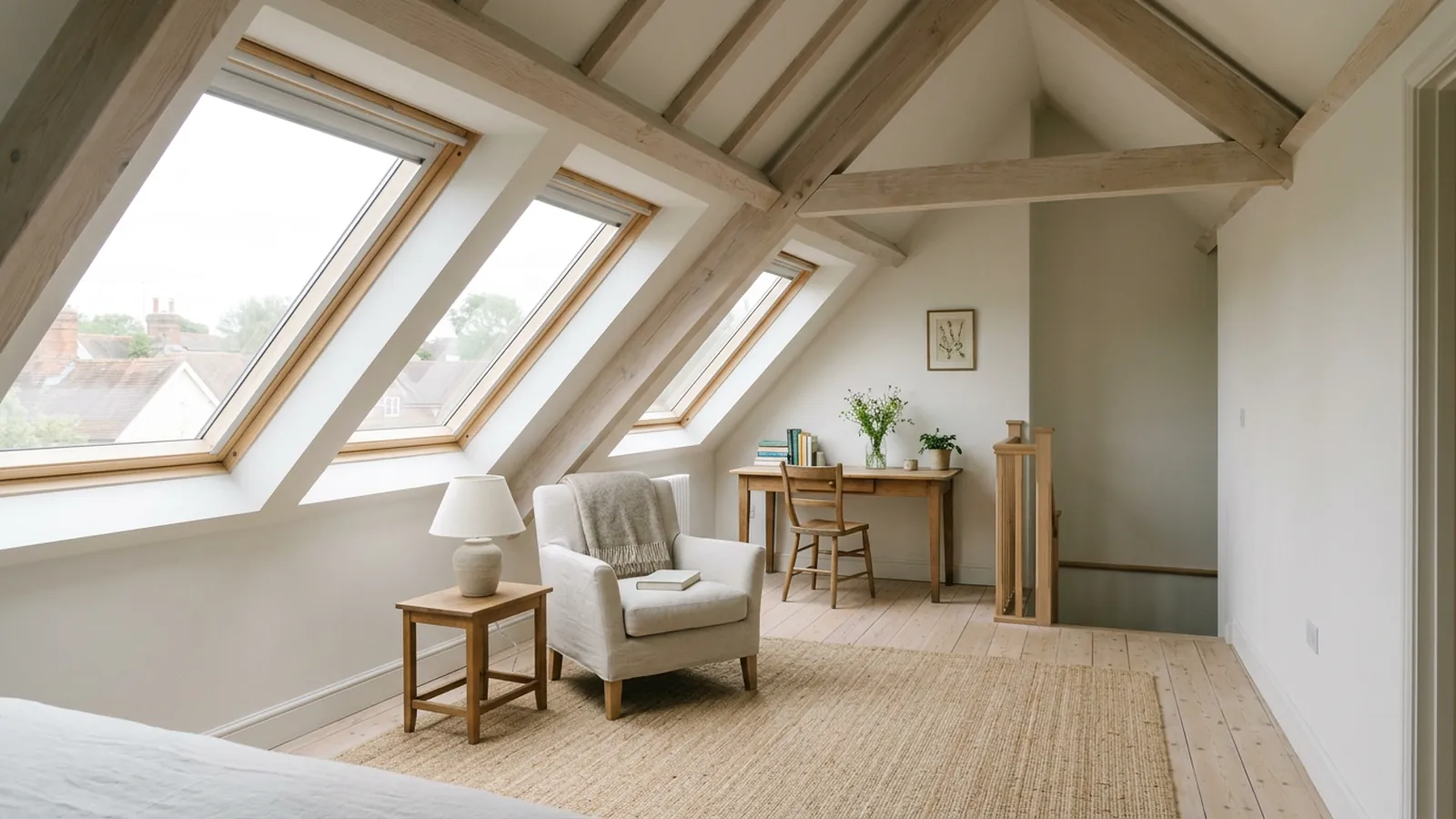
The single biggest control over glare is position. A roof window in a pitched roof throws light down and across the room, and the pool of sun it casts shifts with the season as the sun sits higher or lower. A flat rooflight on an extension throws light almost straight down. In both cases the question is what sits under that light.
- Keep the glass off the line between a sofa and a television, and away from the wall a monitor faces.
- In a bedroom, set the window where morning sun does not fall across the bed. Our answer on whether a skylight is a good idea in a bedroom goes further on that room.
- Over a kitchen, light on the worktop is welcome; light straight into the eyes of someone standing at the hob is not.
Choosing the spot with furniture and screens in mind is covered in more depth in where is the best place to put a skylight? The short version: decide how the room is used, then place the light to serve it.
Glass and blinds that take the edge off
Rooflight glazing is not all the same. Makers offer units with solar control coatings that cut the heat and brightness of direct sun, tinted glass, and obscured or diffusing glass that scatters light evenly so there is no sharp pool of sun. Opal and diffused finishes are common on flat rooflights and older domes for exactly this reason. The trade-off is the view: a diffusing pane gives soft, even light but no picture of the sky.
| Option | What it does to glare | What you give up |
|---|---|---|
| Solar control coating | Reduces the brightness and heat of direct sun | A slightly different tone to the light |
| Obscured or diffusing glass | Spreads the light evenly, no sharp pool of sun | The clear view of the sky |
| Interior blind | Filters or blocks light when you choose | Some daylight when drawn |
| External awning blind | Stops sun before it reaches the glass, cutting heat too | Reach: it needs opening or a motor |
A blind fitted to the frame is the most flexible answer, because it lets the room be bright on a grey day and calm on a sunny one. Pleated and filtering blinds soften the light; blackout blinds suit bedrooms. Where the glass is out of reach, a motorised or solar-powered blind makes daily use practical, and the electric and opening rooflight page covers how that is powered and controlled.
Splayed linings and the shaft
Contrast glare is mostly a finishing question. When the lining between the frame and the ceiling runs straight down, the light arrives as a hard-edged rectangle. When the linings are splayed, angled outwards so the ceiling opening is larger than the glass, the light spreads over a wider area and the edge between bright glass and dark ceiling softens. Painting the linings a pale, matt colour helps the same way.
The rule: splay the bottom lining towards the room and the top lining towards the ceiling, so light falls into the space rather than down a tunnel. The exception is where the roof structure, a truss or a service run limits the angle, which the survey picks up before anything is ordered.
A deep shaft, such as a flat rooflight over a thick extension roof, narrows the beam further. There the finish of the upstand and ceiling opening does a lot of the work in keeping the light even across the room.
When a replacement is the chance to fix it
If an existing rooflight already bothers you, replacement is a good moment to change the outcome. An old clear dome can go back as a unit with a diffusing or coated pane; an old timber roof window can be replaced with one that takes a fitted blind; a unit that throws sun onto a screen may be better as two smaller windows placed elsewhere. Our guide to choosing like for like or an upgrade sets out when changing the glass or the size is worth doing, and which changes stay within the existing opening.
How a survey settles it
At the survey we look at which way the slope faces, its pitch, what the room is used for and where the furniture sits, then suggest a position, a glazing choice and a blind that suit that room. You get that in writing with the quote, before any tile is lifted. Once the rooflight is in, it is covered by a 10-year guarantee on the workmanship, not insurance backed.
If you want daylight without squinting at it, ask us to survey the roof and bring along the question of where the sun will land.