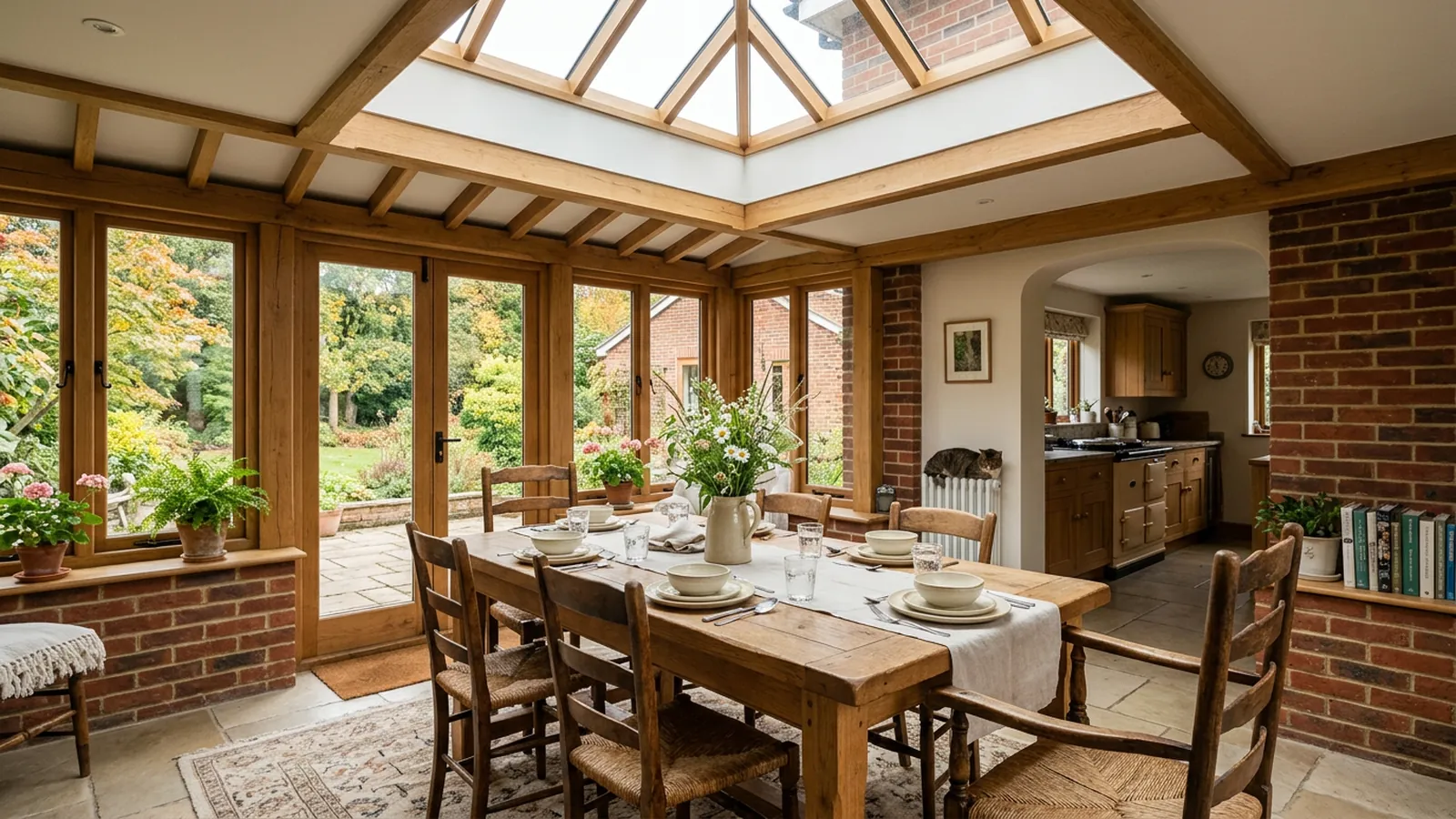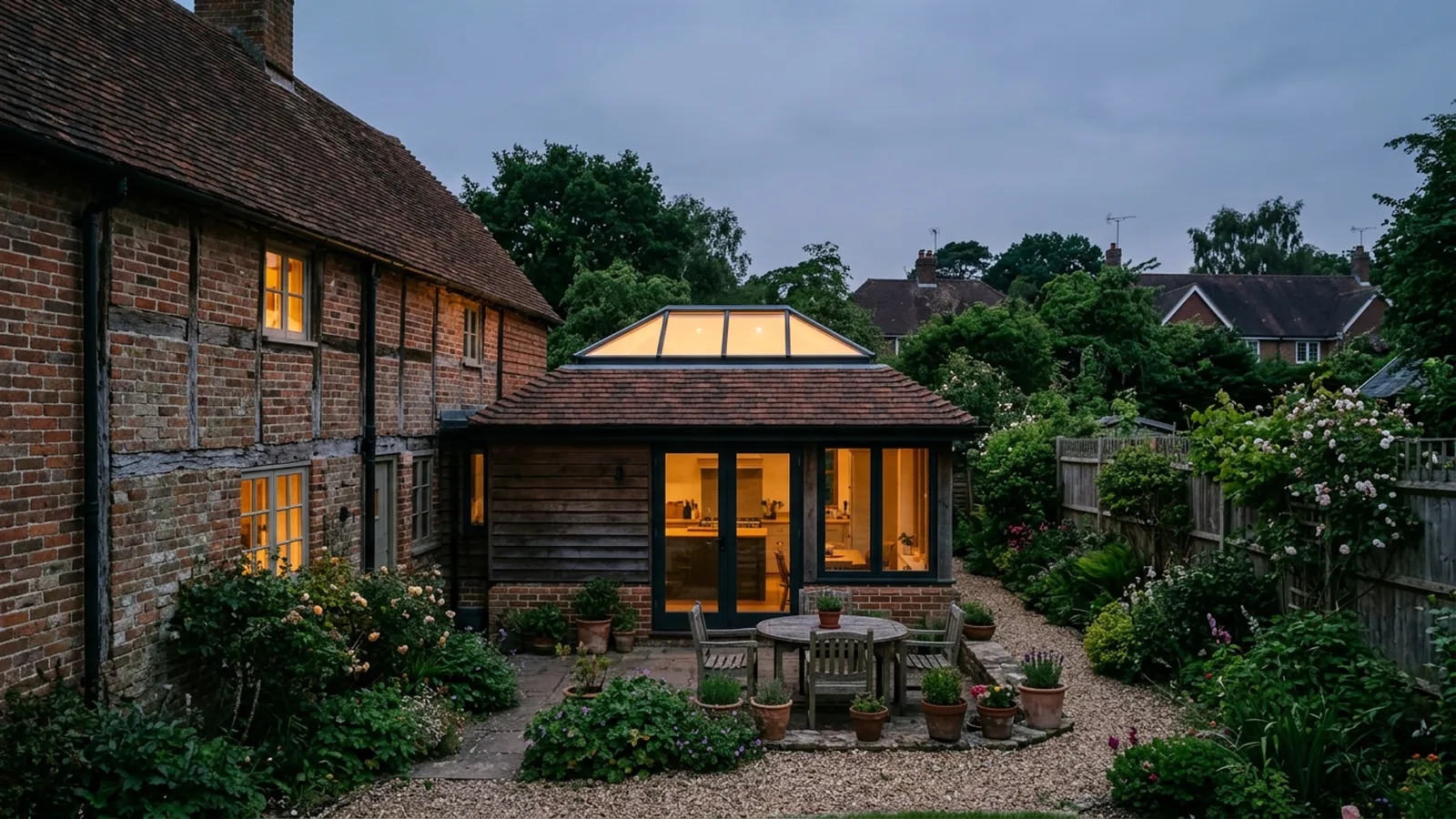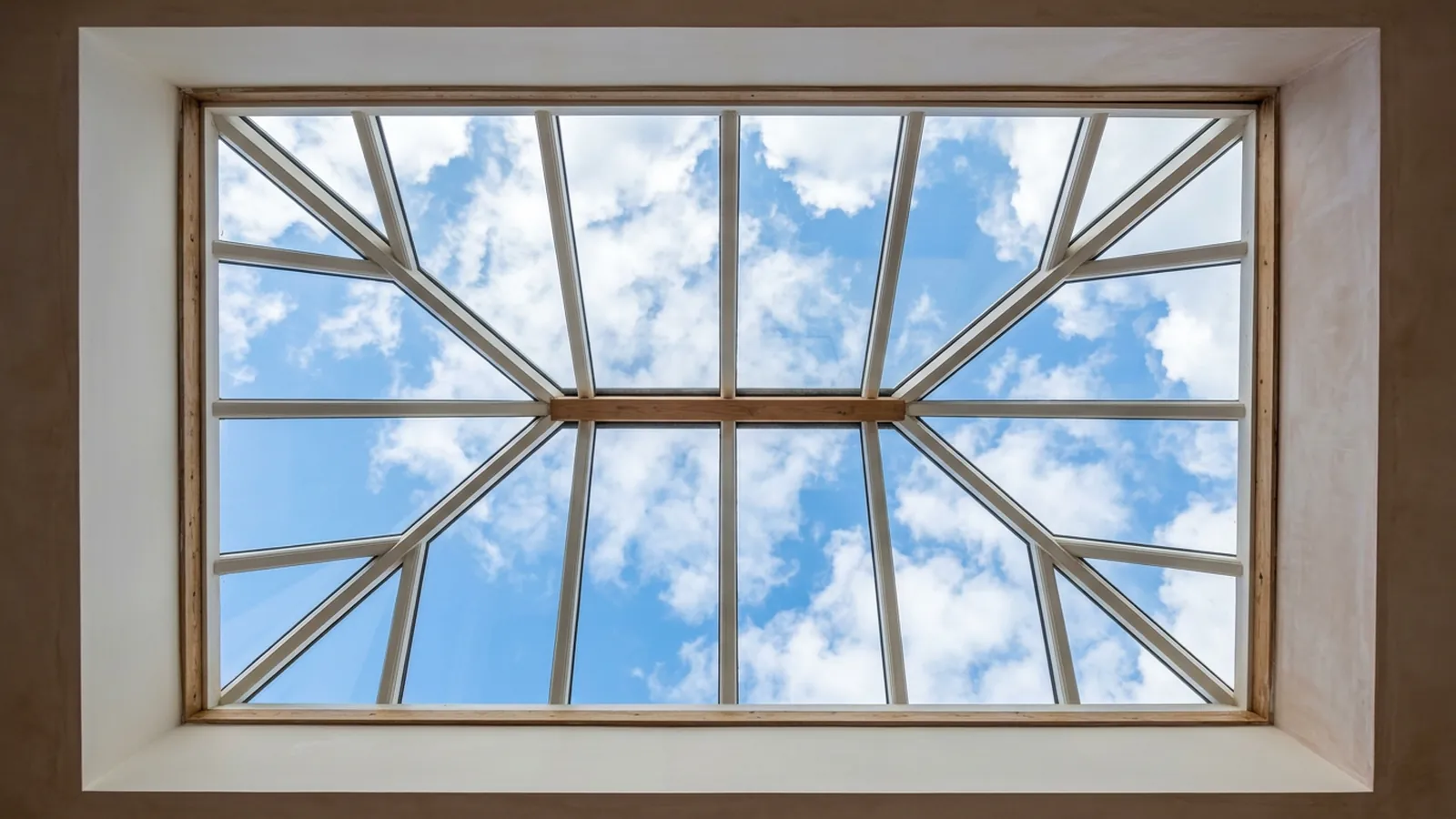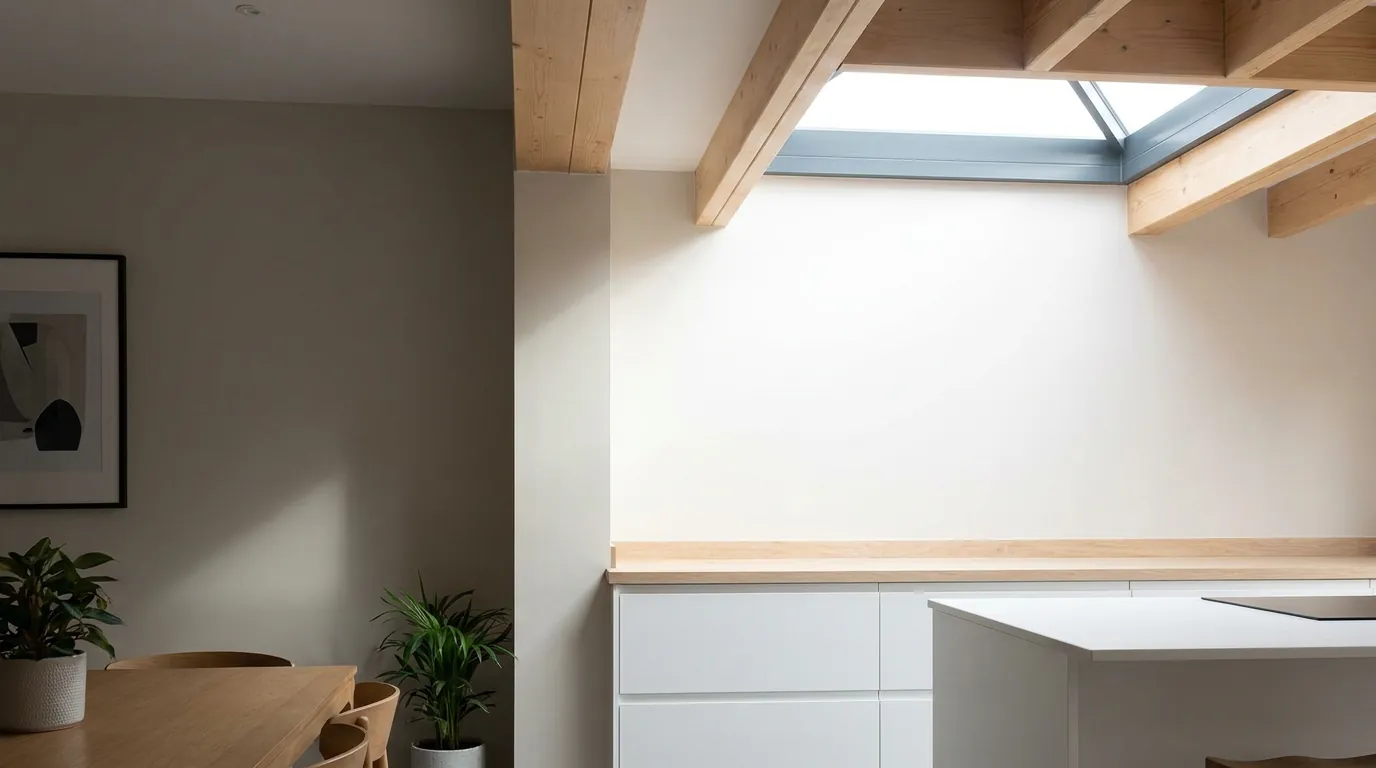
Rain noise is a fair thing to wonder about before you put a large pane of glass over the kitchen table. The answer depends on three things you can choose: what the lantern is glazed with, how the frame is put together, and what sits between the glass and the room. Our roof lantern installation service covers the whole job; this page deals only with the sound.
Why old conservatory roofs gave lanterns a bad name
If your Brighton Hill, Lychpit or Hatch Warren house has an older lean-to or conservatory under a multiwall polycarbonate roof, you will know the sound. That sheet is light, thin and hollow inside. Each raindrop flexes it slightly, and the hollow cells act like a small drum, so a shower sounds much harder than it is. A lantern of the same sheet does exactly the same.
A modern glazed lantern behaves differently. A sealed glass unit is heavy and stiff for its size, so a drop has far less surface to set moving, and the gas-filled cavity between the panes breaks up the path the sound takes into the room. If you have an older polycarbonate lantern and the noise is the reason you want a change, our answer on swapping a polycarbonate lantern for glass explains what that involves.
How a roof lantern sits on a flat roof
- Ridge, where the glazing bars meet at the top
- Hip bar, closing each sloped end of the lantern
- Glazing bar, holding the edges of the glass
- Glass panel, sealed double or triple glazed units
- Eaves or perimeter frame, which the whole lantern stands on
- Insulated kerb (upstand), raising the lantern clear of the roof
- Flat roof covering, dressed up the kerb and under the frame
- Plastered reveal, lining the lantern well into the room below
What the glass does to the sound
The glazing is the biggest single choice for rain noise. Here is how the common options compare, described by principle rather than by any decibel figure, since the real result depends on the unit and the room.
| Glazing | What you hear in rain | Why |
|---|---|---|
| Multiwall polycarbonate | A sharp drumming, loud in heavy showers | Thin, light sheet that flexes, with hollow cells that resonate |
| Double glazed units | A soft patter, noticeable in a downpour | Two stiff panes with a sealed cavity between them |
| Triple glazed units | Quieter again in steady rain | More mass and a second cavity for the sound to cross |
| Laminated inner pane | A duller, softer sound | The interlayer between the glass sheets damps vibration |
Laminated glass is often specified on the inner pane of an overhead unit anyway, because it holds together if broken. The quieter sound comes with it. The full range of glass types, including self-cleaning and solar control coatings, is set out in our answer on what glass goes into a roof lantern.
The frame matters more than you might think
Rain does not only fall on the glass. It lands on the glazing bars, the ridge and the capping, and a frame that is poorly seated or has loose trims can tick and rattle under a heavy shower. A well made lantern has gaskets that grip each unit firmly and caps that clip or screw down tight, so there is nothing free to vibrate.
Aluminium and uPVC framed lanterns both perform well here when they are fitted properly. The differences between them lie mostly in sightlines, strength and appearance, and they are compared in our guide to aluminium or uPVC glazing bars. On the noise question, how the lantern is assembled and bedded on its kerb counts for more than which material the bars are made from.
The rule: a correctly glazed and seated lantern gives a gentle, even sound in rain. The exception: hail, and the heaviest summer storms, will be clearly heard under any glass roof, just as they are on a window beside you.
Where the water goes after it lands
A second source of sound is water running off rather than falling. If the flat roof around the lantern holds puddles, drops splashing into standing water and water gurgling at an outlet can carry into the room. A kerb set at the right height, and a roof laid to proper falls so water clears to the gutter, keeps that quiet as well as keeping the upstand dry. Our guide to kerb height and falls explains how that is set out. It is one of the checks made at survey, because the existing roof on a kitchen extension decides what the lantern sits on.
What softens the sound inside the room
The room itself changes what you hear. A kitchen with hard floors, tiled splashbacks and bare walls reflects sound, so rain can seem louder there than in a carpeted sitting room under the same lantern. A deeper lined opening between the ceiling and the glass also puts a little more distance between you and the roof.
Blinds make a noticeable difference. A pleated or cellular blind sitting in the lantern absorbs some of the sound as well as shading the room in summer. Whether a blind will suit your lantern's shape, and how it is controlled, is covered in our answer on fitting blinds to a roof lantern.
Is a flat rooflight any quieter?
A flat glass rooflight and a lantern with the same glazing sound much alike in rain. The lantern has more glass surface in its sloping panels, so it collects a little more, but the difference is small next to the choice of glazing and whether the unit is laminated. Choose between a skylight laid flat and a raised lantern on light, look and the size of the room; the comparison is in our guide to a roof lantern or a flat rooflight.
Getting it right before you order
If rain noise is high on your list, say so at the start. It points the specification towards laminated inner panes, possibly triple glazing, and a blind, and each of those is easier to include from the outset than to add later. We look at the extension, the roof around the opening and how the room is used, then put the glazing choice into a written quote with the reasons alongside it.
The work is carried out to Building Regulations, with the notification to Building Control taken care of by us where the job is notifiable, and it is covered by a 10-year workmanship guarantee. For a view on your own kitchen or garden room, book a roof survey and ask about the sound as well as the light.