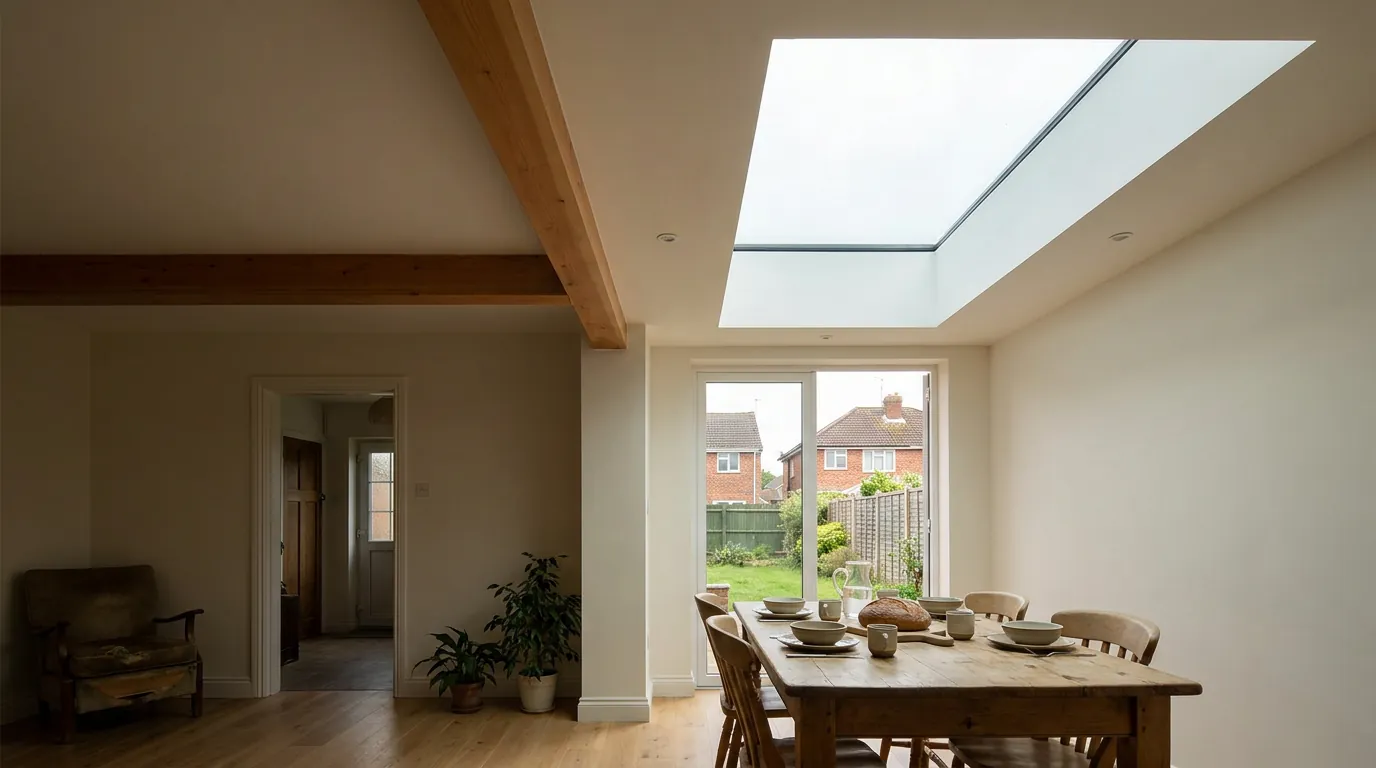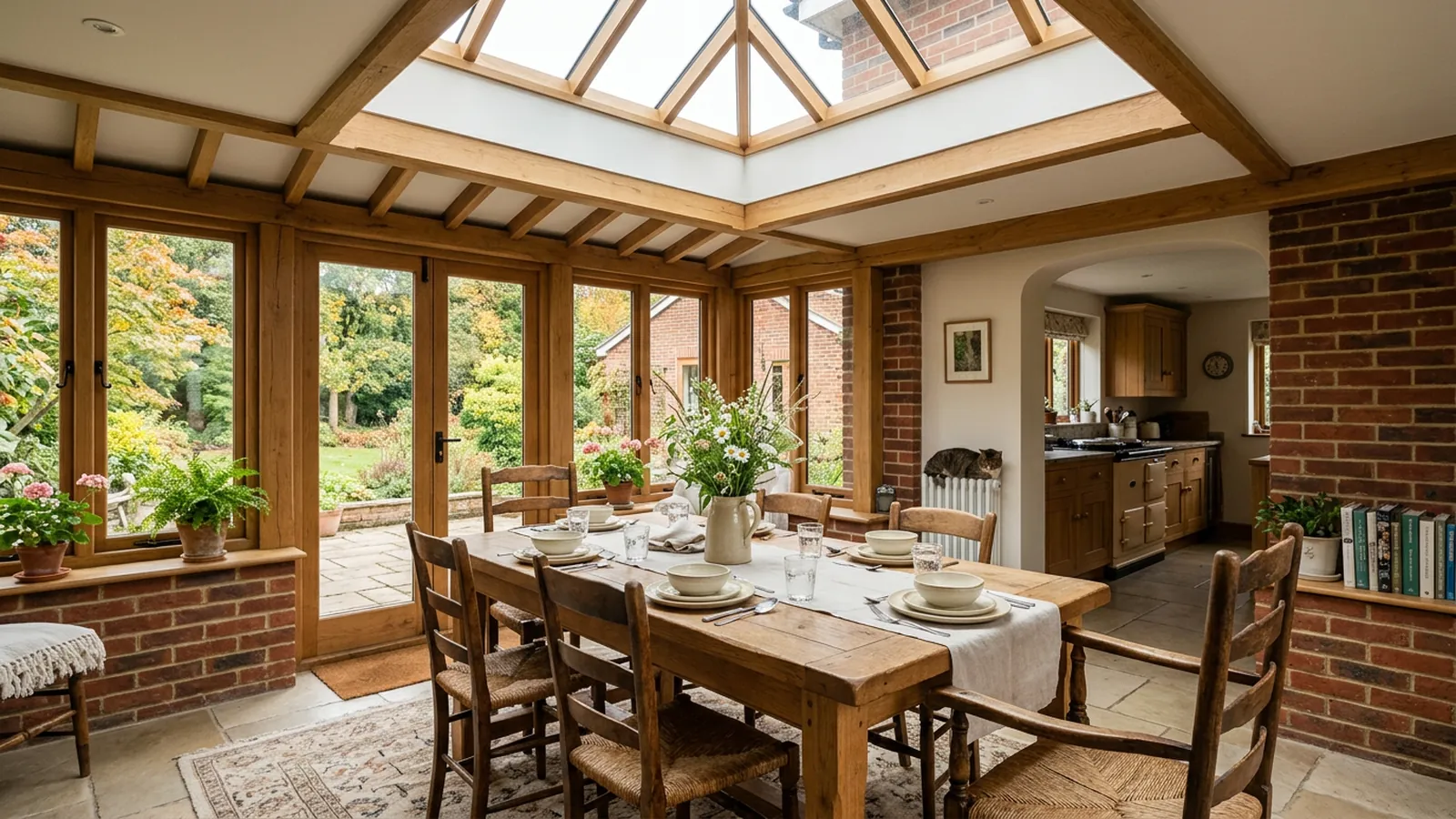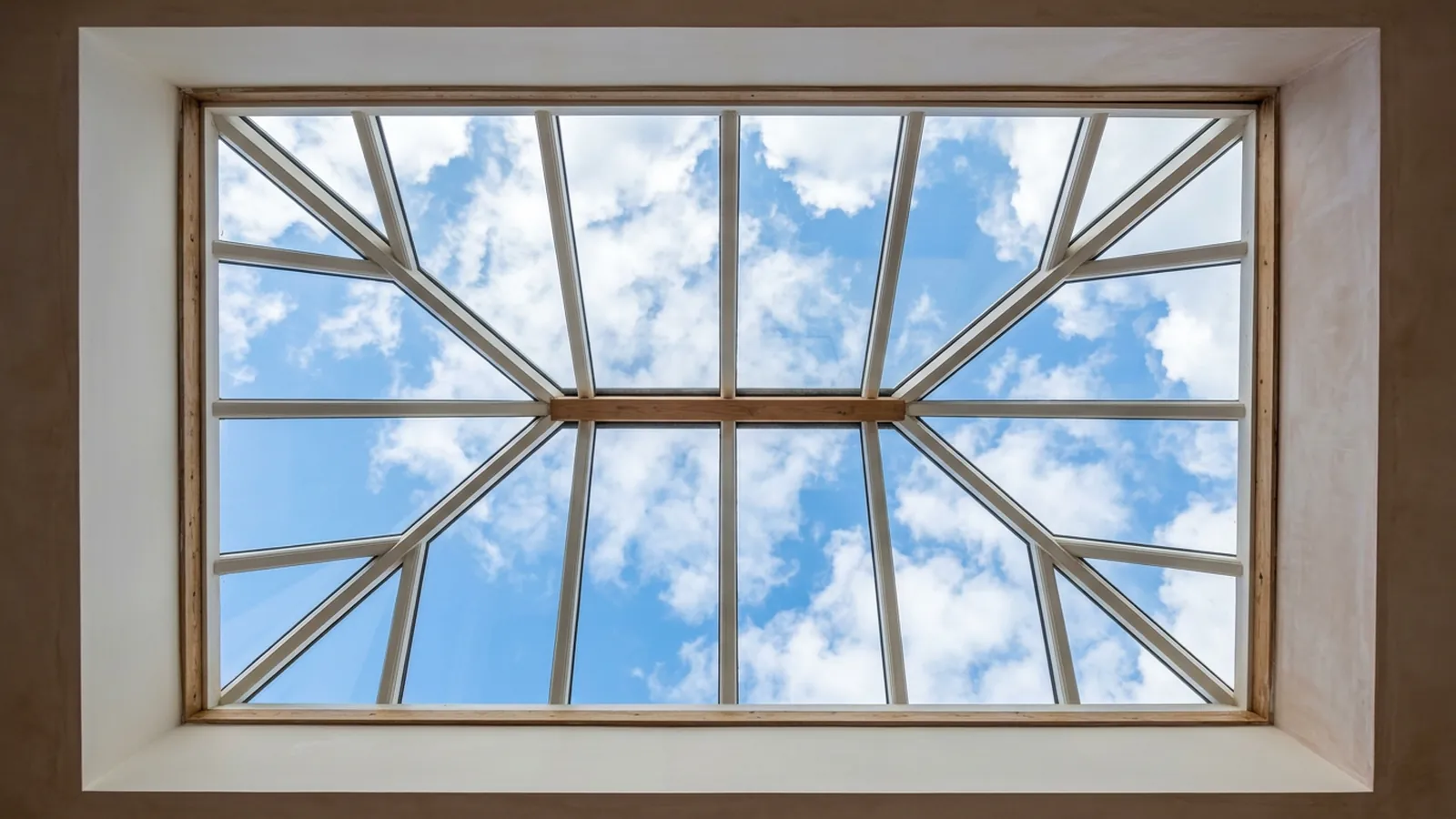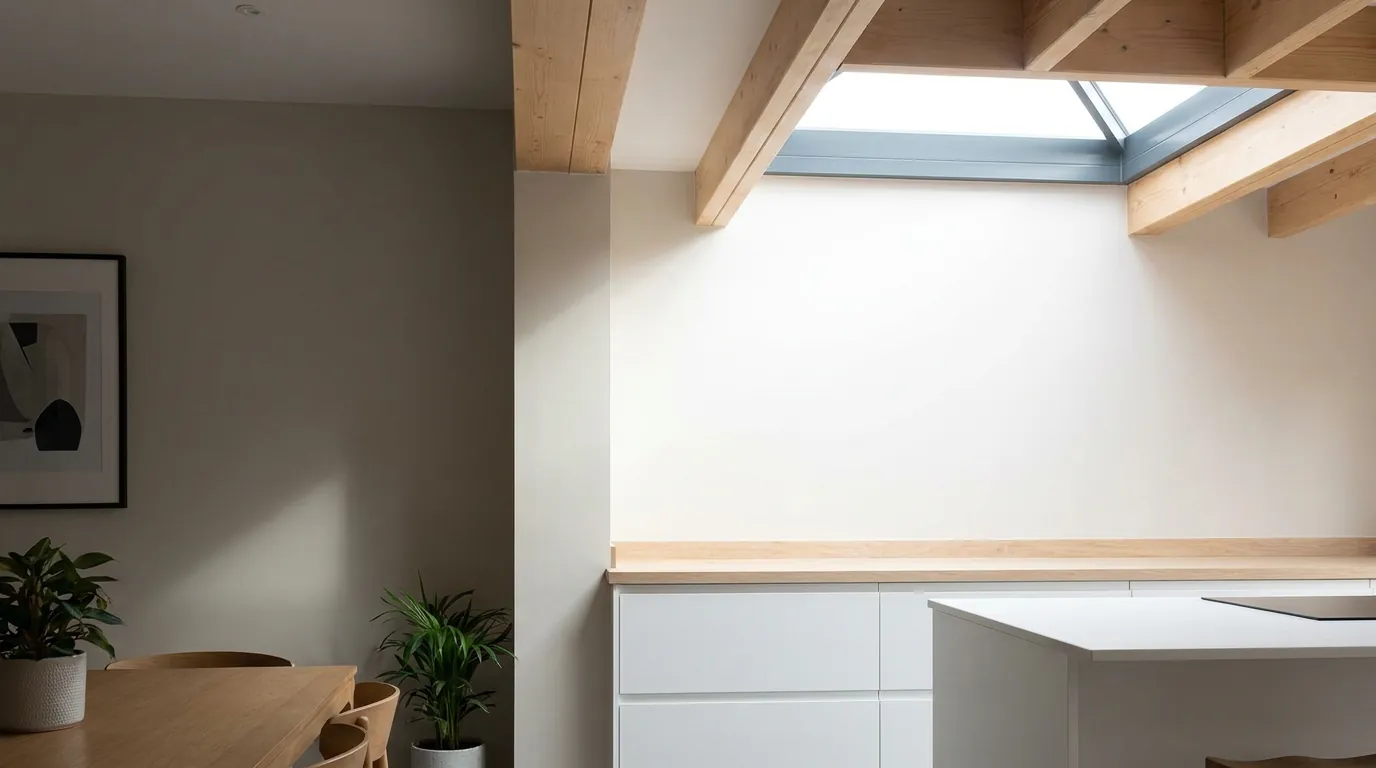
That is the whole answer in outline. What follows unpacks each layer so that a glazing specification on a quote reads as plain English, and so you can see which choices matter for your room. If you are still at the stage of deciding whether a lantern is right at all, our roof lantern installation service covers the whole job from opening to finish.
Why overhead glass is its own category
Glass above your head is treated differently from glass in a wall, for an obvious reason: if a pane ever cracks, gravity decides where the pieces go. A vertical window that breaks mostly falls outward or stays in the frame. A pane lying at a shallow angle over a kitchen island has nowhere to go but down. That is why the inner layer of a good lantern unit is laminated glass: two sheets bonded to a plastic interlayer, so a crack leaves a crazed but intact pane held in the frame.
The outer layer takes the weather, hail, a dropped branch and the thermal stress of full sun on a cold morning. Toughened glass suits it, being several times stronger than ordinary annealed float and breaking into small blunt granules if it ever goes. Put the two together and each pane is doing the job it is best at: toughened on the outside for strength, laminated on the inside for retention.
The rule: the pane facing the room should be laminated. The exception is a unit sold as toughened on both faces, which some budget lanterns use; ask the supplier which build you are getting, and prefer laminated inside wherever people will stand underneath.
How a roof lantern sits on a flat roof
- Ridge, where the glazing bars meet at the top
- Hip bar, closing each sloped end of the lantern
- Glazing bar, holding the edges of the glass
- Glass panel, sealed double or triple glazed units
- Eaves or perimeter frame, which the whole lantern stands on
- Insulated kerb (upstand), raising the lantern clear of the roof
- Flat roof covering, dressed up the kerb and under the frame
- Plastered reveal, lining the lantern well into the room below
The layers in a typical sealed unit
Every glazed panel in the lantern is a factory-sealed unit, and it helps to read it from outside to in. The table below sets out what each part is for and what it changes for the room. Exact thicknesses vary by lantern maker and by the span of each panel, which is why the unit is specified to the frame rather than picked off a shelf.
| Layer | What it is | What it does for the room |
|---|---|---|
| Outer pane | Toughened glass, sometimes with a self-cleaning or solar control coating on its outer face | Takes weather and impact; any coating here cuts glare or helps rain rinse dirt away |
| Cavity | Sealed gap filled with argon, held apart by a warm edge spacer bar | Slows heat escaping; a warm edge spacer keeps the glass edge warmer, so less condensation forms there |
| Low emissivity coating | A microscopically thin metal oxide layer on a cavity face | Reflects warmth back into the kitchen in winter while still letting daylight through |
| Inner pane | Laminated glass: two sheets bonded to an interlayer | Holds together if broken, softens rain drumming a little, and filters much of the ultraviolet |
| Third pane (triple units) | An extra pane and second gas-filled cavity | Better insulation, at the cost of weight the glazing bars and kerb must carry |
Double or triple glazed
Both meet the thermal standard for new glazing when the unit is specified properly, so the choice is about comfort and structure rather than compliance. Triple glazing keeps the inner pane warmer on a frosty night, which helps with that chilly downdraught you can feel under a big expanse of cold glass. It also adds a third sheet of glass to every panel, and on a large lantern that extra load is real: the glazing bars, the kerb and the flat roof beneath all have to be sized for it. Our answer on how heavy a roof lantern is puts that weight in context.
On a single storey rear extension to an estate semi, where the lantern sits over a kitchen diner that is used all year, double glazing with a good low emissivity coating and argon fill is the usual starting point. Triple is worth weighing where the room faces north and feels cold, or where a big lantern will dominate the ceiling.
Solar control, tints and self-cleaning coatings
These are the choices homeowners actually notice once the builders have gone. A south or west facing lantern over a kitchen can make the room uncomfortable on a still July afternoon, and clear glass does nothing to stop it. A solar control coating reflects a share of the sun's heat while letting most of the visible light through, so the room stays bright without cooking. Tinted glass in blue, grey or bronze does something similar and also changes the colour of the light, which some people love and others find gloomy on a dull day.
How much heat control a given orientation needs, and how coatings compare with blinds, belongs to our guide on solar control glass under a roof lantern. For the short version of the heat question, see do roof lanterns make a room too hot?
A self-cleaning outer coating uses daylight to break down organic grime and makes rainwater sheet across the glass rather than bead, so it rinses dirt off as it runs to the bottom edge. It works best on a lantern with a decent pitch to each face and a roof that is open to the rain; under overhanging trees it helps less. It reduces how often you need to get up there, which is a real gain on a lantern that sits in the middle of a flat roof with no easy reach. Our answer on how to clean a roof lantern safely covers the rest.
What about polycarbonate?
Older lanterns, and many conservatory roofs from the same period, used multiwall polycarbonate sheet rather than glass. It is light and cheap to make, but it lets through far less clear light, it yellows and clouds with age, and rain on it is loud. A new glazed lantern replaces all of that with sealed glass units, and the frame and kerb are checked for the heavier load. If you have one of those older plastic roofs over an extension now, our answer on swapping a polycarbonate lantern for glass explains what changes.
How the glass is chosen for your roof
The glazing is decided alongside the frame, not after it. At the survey we look at which way the extension faces, what the room below is used for, how the flat roof is built and whether it can take the lantern you have in mind. That tells us whether double glazing will do, whether solar control is worth having on that aspect, and whether a self-cleaning face earns its keep given the trees and access around your garden. The written quote then names the glass build for each panel rather than just saying "double glazed", so you can compare like with like.
The same thinking applies to a flat skylight or a walk-on rooflight: the glass is part of the specification, fitted to the room and the roof. If you are looking at glazing across the house rather than one lantern, our rooflight and skylight installers around Basingstoke page shows every option in one place. To have the glass for your own extension specified properly, arrange a survey of your flat roof.