A roof lantern sits in the one spot in the house nobody can reach with a normal step stool, which is why cleaning it gets put off and then attempted in a hurry. The method matters less than where you stand while you do it. If you are still at the planning stage, our roof lantern installation page explains how the lantern, its kerb and the flat roof are put together, and knowing that makes it clear which parts will take your weight and which will not.
Below is the safe order of work, what to use on the glass and the glazing bars, what to leave alone, and the few design choices at fitting time that make the job easier for years afterwards.
Where to stand: the part that keeps you safe
Lantern glass is sealed units in a framework of glazing bars, built to carry snow, wind and its own weight. It is not a floor. Kneeling on it, leaning a ladder against it or resting a hand on a glazing bar to reach across puts a point load on something never specified for one. The flat roof around the kerb is a second trap: many single storey extensions around Basingstoke have a felt, GRP or single ply covering on timber joists that was designed for maintenance access at most, and some were not designed for foot traffic at all.
The rule: clean the outside from a ladder footed on the ground, or from the ground with a water-fed pole, and keep off the glass entirely. The exception is a flat roof built as an accessible terrace with a proper guarded edge; even then, you still stay off the lantern itself.
If the lantern sits in the middle of a deep extension where no ladder reaches, that is a job for a window cleaner with a water-fed pole system, which lifts purified water to the glass from the ground and dries without streaks. It is the safest way to reach the centre of a big hipped lantern.
How a roof lantern sits on a flat roof
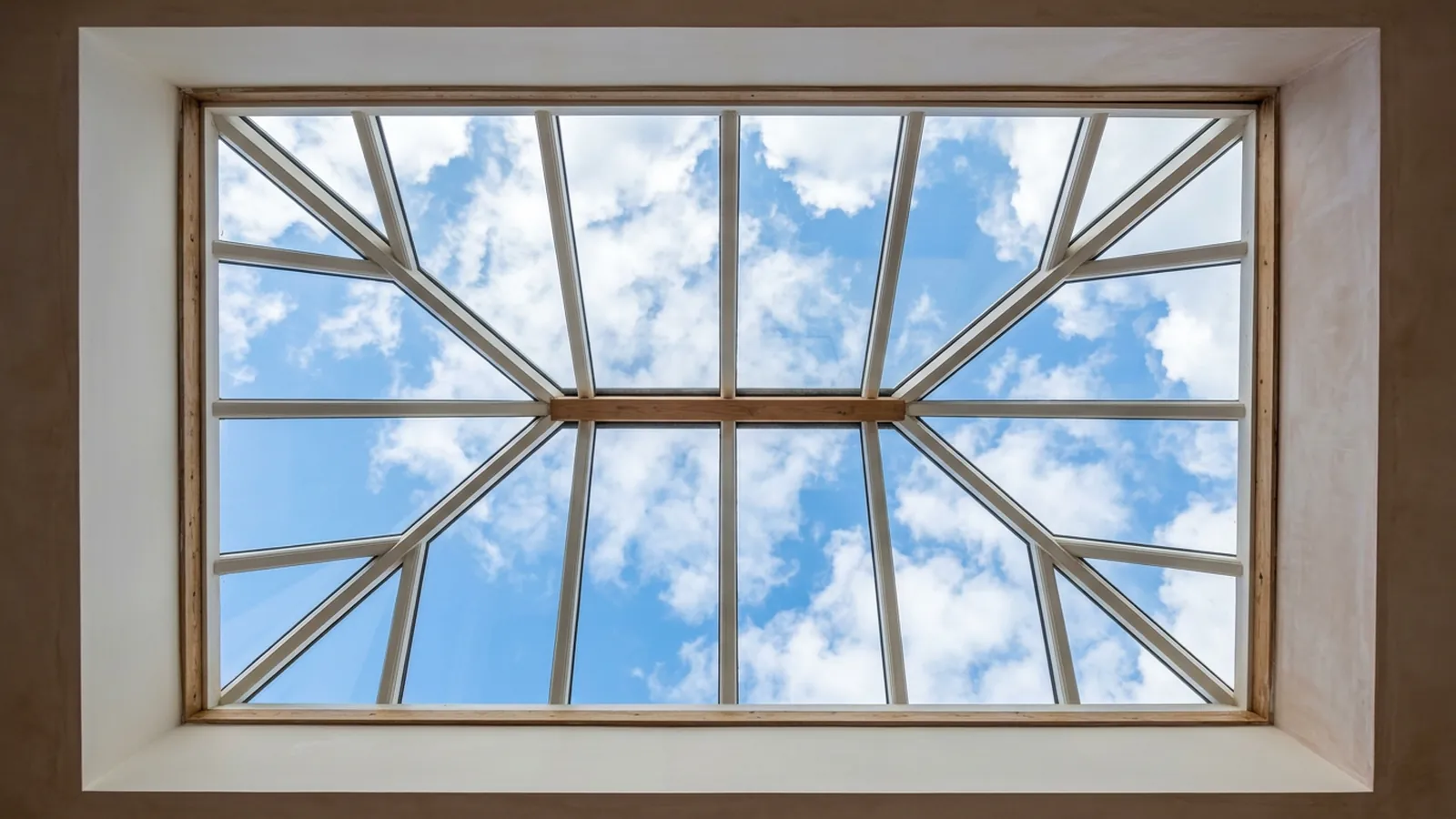
- Ridge, where the glazing bars meet at the top
- Hip bar, closing each sloped end of the lantern
- Glazing bar, holding the edges of the glass
- Glass panel, sealed double or triple glazed units
- Eaves or perimeter frame, which the whole lantern stands on
- Insulated kerb (upstand), raising the lantern clear of the roof
- Flat roof covering, dressed up the kerb and under the frame
- Plastered reveal, lining the lantern well into the room below
Cleaning the outside, step by step
Pick a dry, overcast, still day. Sun on the glass dries the water before you can wipe it, which is how streaks form, and wind on a ladder at eaves height is its own hazard.
- Clear the debris first. Brush leaves and moss off the kerb upstand and the roof around it with a soft brush on a pole, working away from the lantern so nothing collects against the frame.
- Wet the glass. Rinse from the ridge downwards with a hose on a gentle setting or with the pole, so loose grit runs off before anything touches the surface.
- Wash. Use lukewarm water with a small squeeze of mild washing-up liquid and a soft sponge or microfibre pad. Work top to bottom, one pane at a time.
- Rinse again. Leftover soap film attracts dirt, so rinse each pane thoroughly.
- Dry or leave. A rubber squeegee on a pole leaves the clearest finish; pure water from a water-fed pole can simply be left to dry.
Leave the ridge cap, the hip caps and the rubber gaskets alone apart from a gentle wipe. They keep water out, and tugging at them with a scraper does them no favours.
Cleaning the inside without a scaffold tower
The underside collects dust, cobwebs and, in a kitchen, a thin greasy film from cooking. From the floor, a flat microfibre mop head on a telescopic pole reaches most lanterns over a standard ceiling height. Dampen the head in warm water with a drop of washing-up liquid, wring it well so nothing drips onto worktops, and follow with a dry head.
For a high vaulted ceiling, a stable platform or a hired low tower is safer than a stepladder on a hard kitchen floor. If you see water droplets on the inside of the glass in cold weather, that is condensation, not dirt, and wiping it only moves it about. Our guide to condensation and ventilation under a roof lantern explains the causes and what reduces it.
What to use, and what to keep away
Most lantern frames are powder coated aluminium or uPVC, and most glass is toughened or laminated sealed units, often with a coating. Gentle products suit all of them.
| Part | Use | Avoid |
|---|---|---|
| Glass (outside) | Lukewarm water, mild washing-up liquid, soft sponge, squeegee | Scouring pads, razor scrapers, abrasive creams |
| Self-cleaning glass | Plain water, or the cleaner the glass maker names | Silicone polishes and ordinary glass sprays that can coat the surface |
| Aluminium or uPVC bars | Warm soapy water and a soft cloth | Solvents, bleach, wire wool, cutting compounds |
| Gaskets and seals | A light wipe with a damp cloth | Pressure washers, pulling or picking at the rubber |
A pressure washer deserves its own warning. The jet can drive water past the gaskets and into the frame, and on a flat roof covering it can lift edges. A garden hose does the rinsing well enough. If you are not sure what your glazing is, our answer on what glass goes into a roof lantern describes the usual build ups, and your handover paperwork should name the product.
How often, and what to look at while you are up there
There is no fixed interval. A lantern under trees needs attention after leaf fall; one on an open estate plot may look fine through a whole summer. Cleaning is also your chance to look over the skylight and the roof around it. Check that water drains away from the kerb rather than pooling against it, that the outlets and gutters on the flat roof are clear, and that the ridge and hip caps sit straight.
Standing water around a lantern is a sign of the falls, not the glass. Our guide to kerb height and falls explains how the upstand and the roof slope keep water moving away from the frame.
Choices at fitting time that make cleaning easier
A few decisions before installation pay off every time the glass needs washing. Self-cleaning glass, with its coating that uses daylight and rain to loosen and rinse off dirt, reduces how often the outside needs a wash, though it still benefits from a rinse in a dry spell. Placing the lantern where a ladder or pole can reach it from the garden helps too. Blinds make the inside harder to reach, so it is worth thinking about how they come down for cleaning; our answer on fitting blinds to a roof lantern covers the options. If you have an old polycarbonate lantern that has gone cloudy and will not come clean, cleaning is not the fix: see whether a polycarbonate lantern can be swapped for glass.
Clean it from the ground or a ladder, never from the glass, and a roof lantern stays bright for years with nothing stronger than soapy water.
For a new lantern or a glass rooflight over an extension anywhere around Basingstoke, we look at access and cleaning as part of the survey, alongside the structure and the falls, and put it all in a written quote. Book a roof survey when you are ready to talk it through.