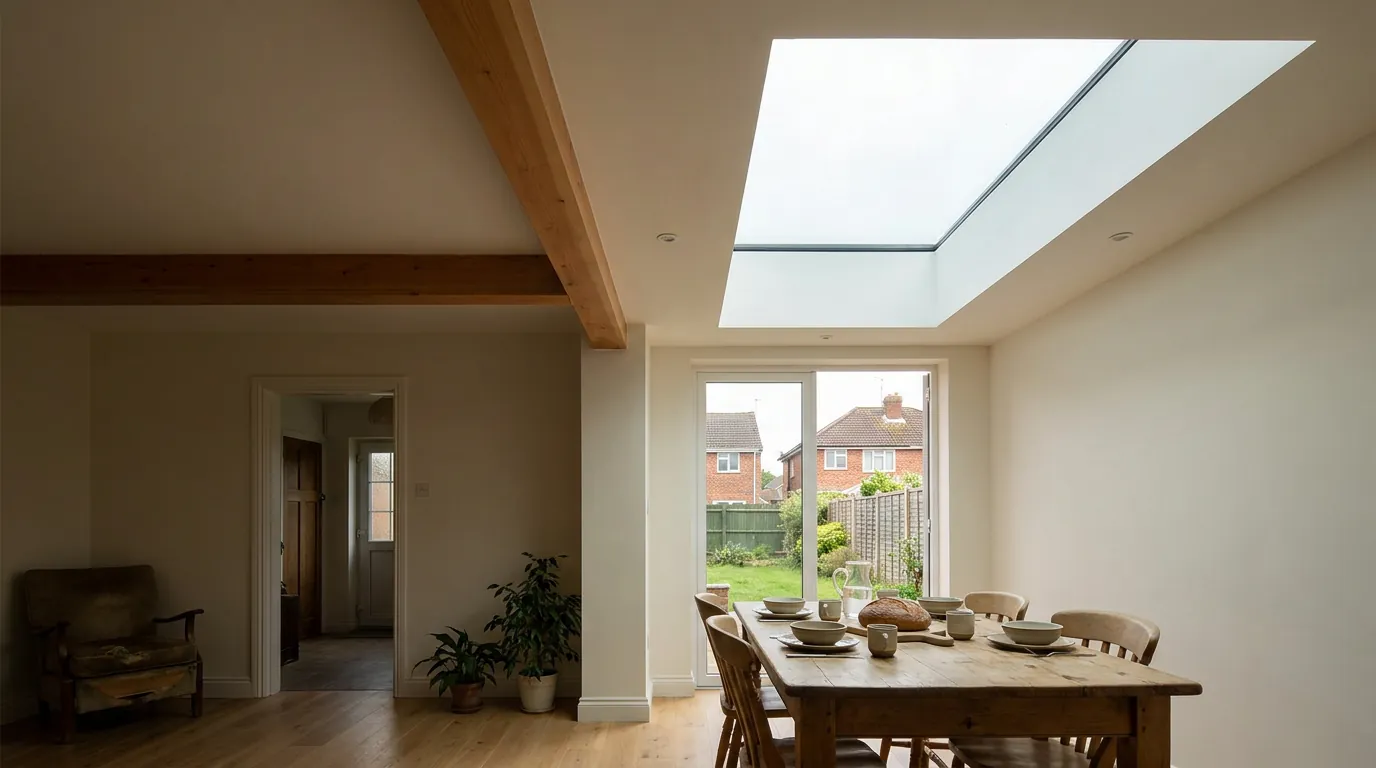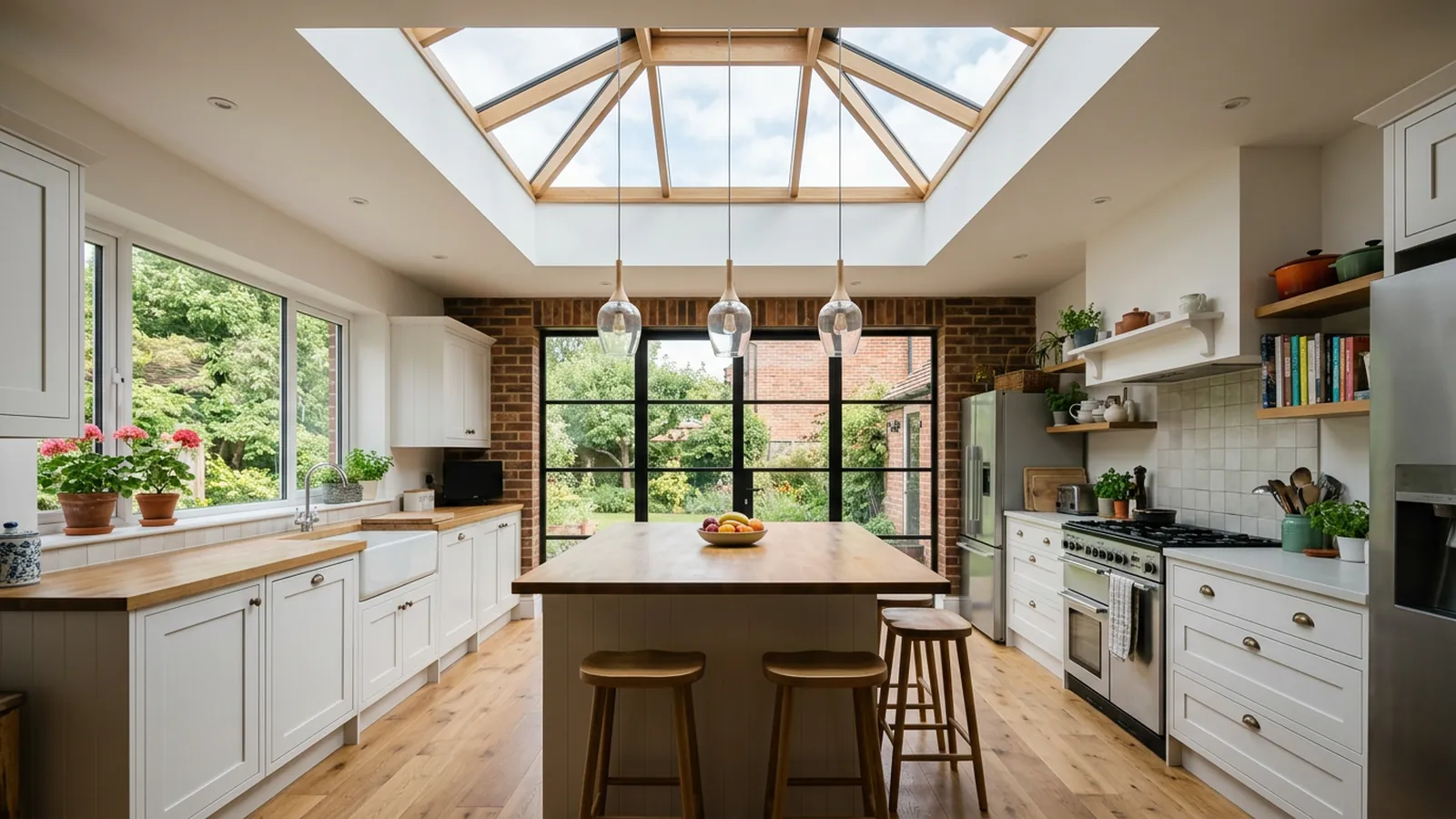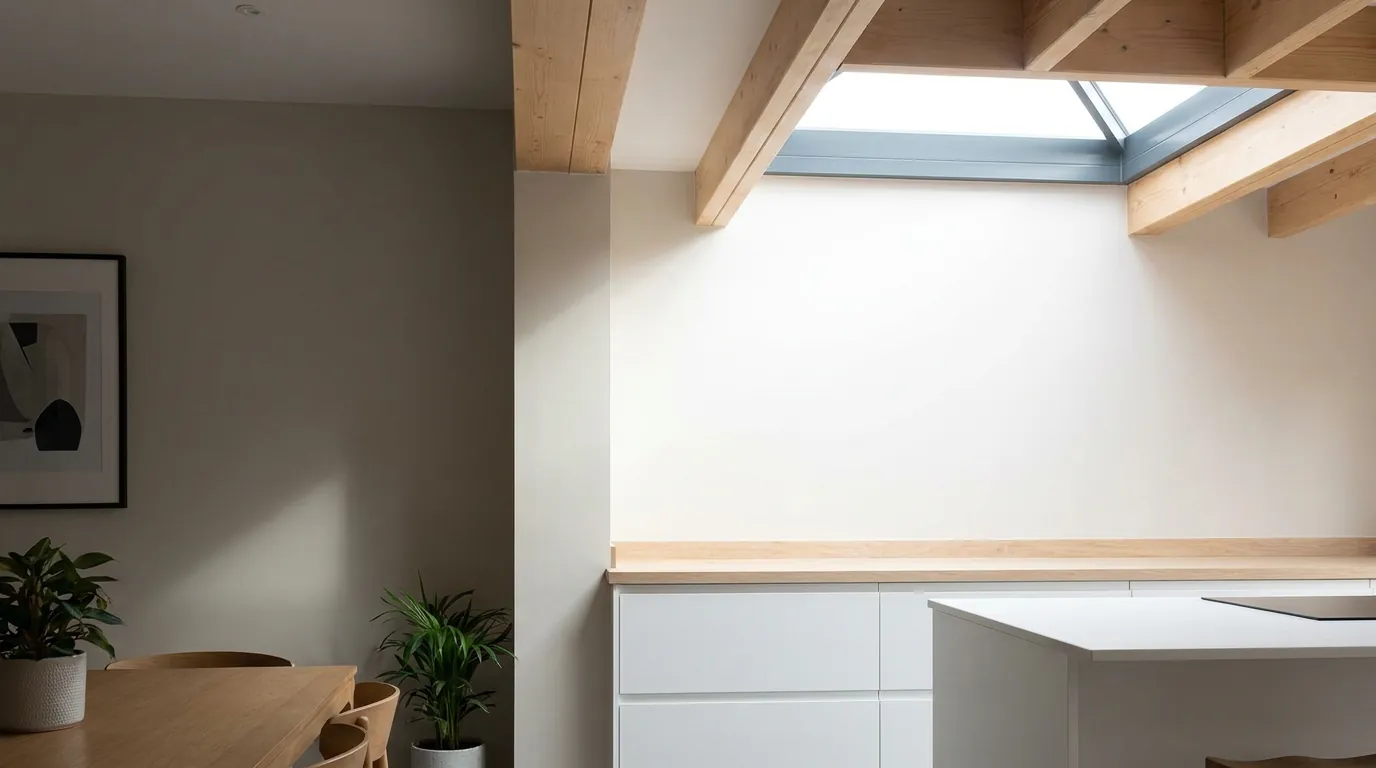
Blinds come up once the kitchen extension is finished and the first bright afternoon arrives. It is far easier to plan for them while the lantern is still being specified, which is why our roof lantern installation service treats shading as part of the design conversation instead of an afterthought. A lantern is a sloping, many-sided skylight, and a blind for it works nothing like a blind for a window in a wall.
This answer covers the types of blind that suit a lantern, how they attach, what to decide before the rooflight is made, and when solar control glass does the job better.
How a lantern blind differs from a window blind
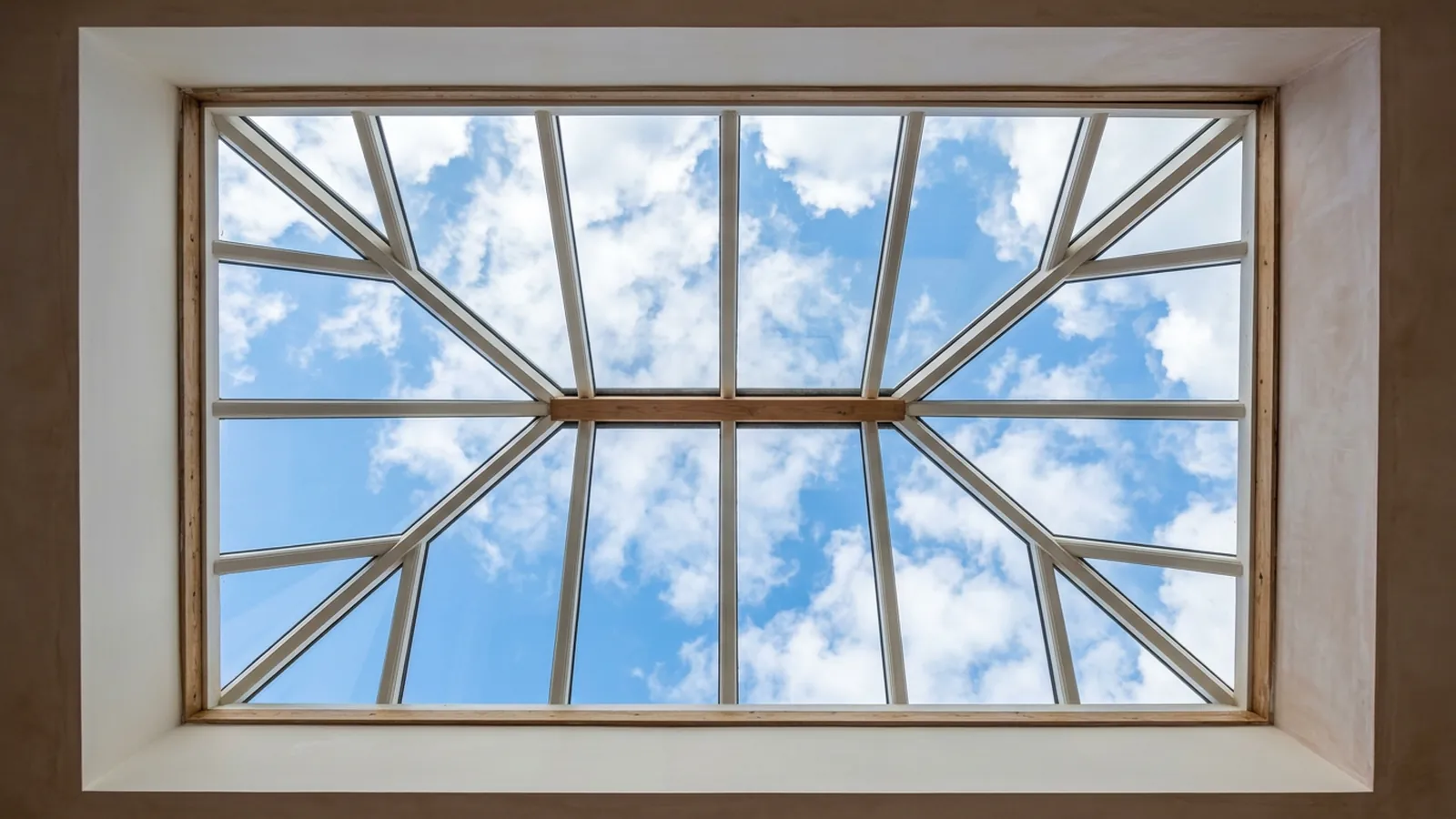
A wall window blind hangs under gravity. On a lantern, every glass panel is sloped, and the hipped ends are triangles or trapezoids, so a blind has to be held flat against the underside of the glass along its full length. That is done with side tension: cords or slim channels either side of the fabric keep it taut from the ridge down to the kerb, and the blind slides along them instead of dropping.
Because every panel is its own shape, each blind is measured and made for one panel. On a hipped lantern, the long side panels take rectangular or tapered blinds, and the end panels take triangular or shaped ones, which are usually fixed in position. A gable ended lantern has fewer odd shapes, which makes shading simpler, which is worth knowing if the shape of the lantern is still open.
How a roof lantern sits on a flat roof
- Ridge, where the glazing bars meet at the top
- Hip bar, closing each sloped end of the lantern
- Glazing bar, holding the edges of the glass
- Glass panel, sealed double or triple glazed units
- Eaves or perimeter frame, which the whole lantern stands on
- Insulated kerb (upstand), raising the lantern clear of the roof
- Flat roof covering, dressed up the kerb and under the frame
- Plastered reveal, lining the lantern well into the room below
The types of roof lantern blind
There are four common approaches. They differ in how they look, how they are worked, and how much they ask of the lantern frame.
| Option | How it works | What to plan for |
|---|---|---|
| Pleated blinds on side tension | Folded fabric runs on tensioned cords between the glazing bars and is moved with a hooked pole or by hand | Fixings into the glazing bars, and a pole store if the ridge is out of reach |
| Clip-in blind frames | A slim frame carrying the blind clips into the bead or bar of each panel, with no drilling on some systems | Compatibility with the glazing bead of the chosen lantern system |
| Motorised blinds | Small motors move each blind, run from a switch, remote or app | A power supply routed to the kerb before the ceiling is finished |
| Blinds inside the sealed unit | A blind sits in the cavity between the panes and is moved magnetically or by a small motor | Ordering with the glass, since it cannot be added later |
Pleated fabrics come in blackout, dim out and translucent weights, and some carry a reflective backing that turns back part of the sun's heat before it reaches the room. Blinds inside the glass never collect dust, but they are part of the glass unit, so the choice is made once.
Fixing blinds to the glazing bars
Most lantern blinds fix to the underside of the glazing bars, the aluminium or uPVC members that hold each pane. That means screws into the bar or into a bracket clipped to it. The bar profile, and whether it has an internal cover cap, decides which fixing a blind maker uses, so the lantern system matters. Our guide to aluminium or uPVC glazing bars explains how the two materials differ.
The rule: fix into the glazing bar in the places the blind maker specifies, and nowhere near the glass or its seals. The exception is a clip-in frame designed for that lantern's bead, which needs no screws at all. Either way, check the lantern manufacturer's guidance on fixings to the bars before anyone drills.
What to decide before the lantern is made
The best moment to think about shading is while the rooflight is still on paper. A few choices then save work later.
- Glass first. Decide whether solar control glass, a tinted unit or integral blinds will carry some of the shading, since the glass is ordered with the lantern.
- Power. If motors are likely, even in a year or two, have a cable run to the kerb while the ceiling and upstand are open.
- Reach. Check whether the ridge will be within pole reach from the floor, or whether a motor makes more sense over a tall ceiling.
- Measure after fitting. Blinds are measured from the installed lantern, never from drawings, because each panel is made to its real size.
Blinds, heat and condensation
A blind is only one answer to summer heat, and not always the strongest one. A fabric blind stops glare well, but much of the heat is already inside the room once the sun has passed through the glass. Solar control glass turns more of it away at the outer pane, so the two are often used together. For a fuller answer on heat under a lantern, see do roof lanterns make a room too hot in summer?, and our guide to solar control glass under a roof lantern explains the glass options.
In winter a closed blind can trap cooler air against the glass, and moisture from a kitchen can settle there overnight. Opening the blinds during the day and keeping the room ventilated helps. If ventilation is part of the plan, can a roof lantern be made to open? covers vents and opening panels, which some blind systems work around.
Who fits them, and how it fits into the job
Lantern blinds are a specialist made-to-measure product, fitted once the lantern is in and the ceiling is decorated. What the installer controls is the preparation: the glass specification, any wiring to the kerb, and a lantern system with bars that take blind fixings cleanly. Getting those right means the blind fitter arrives to a lantern ready for them.
Blinds also change how you look after the glass from inside. Our answer on how to clean a roof lantern safely covers access to the underside. For our part, the lantern installation comes with a 10-year workmanship guarantee, which is not insurance backed, and any blind should be fixed in a way that leaves the lantern's own warranty terms intact.
If shading is on your list for a new flat roof lantern around Basingstoke, raise it at the survey and we will plan the glass and wiring around it. You can book a roof survey whenever you are ready.