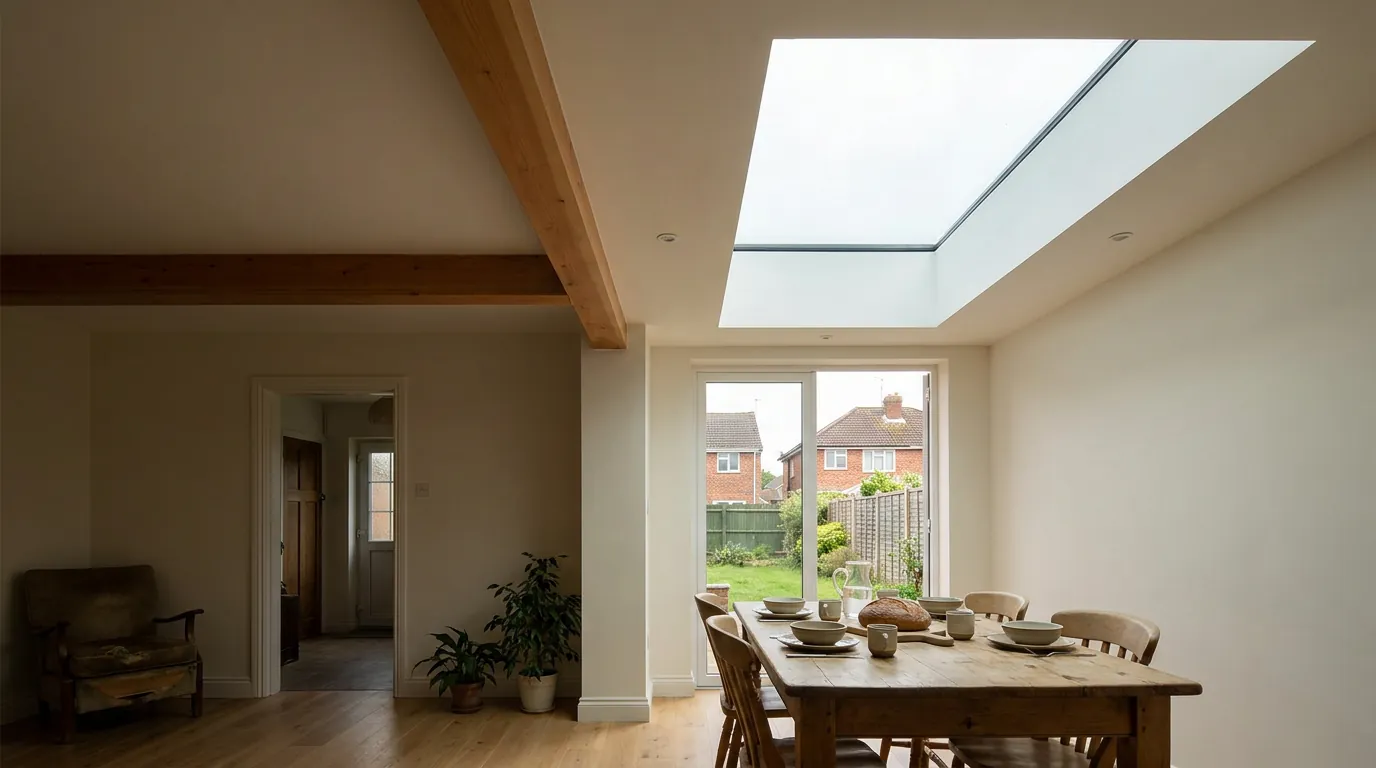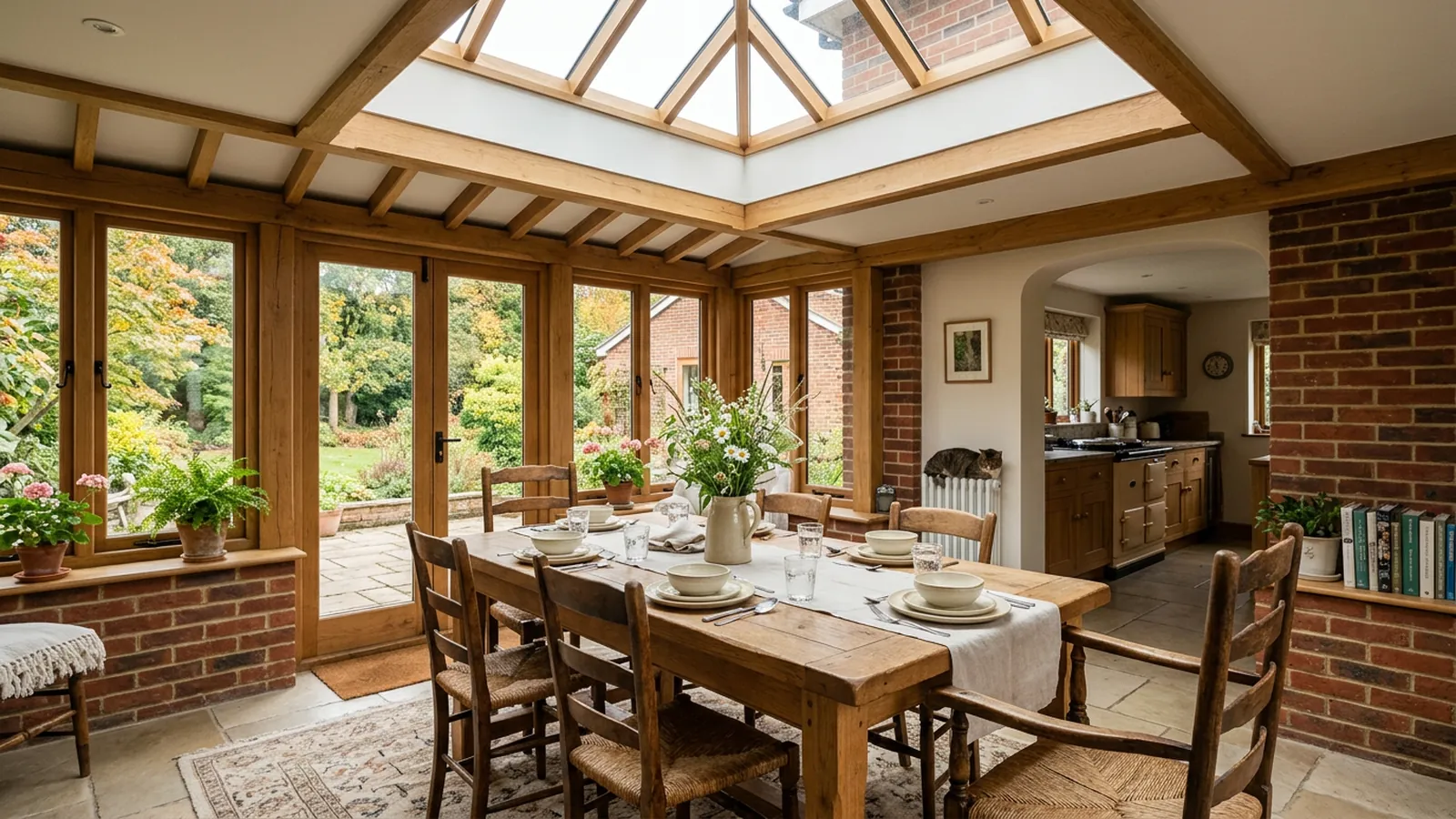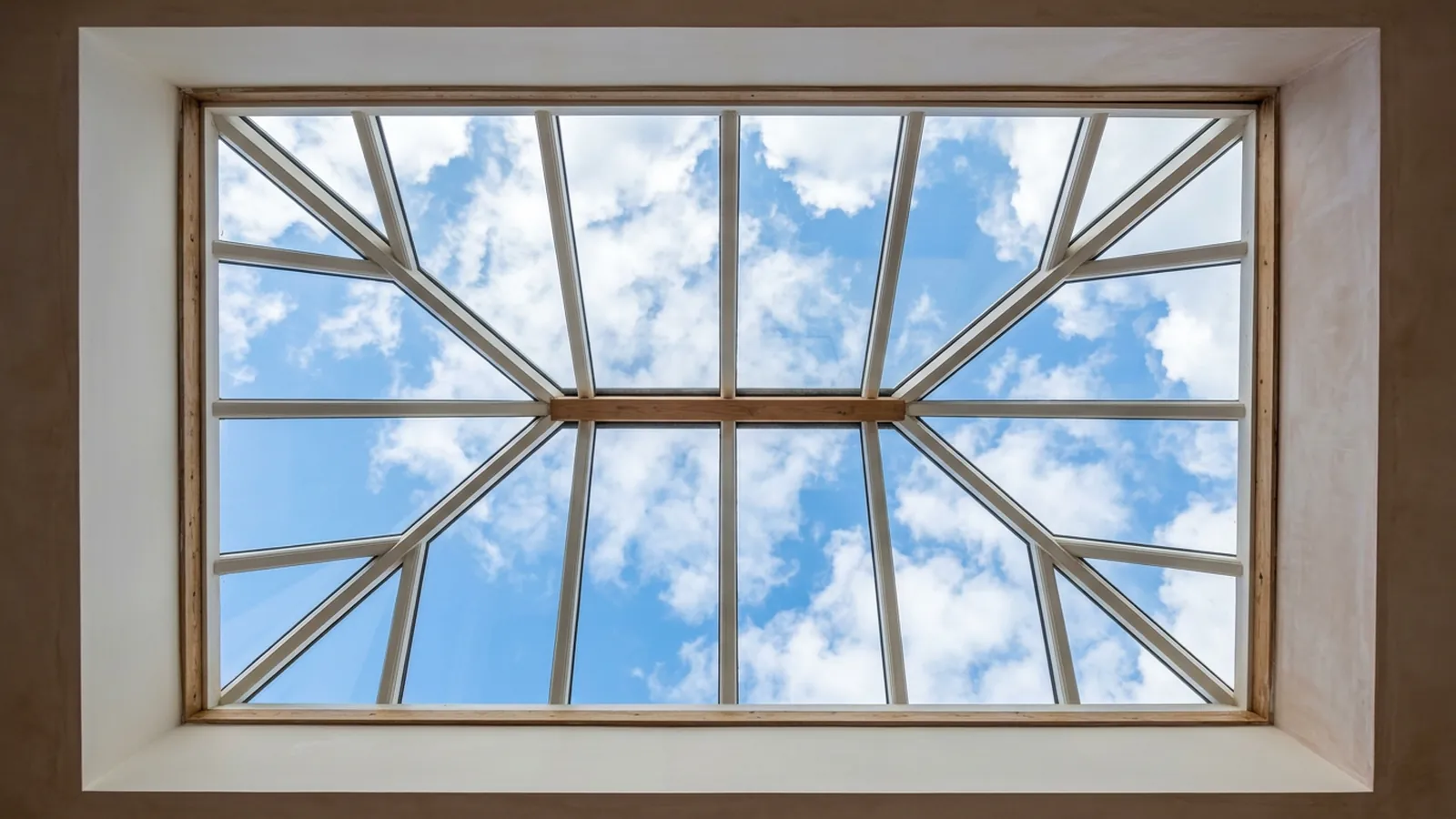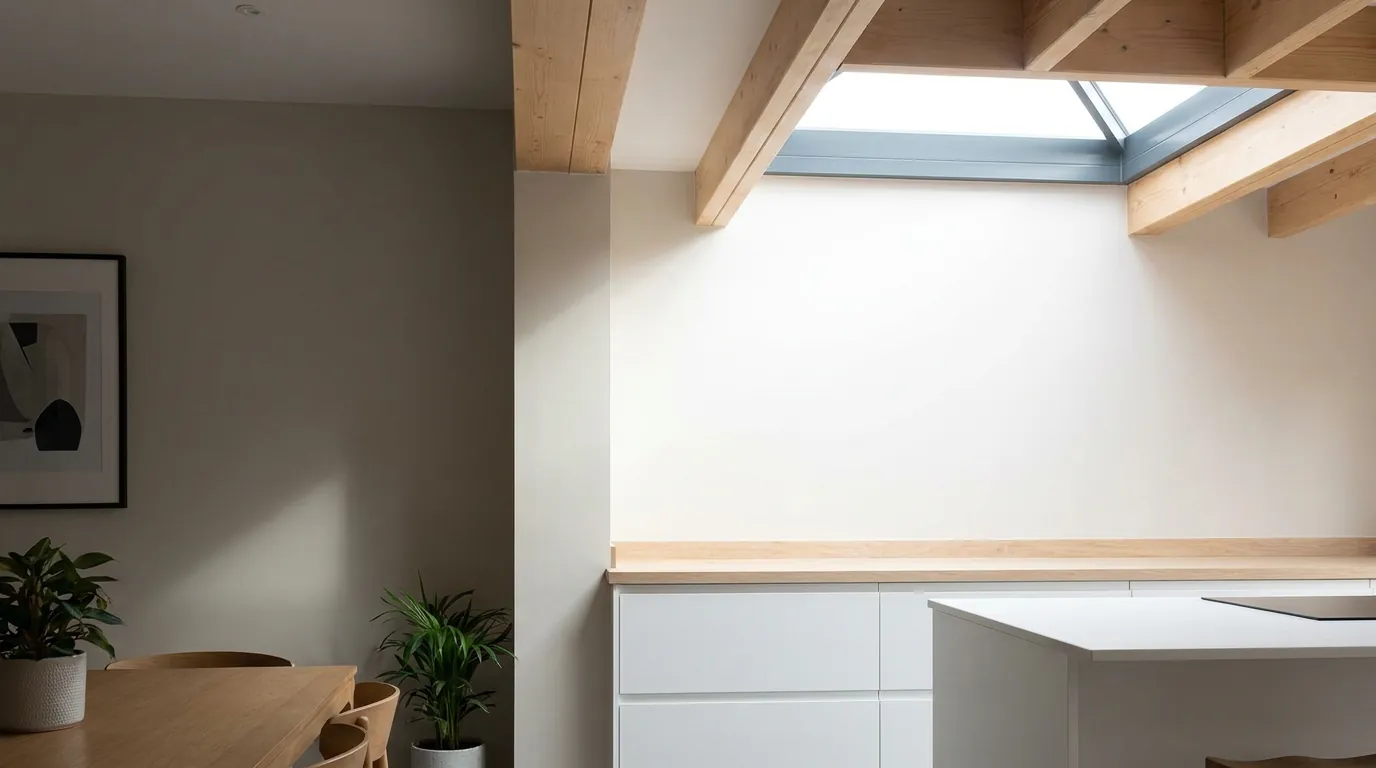
A polycarbonate lantern was a common finish on single storey extensions of the 1980s and 1990s around Basingstoke, chosen because it was light and simple to fit. Those roofs now look tired: the sheet yellows, the multiwall chambers fill with grime and the frame rattles in wind. Moving up to glass is a sensible upgrade, and our roof lantern installation service treats it as a fresh installation on an existing opening, with the old unit lifted off and the base properly assessed first.
Why the old frame cannot simply take glass
It is tempting to picture a glazier sliding double glazed units into the slots where the plastic sheets used to sit. The bars will not allow it. A polycarbonate roof uses sheet that is thick but very light, held in bars with gaskets shaped for that sheet and spaced for its stiffness. A sealed glass unit weighs much more for the same area, needs a different edge seal and setting blocks, and relies on bars and a ridge designed to carry it without deflecting.
Load a light frame with glass and the bars can sag, the ridge can spread and the seals can open up. So the honest answer is a replacement lantern built for glass from the start, whether in aluminium or uPVC. Our guide to aluminium or uPVC glazing bars sets out how the two frame types differ once glass is involved.
How a roof lantern sits on a flat roof
- Ridge, where the glazing bars meet at the top
- Hip bar, closing each sloped end of the lantern
- Glazing bar, holding the edges of the glass
- Glass panel, sealed double or triple glazed units
- Eaves or perimeter frame, which the whole lantern stands on
- Insulated kerb (upstand), raising the lantern clear of the roof
- Flat roof covering, dressed up the kerb and under the frame
- Plastered reveal, lining the lantern well into the room below
The kerb and deck decide the job
Once the polycarbonate unit is off, attention moves down to what it sat on. Older lanterns were often screwed to a low timber upstand with little insulation and a felt finish lapped up its sides. A glass lantern needs a kerb that is level, square, strong enough for the new weight, and tall enough to keep the frame above any water lying on the roof.
| Part | What is checked | Common outcome |
|---|---|---|
| Timber kerb | Soundness, height above the finished roof, level and square | Rebuilt or raised to suit the new lantern base |
| Opening size | Internal dimensions against standard glass lantern sizes | Lantern made to the opening, or the kerb adjusted slightly |
| Joists and trimmers | Which way the joists run and how the opening was framed | Existing trimming confirmed, or strengthening designed |
| Roof covering | Felt, EPDM or GRP condition around the upstand | New covering dressed up the new kerb |
The height and falls around the kerb are covered in depth in our guide on kerb height, falls and standing water, which is the right place to read about upstand detailing rather than here.
Is the extra weight a problem for the roof?
On most extensions the flat roof joists were sized for the ceiling, the deck, the covering and a snow load, and the opening was trimmed when the extension was built. A glass lantern adds a concentrated load around the edges of that opening. Whether the existing trimmers carry it comfortably depends on their size, the span and the direction the joists run, so it is measured rather than assumed.
The rule: a like for like size swap on a soundly framed opening normally needs no new structure. The exception is an undersized or poorly trimmed opening, or a request to make the lantern larger, where the framing is recalculated and strengthened before anything heavier goes on top.
For the actual figures glass lanterns weigh by size and glazing, see how heavy is a roof lantern?
What you gain by moving to glass
The difference shows the first time it rains and the first bright morning afterwards. Glass stays clear for the life of the unit, so the room gets true daylight instead of the milky light of aged sheet. Sealed units with a warm edge spacer and a low emissivity coating hold heat far better than the old multiwall panels, which makes the extension more usable through winter. Rain on glass is also noticeably quieter than rain drumming on plastic chambers, a point expanded in are roof lanterns noisy in the rain?
The trade off is that glass lets more solar heat in than tinted polycarbonate did, so a south facing kitchen can warm up in summer. Choosing the right coating deals with most of that, and what glass goes into a roof lantern? explains the options, from toughened and laminated inner panes to self cleaning and solar control outer panes.
Building Control when you replace a lantern
Swapping a polycarbonate rooflight for a glass one counts as replacing a controlled fitting, so the new lantern must meet current thermal standards, and changing the roof structure to suit it brings structural checks too. We notify Building Control on your behalf where the work falls within the rules, which means you receive the completion paperwork a future buyer's solicitor may ask to see. A modern glass skylight of this kind meets those thermal standards comfortably, while the old plastic unit would not have.
How the swap is carried out
- Survey and measure. We look at the existing lantern, the kerb, the covering and the ceiling below, and measure the opening before we quote.
- Order the lantern. The glass lantern is made to the confirmed size, which takes a short lead time, so the old one stays in place until the new one arrives.
- Remove and prepare. The polycarbonate unit is lifted off, the kerb rebuilt or raised if needed, and the roof covering dressed up to the new upstand.
- Fit and seal. The frame is fixed to the kerb, the glass units set in, and the internal plaster reveal finished around the opening.
- Clear up. Old sheet and timber go away with us, and the 10-year workmanship guarantee covers the installation.
With the opening already formed, the whole swap is often a quicker and tidier job than a lantern in a new roof, though a rebuilt kerb or new covering adds time.
Where to go from here
If your extension still has its original polycarbonate roof light and the room below feels dim, cold or loud in the rain, the move to glass is worth pricing. Tell us roughly when the extension was built and what the roof is covered in, then arrange a survey of the old lantern so the kerb, the framing and the size can be confirmed before you commit.