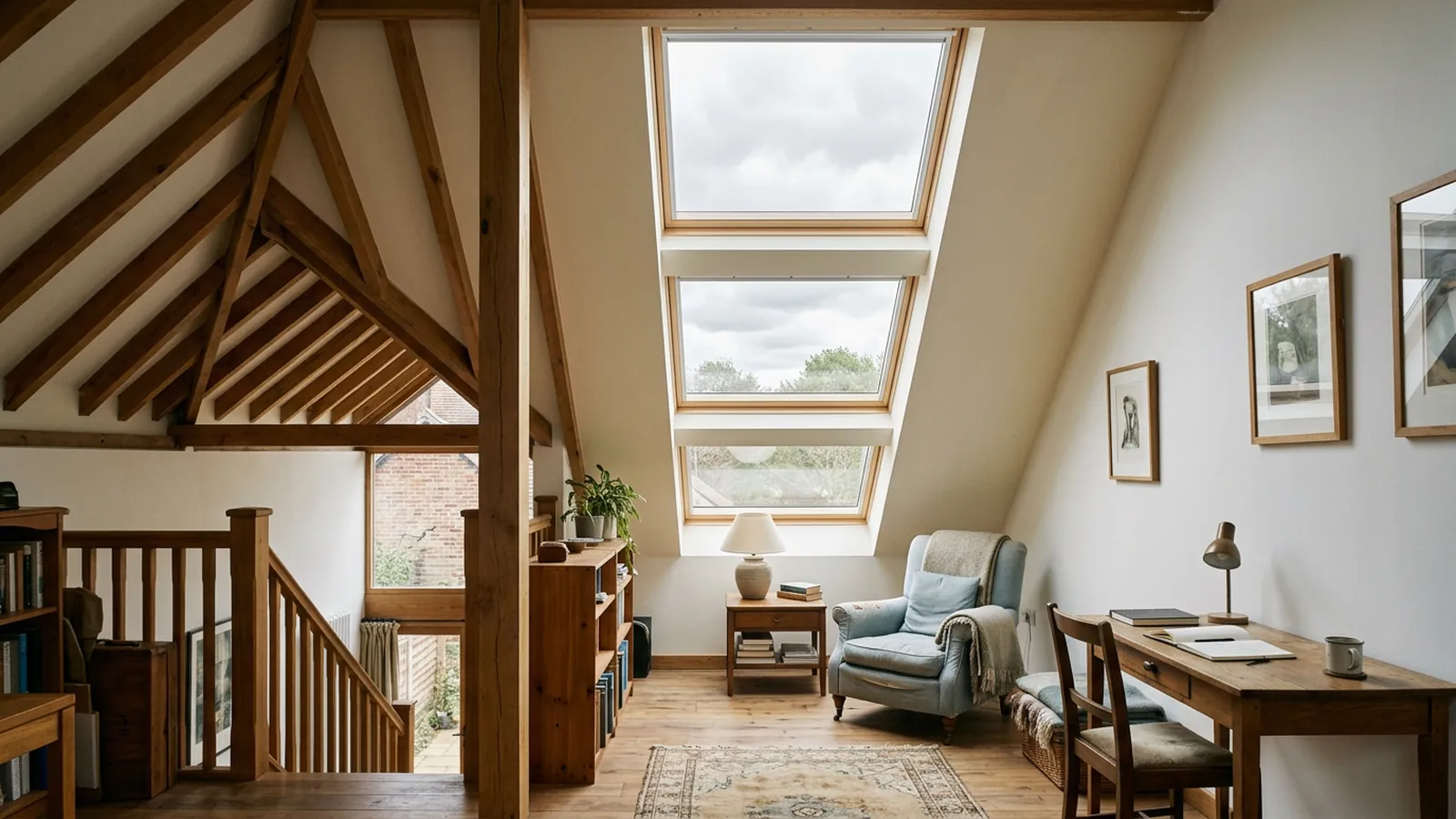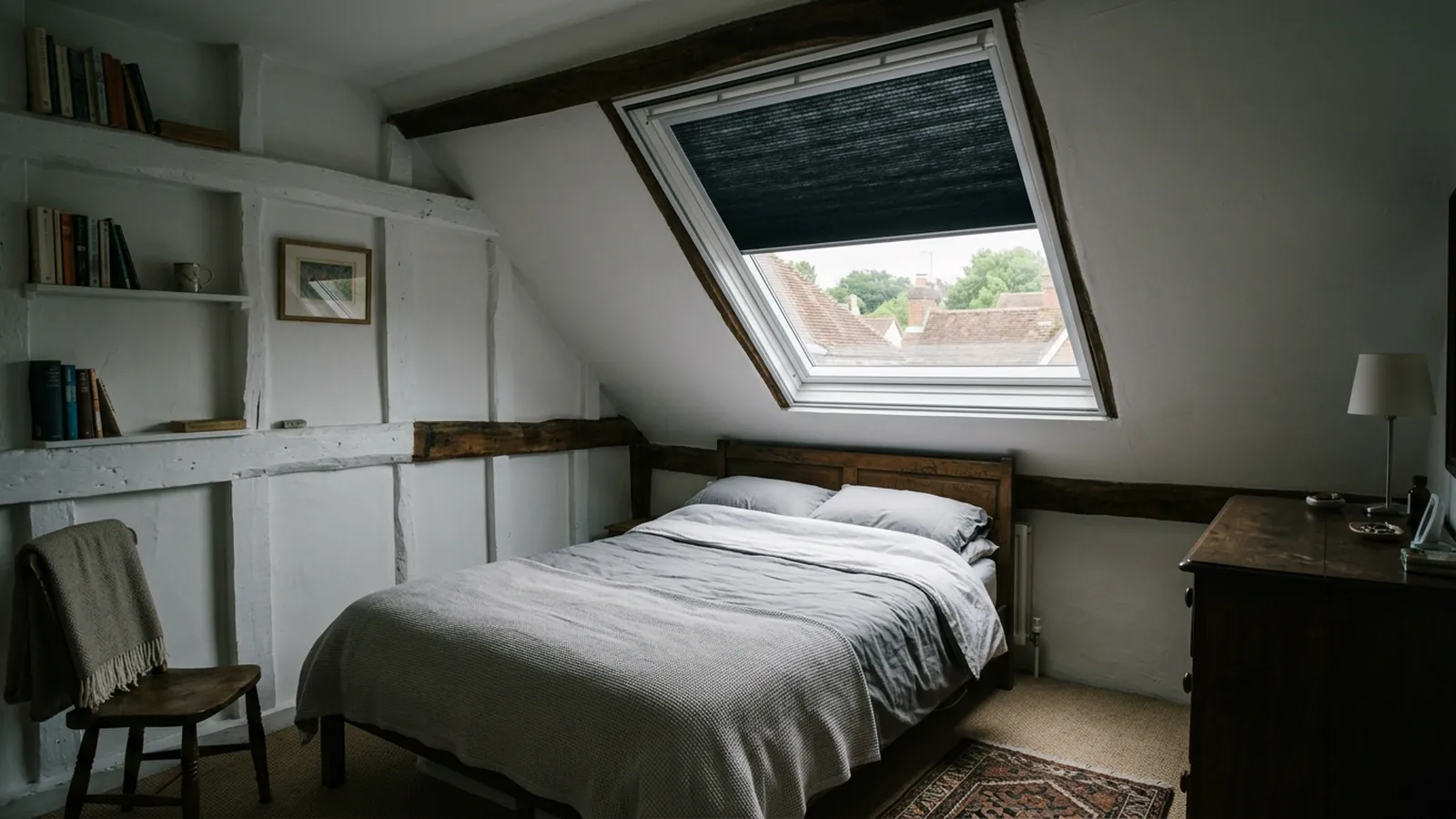
A manual window that sits just out of reach is a common reason people ask this. A skylight over a stairwell, above a vaulted kitchen or high in a loft room gets opened less than it should, simply because nobody fetches the pole. Motorising it fixes that without touching the roof. Our VELUX window installation page covers the wider work on these windows; this answer sticks to the conversion question.
Start with the code plate
Open the sash and look along the top of the frame for a small label. It carries the window type (for example GGL or GGU), a size code and a production reference. Those three details decide almost everything that follows. The type tells you how the window opens and what its frame is made of; the size tells you which motor and chain length suit it; the production details tell you whether the frame was made to accept the kit. If the label is painted over or missing, a photograph of the window open and closed, plus its outside measurements, usually lets the type be identified. Our answer on what the code on a VELUX means explains how to read each part.
How rooflights and roof windows open
- Centre-pivot sash, turns so the lower edge tips out and the top swings in, handy for cleaning from inside
- Pivot point, the hinge line across the middle of the sash
- Top-hung sash, swings outward clear of the opening for a wider view
- Top hinge, where the sash is hung from the head of the frame
- Fixed rooflight, glazing sealed to the upstand with no moving parts
- Electric opening rooflight, the glazed lid lifts from one edge for ventilation
- Motorised chain actuator, pushes the lid open and draws it closed
- Rain sensor, closes the rooflight automatically when it starts to rain
Which windows take a conversion kit
The conversion kit is made for centre-pivot windows, the ones that tilt on a hinge half way up the sash and are opened with the handle along the top. Other opening styles work differently, and for those the practical route to electric operation is usually a new window built as electric from the factory.
| Window you have | How it opens | Route to electric |
|---|---|---|
| GGL (white painted pine) | Centre pivot, top handle | Conversion kit, subject to size and frame age on the code plate |
| GGU (white polyurethane) | Centre pivot, top handle | Conversion kit, subject to size and frame age on the code plate |
| GPL or GPU | Top hung, bottom handle | Replace with an electric window in the same opening |
| Older or unidentified frame | Varies | Check the plate first; often a like-for-like electric replacement |
If you are unsure which of the first two you have, the difference is explained in VELUX GGL or GGU. Both take the kit in the sizes it is made for.
Mains or solar powered
The kit comes in two forms. The mains version needs a power supply routed to the window, normally from a nearby circuit to a small control unit, with the cable hidden behind the lining. The solar version carries its own small panel and battery on the outside of the window, so no cable runs through the ceiling at all. That makes solar the tidier choice in a finished room where chasing a cable would disturb decorated plasterboard, while mains suits a window that will be opened and closed many times a day, or a room already being rewired.
Worth knowing: a mains kit brings electrical work into the job. The wiring should be done by a qualified electrician, who will tell you whether that part needs its own certificate under the electrical rules. A solar kit avoids that step entirely, since nothing is connected to the house supply.
The detail of how the INTEGRA range works, the controls it uses and how a solar unit performs on a north-facing slope sits in our guide to VELUX INTEGRA electric and solar windows.
What changes once it is motorised
The window opens and closes from a wall switch or a handheld control, and a rain sensor on the outside closes it automatically when the first drops land. That sensor is the part owners tend to value most: a converted rooflight left open over a bed or a sofa shuts itself when the weather turns. Electric blinds from the same range can be paired with the same control afterwards, and can be added later rather than all at once. The manual handle stays usable for cleaning, though day to day operation moves to the switch.
How the conversion is carried out
- Identify. Read the code plate and confirm the kit is made for that type and size.
- Plan the power. For mains, agree where the supply comes from and where the switch goes; for solar, check the panel will get daylight on that slope.
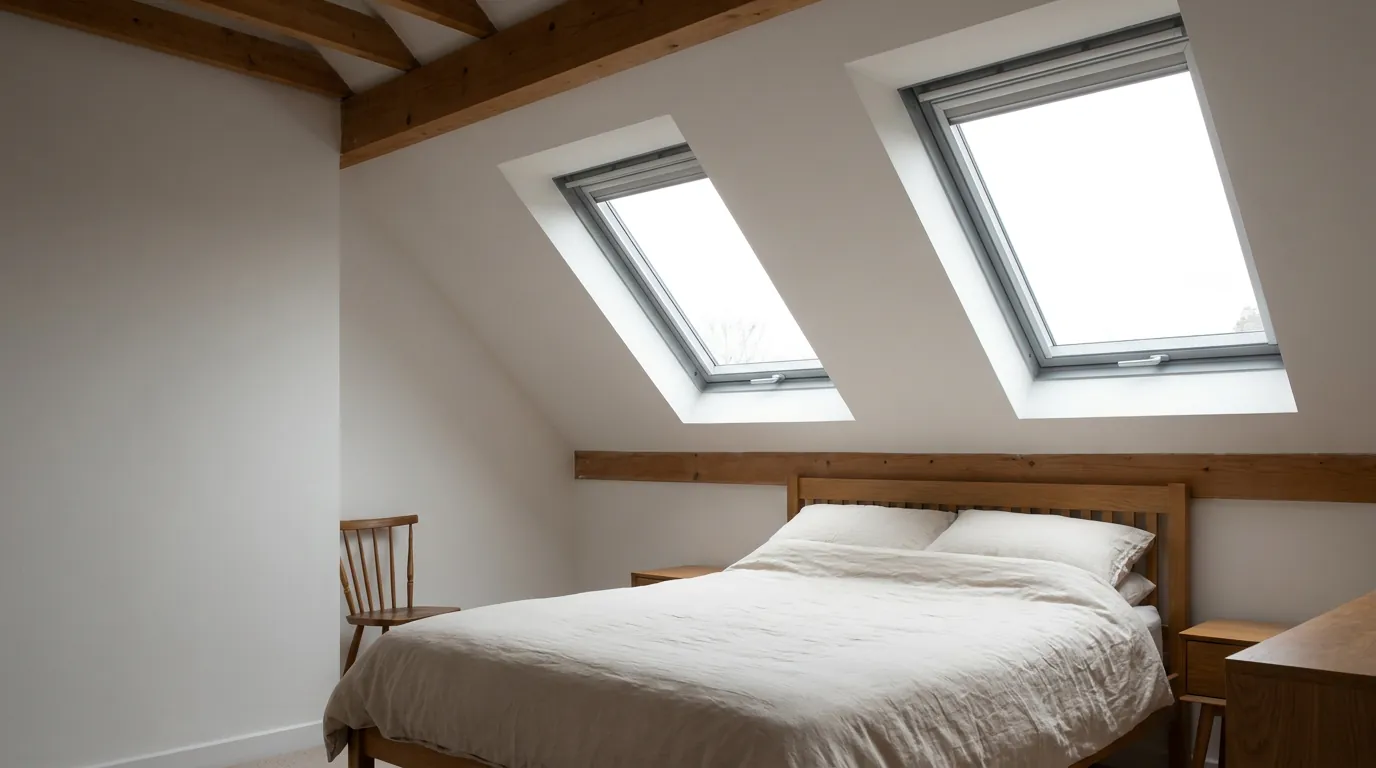
- Fit. The motor mounts along the top of the sash and frame from inside the room, with the rain sensor on the outside. The glazing and flashing stay as they are.
- Connect and test. The control is paired, the window run through its full travel, and the rain sensor checked.
Because nothing structural is touched and the outside covering stays as it is, a conversion is a small internal job compared with fitting a new window.
When a new electric window is the better answer
Converting makes sense when the existing window is sound: clear glazing, a frame in good order, a sash that moves freely. If the glass has misted, the frame is tired or the window is an older type the kit does not suit, spending on a motor for it makes little sense. A current electric window can go into the same opening, usually with new flashing to match, and you gain the newer glazing at the same time. Our guide to upgrading an old VELUX in the same opening sets out how that swap works and what it disturbs inside.
For a straight comparison of the trade-offs of any roof window, including powered ones, see the disadvantages of VELUX windows.
Getting a firm answer for your window
A photo of the code plate settles most conversion questions quickly; a look at the window settles the rest, including whether its condition justifies the kit or points to a replacement. If a replacement turns out to be the better route, we survey before quoting, the fitting is covered by our 10-year workmanship guarantee (a promise on our own work, not insurance backed), and any notifiable part is taken care of with Building Control. To find out which route suits the window you have, send us the code and book a roof survey.