An extension built over the summer can reach its roof stage as the evenings draw in, and the lantern is the last piece of that roof, so the weather question arrives at exactly the wrong moment. Our roof lantern installation service plans around the forecast rather than the calendar, and the rest of this page explains what the cold actually changes and what it leaves alone.
What the cold changes, and what it does not
A lantern is made in a factory to a measured size. The aluminium or uPVC glazing bars, the sealed glass units and the ridge all arrive ready to assemble, and none of those parts is weaker for being fitted on a grey morning. The timber kerb it sits on is built with screws and brackets, which work the same in January as in June.
The weather sensitive part is the join between the kerb and the roof. That is where the flat roof covering is dressed up the kerb sides and bonded, and that bond is chemistry. Contact adhesives for rubber membranes need time to flash off. Resin for a fibreglass roof needs warmth to cure. Sealants and primers want a clean, dry surface free of frost and dew. Get those conditions and a winter joint is as sound as a summer one. Miss them and the joint may look finished while it has never properly taken hold.
The rule: no covering is bonded to a wet, frosty or dew-damp deck, whatever the date. The exception is none at all: if the surface is not dry by the time the work reaches that stage, the opening is protected and the bond waits for the next dry day.
How a roof lantern sits on a flat roof
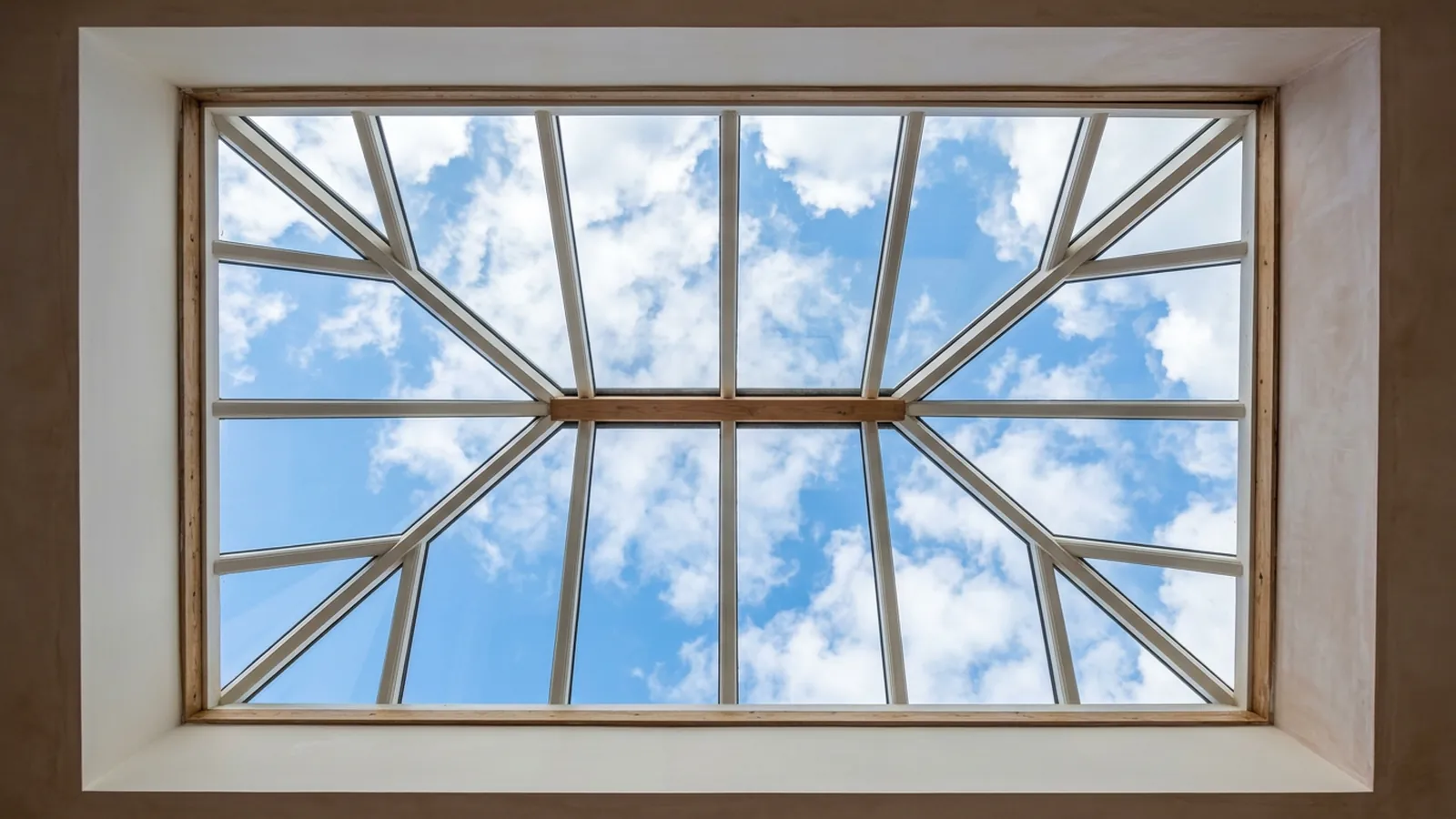
- Ridge, where the glazing bars meet at the top
- Hip bar, closing each sloped end of the lantern
- Glazing bar, holding the edges of the glass
- Glass panel, sealed double or triple glazed units
- Eaves or perimeter frame, which the whole lantern stands on
- Insulated kerb (upstand), raising the lantern clear of the roof
- Flat roof covering, dressed up the kerb and under the frame
- Plastered reveal, lining the lantern well into the room below
How each flat roof covering copes with winter
Which covering your extension has makes the biggest difference to how flexible the timing is. The manufacturer of each system sets its own temperature and moisture limits, and those limits are what we work to on the day.
| Covering | What the cold affects | How the day is planned |
|---|---|---|
| EPDM rubber | Contact adhesive is slow to flash off and will not grab on a damp surface | Bonding waits for a dry spell; the rubber itself stays flexible in the cold |
| GRP fibreglass | Resin cures slowly or poorly when cold, and moisture spoils the laminate | The least forgiving in winter: needs a dry, milder day and cover while it cures |
| Torch-on felt | Frost, dew and wet laps stop the layers fusing cleanly | Laid on a dry deck once the frost has lifted; short daylight limits the working window |
| Liquid-applied systems | Coatings need a dry surface and a temperature within the maker's range to set | Applied only when the forecast allows it to set before rain or frost returns |
If your roof is fibreglass, our answer on whether a roof lantern can sit on a GRP flat roof covers how the kerb is laminated in, which is the step that most needs mild, dry weather.
Keeping the house warm and dry while the roof is open
A hole in the ceiling on a cold day is the obvious worry. On a well planned job the opening is formed, the kerb is built and the lantern is set on it in one continuous run of work, so the room is open to the sky for as short a time as the job allows. If a lantern is going into an existing roof, the ceiling below is taken down neatly and the room is sheeted off from the rest of the house to hold the heat and the dust in.
Whenever work has to pause before the lantern is on, the opening is covered with a secured temporary sheet or boarding laid to shed water, never simply left open overnight. Where the kerb is built but the covering is still waiting for a dry day, the kerb and the upstand are protected the same way. How long each stage takes is set out in our answer on how long fitting a roof lantern takes.
Wind, short days and lifting the glass
Rain and frost get the attention, but wind is often the real limit in winter. Sealed glass units are large, flat and heavy, and carrying them across a flat roof or up a ladder in a gusting wind is not safe. A calm day matters as much as a dry one, especially where the lantern has to be carried through the house or over a fence. Our guide to getting a roof lantern onto the roof goes through the access side in detail.
Short daylight is the other practical limit. There are fewer usable hours between the frost lifting and dusk, so a winter job is planned to finish each stage in daylight rather than squeeze the sealing into failing light.
Condensation after a winter install
A new lantern fitted in cold weather sometimes shows condensation on the inside of the glass in its first weeks, and it is easy to read that as a fault. Usually it is the house drying out: a new extension holds a lot of water in its plaster and screed, and that moisture meets the coldest surface in the room. The sealed units are not the problem. Good background ventilation and some patience normally clear it, and our guide to condensation and ventilation under a roof lantern explains what to do if it persists.
Does winter change the paperwork or the guarantee?
No. A new lantern that forms or alters an opening in the roof is usually notifiable, and the season has no bearing on that; we look after the notification to Building Control whenever the job falls. Our answer on whether roof lanterns need Building Regulations approval explains when it applies. The 10-year workmanship guarantee is the same for a lantern fitted in February as for one fitted in August, which is exactly why we will not bond a covering in conditions its maker rules out. The guarantee is not insurance backed.
Infographic
How a rooflight job runs, from survey to guarantee
Roof survey
We look at the structure, the covering and the room below before anything is priced.
Specification
A size, type and position that fits your roof, and whether the work is notifiable.
Paperwork
Building Control notified where the work needs it, and planning checked where it applies.
Installation
Opening formed, frame fixed, flashed or dressed in, then lined and finished inside.
Sign-off and guarantee
Completion paperwork where needed and a 10-year workmanship guarantee.
Planning a winter lantern
- Survey in any weather. We look at the roof, its covering and the joists before quoting, and the survey is unaffected by the season.
- Order to size. The lantern is made to the measured kerb, which takes the same time whatever the month.
- Book a window, not a date. A provisional day is set, then confirmed against the forecast for dry, calm conditions.
- Weather the opening first. The kerb is built and the covering dressed up it before anything is left overnight.
- Glaze and finish. The lantern goes on, the ceiling is made good inside, and the room is cleared.
The same thinking applies to a flat skylight or rooflight on the same roof: the unit is indifferent to the cold, and the covering around it sets the pace. If you are weighing a winter lantern for a kitchen or a converted garage, or you want a skylight or rooflight fitted around Basingstoke before spring, arrange a survey and we will match the job to the covering and the forecast.