So the honest reply is "not when new, but eventually, yes". Glass and aluminium do not simply wear out, but the joints between the unit and the roof do, and that is where water finds its way in. Estate houses around Basingstoke built from the 1960s onward can still carry the skylights they were built with, and that age is what links this question to rooflight replacement across Basingstoke and its villages. Which parts wear first depends on what kind of unit you have and how old it is.
Where water gets in on an ageing skylight
Water rarely comes through the glass itself. It comes round the edges, through a joint that has moved, or through a component that has reached the end of its life. The weak point differs by type, and the build era of the house is a good clue to which type you have.
| Type of unit | Usual weak point | What you tend to see |
|---|---|---|
| Plastic dome on a flat roof | The dome goes brittle in sunlight and crazes or splits; the seal to the upstand gives way | Yellowed or cloudy plastic, drips at the edge of the ceiling opening after heavy rain |
| Early timber roof window | The bottom rail and sash soften where water sits; gaskets harden and shrink | Dark staining or flaking paint on the lower frame, a damp mark on the ceiling below |
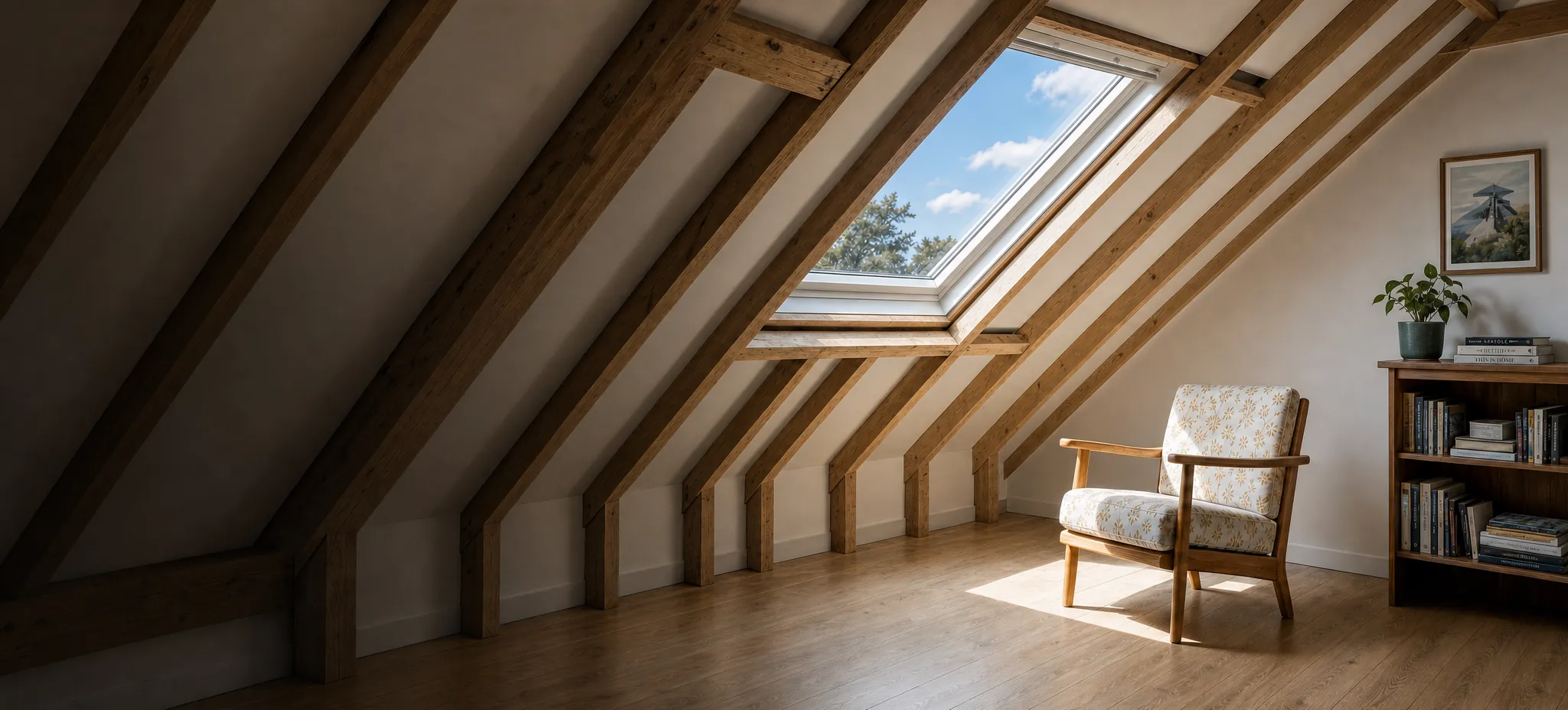
| Pitched roof window of any age | Flashing blocked by moss and leaves, or lifted where tiles have moved | Staining at the top corners of the lining, worse in wind driven rain |
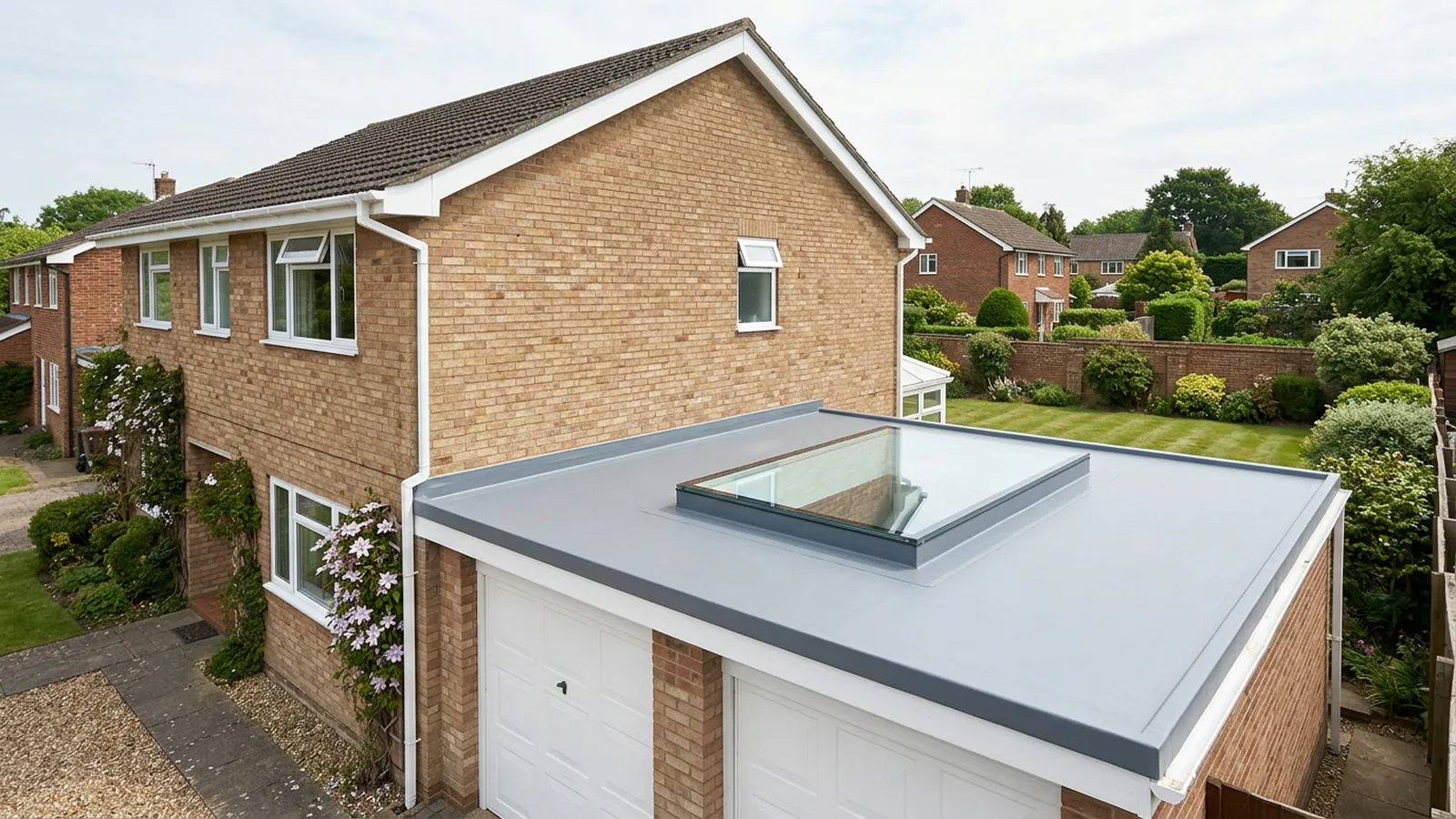
| Flat glass rooflight on a kerb | The junction between the kerb and the roof covering, where the covering has aged | Ponding around the kerb and marks on the reveal inside |
The plastic domes that went onto flat roofed extensions and garages in the 1970s and 1980s are the clearest example of wear by age. Our guide to replacing the plastic domes on older flat roofs covers what goes back in their place.
How a roof window is weathered into a tiled roof
- Sash: the opening glazed unit, fitted last and clipped into the frame
- Flashing kit: head, side and bottom pieces, profiled for tiles or a lower profile for slate, with the bottom apron dressed over the tiles below
- Tiles cut and refitted around the opening so the flashing can lap over them
- Roof window frame, fixed with brackets to the battens and rafters
- Battens cut around the opening, with a trimming batten at the head, fixed across the rafters
- Underlay collar dressed to the frame and lapped into the roof underlay, with a drainage gutter over the head
- Insulation collar packed around the frame to close the gap to the roof structure
- Internal lining: plasterboard reveals taken back to the frame and finished inside
Is it rain, or is it condensation?
Before blaming the roof, rule out the room. Warm, moist air from a bathroom, kitchen or bedroom meets the cold glass and turns to water, which then runs down onto the frame and the sill. It looks exactly like rain getting in, and on older single glazed or early double glazed units it can be heavy enough to drip.
A simple way to tell the two apart is timing. Condensation appears on cold mornings, often when it has not rained at all, and it forms on the inside face of the glass first. Water coming in from outside follows the weather: it shows up during or just after rain, especially rain driven by wind, and it usually tracks from a corner or the top edge. If you are seeing water on dry, cold days, our answer on why skylights get condensation will be more use to you than a roofer.
The rule of thumb: water that arrives with the weather comes from outside; water that arrives with the cold comes from the room. The exception is a unit where the sealed glass has failed and misted, which can show both at once and is a sign the unit is reaching its end.
Why the fitting matters as much as the age
A rooflight that lets water in within its first few winters was usually fitted wrongly rather than worn out. The common causes are a unit set below the minimum pitch its maker allows, the wrong flashing kit for the roof covering, tiles cut and bedded back tight against the frame instead of dressed round it, or an underlay left to run water onto the head of the window instead of round it.
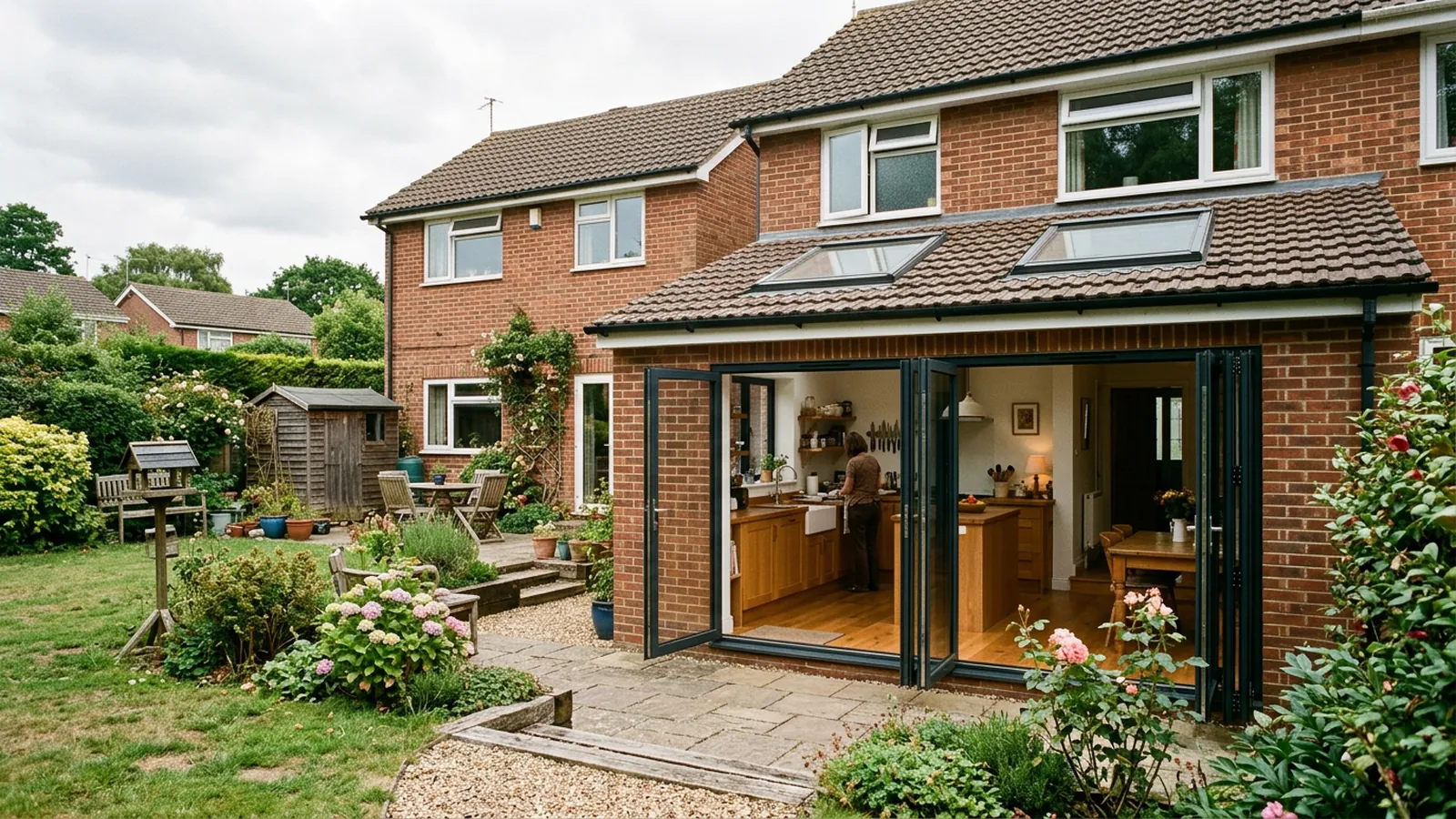
That is why the survey before any quote looks at the roof as a whole: its pitch, the covering, whether it is concrete tile, clay tile or slate, and on the trussed estate roofs, where the unit can sit between the trusses without anything being cut. A unit matched to its roof and flashed to suit it is the one that stays dry. Whether a like for like swap needs new flashing is answered in does a replacement skylight need new flashing?
What slows the wear down
Most of what keeps an older skylight dry is simple and can be checked from the ground or from inside the room.
- Look at the flashing after autumn. Leaves and moss collect above a roof window and hold water against the top flashing. Clear gutters and valleys nearby so water keeps moving.
- Check the lining after heavy rain. A new brown mark at a corner is an early sign worth acting on while the timbers behind it are still sound.
- Keep the room ventilated. Use the trickle vent or the vent bar, and run extractor fans in bathrooms, so condensation does not soak the frame and get mistaken for something worse.
- Watch the glass. Misting between the panes means the sealed unit has failed. It does not let rain in on its own, but it tells you the unit is ageing.
Our answer on whether skylights need maintenance goes through the routine in more detail.
When a new rooflight is the better answer
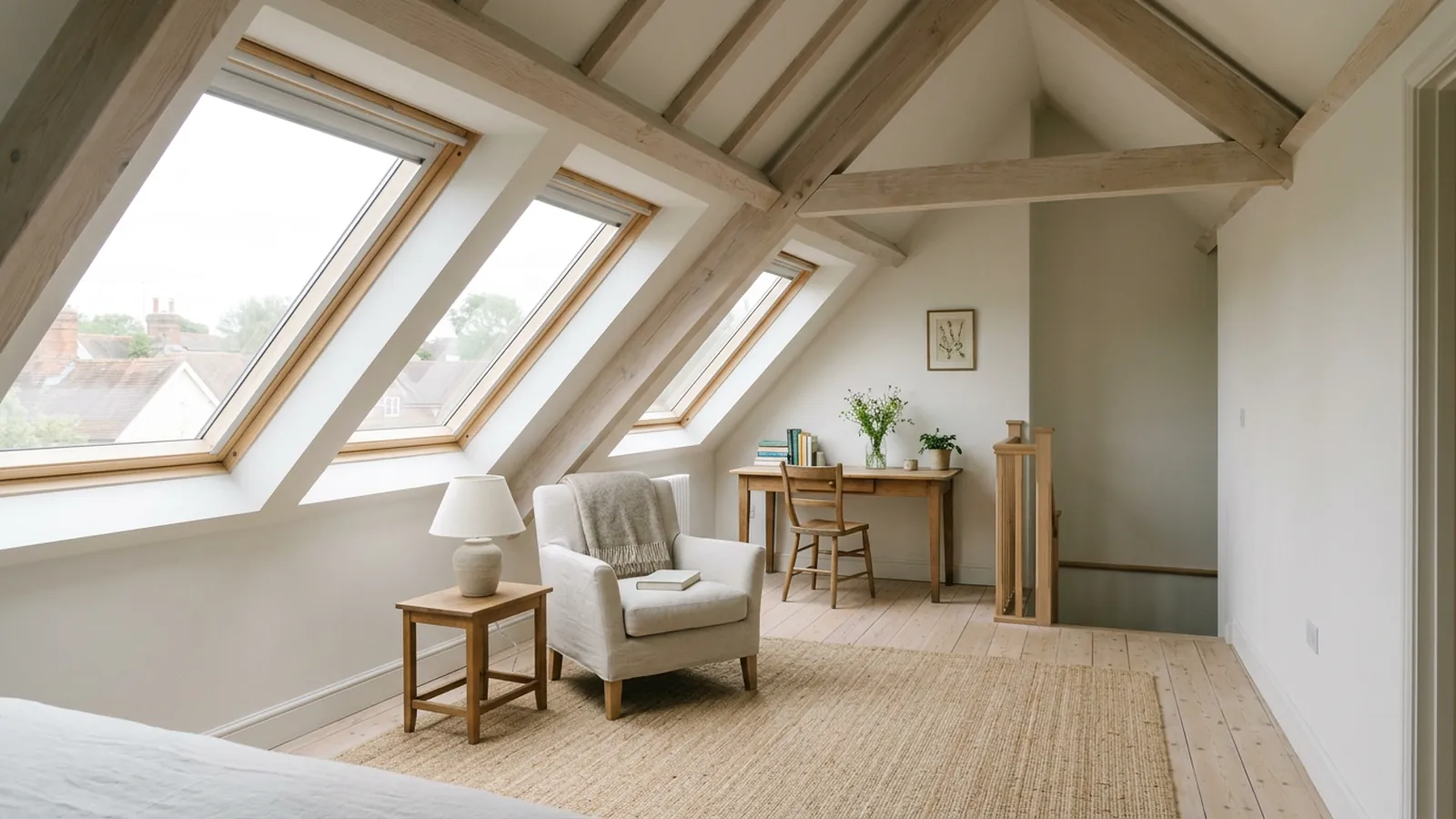
Once the frame is soft, the dome is crazed or the glass has misted, chasing the water with sealant only moves it to the next weak joint. A new unit brings new gaskets, a new flashing kit matched to the covering, fresh underlay collars and better glass, and on older roofs that is often the point where the opening, the pitch and the flashing detail are put right together. The guide to old roof windows by era helps you work out what yours is and what a modern one would change.
A replacement is also a chance to think again about size and type: a slimmer frame, a flat glass rooflight instead of a dome, or a vented unit for a bathroom. Where the work is notifiable, the Building Control side is taken care of as part of the job, and the fitting carries a 10-year workmanship guarantee (a written promise from us, not insurance backed).
What to do if you are seeing water now
Note when it appears, whether it follows rain or cold weather, and which part of the frame or lining it comes from. Take a picture of the mark and of the skylight from outside if you can see it safely from the garden. That tells a surveyor most of what they need before they go up.
Then arrange a survey of the roof. We look at the unit, the flashing and the covering around it, tell you plainly whether the water is from outside or from the room, and quote for the right fix once we have seen it.