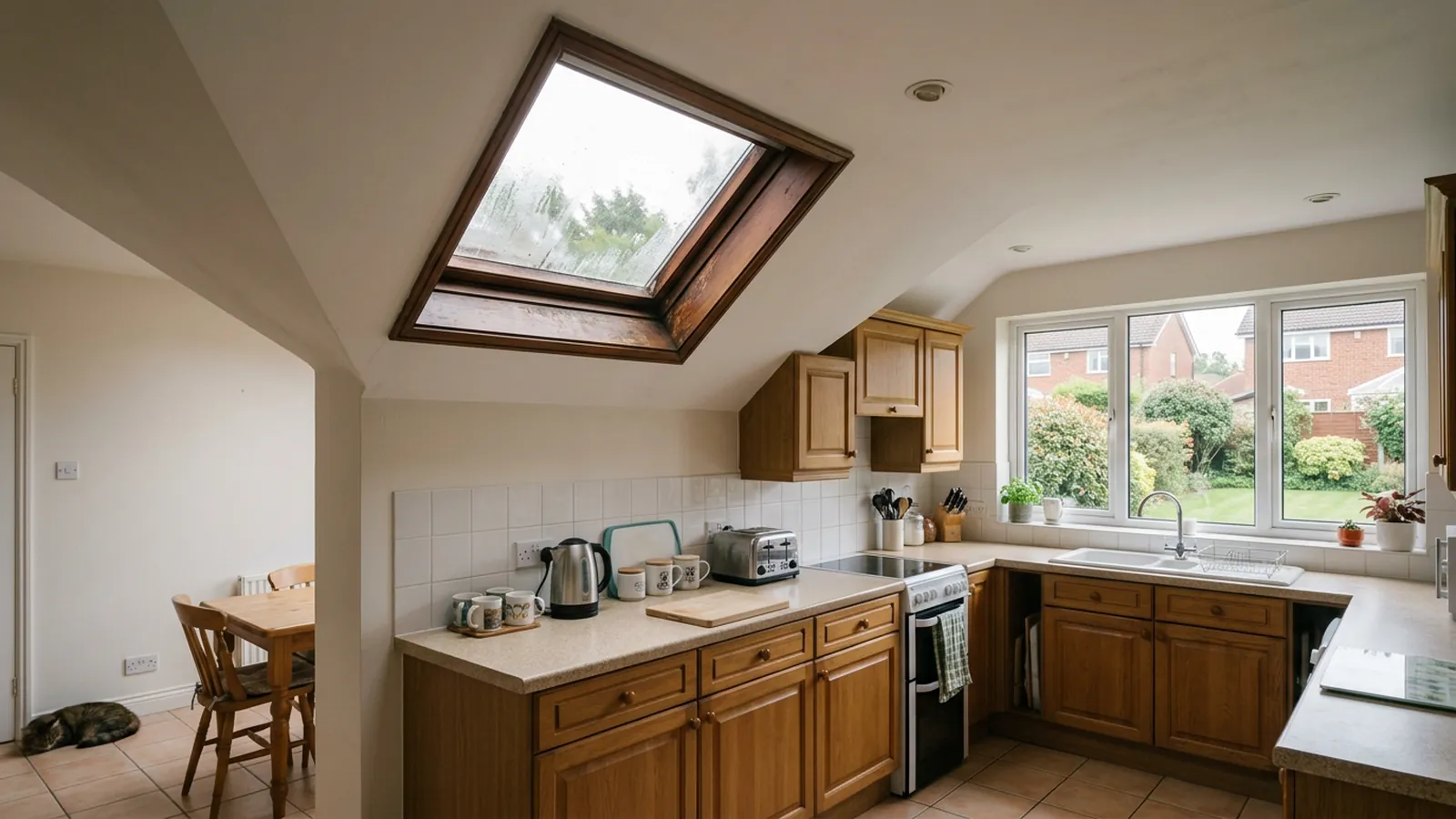
This is one of the first things to settle when a unit has misted or failed, because it decides how much of the roof gets opened up. Our misted and failed rooflight replacement work starts from the opening you have, measured on the roof rather than guessed from the room below, and only moves away from it when you ask for more light or the old size simply cannot be matched.
What follows is how the size question plays out for each kind of rooflight or skylight you might have above you, what the survey measures, and when changing the size is worth thinking about.
Why keeping the size is the default
The old frame sits in an opening that was framed for it. On a pitched roof that means battens cut back, and on a trussed estate roof it means a gap between trusses that were designed at a fixed spacing. On a flat roof it means a kerb built to a set outside dimension. Keep the size and all of that stays as it is: the new frame sits where the old one sat, the new flashing follows the same line, and the plaster reveals inside need little more than making good.
Change the size and each of those things changes with it. Tiles or slates come off over a wider area, the battens are cut again, and the internal lining is rebuilt. On a trussed roof, anything wider than the existing gap brings the structure into it. That is why the like-for-like route is the starting point, not a way of cutting corners. Our guide to replacing a failed rooflight in the same opening walks through that job from start to finish.
Sizing a roof window to the truss bays
- Fink trussed rafter, factory made and designed to work as one whole frame
- W-shaped webs, joined at every node by pressed metal nail plates
- Tile covering on battens over the underlay
- Roof window set in the slope, fitted between trusses so the frame is untouched
- Narrow roof window sitting in the bay between two trusses
- Trusses at even 600mm centres along the roof
- No truss cut: the trusses either side of the window stay whole
- A wider window crosses a truss, so the cut needs designed trimming from an engineer or the truss maker
How it works for each type of rooflight
The answer depends on what is up there now. The measurement that matters differs from one type to the next, so this is how each one is sized.
| Existing rooflight | What sets the size | Usual outcome |
|---|---|---|
| Pitched roof window (VELUX or similar) | The frame size, often shown as a code on the maker's data plate | A current window in the same frame size, or the nearest current size where the old one has been dropped |
| Flat rooflight on a kerb | The outside dimensions of the kerb or upstand | A unit made to suit that kerb, which is why flat rooflights are measured before anything is ordered |
| Old plastic dome | The kerb it sits on and its condition | A glazed flat rooflight to the same kerb size, or a rebuilt kerb if the timber is tired |
| Roof lantern | The upstand the lantern frame bears on | A new lantern built to that upstand, or the failed panes alone where the frame is sound |
| Conservation rooflight | The opening and, in a conservation area, how the roof is seen from the street | The same size in a slim, low profile frame, keeping the roof as it reads now |
Roof windows: the frame size code
Pitched roof windows from the main makers come in set frame sizes, and the size is usually printed on a data plate on the frame, often on the top of the sash or inside the window when it is opened. That code tells the installer the outside frame size, which is what has to match the opening. Makers have also produced windows intended to go into the openings left by their older models, so an old roof window on a 1970s or 1980s house can often be swapped for a current one of the same footprint.
Where the old size has no current match, the nearest standard size is chosen and the opening is trimmed a little, usually by adjusting battens and, on a cut rafter roof, the timbers round the head or sill. A truss is never altered on the strength of a close fit. If only the glass has gone and the frame is sound, the size question may not arise at all: our answer on whether just the glass can be replaced in a VELUX explains when that works. The wider choice between a new sealed unit and a whole new window is set out in replacing the sealed unit or the whole rooflight.
Flat rooflights, domes and lanterns: the kerb decides
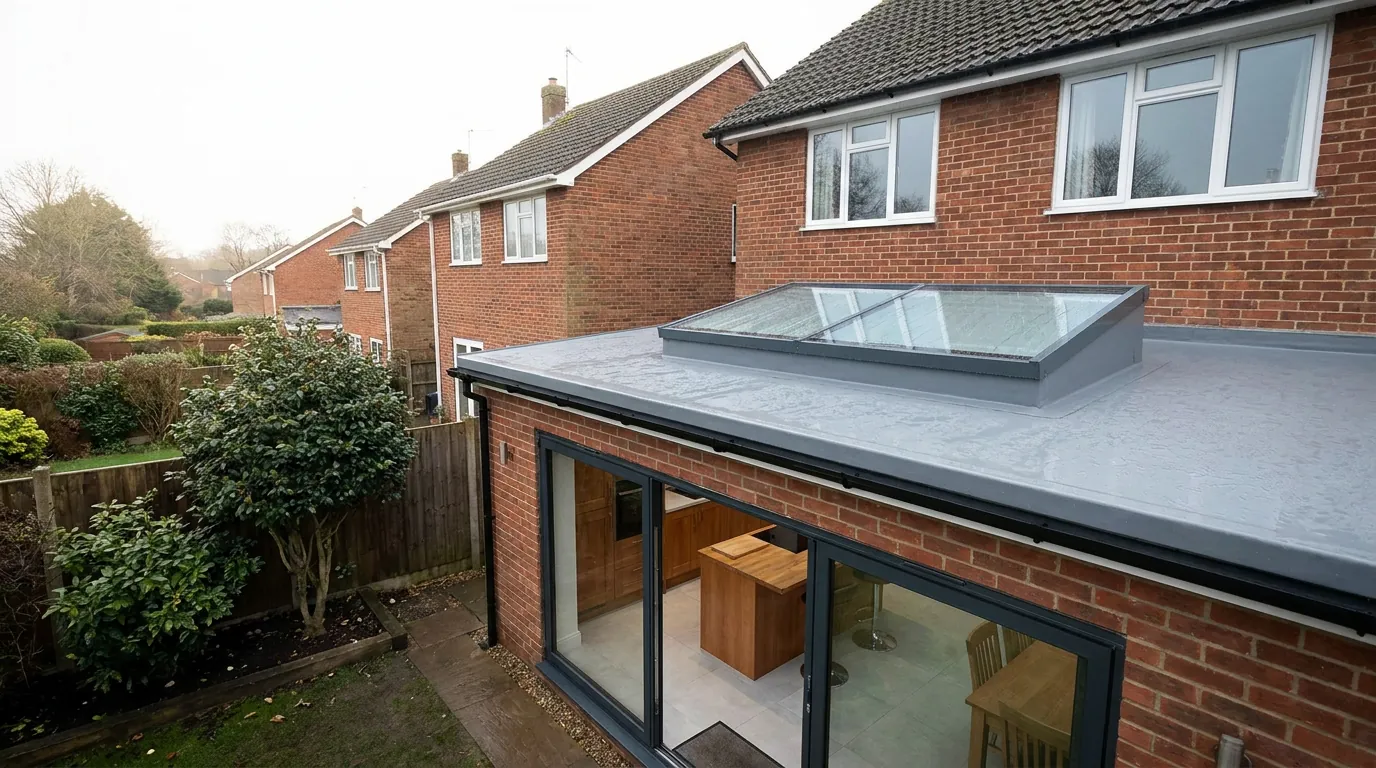
On a flat roof there is no frame code to read. What counts is the kerb, the timber or factory upstand the rooflight sits on, and its outside dimensions set the size of the new unit. Glazed flat rooflights are generally made to order, so the kerb is measured on the roof and the unit is specified to fit it, rather than picked from a catalogue and hoped for.
The rule: keep the existing kerb and match the new rooflight to it. The exception: when the kerb timber is soft, too low for the new unit, or out of square, it is rebuilt, and that is the moment to change the size if you want to, because the roof is being opened anyway.
A roof lantern follows the same thinking. The frame bears on an upstand, and a new lantern is built to that upstand. If one or two panes have misted and the frame is sound, the panes can often be changed on their own and the size question falls away.
Choosing a different size on purpose
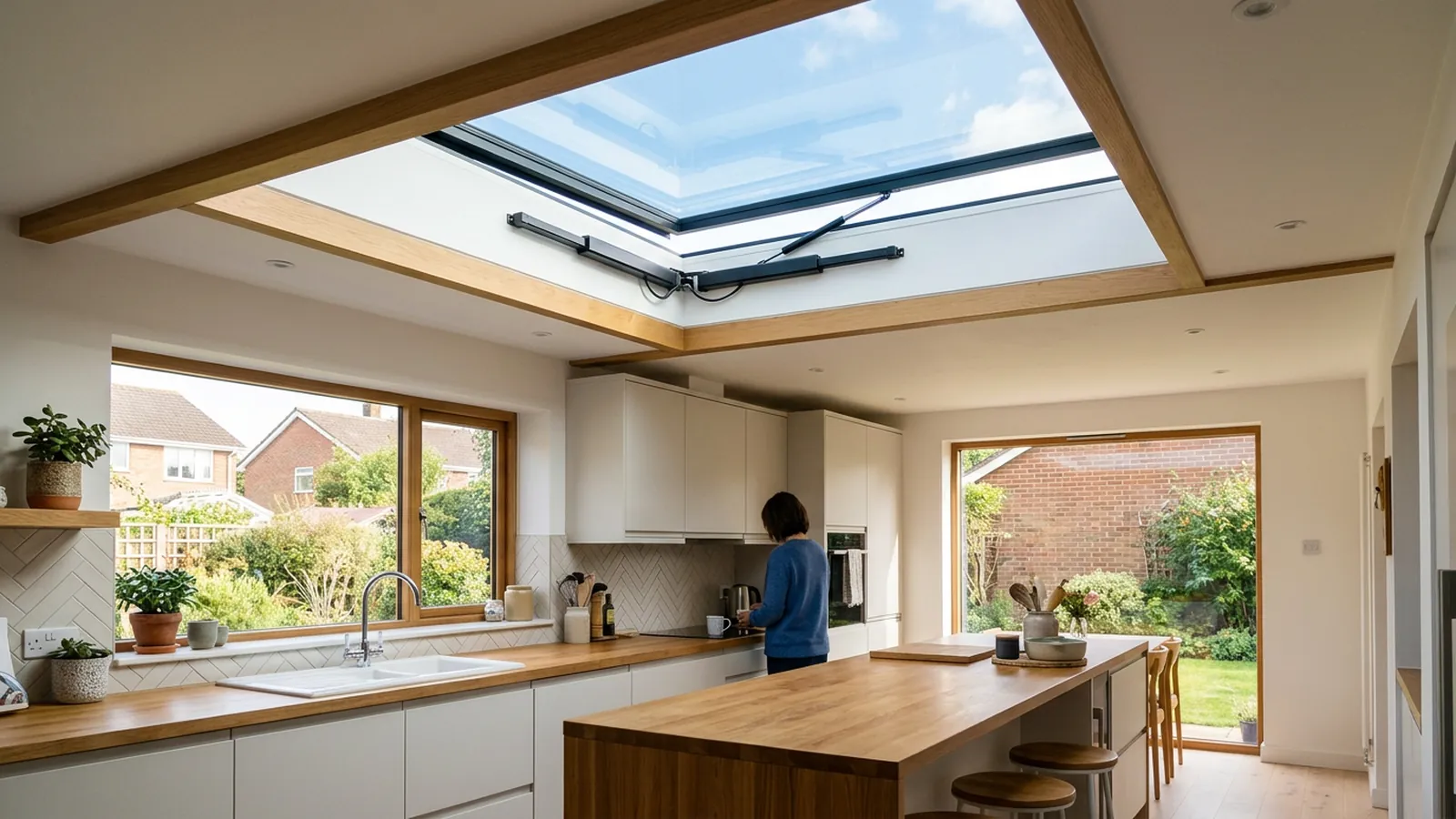
Some owners use the replacement as a chance to get more daylight, and that is a fair thing to want. It changes the job, though. A wider roof window on a trussed estate roof runs into the trusses either side, so the options become a taller window of the same width, a second window in the next bay, or a designed opening with trimming drawn up first. A bigger flat rooflight means a new kerb and a wider hole in the deck. Going smaller is simpler but still means rebuilding the opening and the lining inside.
A change of size can also alter the paperwork. A like-for-like swap and a structural change are treated differently, and our answer on whether replacing a failed rooflight needs Building Regulations sets out where the line falls. Where notification applies, we deal with it as part of the job.
What the survey measures
We look at the roof before quoting, and on this question the survey settles it in one visit.
- Identify the unit. Read the data plate or maker's marks where there are any, and note the type, the glazing and how it opens.
- Measure the opening. Take the outside frame size on a pitched roof, or the outside kerb dimensions on a flat roof, and check the kerb height.
- Check the structure. Confirm trusses or cut rafters and the spacing either side, so any size change is judged against the real roof.
- Check the covering. Note the tile, slate or flat roof finish, which sets the flashing kit or the detail round the kerb.
- Look inside. Check the reveals and lining, since a size change means rebuilding them and a like-for-like swap usually does not.
You then get a written quote for the same size where that is possible, with any change you asked about priced separately so you can compare the two.
What stays the same indoors
With a matched size, the room looks as it did, only brighter and clearer through new glass. The blind brackets may change with the new frame, and the plaster round the reveal is made good where the old frame came out. It is also usually the quickest version of the job, which our answer on how long replacing a misted rooflight takes covers in more detail. The work carries a 10-year workmanship guarantee; it is a guarantee on our workmanship and is not insurance backed.
If you are unsure what size is up there now, a note of the data plate code or a photo of the flat roof kerb is a useful start. To have it measured properly and get both options side by side, arrange a survey of the roof.