Rain, dew and frost are the normal state of a flat roof for much of the British year, so a walk-on panel has to be judged on how it behaves wet, not how it looks dry on a sunny afternoon. Our walk-on rooflight installation page covers the whole job; this answer deals with grip alone.
Whether you call it a walk-on skylight, a glass floor panel or a trafficable rooflight, the thing you stand on is the top pane of a laminated unit, and that pane is where the grip is decided.
Why smooth glass loses its grip in the rain
A clean, dry sheet of float glass is not especially slippery under a rubber sole. Add a film of water and the picture changes: the water sits between shoe and glass as a thin layer, and with nothing to break it up the sole can aquaplane across the surface. Algae, pollen, fallen leaves and the fine grit that settles on any roof make that film slicker still. Frost adds another layer on a cold morning.
That is why a walk-on unit for outdoor use never has a plain polished top. The surface has to be broken up at a small scale so that water drains away from the contact point and the sole touches the glass itself.
How a walk-on rooflight sits in a terrace
- Anti-slip fritted top surface, so the glass is safe to walk on when wet
- Laminated glass: several layers bonded with interlayers, so it stays in place if a layer breaks
- Sealed cavity between the laminated glass and the inner pane
- Inner pane, completing the insulated unit
- Frame carrying the glass, sealed at the edges
- Kerb around the opening, bedded to the roof structure
- Waterproofing dressed up the kerb and under the frame
- Paving on pedestals, finished level with the glass
The anti-slip finishes on walk-on glass
Makers of trafficable glass offer a handful of top-surface treatments. They differ in grip, in how much they soften the view and in how they wear.
| Finish | How it gives grip | Effect on the view |
|---|---|---|
| Plain polished glass | None beyond the glass itself; suited to dry indoor use only | Fully clear |
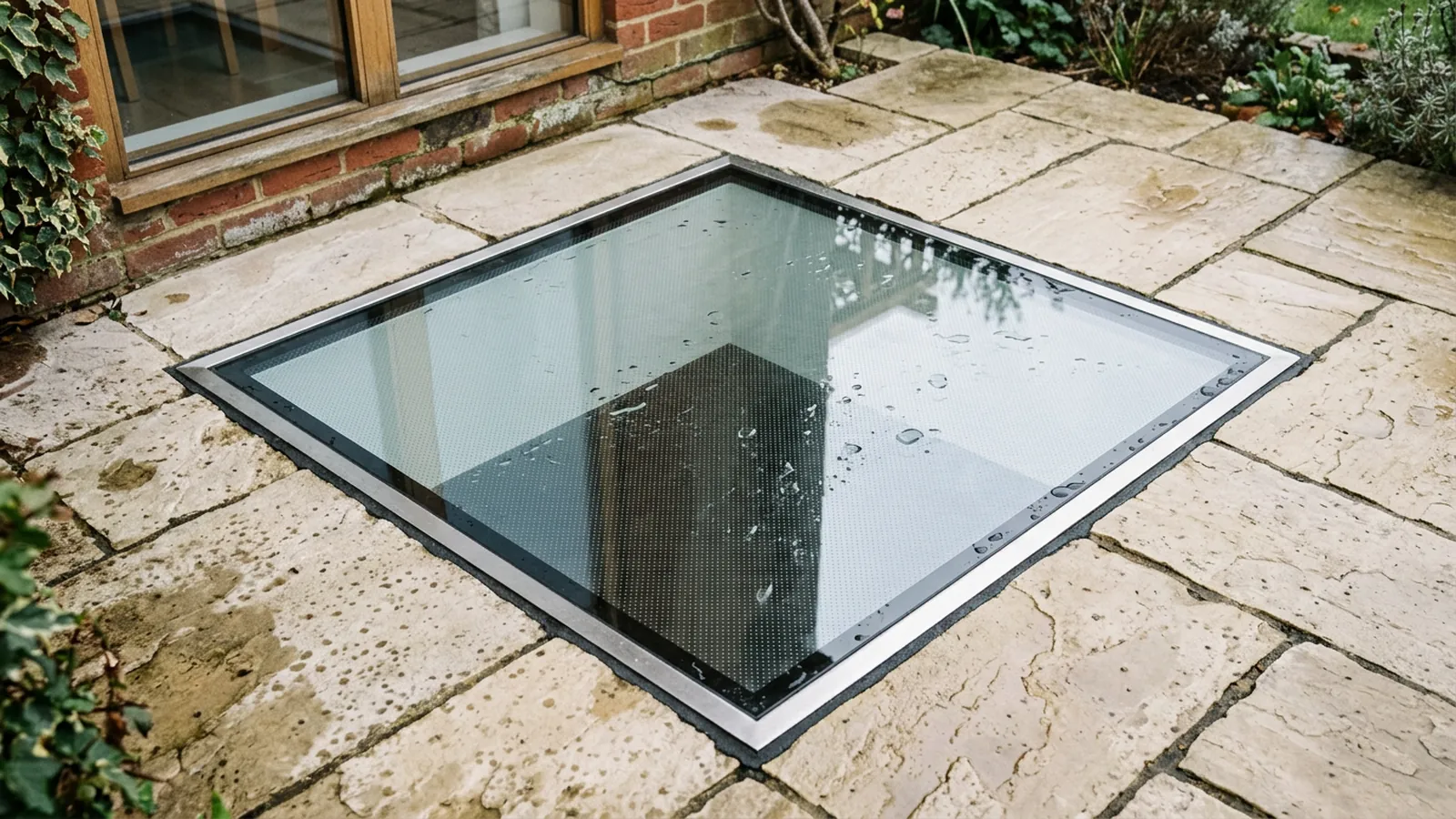
| Ceramic frit dots or pattern | A gritty ceramic layer fired into the glass surface | Mostly clear between the dots, softened across the pattern |
| Etched or sandblasted surface | The whole face is roughened to a fine texture | Translucent: light passes, detail is blurred |
| Applied anti-slip coating | A textured layer bonded to the top face | Varies with the product and the pattern chosen |
Each maker publishes a slip test result for its finishes, usually from the pendulum test used across the UK for floors, and that figure is the fair way to compare them. The test method and how to read the numbers are explained in our guide to slip resistance on walk-on glass.
Matching the finish to where the glass sits
A skylight panel set into a roof terrace outside a bedroom door will be crossed in socks, slippers and outdoor shoes, often in the rain. A panel in the corner of a flat roof that only sees a person at gutter-clearing time takes far less traffic. The finish should follow the use.
The rule: any walk-on rooflight that people will cross outdoors gets an anti-slip top pane. The exception is a panel sheltered inside the house, such as an internal glass floor, where the surface stays dry and a clear finish may be chosen.
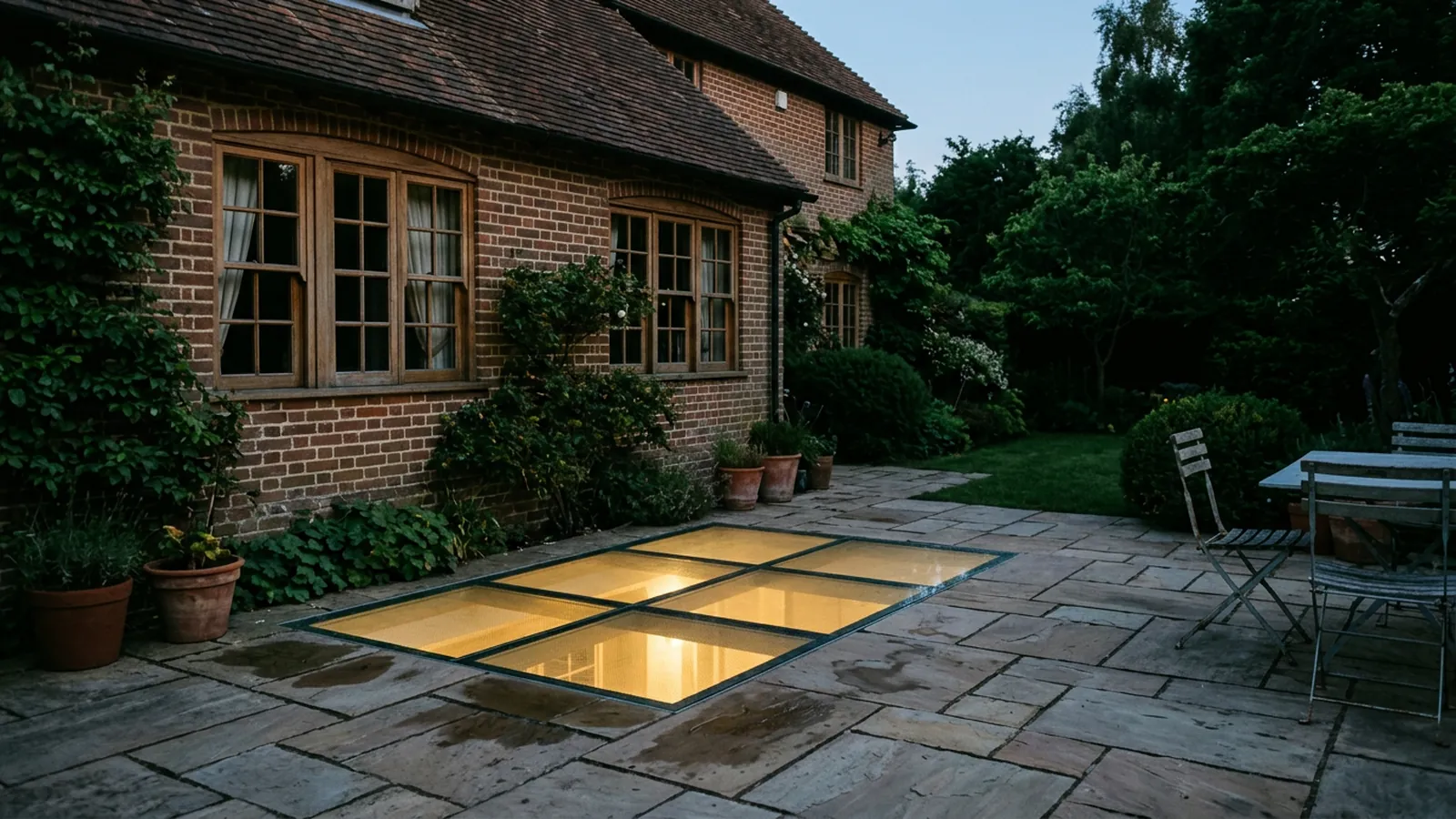
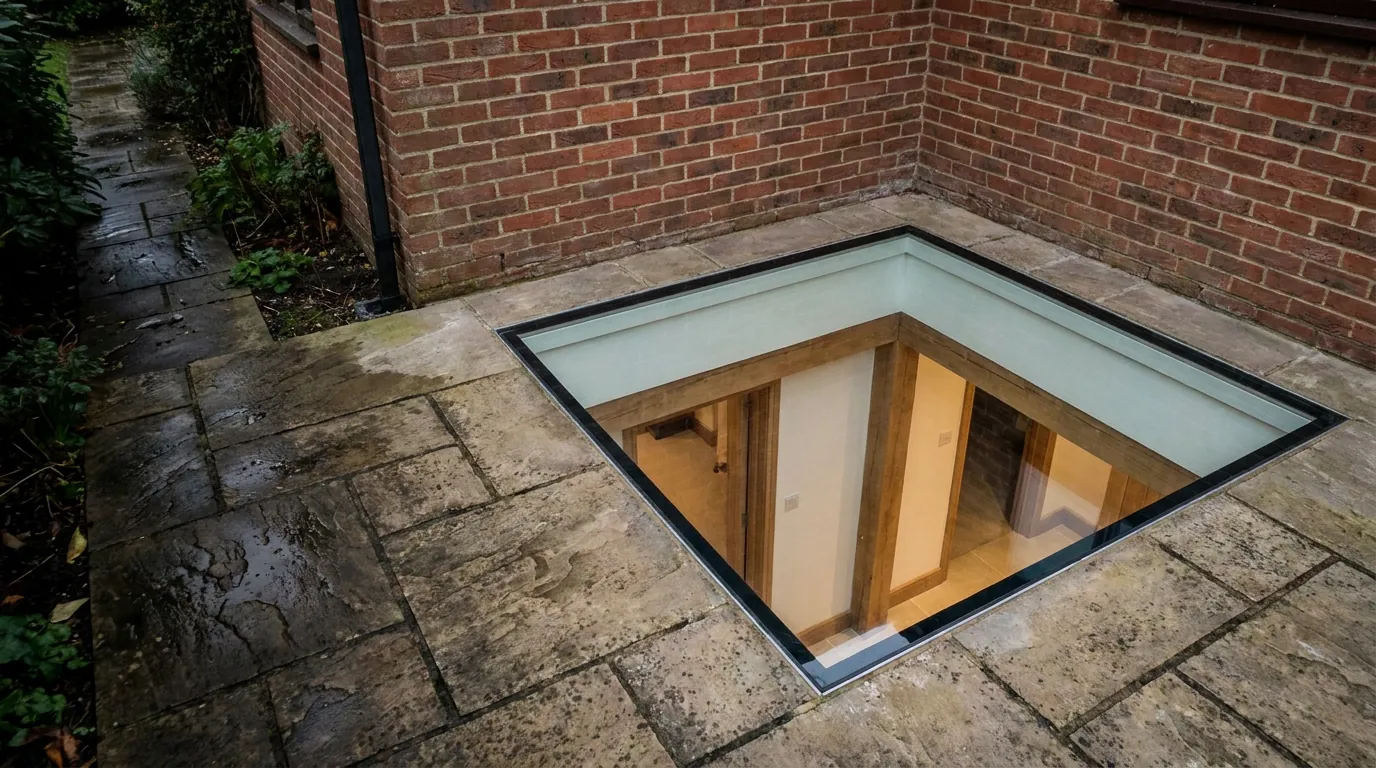
Where the glass sits flush with paving or decking, the change of surface underfoot matters as much as the grip of the glass itself; our answer on where a walk-on rooflight meets decking or paving looks at that join. For a terrace over a new extension, the guide to a walk-on rooflight in a roof terrace or balcony sets the finish in the context of the whole layout.
Keeping the grip once it is fitted
An anti-slip finish only works if the texture is open. Moss, bird droppings and a skin of wet leaves fill it in and bring the slipperiness back, so the surface wants rinsing and a soft brush now and then. Scouring pads and harsh cleaners can wear some coatings, which is covered in how do you keep walk-on glass clean?
Standing water is the other thing to design out. A flush panel laid dead level on a flat roof can hold a shallow puddle, and a puddle over glass is the slipperiest condition of all. A slight fall across the unit, set at installation, lets rain run off to the roof drainage instead of sitting on the surface. Etched and fritted faces also stand up well to the grit that works across any roof, which our answer on whether walk-on glass scratches covers.
Grip, children and pets
Families with toddlers and dogs tend to ask about grip first, because small feet and paws are less steady on any wet surface. A textured top pane helps them the same way it helps an adult, and a frit pattern also makes the glass easy to see, so nobody treats it as a hole. The wider safety points, including load and edge detail, are gathered in are walk-on rooflights safe for children and pets?
Shade, frost and which side of the house the glass faces
Orientation changes how long the glass stays damp. On the 1960s to 1980s estates in Popley, Oakridge or Brighton Hill, a flat roof over a single-storey rear extension often sits in the shadow of the main house for part of the day, and a panel on the shaded side can hold dew or frost well into the morning while a south-facing one has dried. Overhanging trees in older gardens around Old Basing or Sherborne St John add leaf fall and drip. None of this changes the need for a textured top pane, but it does shape the choice: a shaded or tree-covered spot is the place for the most open, gritty finish, and it is worth knowing before you settle on a smoother pattern for looks.
Choosing it at survey
The top finish is ordered with the unit, so it is settled before anything is made. At the survey we look at who will walk on the glass, whether it sits flush in a terrace or on a kerb, which way the roof drains and how much of the view below you want to keep. We then set out the finishes that suit, with the maker's slip data for each, and the choice goes into the written quote. The work is backed by a 10-year workmanship guarantee.
If you are planning a rooflight you can stand on and want the wet-weather grip right from the start, arrange a survey of your flat roof and we will go through the finishes on site.