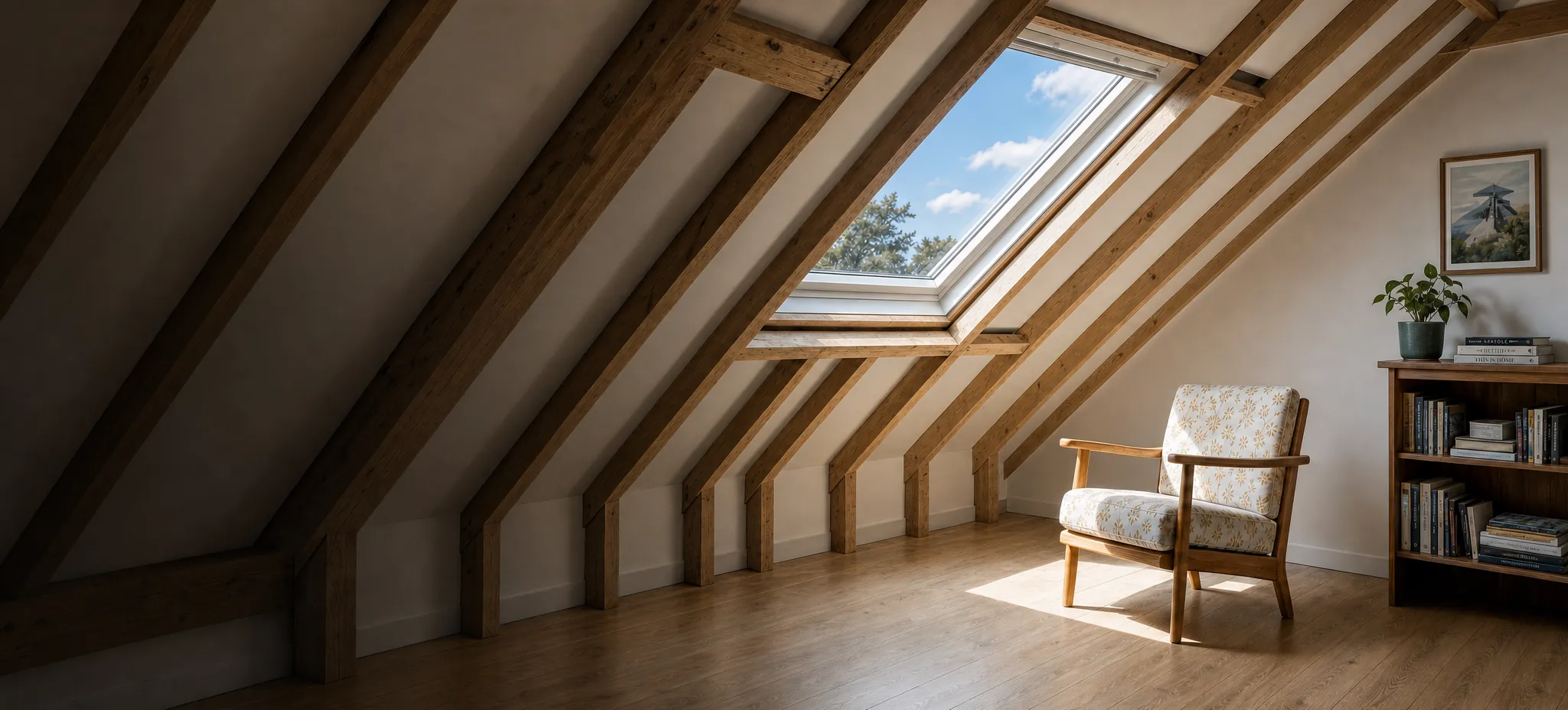
So the honest answer depends on which part of the skylight has failed, and that is worth knowing before you decide anything. On a typical Basingstoke estate semi, the tiles around an old roof window are the part owners worry about most, because they fear a builder stripping a whole slope to change one window. That is not how a replacement runs. For the wider picture of how we approach skylight and rooflight replacement across Basingstoke, the homepage sets out the survey-first way of working; this page stays on the tiles.
Why the tiles have to move for a full replacement
A pitched roof window is not bolted on top of the covering. Its frame is fixed to the battens or rafters inside the roof, and the covering is dressed around it: the tiles above lap over a head flashing, the tiles at each side sit on side flashings, and an apron below carries water out over the course beneath. Those flashings are made for one frame size and one maker's system. When the frame comes out, the flashing comes with it, and the tiles resting on it have to be lifted so the new set can go in and be dressed properly.
Lifting is the right word. The tiles are taken off, stacked safely on the roof or scaffold, and put back once the new frame and its flashing are in. Only the courses touching the window are involved. Whether new flashing is always needed is a question of its own, answered in does a replacement skylight need new flashing?
The rule: changing the frame means lifting the tiles that lap onto it and relaying them. The exception: where the frame and its flashing are sound and only the sash or sealed glazing unit has failed, the new sash is hung from inside and the tiles are never touched.
How a roof window is weathered into a tiled roof
- Sash: the opening glazed unit, fitted last and clipped into the frame
- Flashing kit: head, side and bottom pieces, profiled for tiles or a lower profile for slate, with the bottom apron dressed over the tiles below
- Tiles cut and refitted around the opening so the flashing can lap over them
- Roof window frame, fixed with brackets to the battens and rafters
- Battens cut around the opening, with a trimming batten at the head, fixed across the rafters
- Underlay collar dressed to the frame and lapped into the roof underlay, with a drainage gutter over the head
- Insulation collar packed around the frame to close the gap to the roof structure
- Internal lining: plasterboard reveals taken back to the frame and finished inside
What the survey looks at before anything is lifted
The difference between a tidy relay and a messy one is decided before the day. We look at the roof from outside and the window from inside, then tell you in writing which kind of job yours is. These are the questions that settle it.
| What we check | Points to a sash swap | Points to a full frame change |
|---|---|---|
| The frame | Sound timber or PVC, square, no rot at the corners | Softened, split or out of square, or no longer made |
| The flashing | Lying flat and dressed well to the tiles | Lifted, corroded or made for a different frame |
| The sash | A current replacement sash exists for that frame | No matching sash, or you want a different size or opening |
| Your plans | Same size, same position, better glass | Bigger, electric, or moved to a new spot |
Which way to go when you have the choice is weighed up in our guide to choosing like for like or an upgrade. If the survey points to a sash only, the question of working from the room below is covered in can a skylight be replaced from inside?
Concrete, clay and slate: how each covering behaves
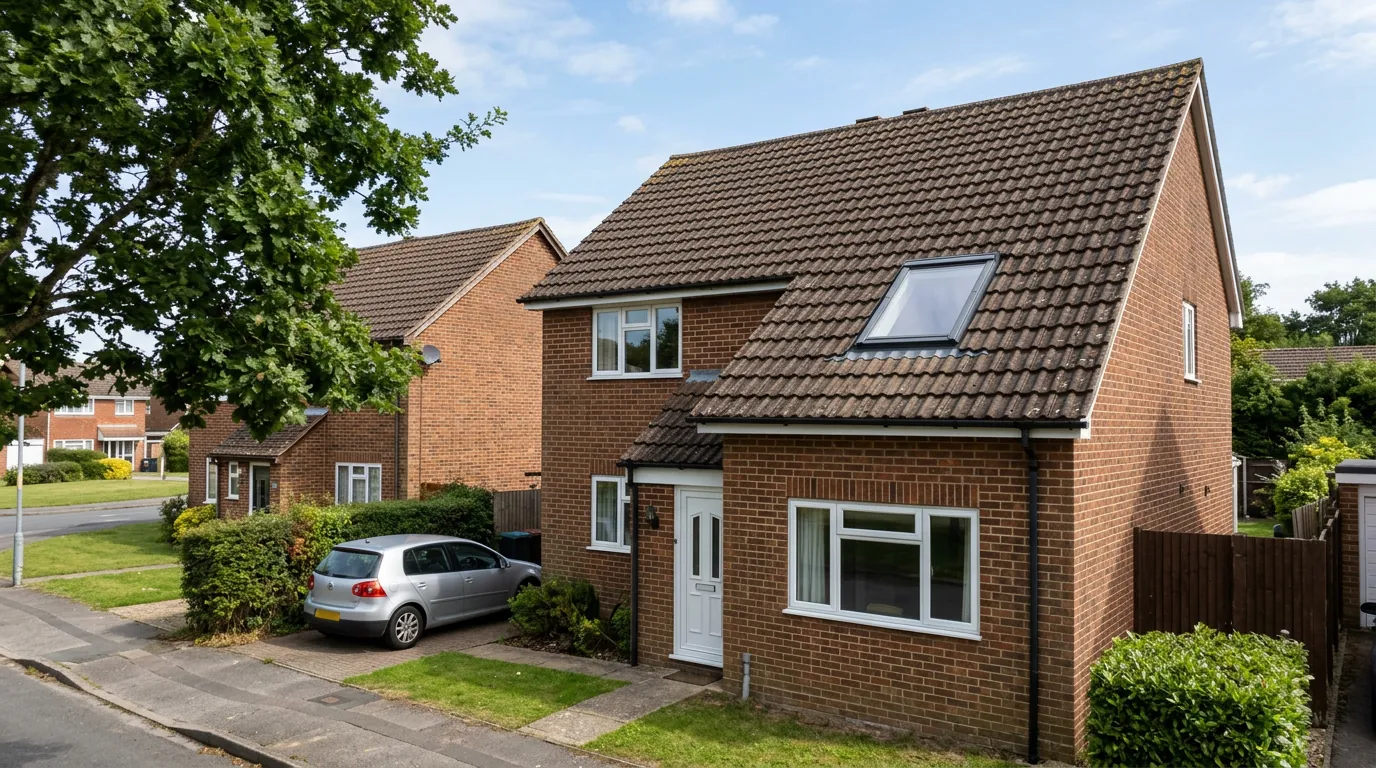
Most of the trussed estate roofs from Popley to Chineham are finished in interlocking concrete tiles. These lift and relay cleanly, since each tile hooks over a batten and locks into its neighbour, and they go back in the same order they came off. Older concrete tiles can be brittle at the nibs, so the survey notes whether a matching profile is still available in case one cracks on the way off.
Plain clay tiles, the small double-lapped kind found on older cottages in Old Basing or Overton, involve more pieces around the opening and need more care to relay to the original gauge. Natural slate is held by nails or hooks rather than nibs, so slates near the frame are released with a slate ripper and refixed, often with copper tingles where nails cannot be reached. In each case the aim is the same: the covering goes back looking as it did, with nothing visible from the street but a newer window.
How the tiles are handled on the day
A relay around one roof window follows a set order, and the covering is never left open longer than it needs to be.
- Protect below. Dust sheets go down in the room and the old sash comes out first, which lightens the frame.
- Lift and stack. The courses touching the window are taken off and kept in order, so each tile returns to its own place.
- Out and in. The old frame and flashing are removed, the opening is checked, and the new frame is fixed with its insulation collar and underlay collar.
- Flash and relay. The new flashing set goes on, then the tiles are relaid and dressed down onto it, cut only where the new frame's width asks for it.
- Finish inside. Linings and plaster edges are made good and the room is left clean.
The full sequence for the day, including what happens indoors, is walked through in how a rooflight replacement day runs. On timing, how long it takes to replace a skylight gives the direct answer.
Flat roofs have no tiles, but the same idea applies
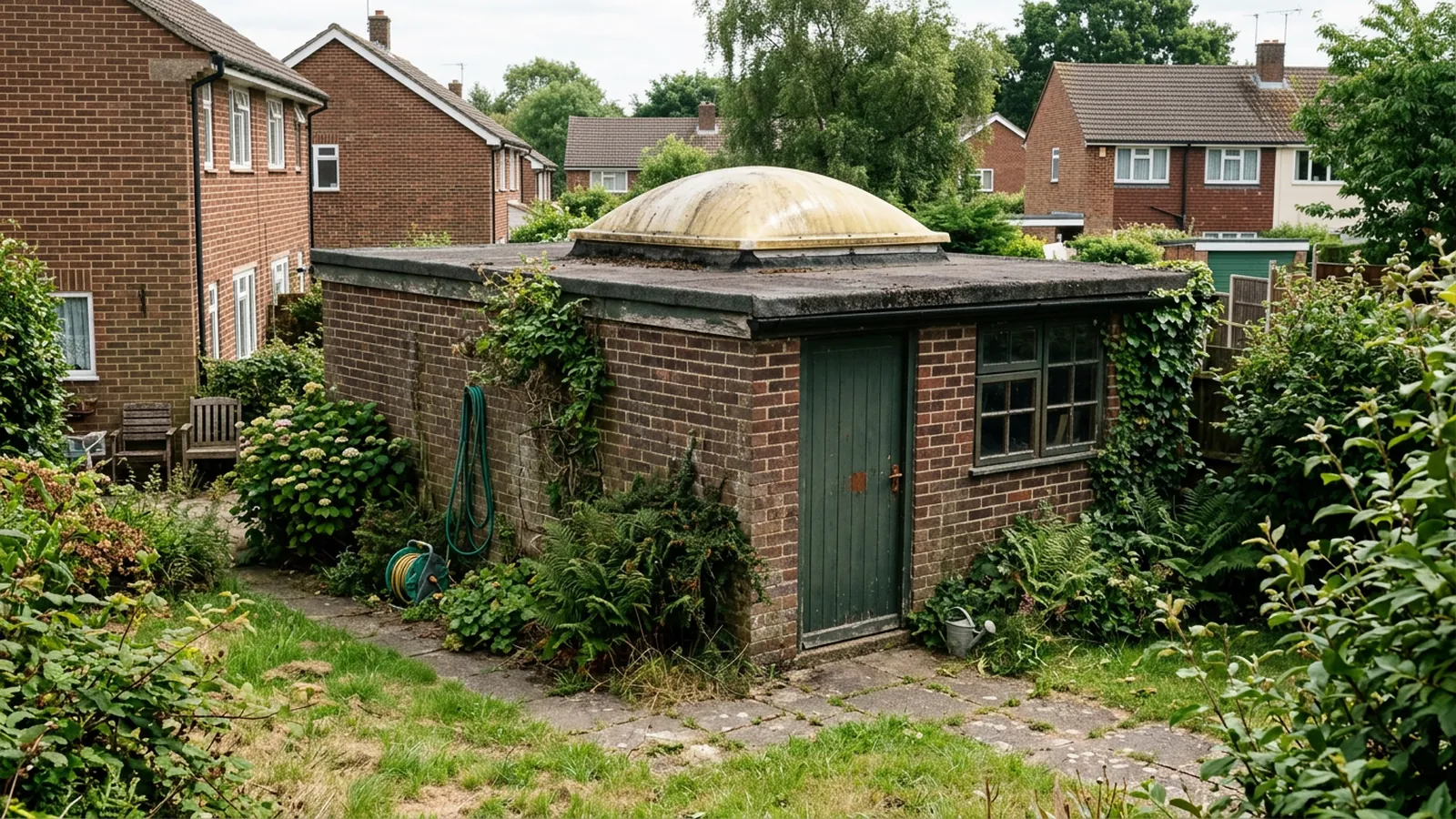
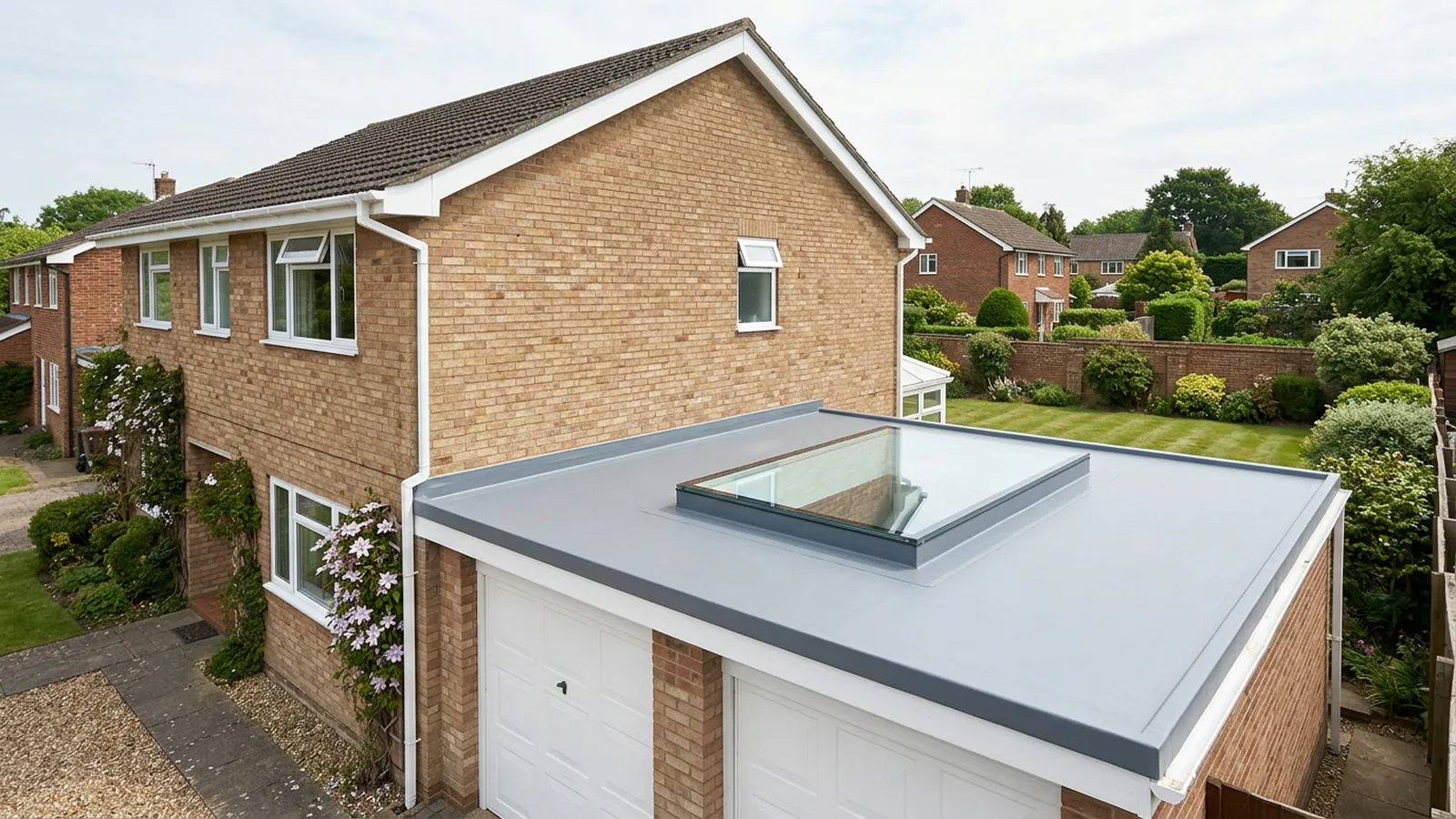
A rooflight on a flat roof sits on a kerb, and the waterproof covering is turned up the sides of that kerb rather than tiled around it. Swapping an old plastic dome for a modern glazed unit on a sound kerb touches only the top of the kerb. Where the kerb is too low or failing, the covering around it has to be cut back and dressed onto a new one. It is the flat roof version of the same trade fact: keep what is sound, open only what the new unit needs.
When a bigger change is worth it
If the tiles around the window are sound and the old frame is not, a like-for-like change is the least disruptive route. If you have always wanted a wider window, the tiles are coming off anyway, so the extra disturbance of going up a size is smaller than it sounds, though a trussed roof may still decide what width is possible. If the whole roof is due for re-covering soon, it can be sensible to change the rooflight at the same time, so the covering is only opened once.
The tiles that move are the ones touching the window; the rest of the slope is left as it is.
Whatever the survey finds, the work is covered by our 10-year workmanship guarantee, which is not insurance backed, and any Building Control notification the job needs is taken care of as part of it. To find out whether your skylight needs a sash, a frame or just a conversation, arrange a survey of your roof or ring 01256 213206.