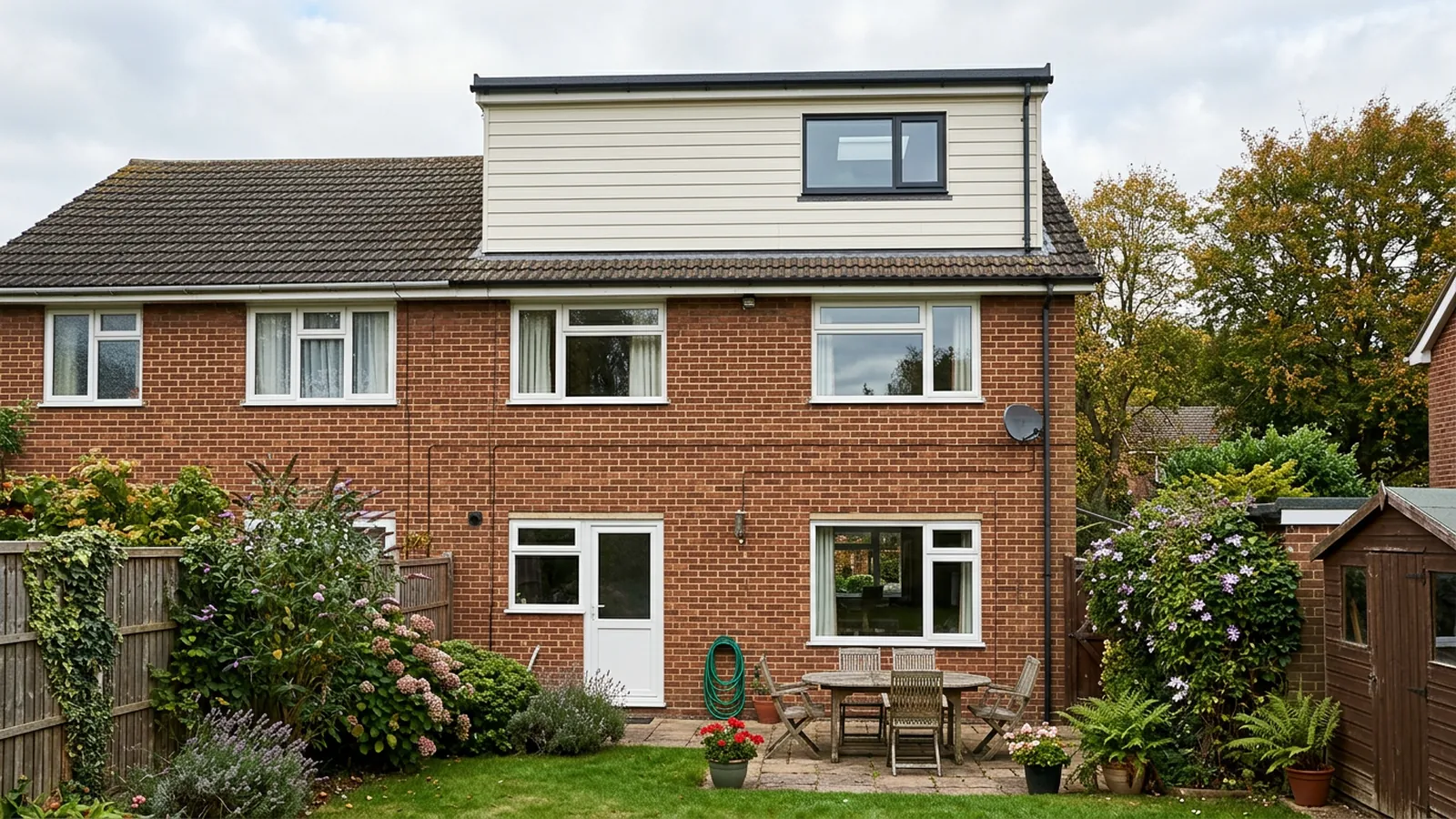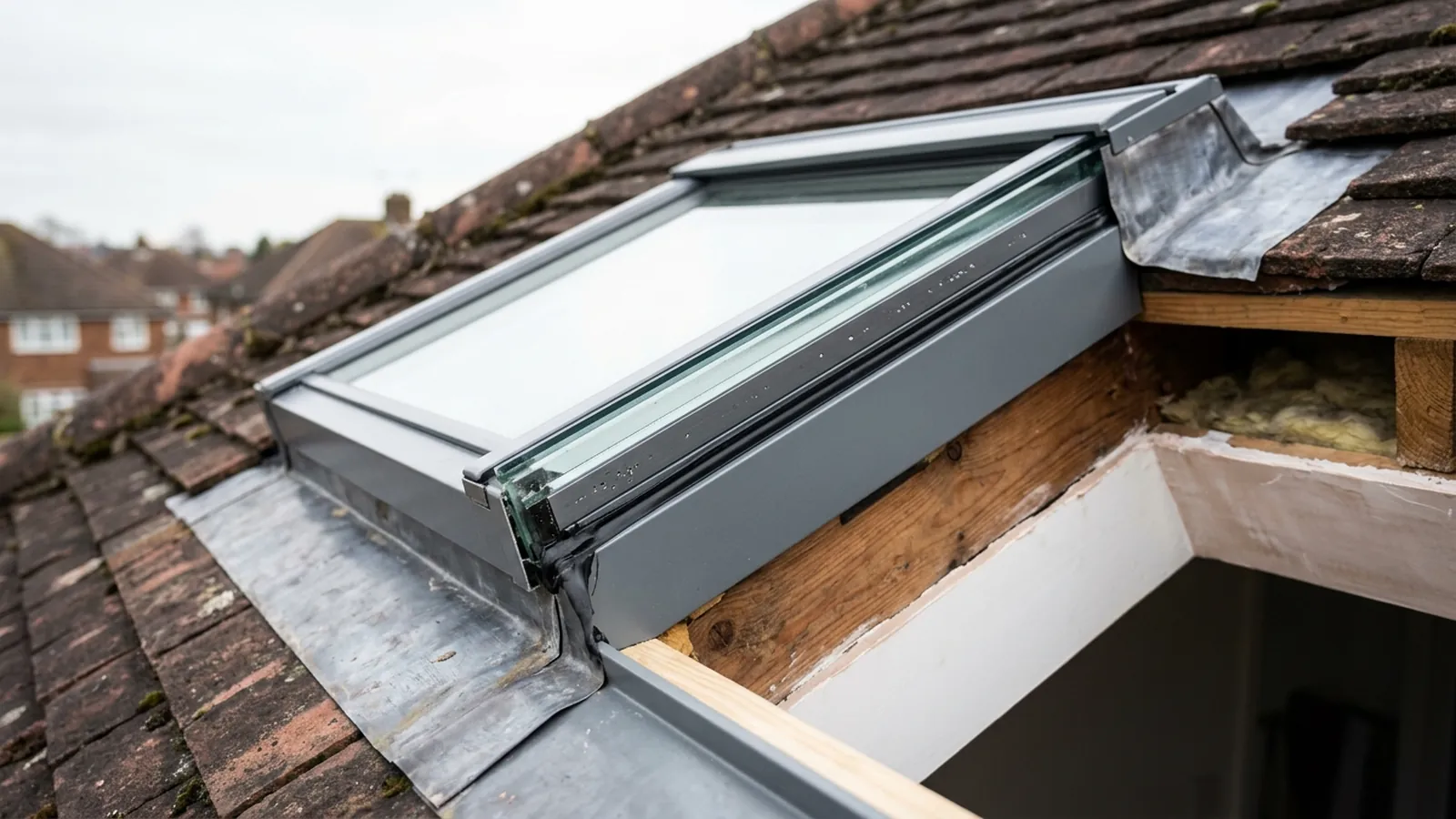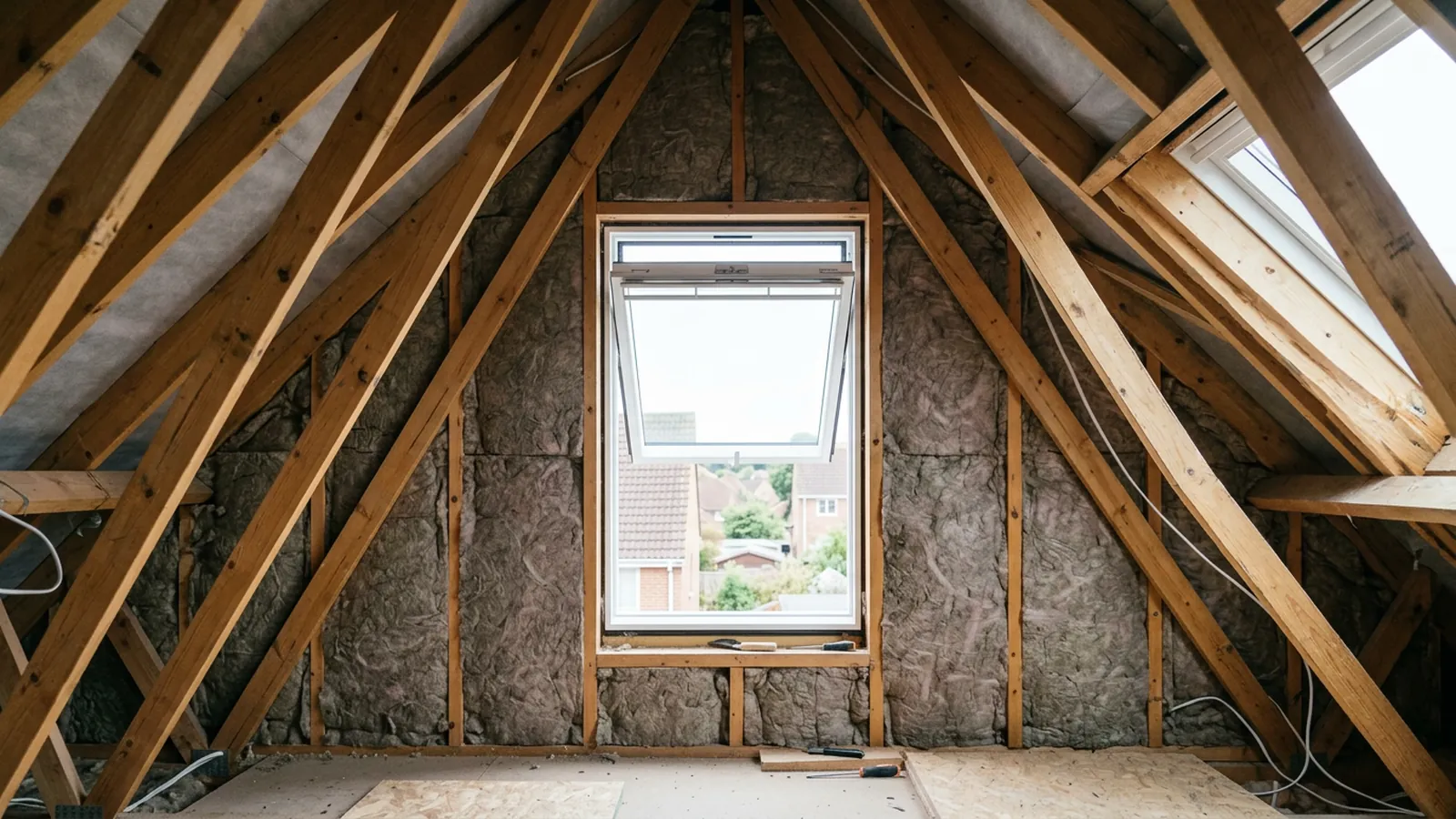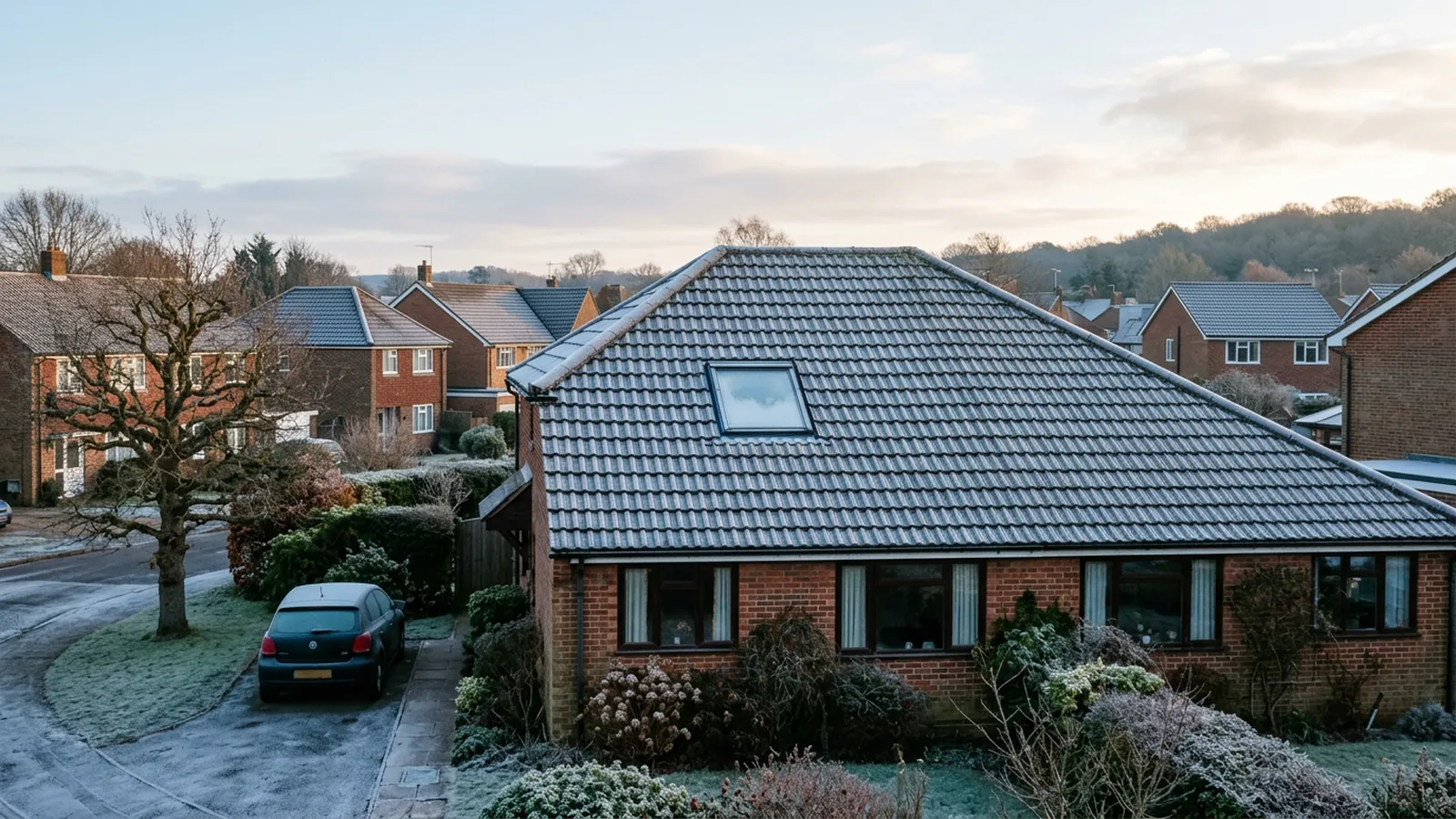
So when a data sheet quotes a g-value for a skylight, it is telling you about summer heat and winter warmth from the sun, not about heat escaping at night. That second job belongs to the U-value. Our energy efficient rooflights service reads both figures together, because on a roof the glass faces the sky for far more of the day than a wall window does, and the sun's contribution is much larger.
What follows covers how the figure is built up, how it differs from light transmission, which figure suits which room, and where it shows up in the rules.
What the number is made of
Sunlight reaching a pane carries visible light, near infrared and a little ultraviolet. Some of that energy bounces straight off the outer surface. Some passes through the panes and lands on the floor, the walls and the furniture, where it turns into warmth. The rest is absorbed by the glass and its coatings, which warm up and pass part of that heat inwards and part back outdoors.
The g-value adds the direct part to the inward share of the absorbed part. Glaziers also call it total solar energy transmittance, or the solar factor, and you may see it written as g, g-value or TSET on a specification. They all describe the same quantity. A clear single pane lets most of the sun's heat in; a sealed unit with a coated inner pane lets in noticeably less; a unit with a dedicated solar control coating lets in less again.
How a sealed rooflight unit works and fails
- Outer and inner glass panes, with the outer pane facing the weather
- Low-emissivity coating on one inner face, reflecting heat back into the room
- Warm-edge spacer bar holding the panes apart, filled with desiccant to soak up trace moisture
- Primary seal against each pane, backed by the secondary seal around the edge
- Dry sealed cavity, the insulating layer between the panes
- Broken edge seal: moist air gets in and the desiccant becomes saturated
- Mist and droplets trapped between the panes; they cannot be wiped off and the sealed unit needs replacing
- Inset: condensation on the room-side face of the glass is a ventilation or humidity issue, not a failed unit
g-value, light transmission and U-value side by side
Three figures sit next to each other on almost every rooflight data sheet, and they are easy to muddle.
| Figure | What it measures | Which way is better |
|---|---|---|
| g-value | Solar heat that reaches the room, from direct sun and warmed glass | Depends on the room: lower to limit overheating, higher to welcome winter sun |
| Light transmittance | Visible daylight that passes through, the part your eyes use | Higher for a brighter room |
| U-value | Heat escaping outwards through the whole unit, day or night | Lower always keeps more warmth in |
The useful comparison is between the first two. Good solar control glass holds the g-value down while keeping light transmittance fairly high, so the room stays bright but gains less heat. A tinted or heavily mirrored pane can cut heat gain too, but it cuts daylight with it. If that trade worries you, our answer on whether solar control glass makes a room darker looks at it directly.
Which g-value suits which room
There is no single right figure. The better choice depends on which way the roof slope faces, how big the opening is compared with the room, and how the space is used.
- A south or west facing loft bedroom. A lower g-value is usually the priority. Loft rooms sit under the hottest part of the house, and a bedroom that has soaked up afternoon sun is hard to cool before bedtime.
- A north facing slope. Direct sun rarely falls on the glass, so the g-value matters less and you can put light transmittance and U-value first.
- A flat rooflight over a kitchen extension. Horizontal glass takes high summer sun almost head on, so solar heat gain is a real consideration even on a modest opening.
- A small landing or stairwell skylight. The glass area is small against the volume of the house, and a higher g-value can be welcome in winter.
Orientation carries much of this decision, and our answer on which way a rooflight should face for energy sets out how each direction behaves through the year.
How the glass gets a lower g-value
Most of the work is done by thin metal oxide coatings on one of the inner faces of the sealed unit. A standard low-e coating is aimed at keeping room heat in and trims solar gain only a little. A solar control coating is tuned to reflect more of the near infrared part of sunlight while letting most visible light through, which is how it lowers the g-value without making the room gloomy. Some units combine the two, and a laminated or tinted outer pane can also change the figure.
How those coatings differ, which face of the unit they sit on and why that position matters, is the subject of our guide to solar control and low-e coatings on rooflight glass. That guide owns the detail; the point here is simply that the g-value is set by the glass you order, so it has to be decided before the unit is made.
Where the g-value appears in the rules
For work on an existing home in England, Approved Document L sets a limiting U-value for a new or replacement rooflight; it does not set a g-value you must meet. The g-value still matters in two places. Energy calculations for a dwelling use it to count the free heat the sun supplies, and overheating checks use it to judge how much heat a room will gain.
The rule: for a roof window added to an existing house, the g-value is a comfort choice rather than a legal threshold. The exception is a new dwelling, or a project where the designer has run an energy or overheating assessment; there the g-value used in the calculation should match the glass that is actually fitted.
If an architect or a loft conversion designer has specified a g-value on the drawings, we order glass to that figure and the Building Control notification goes in with the rest of the job, so the paperwork and the installed unit agree.
Reading a data sheet without being misled
Check whether the g-value quoted is for the glass alone or for the complete window. The frame blocks sunlight, so the whole unit lets in less solar heat than the glass figure suggests, and comparing a glass figure from one maker with a whole-window figure from another tells you little. Check too that you are comparing like with like on coatings: a unit sold on its U-value may have a different coating from one sold as solar control.
Finally, remember that blinds change the picture. An external awning blind stops sunshine before it reaches the glass, which glass alone cannot match, while an internal blind catches the heat once it is already inside. How much the glass can do on its own in a hot spell is covered in our answer on whether a rooflight can keep a room cool in summer. When the slope, the room and the glazing need weighing together, arrange a survey of your roof and we will set the choice out in writing before anything is ordered.