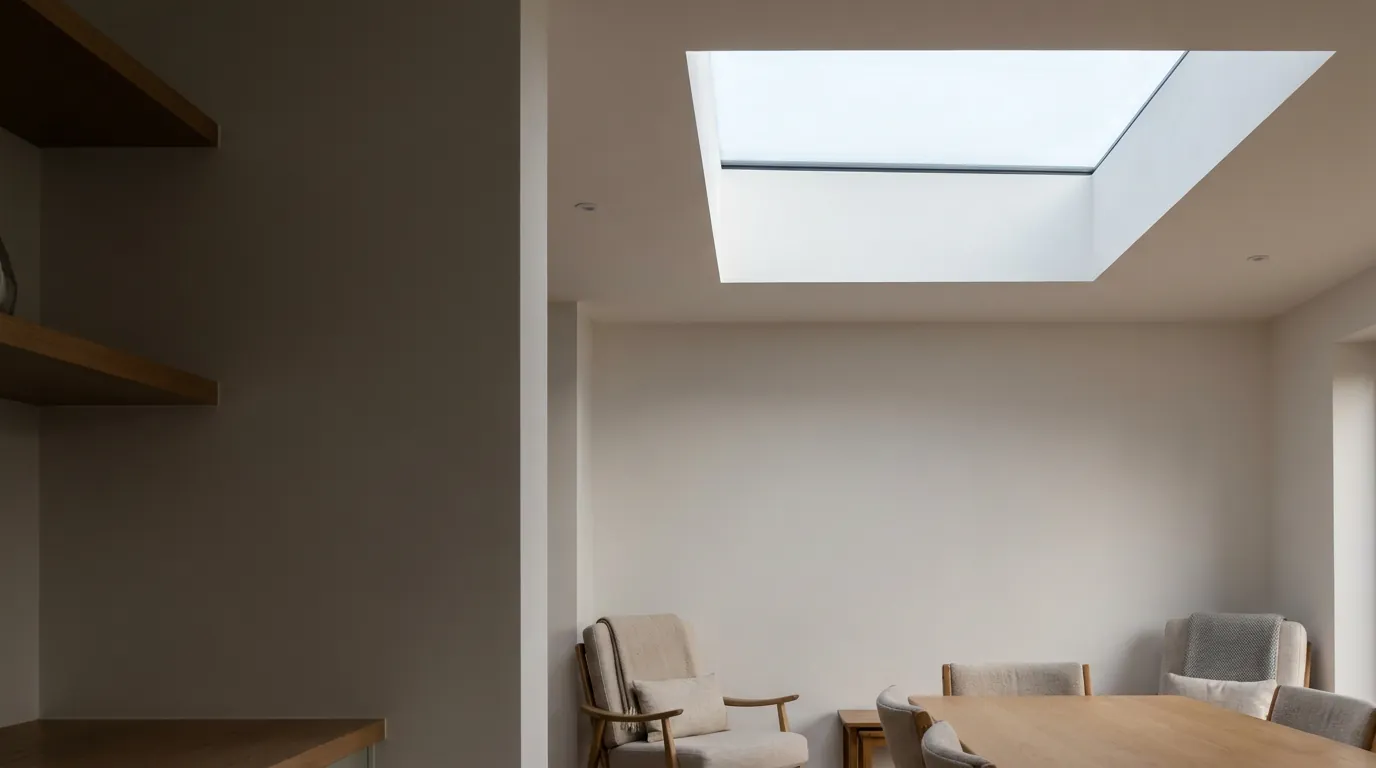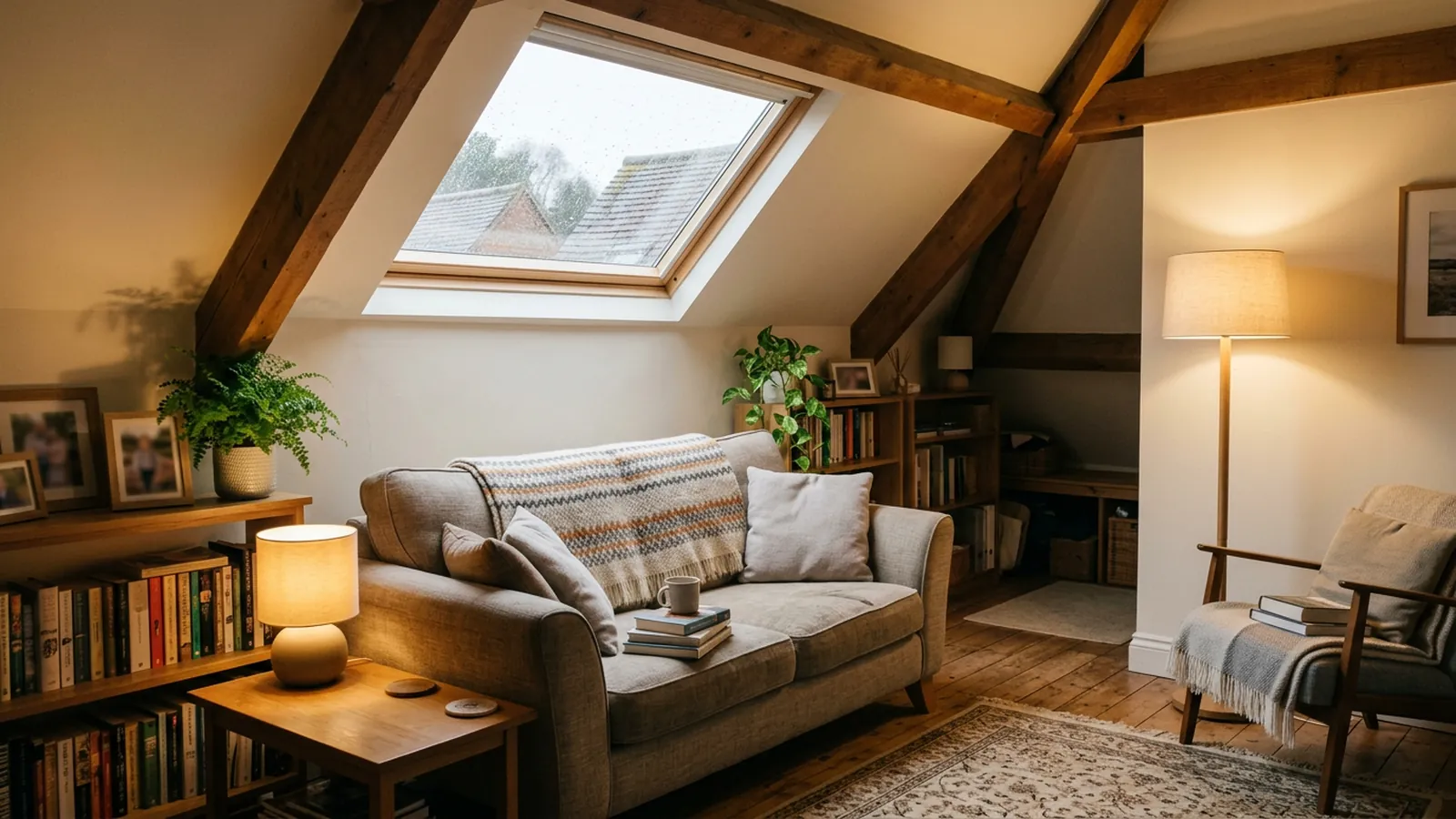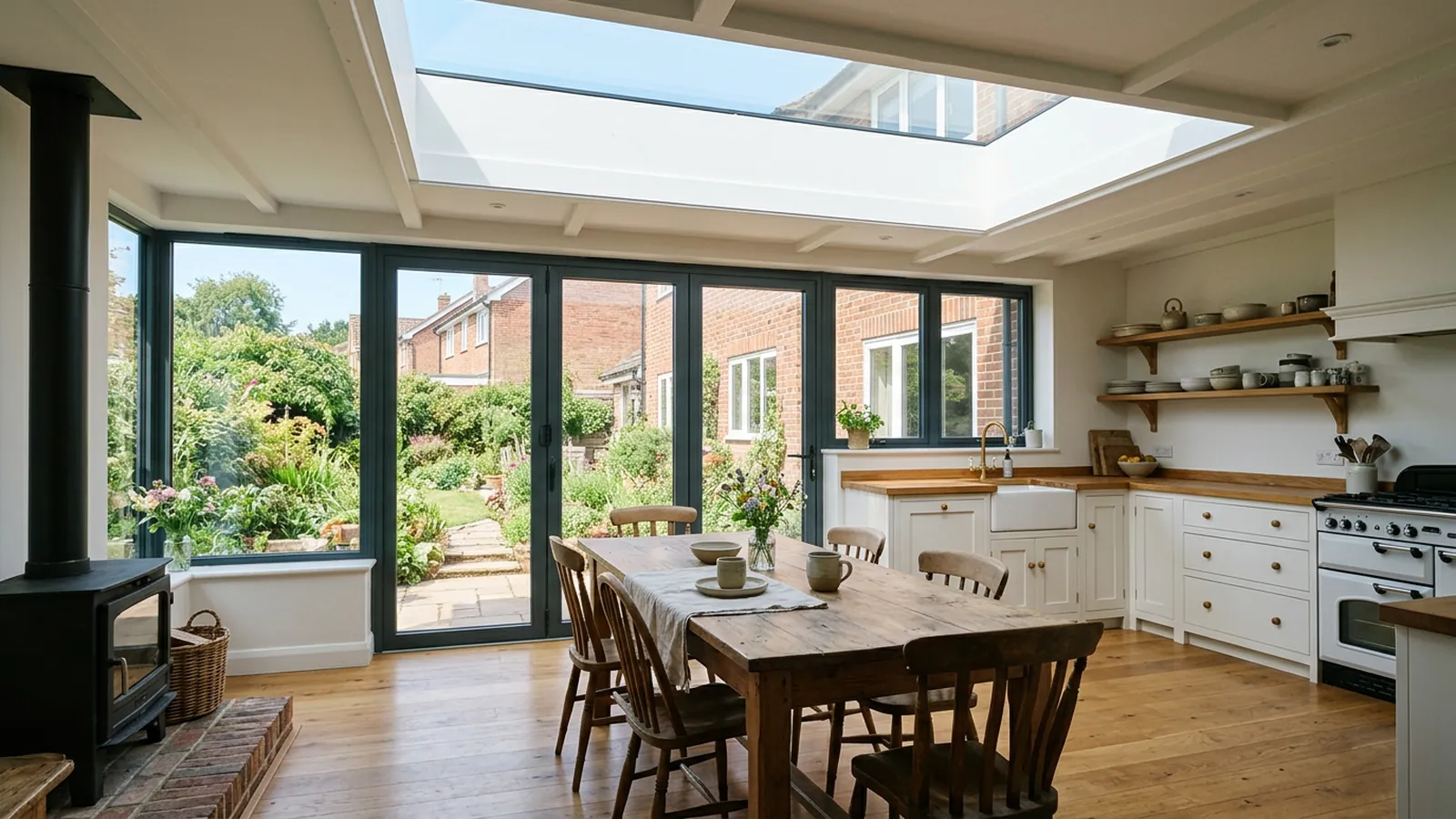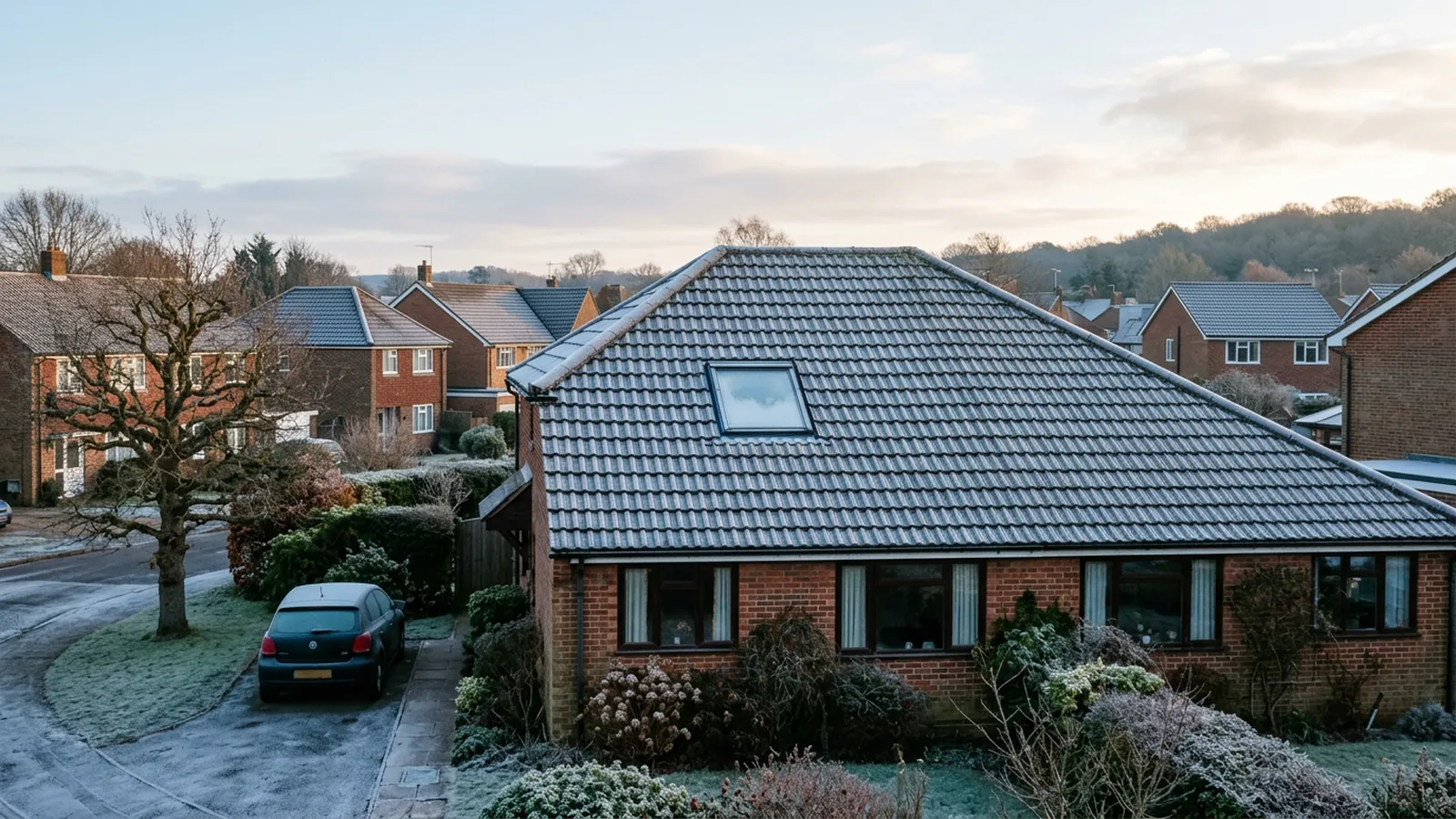
So the fair question is not glass against brick but how much of the heat escaping from a room goes out through the glazed area, and whether that is a sensible trade. That is the thinking behind our energy efficient rooflights work around Basingstoke: choose a unit and a size that give the room its light without turning the ceiling into a cold spot.
Why glass will always lag behind an insulated wall
Heat moves through a building element in proportion to how easily it conducts, which is what a U-value measures: lower is better. A modern cavity wall, or an older one that has been filled or lined, holds a thick layer of mineral wool or rigid board. A sealed glazed unit has two or three panes, a gas filled gap of a few millimetres, and a frame. However good the coatings and the gas, that thin build-up cannot match a wall's insulation depth, so the glass loses more heat for every square metre.
What the numbers mean in practice, and how to read the figure a maker quotes, is set out in our plain guide to rooflight U-values. For this answer the principle is enough: glazing is the weakest insulating part of any external surface it sits in.
How a sealed rooflight unit works and fails
- Outer and inner glass panes, with the outer pane facing the weather
- Low-emissivity coating on one inner face, reflecting heat back into the room
- Warm-edge spacer bar holding the panes apart, filled with desiccant to soak up trace moisture
- Primary seal against each pane, backed by the secondary seal around the edge
- Dry sealed cavity, the insulating layer between the panes
- Broken edge seal: moist air gets in and the desiccant becomes saturated
- Mist and droplets trapped between the panes; they cannot be wiped off and the sealed unit needs replacing
- Inset: condensation on the room-side face of the glass is a ventilation or humidity issue, not a failed unit
The real comparison is with the roof, not the wall
A skylight sits in the roof, so the heat it lets out would otherwise have been held back by the ceiling or the rafter insulation around it. On a loft conversion or a vaulted room, that roof slope is usually insulated to a higher standard than the walls, which makes the contrast sharper still. Put simply, the rooflight is replacing one of the best insulated surfaces in the house with one of the least insulated.
There is a second, less obvious effect. The performance printed on a glazed unit is measured with the glass upright. Tilt it towards flat and the warm gas inside the unit circulates more freely, so the same unit loses a little more heat on a shallow pitch than it would standing in a wall. Roof window makers publish figures for their products as installed in the roof for exactly this reason, and those are the ones worth comparing.
Rule of thumb: judge a rooflight against the insulated roof around it and against a wall window of similar size, never against the solid wall. The exception is a room where the rooflight replaces a window you were going to put in a wall anyway, where the fairer comparison is glass against glass.
Where a rooflight wins the trade
Heat loss is only half of the account. A roof window facing the sky receives more daylight than a wall window of the same size, so a smaller glazed area can light a room just as well, which keeps the loss in check. Sun through the glass adds free warmth on bright winter days, and good daylight means lights stay off for longer. Whether a roof opening outperforms a wall opening for light is covered in does a rooflight let in more light than a wall window?
| Compared with | Heat lost per square metre | What it gives back |
|---|---|---|
| Insulated wall | Rooflight loses clearly more | Daylight and winter sun a wall cannot give |
| Insulated roof slope | Rooflight loses clearly more | Light from the brightest part of the sky |
| Wall window of similar glazing | Similar, a little higher when tilted | More light per square metre of glass |
| Old single glazed or plastic dome | New unit loses far less | Warmer ceiling and less condensation |
Keeping the loss down when you add one
Four choices do most of the work. The first is size: a unit big enough to light the room and no bigger, which our guide on balancing daylight against heat loss walks through room by room. The second is the glazing itself, where the target figure for a new unit is covered in what U-value should a new rooflight have? The third is the fitting: insulation packed tight to the frame and a proper vapour control layer, so the join between window and roof does not leak warmth. The fourth is what you add inside, since a thermal blind drawn at night cuts the loss through the glass after dark, as do rooflight blinds help keep heat in? explains.
On the 1960s to 1980s trussed estates around the town, the biggest gain often comes from swapping an ageing dome or early timber roof window for a modern sealed unit. That swap removes the weakest part of the roof in one go.
Does it make a loft room cold?
A well chosen, well fitted unit should not. A cold loft room is far more often down to thin insulation in the slopes, gaps around the window lining or draughts at the eaves than to the glass on its own. If that is the worry behind your question, do rooflights make a loft conversion colder? looks at it head on.
What to do next
The quickest way to know how much heat a rooflight in your room will cost you is to look at the roof it would sit in: the pitch, the depth of insulation already there, and which way the slope faces. We survey the roof before we quote, name the glazing specification in writing, and our fitting is covered by a 10-year workmanship guarantee (it is not insurance backed). If the idea is a lighter room without a colder one, arrange a survey of your roof and we will size the rooflight to suit it.