The glass and frame do the real work of keeping a loft room warm, and our energy efficient rooflights page explains how that specification is chosen for the roof you have. This answer deals with the layer of fabric that sits on the room side of it, what it can add on a winter evening, and where it quietly works against you.
Where the heat actually goes
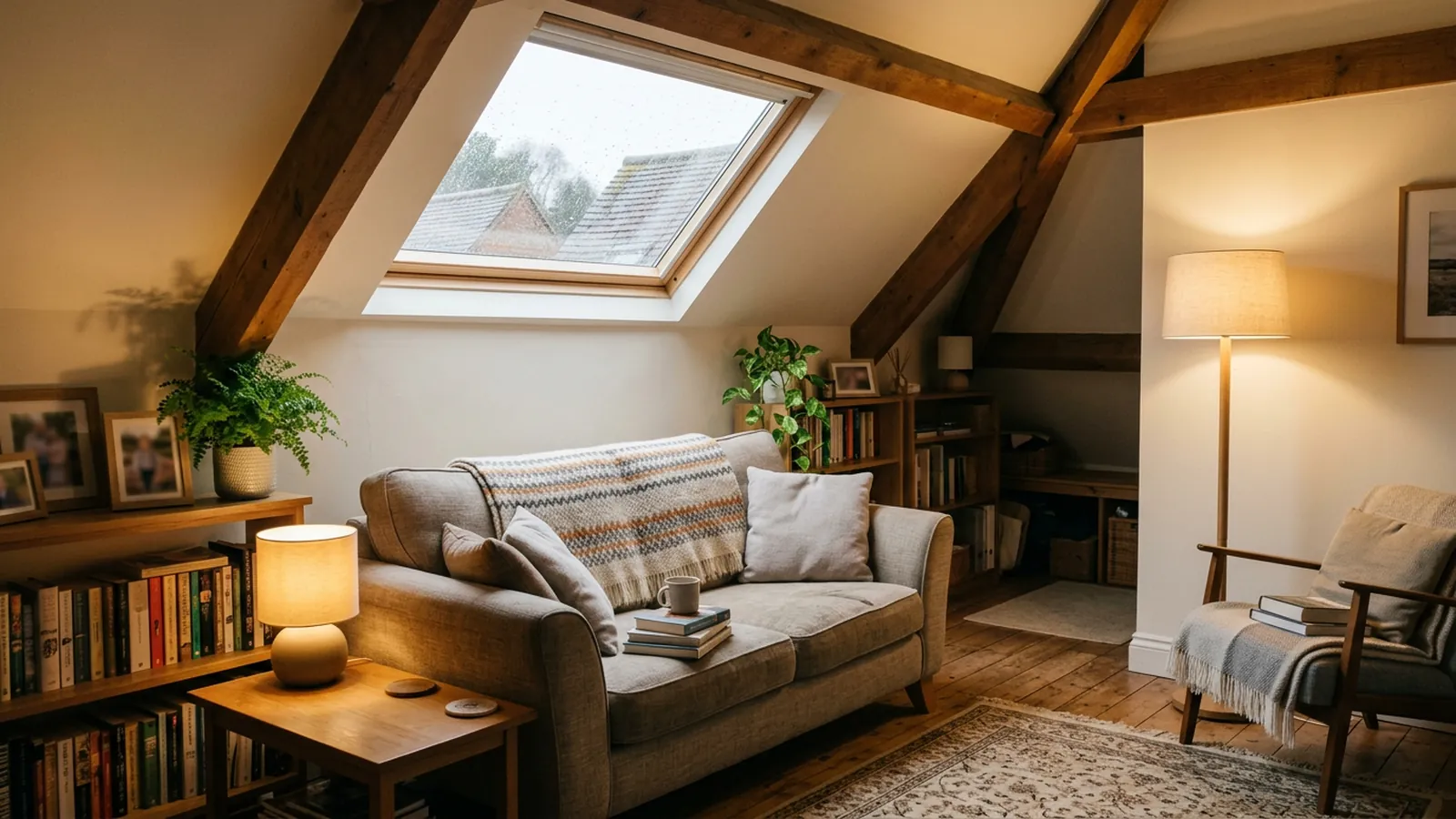
A skylight loses heat through the glass, through the edge of the sealed unit and through the frame, and warm air in a room rises straight towards it. In the day, sunlight coming in can offset some of that loss. After dark there is nothing coming back, so the rooflight becomes one of the cooler surfaces in the room, and the air next to it cools and falls. That slow loop of air washing over cold glass is what a blind interrupts.
Close the blind and the air trapped between fabric and pane stays fairly still. Still air is a poor conductor, so the room side of the blind sits closer to room temperature and the draught-like feeling under the window eases. The effect depends almost entirely on how well the blind is sealed at its edges: air that can circulate round the sides carries heat past it anyway.
How a sealed rooflight unit works and fails
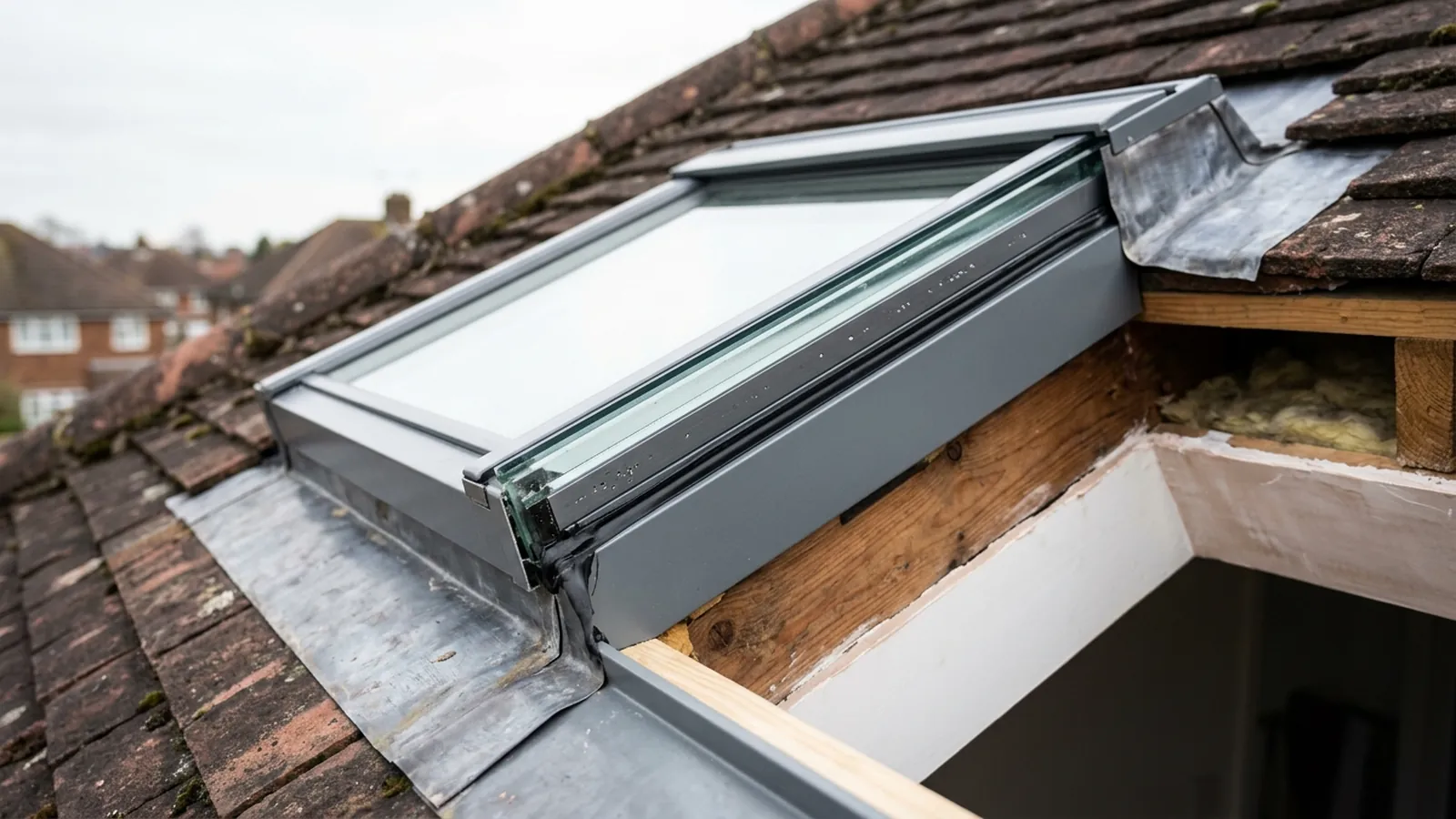
- Outer and inner glass panes, with the outer pane facing the weather
- Low-emissivity coating on one inner face, reflecting heat back into the room
- Warm-edge spacer bar holding the panes apart, filled with desiccant to soak up trace moisture
- Primary seal against each pane, backed by the secondary seal around the edge
- Dry sealed cavity, the insulating layer between the panes
- Broken edge seal: moist air gets in and the desiccant becomes saturated
- Mist and droplets trapped between the panes; they cannot be wiped off and the sealed unit needs replacing
- Inset: condensation on the room-side face of the glass is a ventilation or humidity issue, not a failed unit
Which blinds make a difference
| Blind | Effect on heat loss at night | Worth knowing |
|---|---|---|
| Honeycomb (cellular) pleated | The best of the internal options: the cells trap air within the fabric as well as behind it | Needs side channels to hold it flat on a sloping window |
| Blackout with a coated backing | A useful gain when it runs in channels and closes fully | Chosen mainly for sleep in a loft bedroom; warmth is a side benefit |
| Simple pleated | Modest | Mostly for softening light and privacy |
| Roller without channels | Very little, because air moves freely round the edges | Tends to sag away from the glass on a pitched roof |
| External awning or shutter | Some, from the sheltered air gap outside the pane | Its real job is stopping summer heat before it reaches the glass |
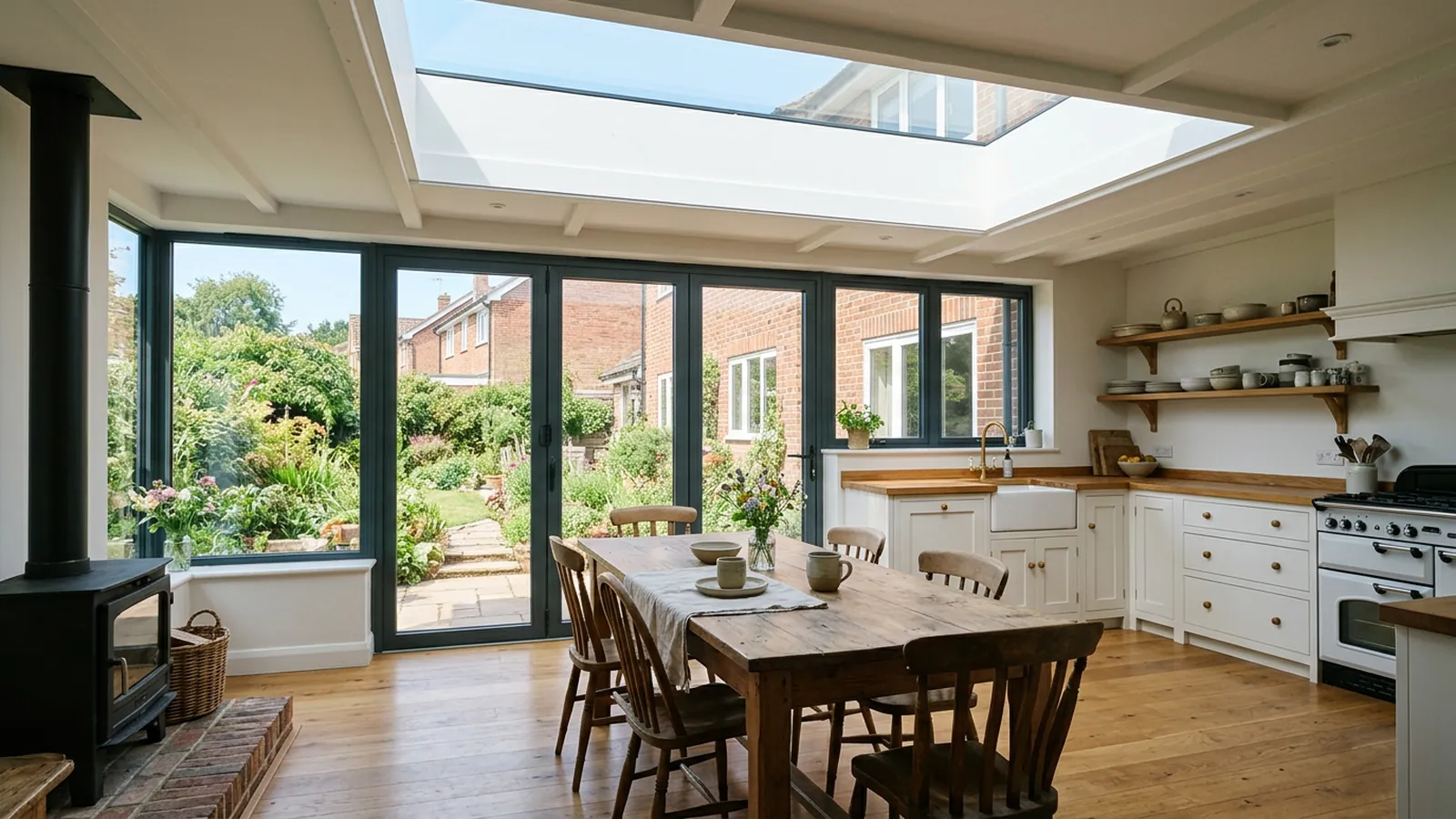
Blinds made by the rooflight maker for a named window size clip into the frame and run in fitted side channels, which is why they seal better than a generic blind cut to measure. On a flat roof rooflight or lantern the options are narrower, and fitted internal blinds are not offered for every model, so it is worth asking at the planning stage rather than after the glazing is in.
The condensation catch
Here is the part that surprises people. A blind that keeps the room warmer also keeps the glass colder, because the pane no longer gets the room's warm air. On a cold night, moisture in the air that does reach the glass can condense on it, and a closed blind gives that moisture a quiet, cold pocket to settle in. In a loft bedroom with a closed blackout blind, water on the inside of the pane in the morning is the classic sign.
The rule: a warm, well-insulated rooflight lets you close a blind at night without much fuss, because its inner pane stays warm enough. The exception is an older unit with a cold inner pane or a cold frame edge, where a closed blind can make morning condensation worse, and opening it in the morning plus steady background ventilation matters more.
How modern glazing changes the picture is covered in our answer on whether energy efficient rooflights reduce condensation.
Keeping heat in versus keeping it out
The same word, blind, covers two different jobs. In winter an internal blind keeps warmth in. In summer an internal blind is poor at keeping heat out: the sun has already passed through the glass and warms the fabric inside the room. An external awning stops much of that heat on the outside of the pane, which is why it is the better choice over a south-facing loft room.
If summer is the bigger problem in your room, read can a rooflight keep a room cool in summer? and our guide to overheating in south-facing loft rooms, which weighs awnings against solar control glass.
What a blind cannot fix
A blind helps for the hours it is closed. It does nothing through a grey winter day when you want the light, and nothing about cold coming through a poorly insulated reveal or a gap round the frame. If a loft room still feels cold with the blind down, the lining around the window is the likelier cause, and our guide on insulating around a roof window in a loft room walks through that detail. The wider question of whether glazing is chilling a converted loft is answered in do rooflights make a loft conversion colder?
Old single-glazed plastic domes on 1970s and 1980s flat roofs around Basingstoke are the clearest case: no blind will make them warm, and replacing the rooflight is the step that changes the room.
Choosing a blind with a new rooflight
It pays to pick the blind at the same time as the window. The window size and model decide which fitted blinds exist for it, and a high rooflight out of reach is far easier to live with if the blind is electric or solar powered and closes itself at dusk. Electric blinds are covered on our electric and opening rooflight page.
At survey we note the window position, how you use the room and whether a blind will be reachable, then quote the rooflight and any blind together. If you want a warmer room after dark, arrange a survey and we will look at the glass, the lining and the blind as one job.