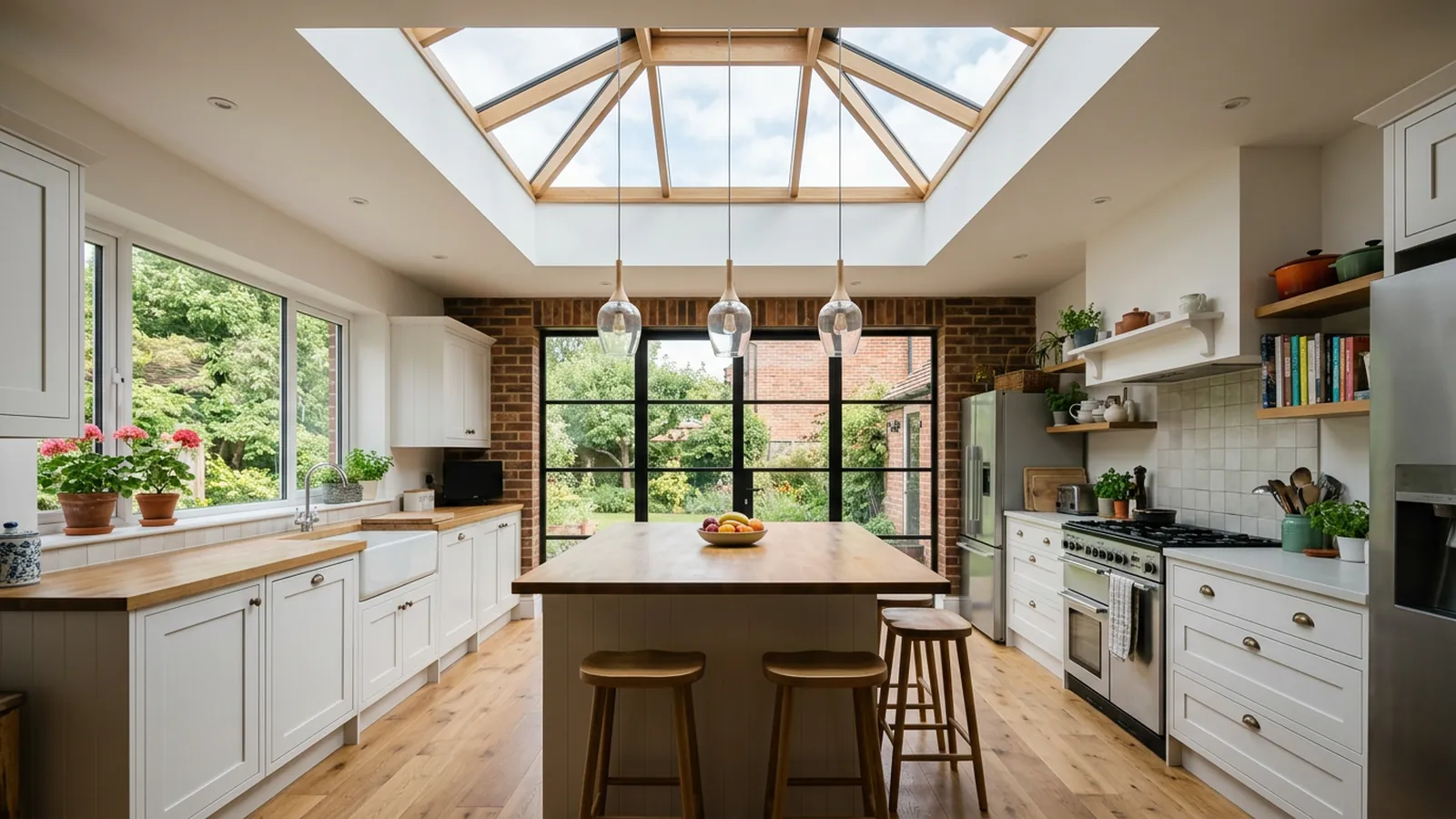
Two pieces of glass can sit in the same hole in the same flat roof and give a kitchen extension a completely different character. A roof lantern rises above the roof in a small glazed pyramid or ridge, with bars running down to a kerb. A flat rooflight lies almost level with the roof, a single slab of glass on a low upstand, with a thin frame or none you can see from inside. Both let the sky into the room. They do it in different ways, they suit different rooms, and they cost differently for reasons worth knowing before anyone draws a line on a plan.
This page sets the two side by side, question by question, so that the choice comes from the room and the roof rather than from whichever brochure arrived first. The deeper detail on each point lives in the linked guides; here the aim is simply to help you pick a direction.
What each one actually is
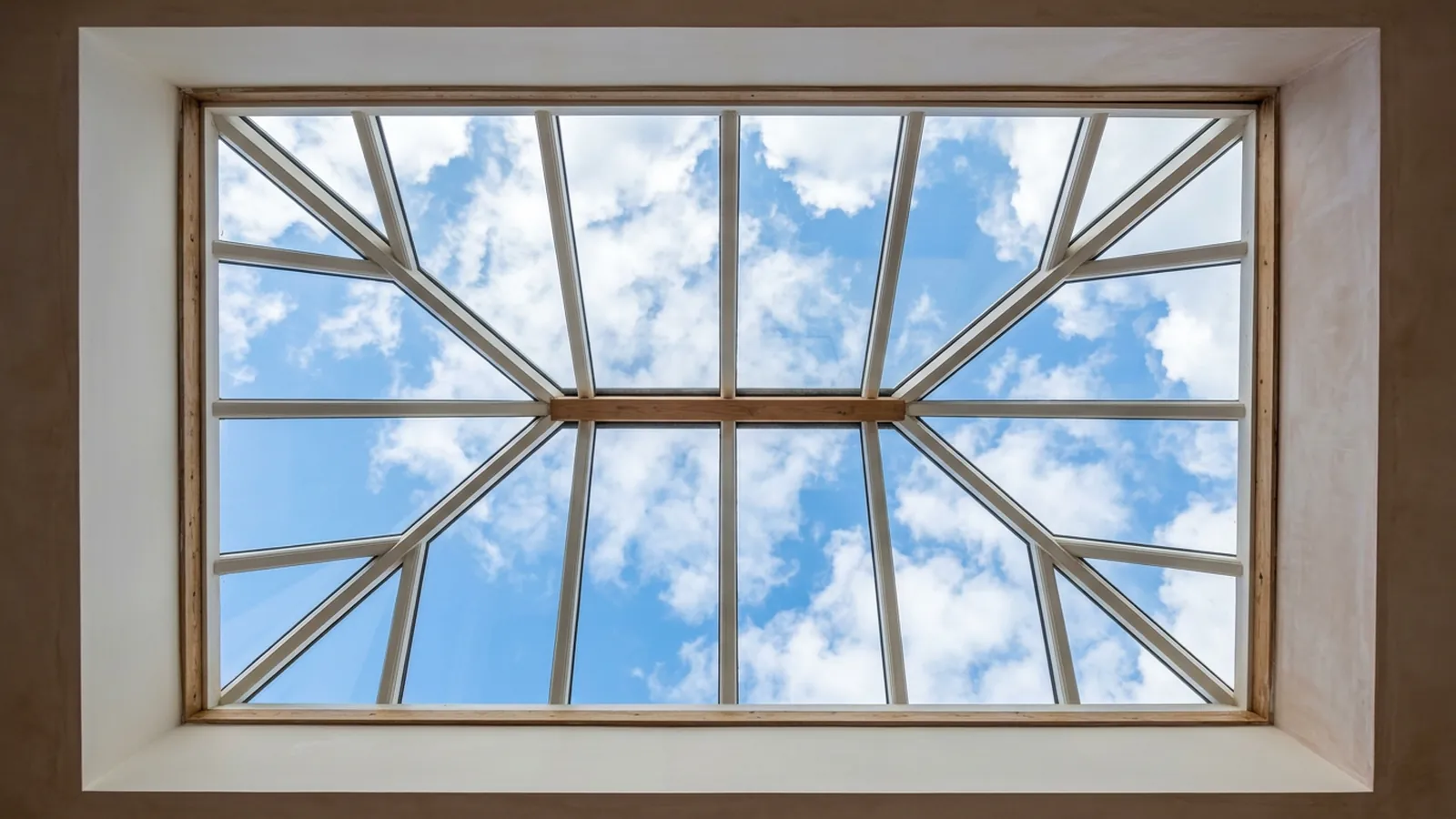
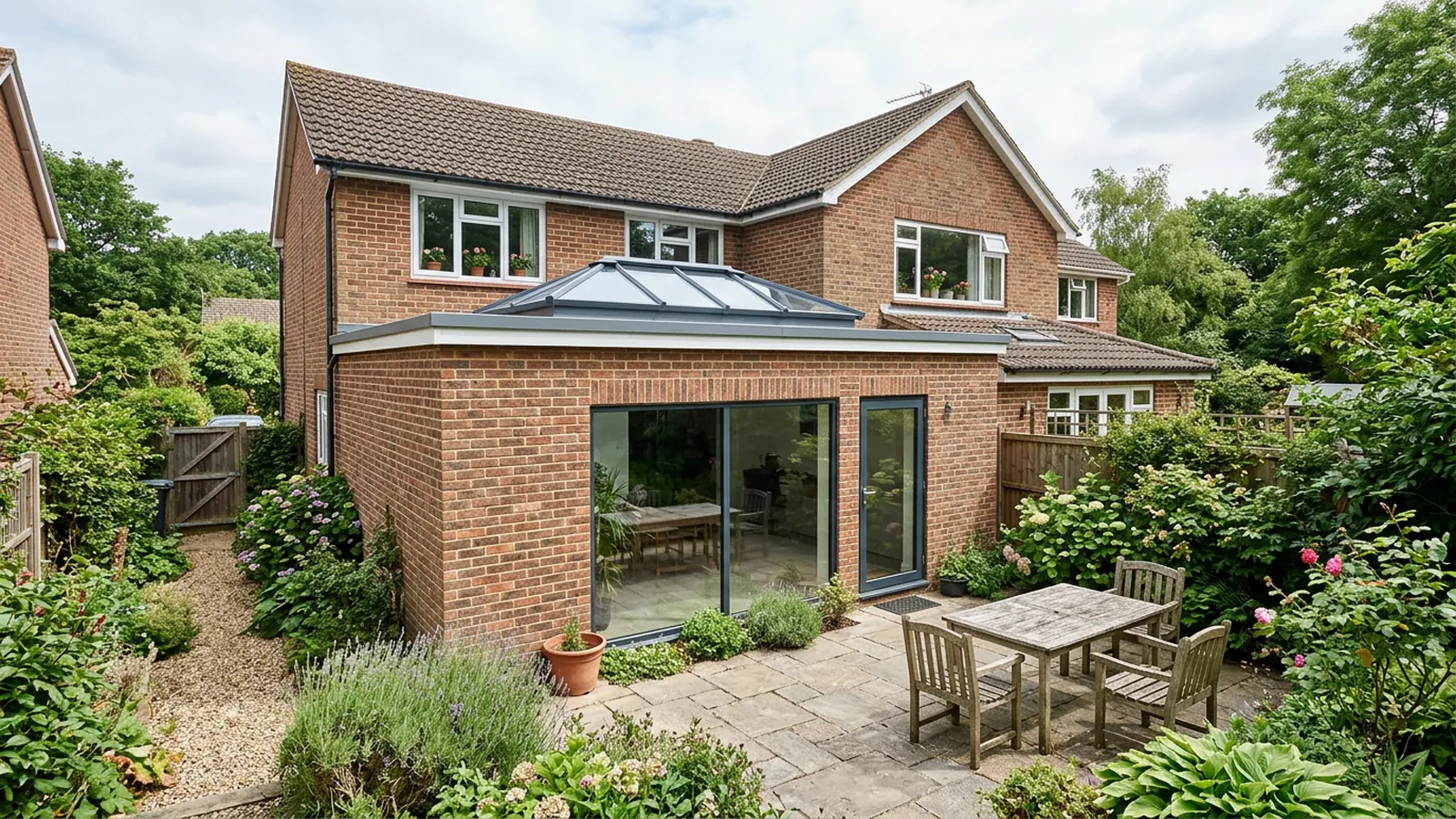
A roof lantern is a small glazed roof in its own right. It has a ridge, and either hips sloping down at each end or upright gable triangles, with glazing bars carrying sealed units between them. The whole assembly sits on a kerb built up from the flat roof deck, so the glass starts some way above the roof surface and climbs from there. Inside, you look up into a tall glazed volume that adds height to the ceiling as well as light.
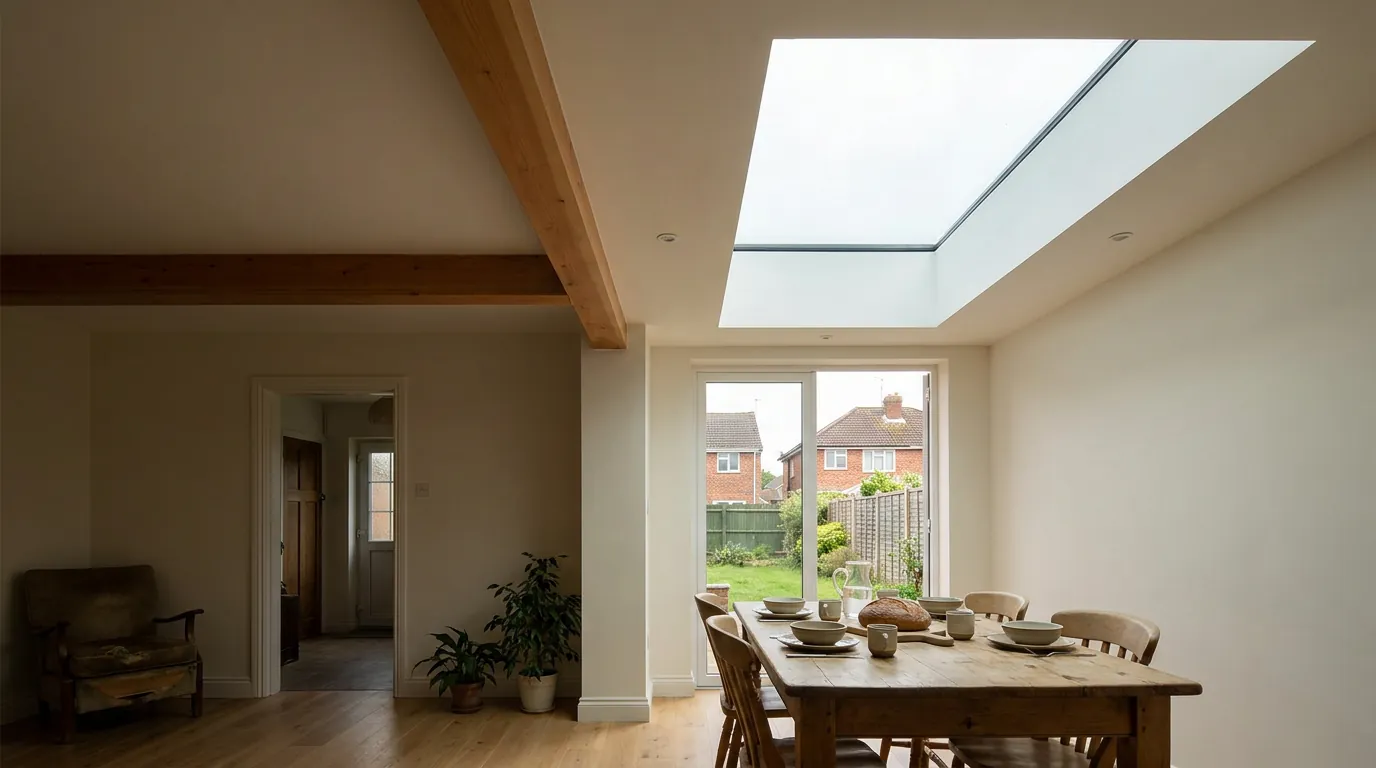
A flat rooflight, sometimes called a flat glass skylight or a frameless rooflight, is one sealed glass unit (or occasionally a fixed pair) bonded to a slim frame that sits on an insulated upstand. The glass is close to level, with a small built-in fall so that rain runs off rather than sitting on it. From inside, you see a clean rectangle of sky set into the plaster, usually with deep plastered reveals around it and very little frame.
That difference in shape drives almost everything else on this page: how the light arrives, how water behaves, how the thing looks from the bedroom window above and what it asks of the joists underneath.
How a roof lantern sits on a flat roof
- Ridge, where the glazing bars meet at the top
- Hip bar, closing each sloped end of the lantern
- Glazing bar, holding the edges of the glass
- Glass panel, sealed double or triple glazed units
- Eaves or perimeter frame, which the whole lantern stands on
- Insulated kerb (upstand), raising the lantern clear of the roof
- Flat roof covering, dressed up the kerb and under the frame
- Plastered reveal, lining the lantern well into the room below
Side by side: the points that separate them
The table sets the two against each other on the questions that usually decide it. None of the rows has a universal winner; each depends on the room you are lighting.
| Question | Roof lantern | Flat rooflight |
|---|---|---|
| How the light arrives | Through sloping and upright faces, so it collects light from low sun and from the sides as well as overhead | Mainly from directly above, a clear view of the sky with a crisp edge |
| Feel of the ceiling | Adds height and a focal point; the room reads as more generous | Keeps the ceiling calm and flat; the glass reads as an opening, not an object |
| Rain on the glass | Runs off the pitched faces quickly | Relies on a small fall, so dust and water marks show more readily |
| Seen from above | A raised feature visible from upstairs windows and neighbouring gardens | Low profile; barely visible from ground level |
| Frame and sightlines | Ridge, hips and glazing bars cross the view | One uninterrupted pane with the frame hidden in the upstand |
| Opening for air | Possible with vents or an opening section, depending on the design | Hinged, sliding and electric versions are widely made |
| Standing on it | Never | Only if specified as a walk-on unit from the outset |
If one row matters far more to you than the others, that row usually makes the decision. Someone who wants the kitchen to feel taller tends towards the lantern; someone who wants the extension to look like a clean modern box from the garden tends towards the flat glass.
The room underneath decides more than the roof
Think about what the glass is for. A lantern works well centred over something: a dining table, a kitchen island, a sofa in a garden room. It draws the eye upward and gives that spot its own lit ceiling. Because it gathers light from its sloping faces, it also carries brightness into the corners of a squarish room, which is why lanterns are common on the deep rear extensions added to semis on the estates around Basingstoke.
A flat rooflight suits long, narrow spaces and places where you want light to fall in a line. A galley kitchen along a side return, a corridor behind a garage conversion or a strip of worktop against a back wall often takes a single long flat unit, or two or three in a row, better than one lantern. It also suits rooms where the ceiling is already low, since it does not need the extra depth of structure and kerb that a lantern often brings.
Scale follows the same logic. A lantern that fills most of the roof can make a room feel like a conservatory, with the heat and glare that go with it, while one that is too small looks like an afterthought. Our guide to sizing a roof lantern to the room below covers how to judge the proportion, and the same thinking applies when you are laying out a row of flat units.
Light, heat and glare compared
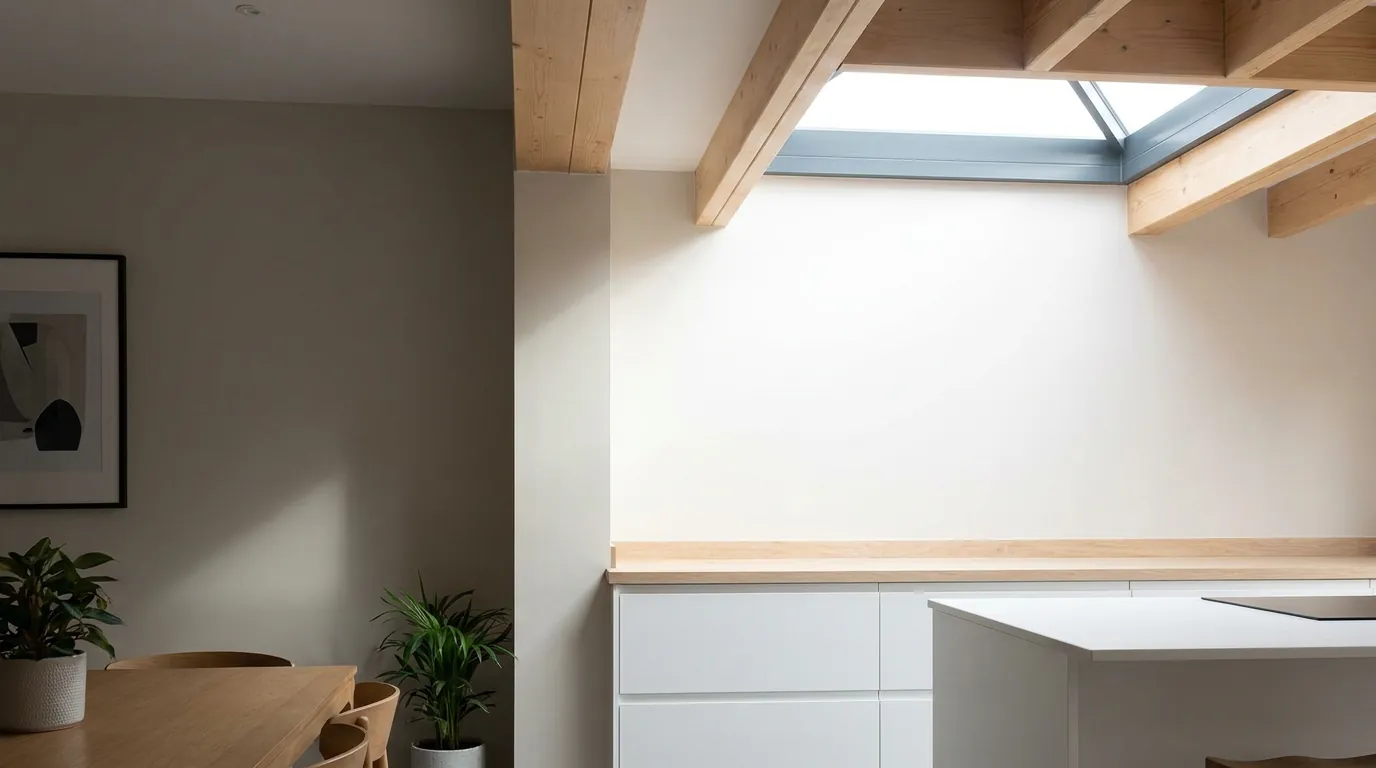
For the same area of glass, the two behave differently through the day. The lantern's sloping faces catch morning and evening sun that a flat pane misses, so a lantern often feels brighter earlier and later. The flip side is that on a summer afternoon those same faces take in more heat. A flat rooflight takes most of its light from overhead, which gives a steady, even brightness and a little less low-angle glare across the room.
Both are glazed with sealed units, and both can take solar control or self-cleaning coatings. Orientation matters more than type: a south-facing extension with a large lantern needs more thought about summer heat than a north-facing one with a modest flat rooflight. If heat is your worry, the direct answer to do roof lanterns make a room too hot? sets out what the glass choice can and cannot do.
Pick the glass for the room it lights, then check the roof can carry it.
Water, dirt and upkeep
Rain is where the geometry shows. On a lantern, water sheds off pitched glass and down to the kerb, so the faces tend to stay clearer between cleans. Leaves and moss can gather where the lantern meets the kerb and in the gutter line of the flat roof around it, so that junction wants an occasional look. The glazing bars add joints and caps that have to be kept clean too.
On a flat rooflight the fall is gentle by design, so rain leaves the glass more slowly. Dust and pollen dry into faint marks, and on a roof under trees debris settles on top. A self-cleaning coating helps, and the smooth single pane is simple to wash from a ladder or a pole where access is safe. How the upstand is built matters just as much as the glass for both types, because a kerb that is too low lets water sit against the frame; our guide to kerb height and falls explains what a good one looks like.
Noise in rain is often raised. Both are double or triple glazed sealed units, and both are quieter than the polycarbonate roofs they often replace. There is a short answer on whether roof lanterns are noisy in the rain, and cleaning each type safely is covered in how do you clean a roof lantern?
What the roof has to carry
Both need a properly formed opening in the flat roof, with the joists trimmed around it and the loads carried to the joists either side. On most estate extensions the flat roof is built from timber joists spanning between the house wall and the new outside wall, and the direction they run affects how easily either type can be positioned. A long flat rooflight laid parallel to the joists often needs only one or two cut; a wide lantern laid across them may need heavier trimming.
A lantern is usually the heavier of the two for the same footprint of daylight, because it has more glass, a ridge and a frame, and it adds the weight of a built-up kerb. A single flat unit concentrates its weight in one pane but sits on a lighter upstand. On an existing extension, the survey checks whether the joists and the opening can take the chosen unit as they are, or whether the trimming needs a structural design. The main house roof is not touched by either, which matters on the trussed rafter homes that make up most of Basingstoke's post-war estates.
The rule: an opening in a flat roof is formed with trimmers sized for the load, whichever glass sits on it. The exception worth planning for is a large lantern on an older or lightly built extension, where the joists may need an engineer's calculation before the unit is ordered.
How each looks from outside and from upstairs
From the garden, a lantern is a visible feature: its ridge and hips rise above the parapet or the roof edge, and it gives a traditional extension a finished, slightly formal look. On an estate house with bedroom windows directly above the extension, it is also the first thing you see when you open the curtains, and your neighbours may see it from their side too. Frame colour and the shape of the ends make a real difference to how it sits; our guide to hipped or gable ended lanterns compares the two profiles.
A flat rooflight almost disappears from the ground. From an upstairs window it reads as a dark rectangle on the roof covering, tidy and low. That makes it a natural choice where the extension has been designed as a crisp modern block, or where the view from above matters and you would rather see roof than a glazed structure.
Height also matters for planning. A lantern adds to the overall height of the extension, and where an extension relies on permitted development the height limits apply to the finished roof, including anything standing on it. Conservation areas in the villages around the town tighten the picture further. Our guide on roof lanterns and permitted development explains when to ask the council first, and no outcome can be promised in advance.
Ventilation and access
If the extension needs fresh air through the roof, for example over a hob or in a room with limited openable windows, the flat rooflight has the wider range. Hinged, sliding and electrically opening flat units are standard products, and some are made as access hatches onto a flat roof. The larger family of opening and powered units is covered on our flat roof rooflight installation page.
Lanterns can open too, usually through a vent built into one face or an opening section driven by a motor, but the choice is narrower and the design has to allow for it from the start. The short answer on whether a roof lantern can be made to open covers the options.
What moves the cost either way
Every figure depends on the roof, because the same product can be a quick job on one roof and a bigger one on the next. What drives the figure is similar for both types, with a few differences.
- Size and glazing. The area of glass, whether it is double or triple glazed, and any solar control or self-cleaning coating.
- The frame. A lantern has a ridge, hips or gables and bars; a flat rooflight has one frame but often a larger single pane, which is heavier to handle.
- The opening. Whether the joists need a simple trim or a designed one, and whether there is an existing opening to reuse.
- The kerb. Building a new insulated upstand, or adapting an old one, and weathering it into the roof covering.
- Getting it there. Access to the roof, lifting large panes and whether the unit has to come through the house.
- Extras and finish inside. Opening mechanisms, blinds, and plastering the reveals afterwards.
A written price comes after a survey of your roof. The answer to how much does a roof lantern cost to install? explains how that quote is built.
Choosing between them
Put simply: choose a lantern when you want height, a focal point over one part of the room, and light that arrives from several angles, and when you are happy for the glass to be seen from above. Choose a flat rooflight when you want an uninterrupted view of sky, a low profile, a long line of light, or an opening unit, and when the extension is meant to read as a simple flat roofed box.
Some extensions use both: a lantern over the dining end and a flat rooflight over the worktop run. That works well so long as the two are planned together, with the openings, kerbs and frame finishes chosen as a set rather than added one after another.
Whichever way you lean, the roof lantern installation service page explains how Everlight surveys the flat roof, forms the opening and weathers the kerb, with a 10-year workmanship guarantee on the fitting. If you are still weighing the two, the full set of lantern guides and short answers sits on the roof lantern hub. To have someone measure the joists and tell you which option your extension can take, arrange a survey of the flat roof and we will put the recommendation in writing before any price.