A fair question to ask before spending money on your roof. VELUX makes a well regarded range, and none of what follows is a knock on the brand: these are the trade-offs of putting any opening window into a pitched roof, whoever makes it. Our VELUX window installation page covers the whole job; this answer is the honest list of downsides, with what each one means for a house around Basingstoke.
Summer heat under the glass
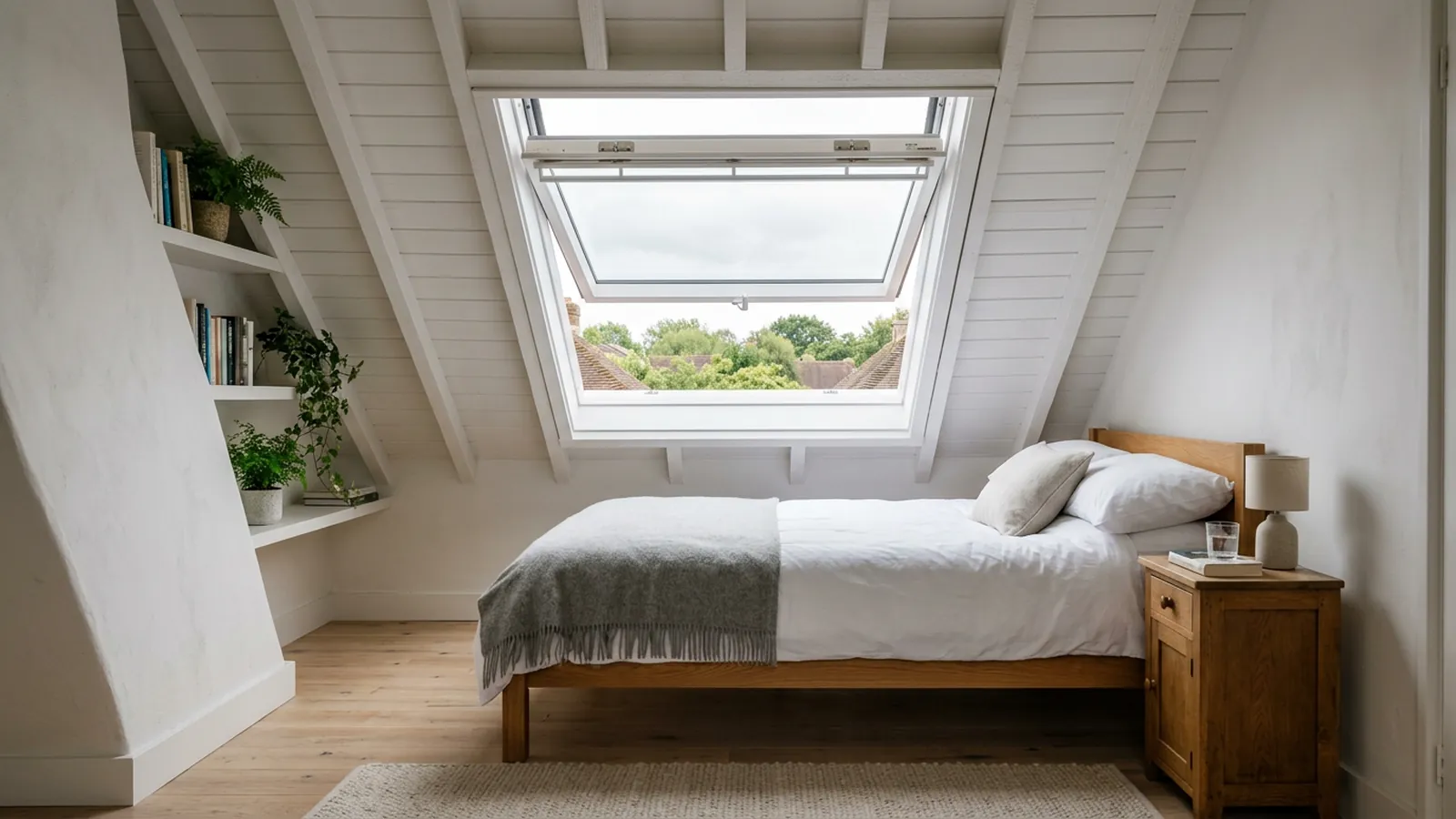
A roof window faces the sky, so on a bright July afternoon it collects far more sun than a wall window of the same size. In a loft bedroom on a Brighton Hill semi, with the ceiling already close to the tiles, that can make the room warm by teatime. South and west facing slopes feel it most; a north slope gives soft, even daylight with very little heat.
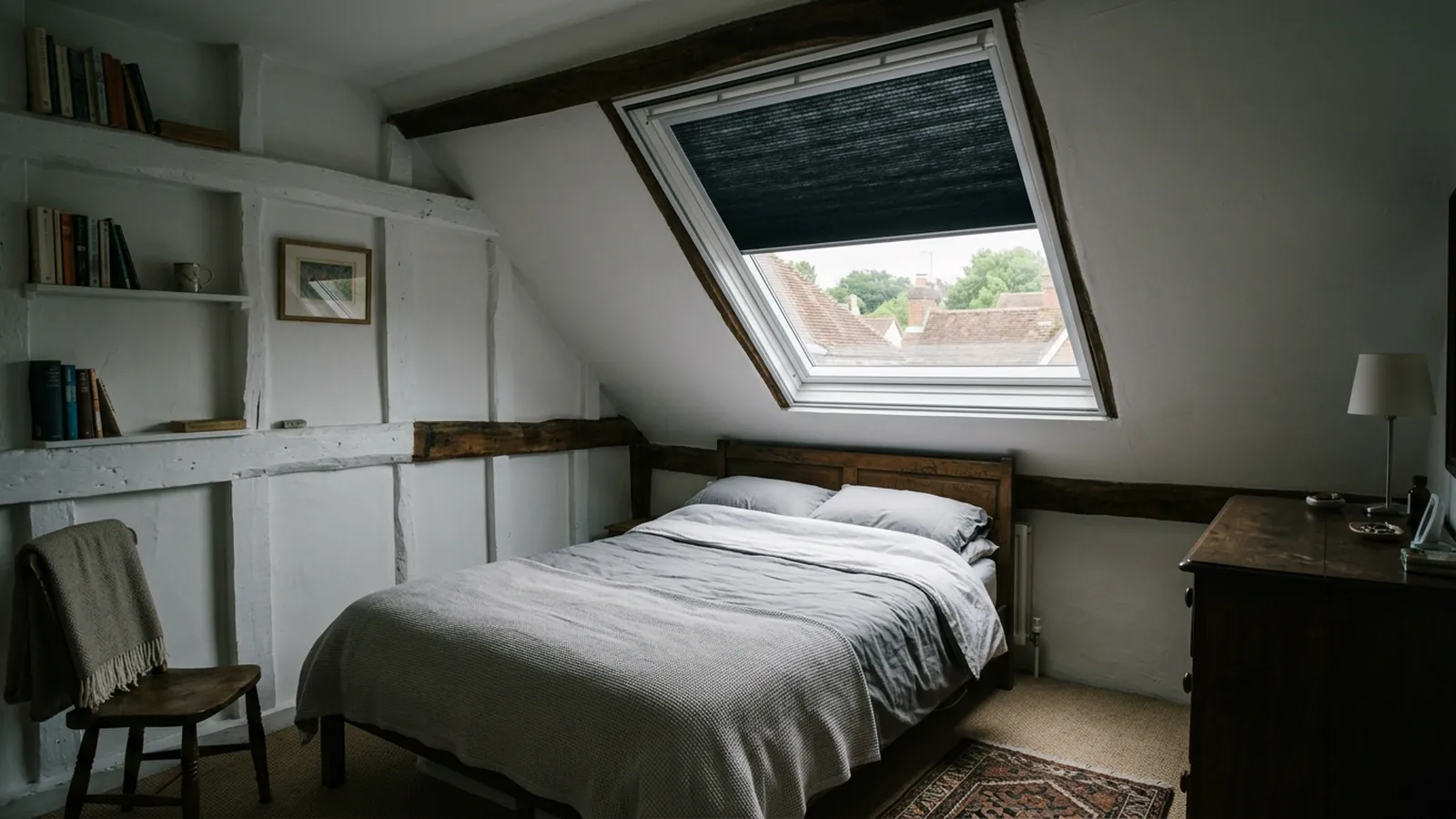
The answer is layered. An external awning blind stops the sun before it reaches the glass, which is the most effective option for a hot slope. Solar control glazing trims the heat further, and an opening sash lets the warm air out at the top of the room, where it collects. Our guide to VELUX blinds and shutters compares the blind types for heat and for blackout.
Sizing a roof window to the truss bays
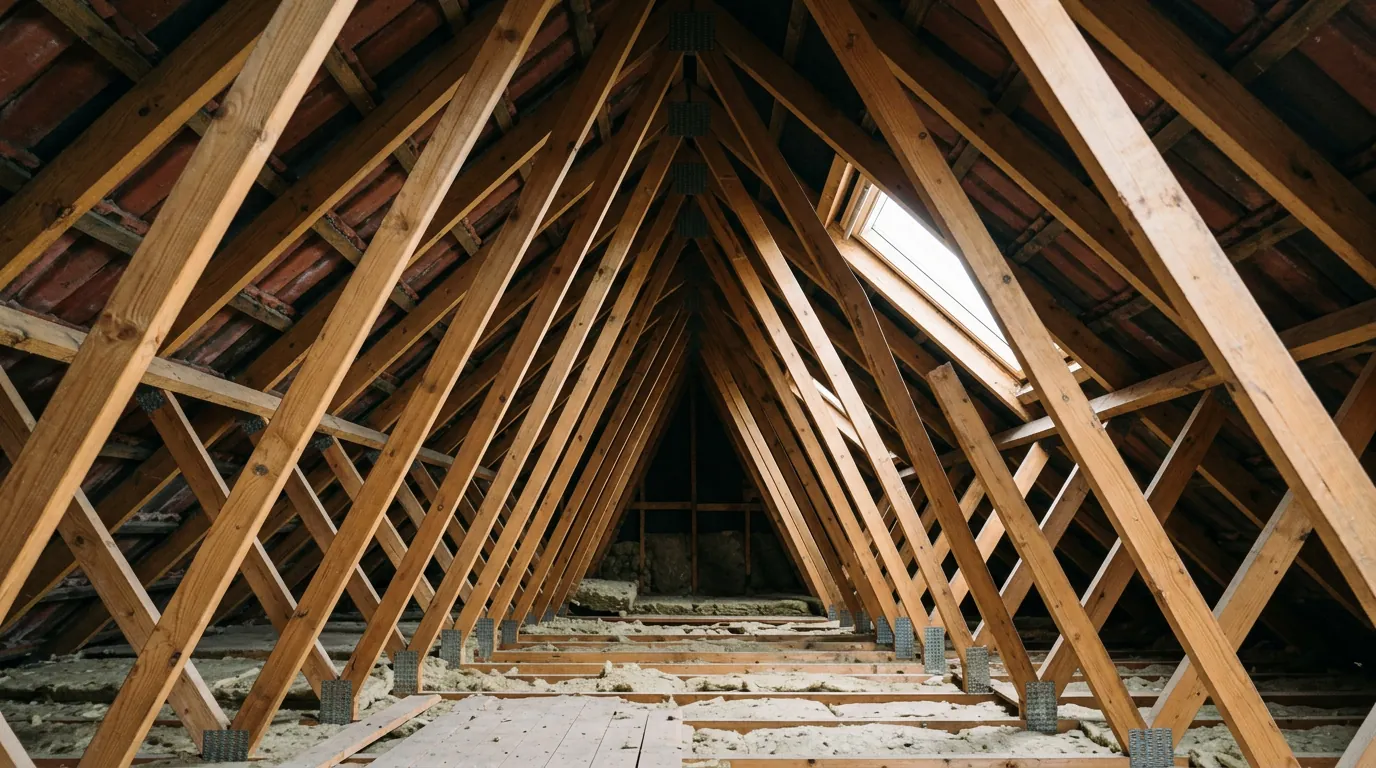
- Fink trussed rafter, factory made and designed to work as one whole frame
- W-shaped webs, joined at every node by pressed metal nail plates
- Tile covering on battens over the underlay
- Roof window set in the slope, fitted between trusses so the frame is untouched
- Narrow roof window sitting in the bay between two trusses
- Trusses at even 600mm centres along the roof
- No truss cut: the trusses either side of the window stay whole
- A wider window crosses a truss, so the cut needs designed trimming from an engineer or the truss maker
Warmth lost on winter nights
Even the best glazed unit loses more heat than an insulated roof around it, and a sloping pane loses a little more than the same pane standing upright. On a winter evening you may feel a cooler zone under a large skylight. It is a real effect, and it is also the reason glazing choice matters more in a roof than anywhere else in the house.
Current triple glazed options narrow the gap considerably, and a thermal blind drawn at dusk helps again. The trade-off is weight and cost against comfort, and the right pick depends on the room: a bedroom or a home office used all evening deserves the warmer unit more than a landing does. VELUX glazing options sets out what each pane is for.
| Drawback | Why it happens | Usual answer |
|---|---|---|
| Summer heat | The glass faces the sky and catches high sun | External awning blind, solar control glazing, opening sash for venting |
| Winter heat loss | Glazing is less insulating than the roof build-up beside it | Warmer glazing unit, thermal blind drawn at night |
| Rain noise | Drops strike the pane and frame directly overhead | Glazing with a noise-reducing laminated inner pane |
| Limited width | The frame has to sit between rafters or trusses | A taller window, or two narrower windows side by side |
| Condensation | Warm, damp room air meets the coldest surface in the room | Trickle ventilation left open, extraction in wet rooms |
| Reach and cleaning | High windows are hard to open and wash from outside | Centre pivot sash that turns for cleaning, or electric operation |
Rain noise and the size ceiling
Heavy rain on glass directly above your bed is louder than rain on concrete tiles and felt. Some people love the sound, others notice it at three in the morning. A glazing unit with a laminated inner pane damps it noticeably, which is worth asking about for any sleeping space.
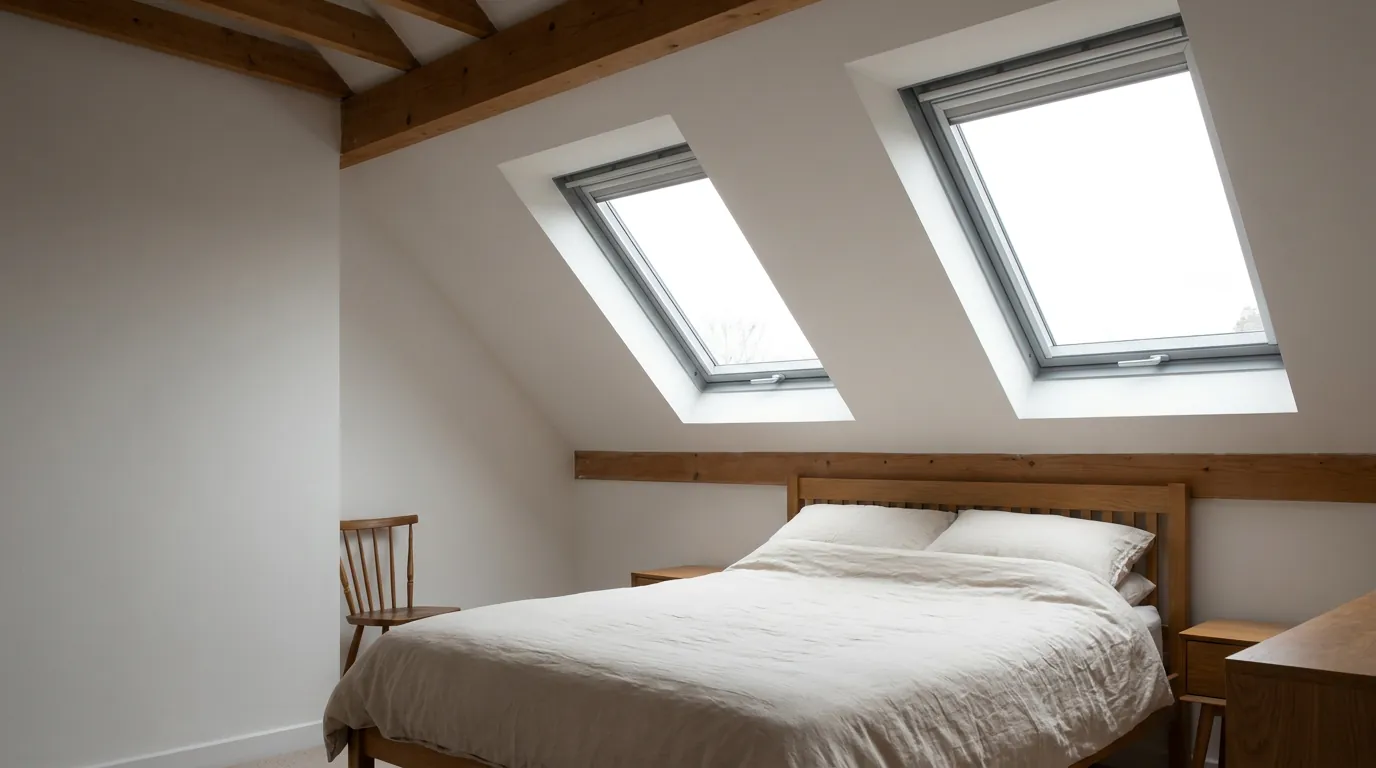
The second limit is width. A roof window sits between the roof timbers, and on the trussed rafter roofs built across Popley, Chineham and Hatch Warren those timbers are usually at 600mm centres. That caps how wide a single window can be without altering the structure, which only happens to an engineer's design. Taller sizes and pairs of windows in neighbouring bays usually get the daylight you want without touching a truss.
Condensation, reach and the pitch of your roof
Because the pane is the coldest surface in the room, moisture from a shower, cooking or a sleeping household settles on it first. It is a ventilation matter, not a fault in the window, and why condensation forms on a VELUX explains the fixes.
Height is the other everyday nuisance. A window set high in a slope needs a rod or a remote to open, and washing the outside of the glass means a sash that rotates inwards. Centre pivot and electric models answer that directly. Pitch matters too: a very shallow slope may fall below what a standard roof window accepts, covered in how shallow a roof a VELUX can go in. On a flat roof, a flat rooflight is the more natural choice.
The rule: most of these drawbacks are settled by what you specify, not by the window itself. The exception is the structure: width and pitch are fixed by the roof you have, so they are checked on a survey before any size is chosen.
Planning and the look from the street
On most estate houses a roof window on a rear slope sits well within permitted development, but a front slope, a conservation area or a listed building changes the position. In the historic cores of Old Basing, Odiham or Kingsclere, a standard frame can look out of place on handmade clay tile, and the local authority may take a view on it. Do VELUX windows need planning permission? sets out when to check first. A low profile conservation model exists for exactly that reason.
Weighing it up for your house
Set against the drawbacks is what a roof window does best: daylight from above lands deeper into a room than light from a wall, and an opening sash at the top of a stair or a loft room clears warm air better than any side window. For most rooms the downsides are managed by three decisions, the glazing, the blind and the size, and all three are easier once someone has looked at the slope, the orientation and the timbers.
That is what our survey is for. We measure the spacing where you want the window, note which way the slope faces, and recommend the pane and blind that suit the room before we quote. The notifiable paperwork with Building Control is ours to arrange, and the fitting carries a 10-year workmanship guarantee (a promise from us, not insurance backed). If you would like the pros and cons weighed for your own roof, arrange a survey visit and we will talk it through on site.