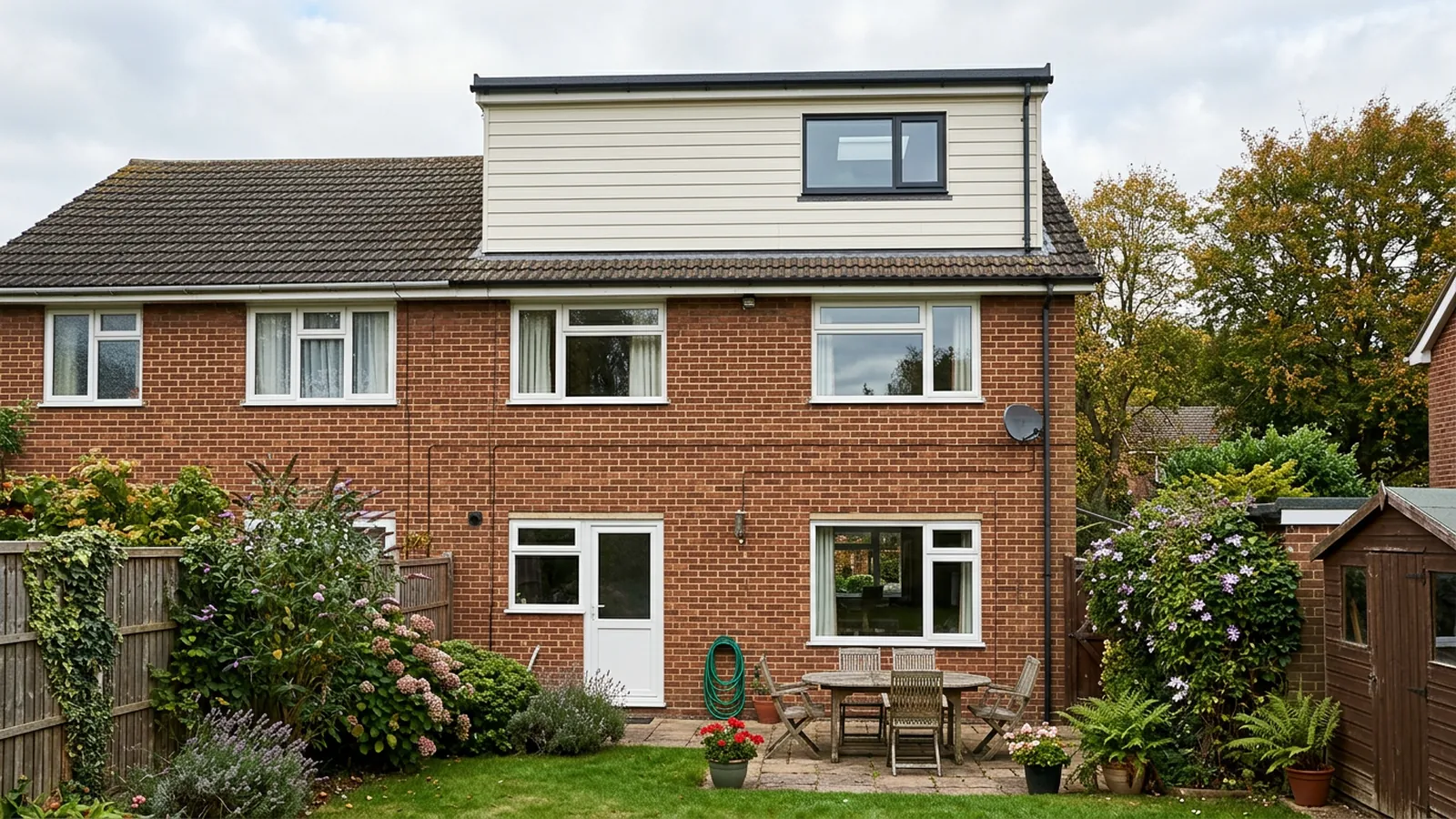
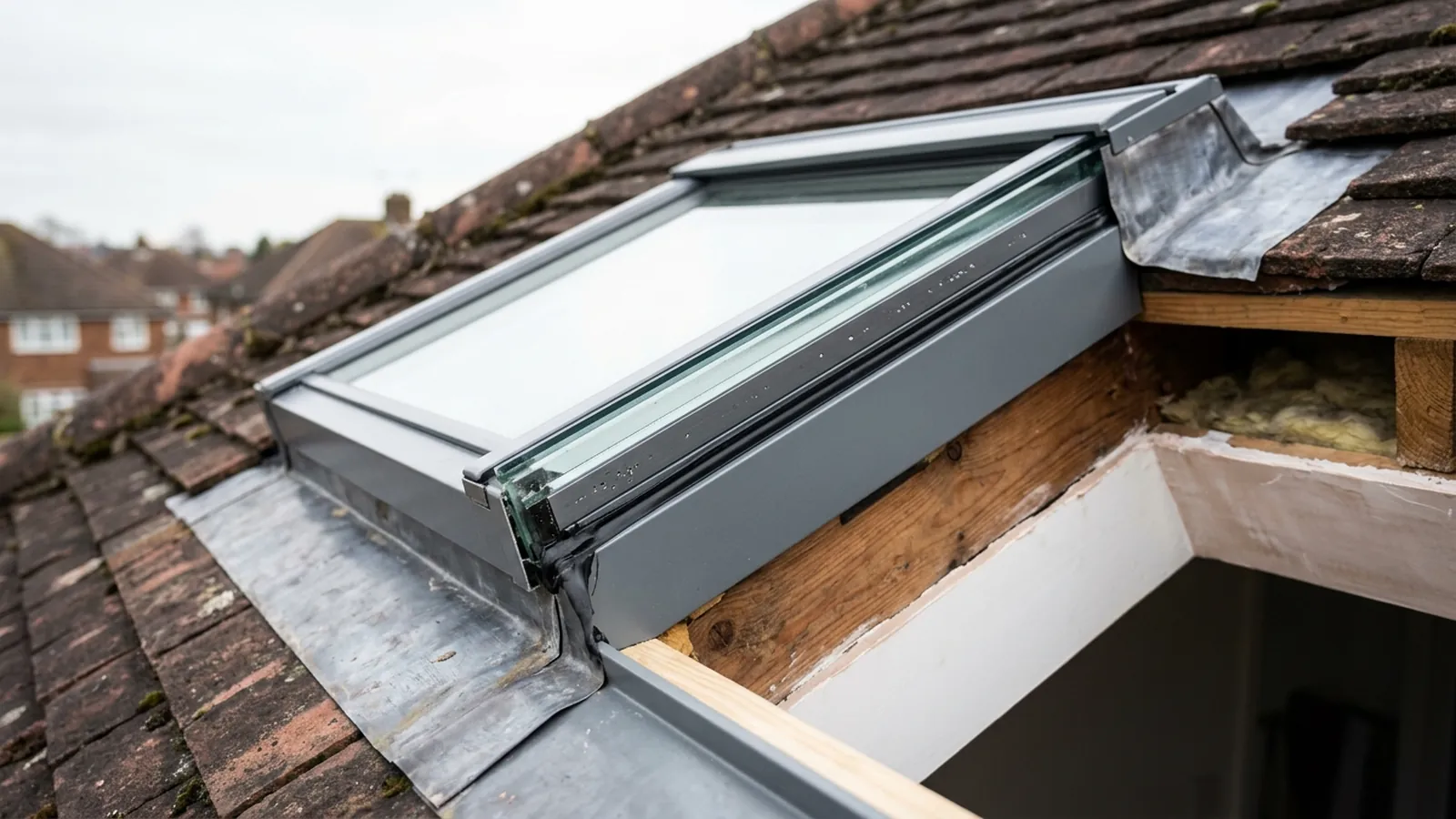
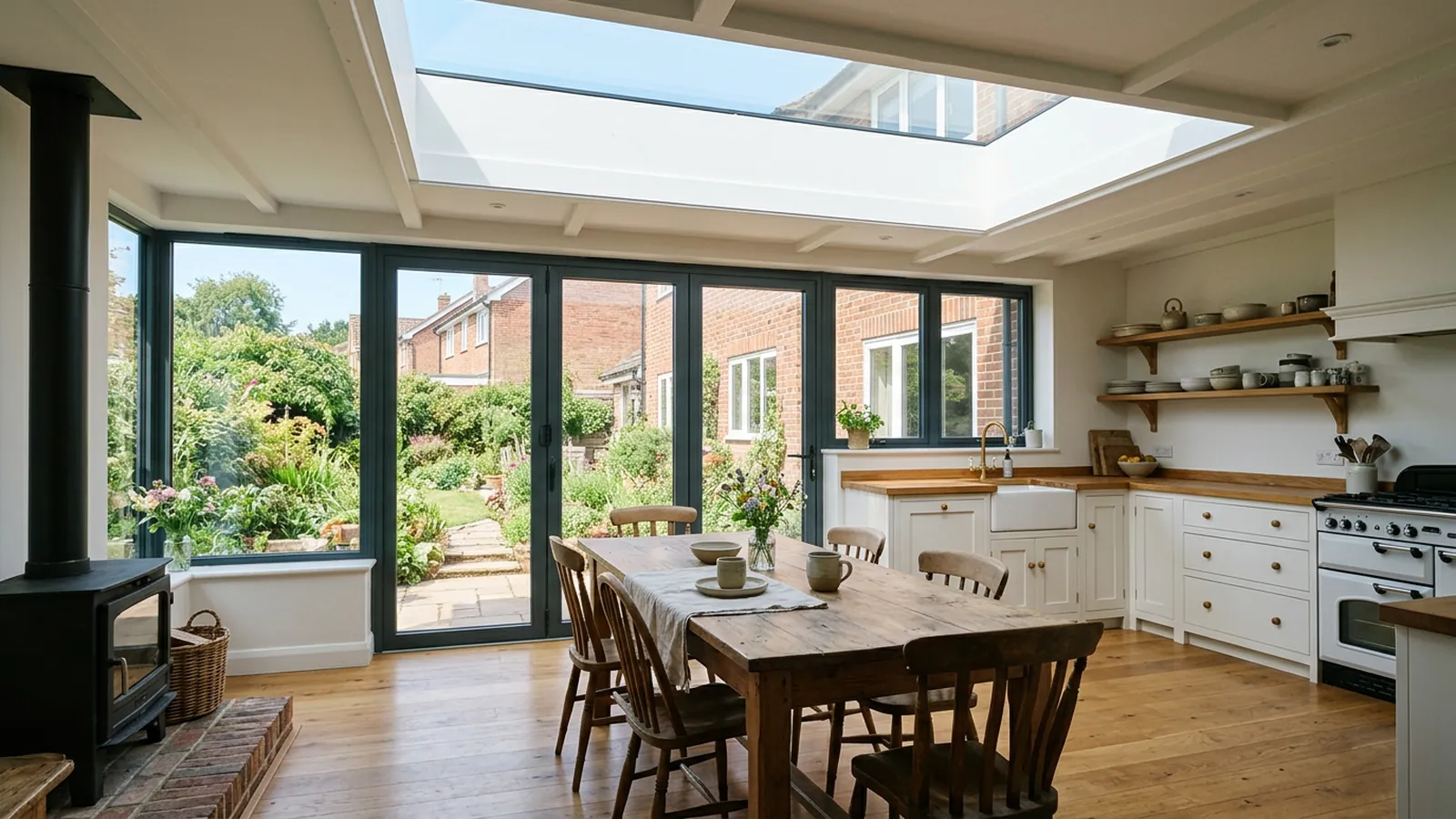
Put a roof window and a wall window of identical size side by side in the same room and they behave very differently. Our energy efficient rooflights service is built around that difference: a skylight in the slope is a strong source of daylight, and it is worth sizing and glazing it so the extra light arrives without the extra heat or glare you did not ask for.
Why the sky overhead is brighter
On an overcast day, which is the normal British day, the sky is brightest near the zenith and dimmer towards the horizon. A vertical window in a wall looks sideways, so half of what it sees is ground, hedges, parked cars and other houses, and only the lower, duller band of sky. Glass laid in a roof slope tilts up towards the brighter part of the sky and sees far more of it.
Obstruction matters just as much. On a close-packed estate street, a ground floor window on the side elevation can face a neighbour's gable a few metres away. A rooflight on the same house clears every fence, tree and roof line around it, which is why a dark landing or stairwell often changes character with one small window in the slope above it.
How a sealed rooflight unit works and fails
- Outer and inner glass panes, with the outer pane facing the weather
- Low-emissivity coating on one inner face, reflecting heat back into the room
- Warm-edge spacer bar holding the panes apart, filled with desiccant to soak up trace moisture
- Primary seal against each pane, backed by the secondary seal around the edge
- Dry sealed cavity, the insulating layer between the panes
- Broken edge seal: moist air gets in and the desiccant becomes saturated
- Mist and droplets trapped between the panes; they cannot be wiped off and the sealed unit needs replacing
- Inset: condensation on the room-side face of the glass is a ventilation or humidity issue, not a failed unit
How the light lands in the room
A wall window throws a pool of light across the floor near the wall and leaves the back of a deep room dim. Light from a roof window comes down from above, so it spreads over a wider part of the floor and reaches corners the side window never touches. In a loft room the effect is stronger again, because the low knee walls leave little room for anything but glazing in the slope.
| Point of comparison | Rooflight in the slope | Wall window |
|---|---|---|
| Part of the sky it sees | The brighter upper sky, largely unobstructed | The lower sky, often partly blocked by buildings and trees |
| Where the light falls | Spread widely from above, reaching deeper into the room | Concentrated near the window wall |
| Outlook | Sky and treetops, unless set low enough to see out | A direct view of the street or garden |
| Summer sun | High midday sun strikes the glass more directly | High sun is partly cut off by the eaves or reveal |
| Privacy | Hard to overlook from the street | Needs nets or blinds where it faces neighbours |
Where a wall window still wins
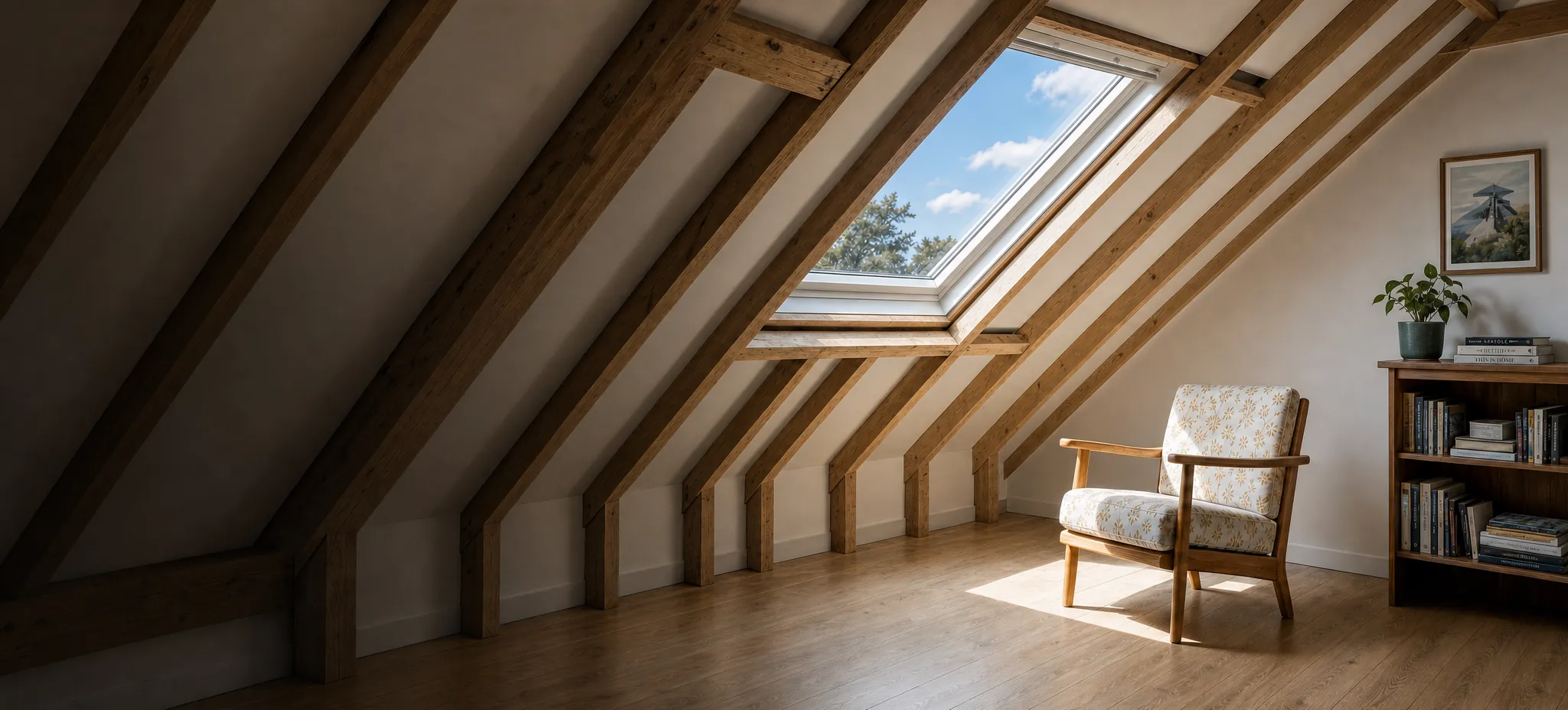
More light is not the only thing a window is for. A wall window gives you a view at eye level and a sense of where you are, and in winter the low sun comes in through it at an angle that warms the room when you most want warmth. A rooflight set high on a steep slope may show you nothing but sky from a chair.
Two things close that gap. Setting the roof window low enough, with its bottom edge near seated or standing eye height, gives a real outlook over the rooftops. A taller window in a narrow width adds both view and light without needing a wider opening between the trusses of an estate roof.
The rule: for a room that needs daylight, glass in the roof does more than the same glass in the wall. The exception is a room you use mainly for its outlook, such as a sitting room facing the garden, where a wall window or a mix of both suits better.
The catch: more light can mean more heat
The same exposure to the sky that makes a rooflight bright also lets it take in more solar heat on a clear summer day, and a south-facing slope feels it most. That is managed with the glass and the blind rather than by making the window smaller than the room needs. A solar control coating trims the heat while passing most of the visible light, which our answer on whether solar control glass makes a room darker sets out. For a loft room that already runs warm, the guide to overheating in south-facing loft rooms covers the full set of options.
Direction plays its part too. A north-facing slope gives a steady, soft light with little glare, which is why artists have always liked it, while a south slope gives more light and more warmth. Our answer on which way a rooflight should face weighs the two.
What this means when you size a rooflight
Because roof glazing is so effective, the useful question is rarely how to get as much glass as possible into the slope. It is how much you need for the room, so the extra daylight does not come with more heat loss in winter than the room can justify. Our guide to balancing daylight gain against heat loss works through that sizing decision properly.
- Decide what the room is for. A study, a bedroom and a stairwell each want a different mix of light, view and shade.
- Check the roof. On a trussed estate roof the width is set by the gap between trusses, so extra light usually comes from a taller unit or a second one in the next bay.
- Choose the glass. Match coating and glazing to the direction the slope faces.
- Place it for the view. Set the height on the slope so you can see out from where you sit or stand.
Will it cut lighting during the day?
Often, yes. A room lit from above can go through a dull afternoon without the ceiling light on, where the same room with only a side window would not. How much difference that makes depends on the room, its use and the hours you spend in it, which is the ground covered in our answer on whether a rooflight can cut lighting use during the day.
If you are weighing a roof window against a new wall opening, or deciding how big the glass should be for a dark room, arrange a survey of the roof and we will measure the slope, the timbers and the direction it faces before recommending a size.