Parents usually ask this after picturing a sash closing on fingers, or a toddler finding the button. Both are fair worries, and both are about how the unit is specified and where things go in the room, which is what our electric and opening rooflight installation work settles at the survey. The rest of this page takes each risk in turn and says what actually reduces it.
Where the real risks sit
An electric skylight is a sash on a motor, called an actuator, driven by a switch, a remote or an app. Nothing about the motor makes the glass or the frame weaker than on a manual rooflight. What changes is that the sash can move without anyone standing at it, and that the thing moving it is a small control a child can pick up.
| Risk | When it matters | What reduces it |
|---|---|---|
| Fingers at the frame | A window low enough for a child to touch the sash edge while it closes | Position above reach; a unit whose maker states it stops or reverses on an obstruction; closing only when you can see it |
| Playing with controls | A handheld remote left on a bedside table, or a wall switch at child height | Switch mounted high, remote stored with an adult, a keypad or app that can be locked |
| Climbing out | A low sill in a loft room with furniture beneath it | Keep beds and chests away from the window, use a restricted opening where the unit allows it |
| Blind cords | A corded blind hanging within reach of a cot or bed | A motorised or cordless blind fitted to the window itself |
| Unexpected closing | A rain sensor or timer shuts the sash while someone is at it | Knowing which automatic features are active, and siting the window where nobody leans in |
How rooflights and roof windows open
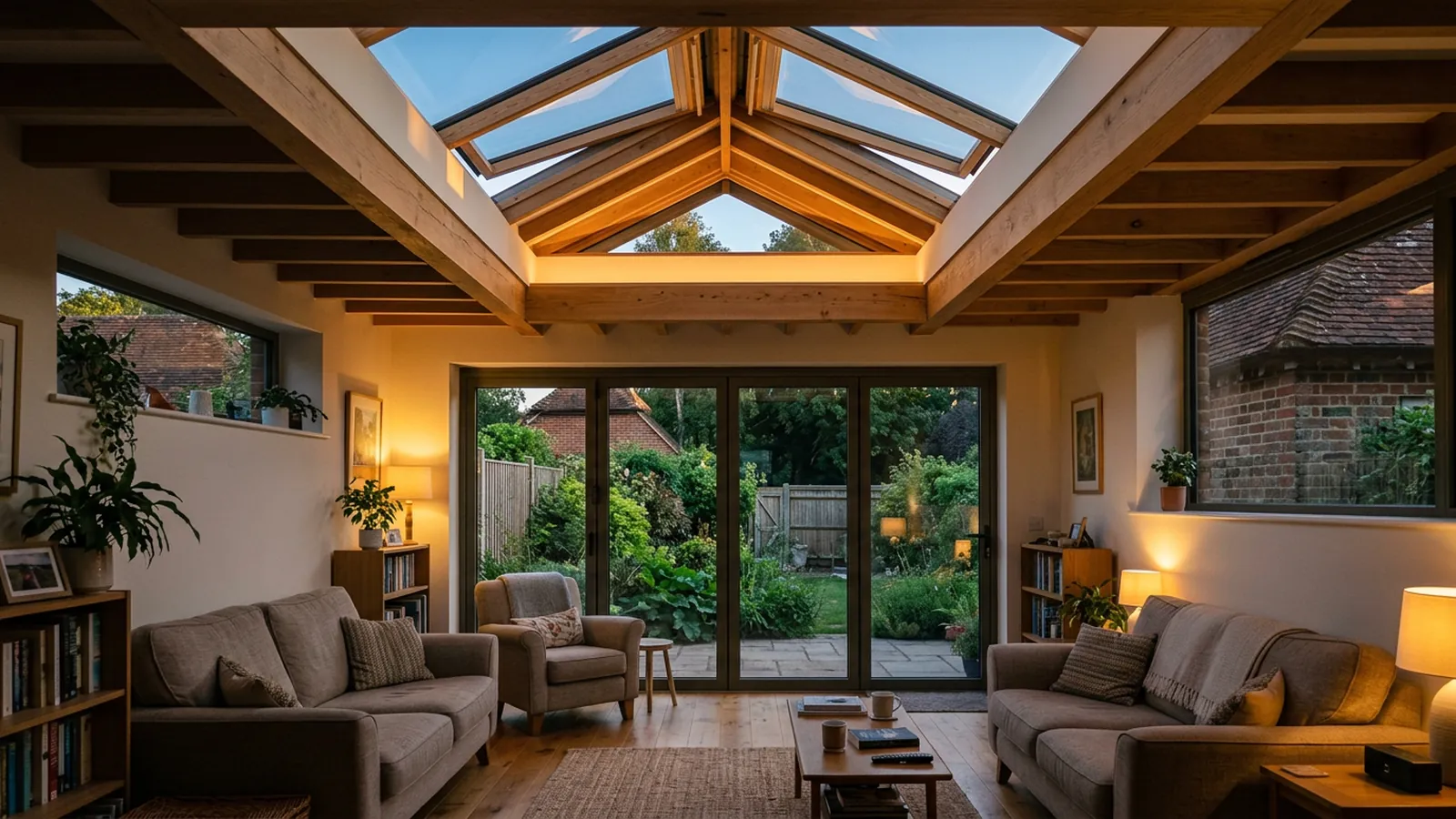
- Centre-pivot sash, turns so the lower edge tips out and the top swings in, handy for cleaning from inside
- Pivot point, the hinge line across the middle of the sash
- Top-hung sash, swings outward clear of the opening for a wider view
- Top hinge, where the sash is hung from the head of the frame
- Fixed rooflight, glazing sealed to the upstand with no moving parts
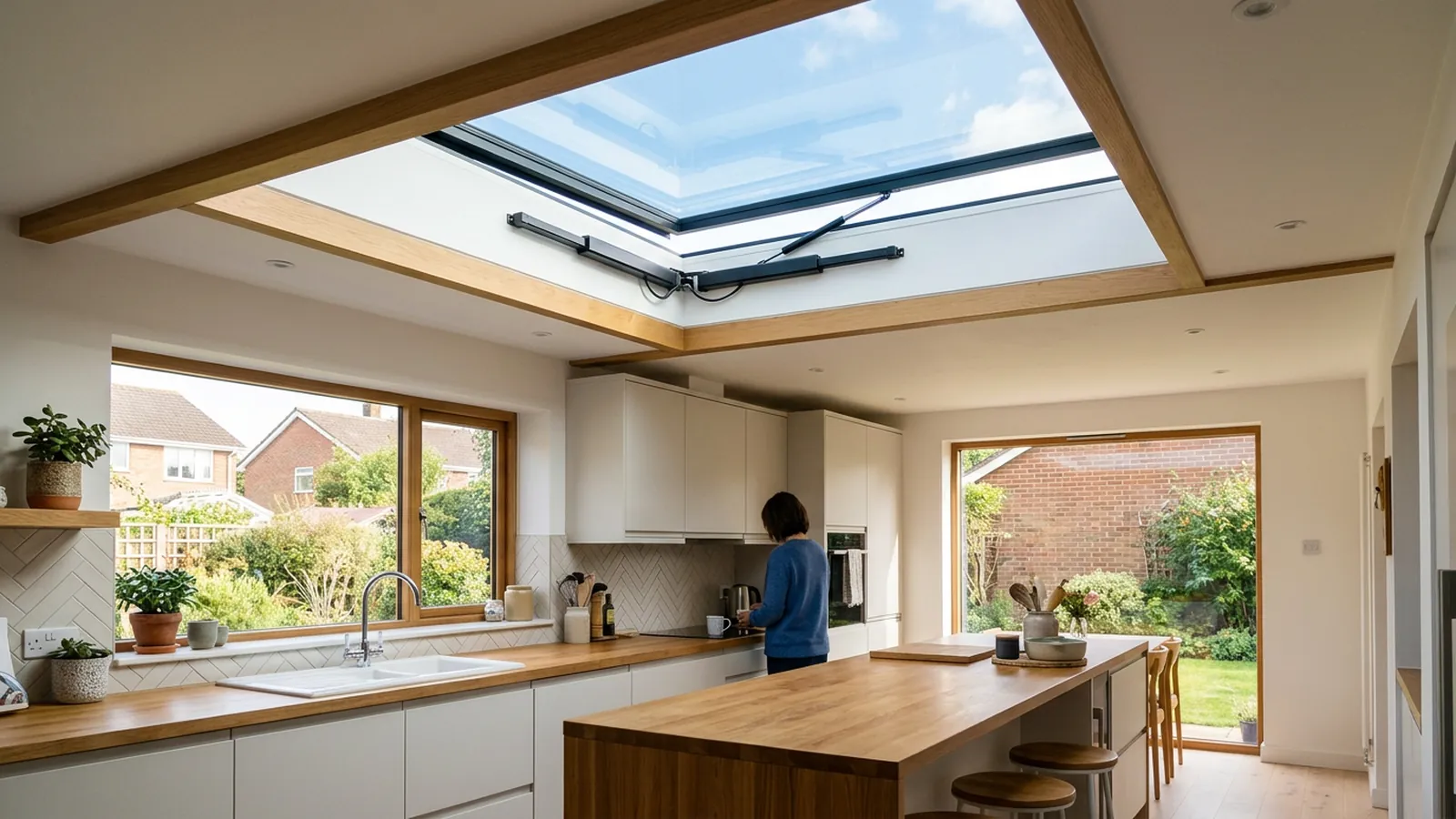
- Electric opening rooflight, the glazed lid lifts from one edge for ventilation
- Motorised chain actuator, pushes the lid open and draws it closed
- Rain sensor, closes the rooflight automatically when it starts to rain
Closing force and obstruction
Actuators on domestic roof windows move the sash at a steady, slow pace, and several makers build in a limit that stops the motor when it meets resistance. Whether a particular model does this, and how it behaves after it stops, is set out in the maker's own instructions, and we check it against your room before recommending a unit. What no feature replaces is supervision: the safest habit is to close the rooflight from where you can see the frame, and to treat the close button the way you would a car window.
Top-hung and centre-pivot sashes close differently, and a flat rooflight lifting on a chain actuator is a different shape again. The guide to hinged and sliding opening rooflights explains how each type moves, which helps when you are picturing where a hand could end up.
Keeping the controls out of small hands
This is the part you control most directly. A wall switch goes where an adult reaches it easily and a toddler does not, usually beside the room's light switch rather than by the bed. A handheld remote works best kept in a drawer or on a hook near the door. Many systems let you lock a keypad, set the app so only certain phones operate it, or pair the remote so it has to be held for the sash to keep moving.
How the switch, remote, keypad and app fit together, and which suits a family room, is covered in how is an electric rooflight controlled?. If you want the security side as well, the guide to security and locking on electric rooflights covers locked positions and what the motor holds shut.
The rule: plan the control position before the wiring goes in, because moving a switch later means opening up a finished wall. The exception is a battery or solar unit with a wireless keypad, which can be stuck wherever it is safest and moved as the children grow.
Loft bedrooms and low windows
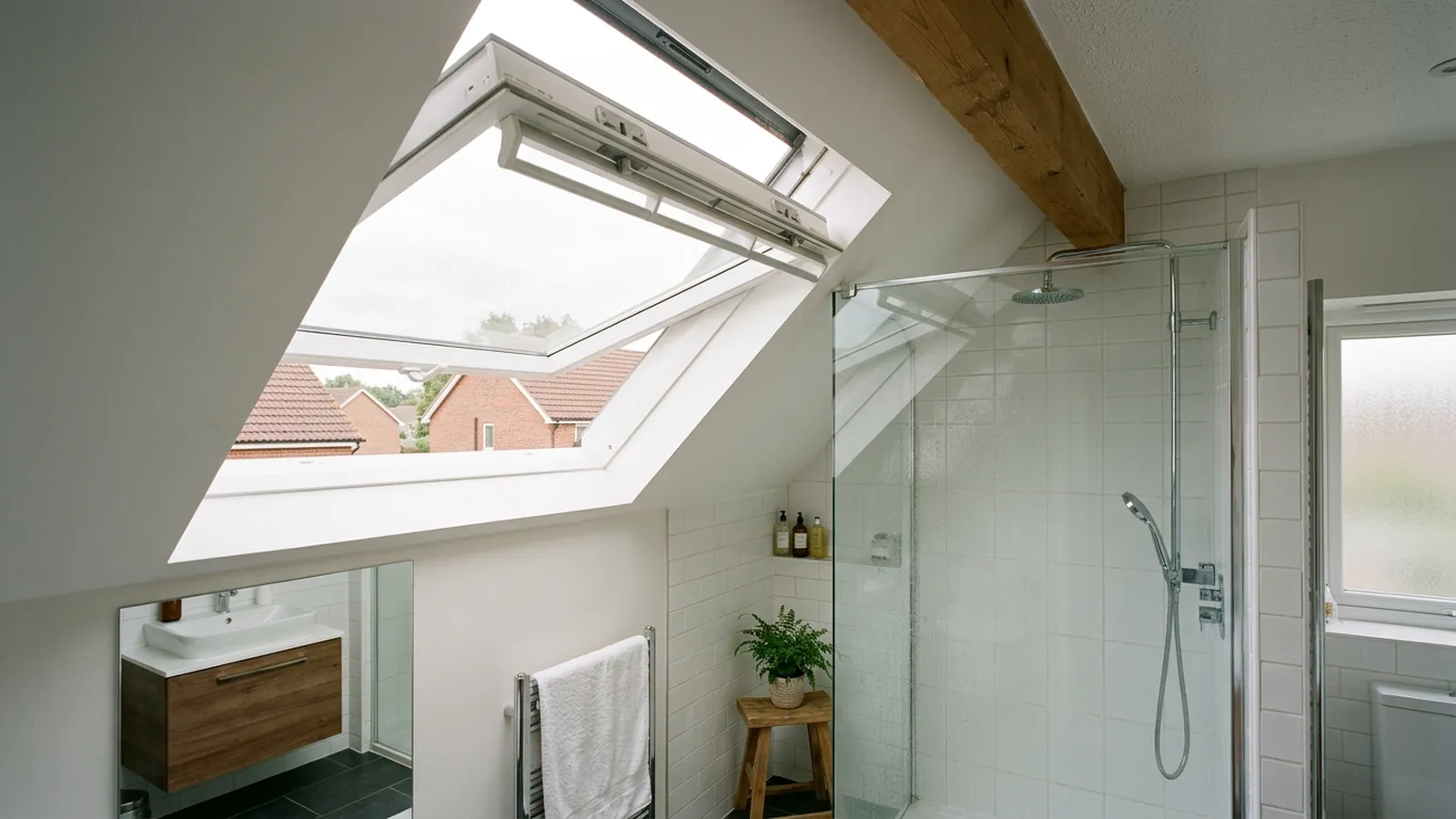
A roof window in a converted loft often sits lower than a wall window would, because the slope brings the glass down towards the floor. In a child's bedroom that is the case to think hardest about. Keep beds, desks and chests of drawers away from beneath it, so a climbing child cannot reach the opening. Where the room is a habitable loft room, the fire escape position under the Building Regulations still applies, so a restrictor cannot simply make an escape window unusable; the survey checks which window, if any, is doing that job.
A motor is often the right answer in these rooms, since it means a high window can be opened without a pole or a chair to stand on. The guide to an electric roof window for a loft bedroom out of reach goes through placing one well in a sloping ceiling.
Blinds, sensors and the manual override
Corded blinds are a known strangulation hazard for young children, which is why blinds sold now must meet child safety standards on cords. A motorised or cordless blind made for the rooflight takes the cord out of the room altogether. On an electric skylight the blind can run from the same control, so one action darkens the room with nothing hanging down.
Rain sensors close the sash automatically, which is good for the room and worth knowing about with children, because the window can move when nobody pressed anything. Parents also ask how the sash is shut if the power goes off with it open; the answer on whether an electric rooflight has a manual override covers that, and how far an opening rooflight opens tells you the size of gap you are planning around.
What we check at the survey
We look at the room before we quote, and for a family this is where the safety answer gets specific. We note the sill height against the floor, which rooms are children's rooms, where the furniture will go and where an adult naturally stands. From that we suggest the switch position, whether a keypad lock or a restricted setting is worth having, and whether a blind should be motorised from the start. Any notifiable electrical or roof work is reported to Building Control as part of the job, and the installation carries a 10-year workmanship guarantee (not insurance backed).
If you are weighing up a first opening skylight for a nursery, a loft bedroom or a stairwell, ask us to survey the room and we will show you where the controls and the window should sit before anything is ordered.