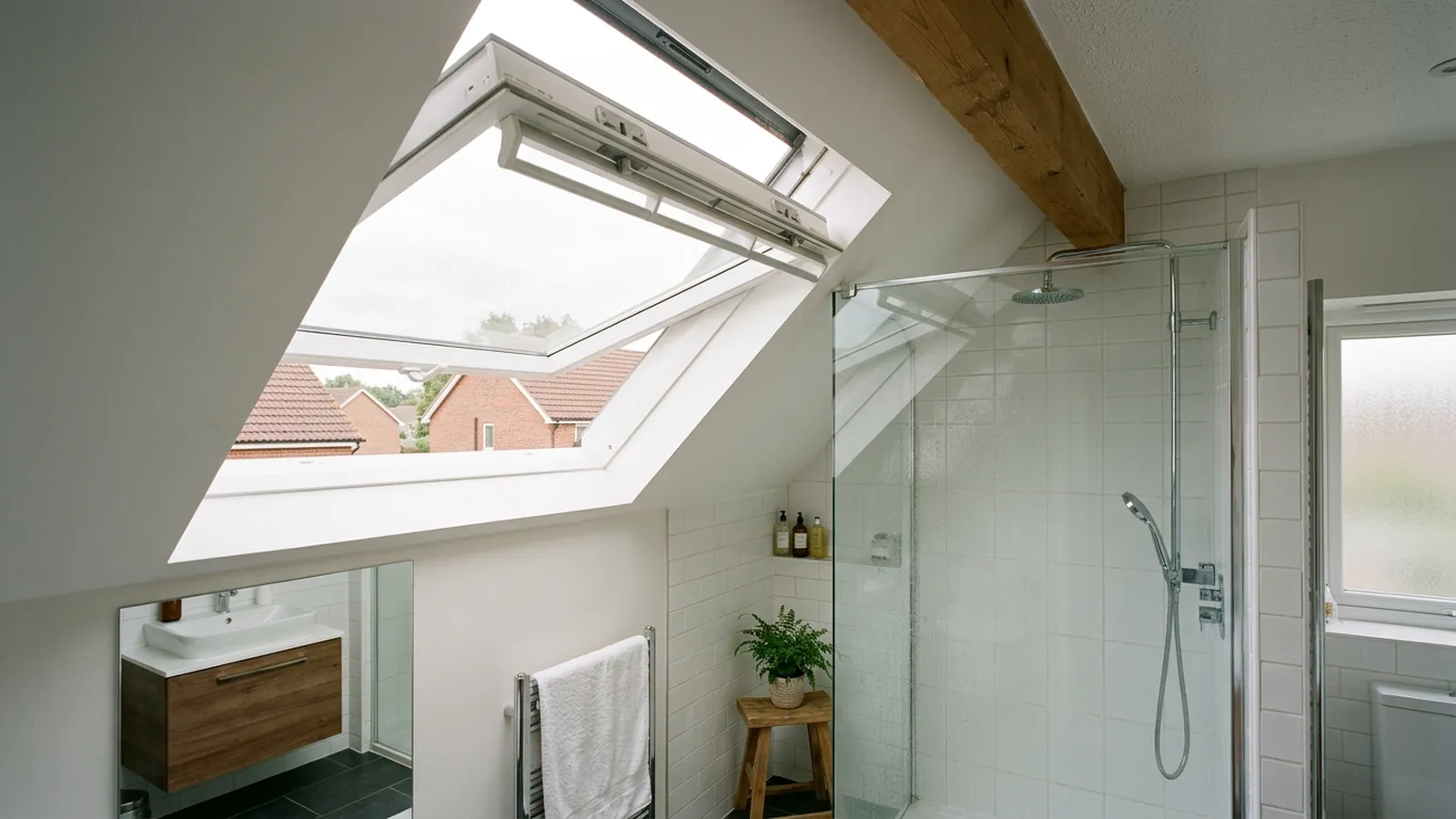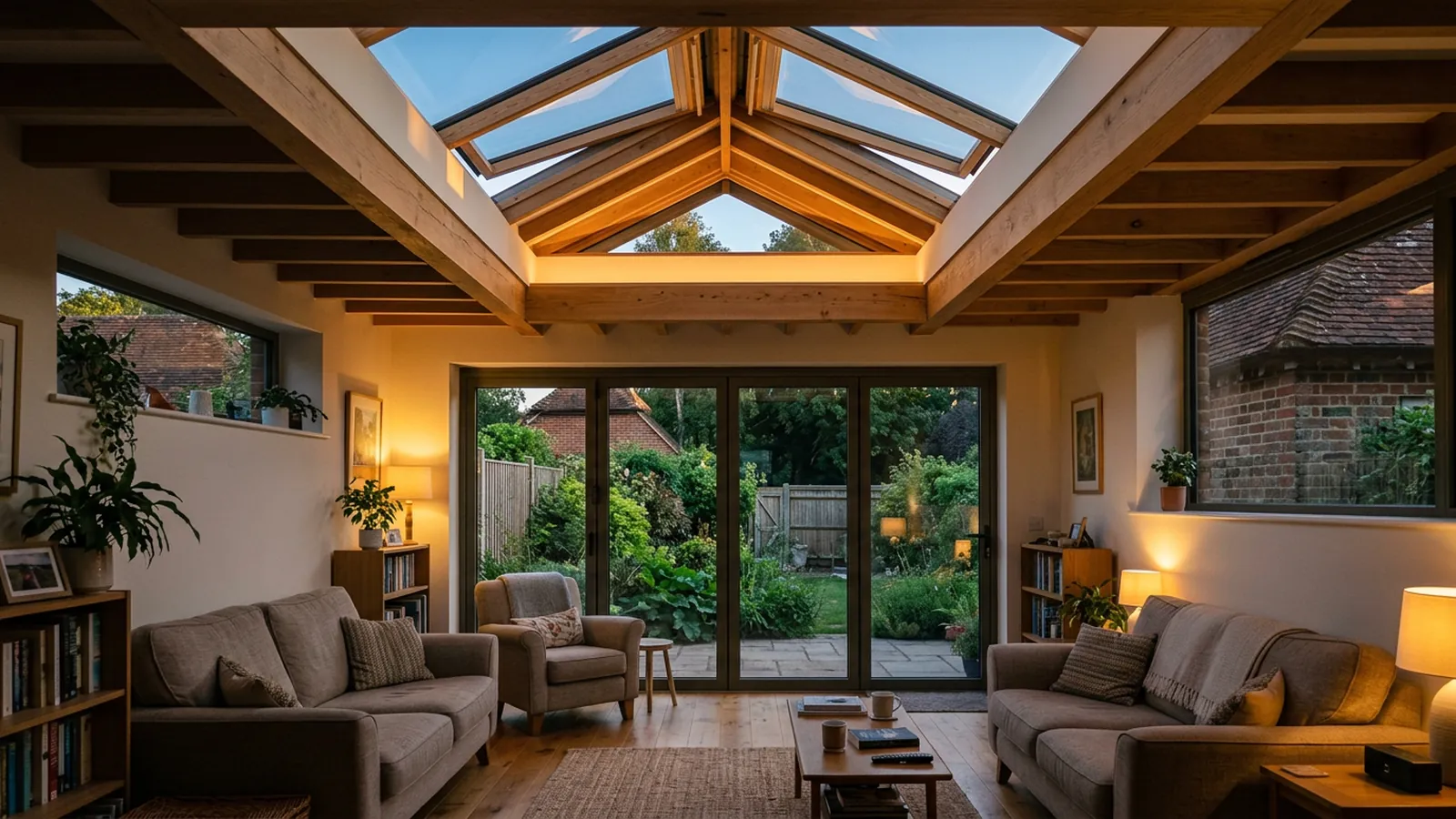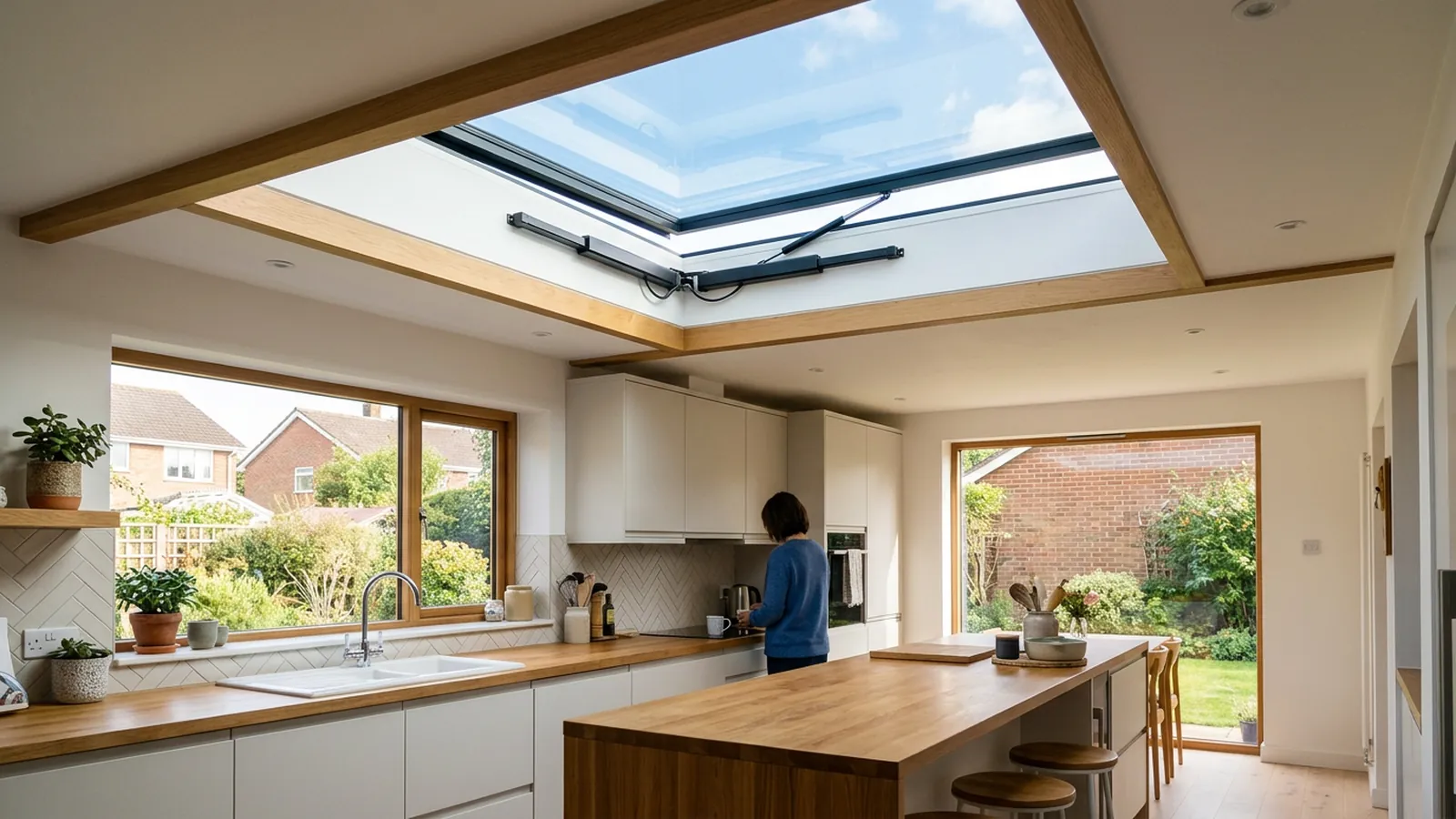
A power cut on a wet evening with the loft window propped open is exactly the moment to know the answer. How the motor, the control and the power supply fit together is set out on our electric and opening rooflight installation page; this answer sticks to one situation: the electricity goes off, and the skylight overhead is on a motor.
Why the sash simply stays put
The motor that pushes an opening rooflight out and pulls it back, the actuator, is driven by low-voltage power from a control unit, which in turn is fed from the mains. Take the mains away and the actuator has nothing to drive it. It does not spring open or fall shut, because the chain or spindle inside it holds its position when it is not moving. That is a deliberate feature: a rooflight that drifted when the power dropped would be a worse problem than one that freezes.
So whatever position the sash was in at the moment of the cut is the position it keeps. A closed rooflight stays weathertight and locked in its closed position. An open one stays open, at whatever gap you left it.
How rooflights and roof windows open
- Centre-pivot sash, turns so the lower edge tips out and the top swings in, handy for cleaning from inside
- Pivot point, the hinge line across the middle of the sash
- Top-hung sash, swings outward clear of the opening for a wider view
- Top hinge, where the sash is hung from the head of the frame
- Fixed rooflight, glazing sealed to the upstand with no moving parts
- Electric opening rooflight, the glazed lid lifts from one edge for ventilation
- Motorised chain actuator, pushes the lid open and draws it closed
- Rain sensor, closes the rooflight automatically when it starts to rain
The rain sensor needs power too
Rain sensors are what let owners leave a loft room vented while they are out. The sensor spots water on its surface and tells the control unit to close the sash. On a mains system both parts are powered from the same supply, so during a cut the sensor sees the rain and nothing happens. That is the one gap in an otherwise sensible arrangement, and it matters most on a high roof window in a bedroom nobody can reach without a ladder. The full picture of how automatic closing behaves in normal use sits in our guide to rain sensors and automatic closing; the short answer on whether a sash can stay open through a shower is in can an opening rooflight be left open in the rain.
The habit worth keeping: if a storm is forecast and the house is on a mains-powered opening rooflight, close it before bed or before going out. The exception is a unit with its own battery, which can still answer its sensor while the mains is down.
Mains, solar and battery-backed compared
How a rooflight behaves when the grid drops depends almost entirely on where its power comes from.
| Power source | During the cut | Rain closing |
|---|---|---|
| Mains, hard-wired | Motor stops, sash holds its position | Unavailable until power returns |
| Solar with built-in battery | Runs on its own stored charge, unaffected by the house supply | Works while the battery holds charge |
| Mains with battery backup unit | Switches to the backup battery where one is fitted | Works while the backup lasts |
| Manual winder or pole | Unchanged: no motor involved | None: someone closes it |
Solar units never touch the house wiring at all, which is why they carry on through a cut. Their limit is their own charge, and how that behaves in a dull month is answered in do solar rooflights work in winter. Whether solar or mains suits your roof in the first place is weighed up in the guide to solar-powered and mains rooflights.
Closing it by hand
Most electric roof windows can be shut without power, but the method varies by maker and model. On some there is a release that disconnects the chain so the sash can be pulled closed by hand; on others the drive has a point for a winding tool. Flat rooflights over an extension vary more, and some can only be moved by their motor. The owner's instructions are the place to check, and it is worth trying the release once on a dry day so it is familiar. Our answer on whether an electric rooflight has a manual override goes through what to look for.
Reaching the handle is the other half. A loft bedroom window above a bed or a stairwell rooflight over a drop needs a safe way up, so treat that as part of the plan rather than something to improvise in the dark.
If the cut runs on with the sash open
A brief cut rarely matters. A longer one, with an opening sash left ajar and no way to close it by hand, raises two practical points: weather and security. Indoors, move anything that would suffer from a drip away from the area directly under the opening, and put a towel down on the floor or sill below. Security is the bigger question on a flat rooflight over a single-storey extension, such as the rear kitchen of a semi in Brighton Hill or Popley, where the roof can sit within reach of a garden wall or a neighbouring garage. A roof window high in a loft conversion is out of casual reach, so there the only concern is keeping the room dry until the supply returns and the motor can shut the sash.
When the power comes back
Once the supply is restored the control unit powers up and the rooflight normally answers its switch or remote as before. Some systems want a short reset, or the remote needs pairing again with the control unit, and a few run the sash through a calibration movement on start-up. If the sash does not respond, check the fused spur or circuit that feeds it has not tripped, then follow the maker's reset steps. App and smart-home links sometimes drop off after a cut and need reconnecting through the hub.
Infographic
How a rooflight job runs, from survey to guarantee
Roof survey
We look at the structure, the covering and the room below before anything is priced.
Specification
A size, type and position that fits your roof, and whether the work is notifiable.
Paperwork
Building Control notified where the work needs it, and planning checked where it applies.
Installation
Opening formed, frame fixed, flashed or dressed in, then lined and finished inside.
Sign-off and guarantee
Completion paperwork where needed and a 10-year workmanship guarantee.
Planning for it at installation
The time to decide how a rooflight should behave in a cut is before it goes in. At the survey we look at where the window sits, how high it is, whether a sensor matters for that room, and whether solar or a backup battery is worth specifying. A skylight over a kitchen extension you can reach from the floor with a pole is a different decision from a roof window high in a Hatch Warren loft conversion. Once fitted, the work is covered by a 10-year workmanship guarantee (a written promise from us, not insurance backed). If you would like to talk through which power option suits your roof, arrange a survey visit.