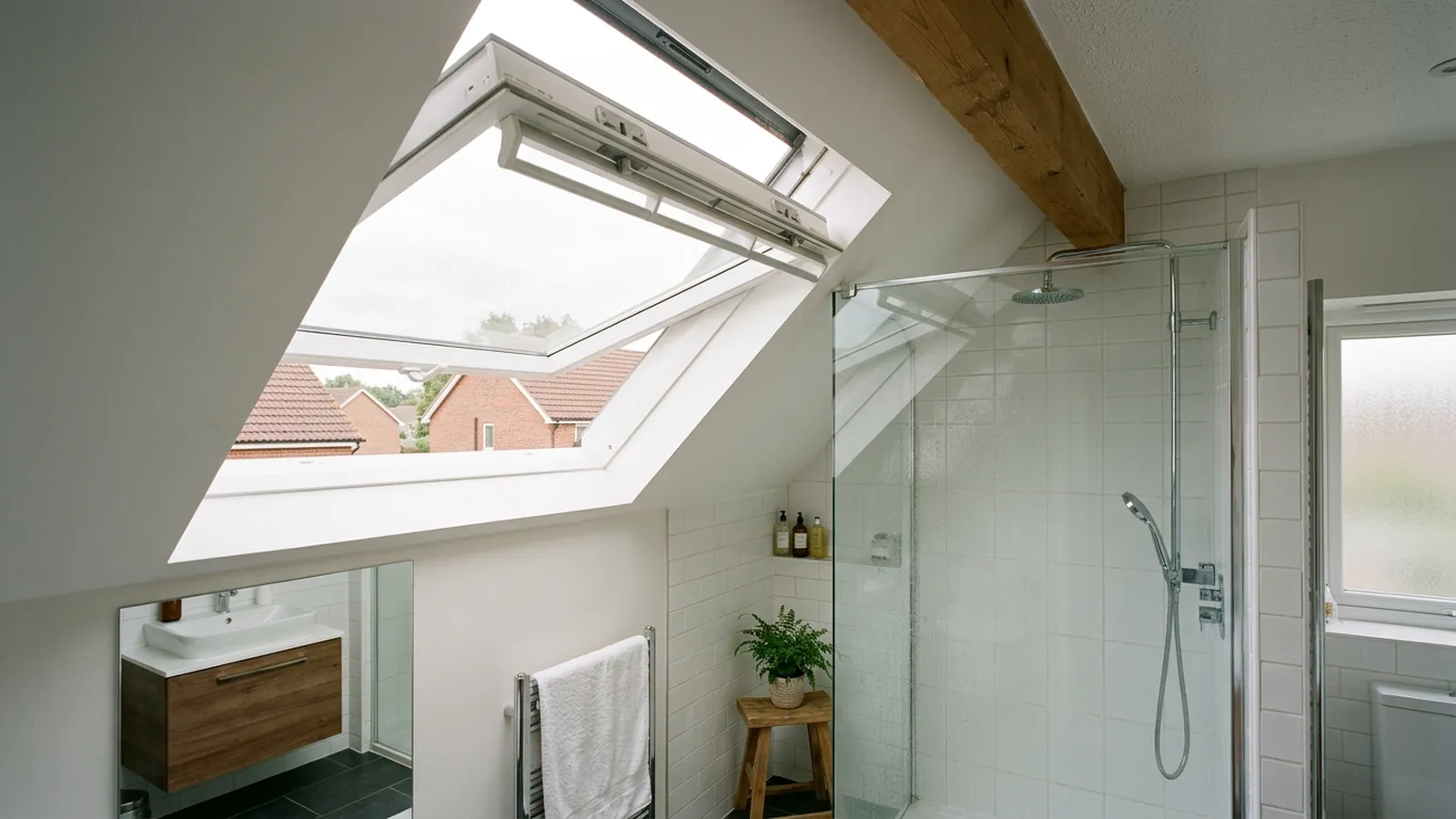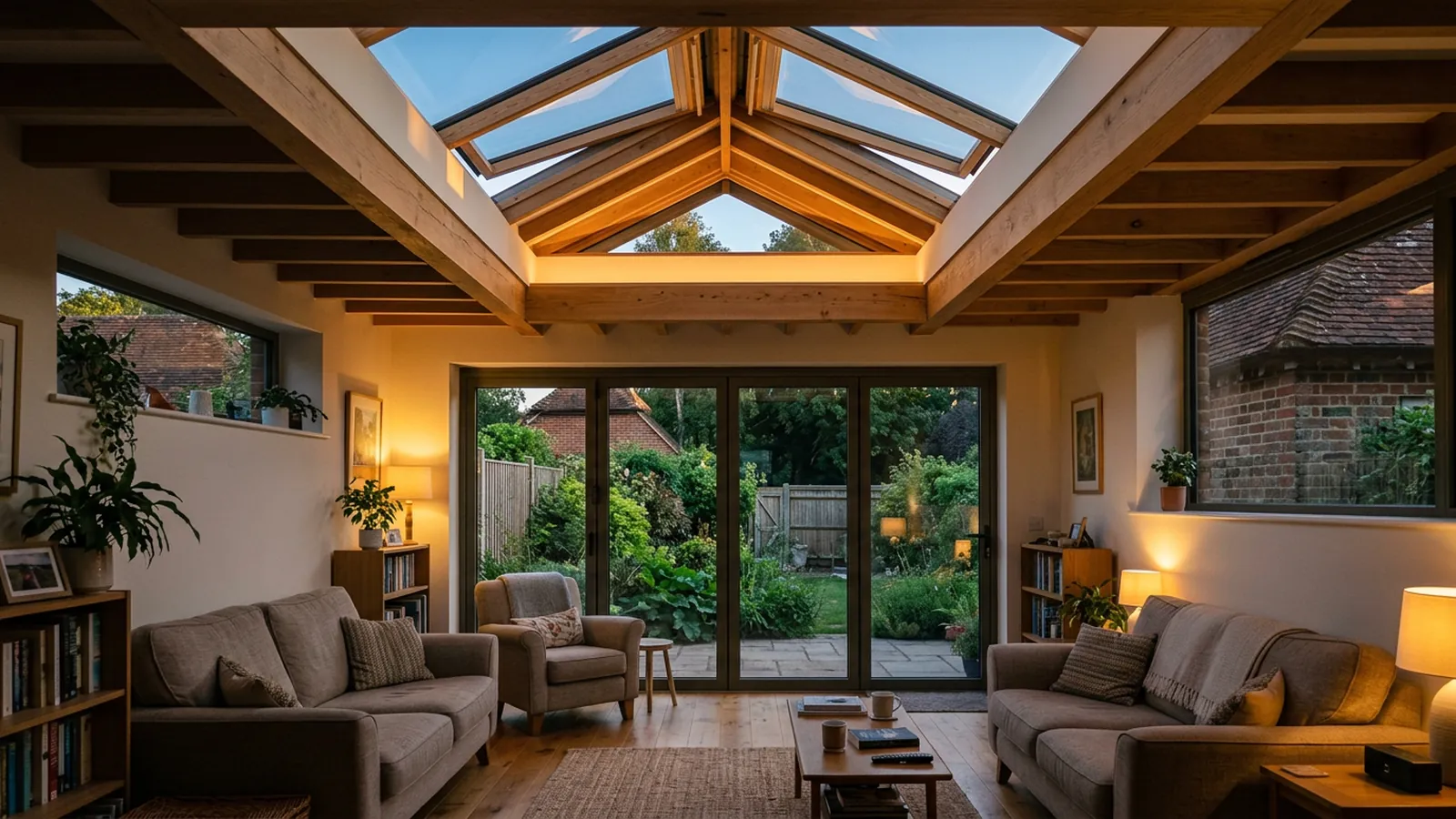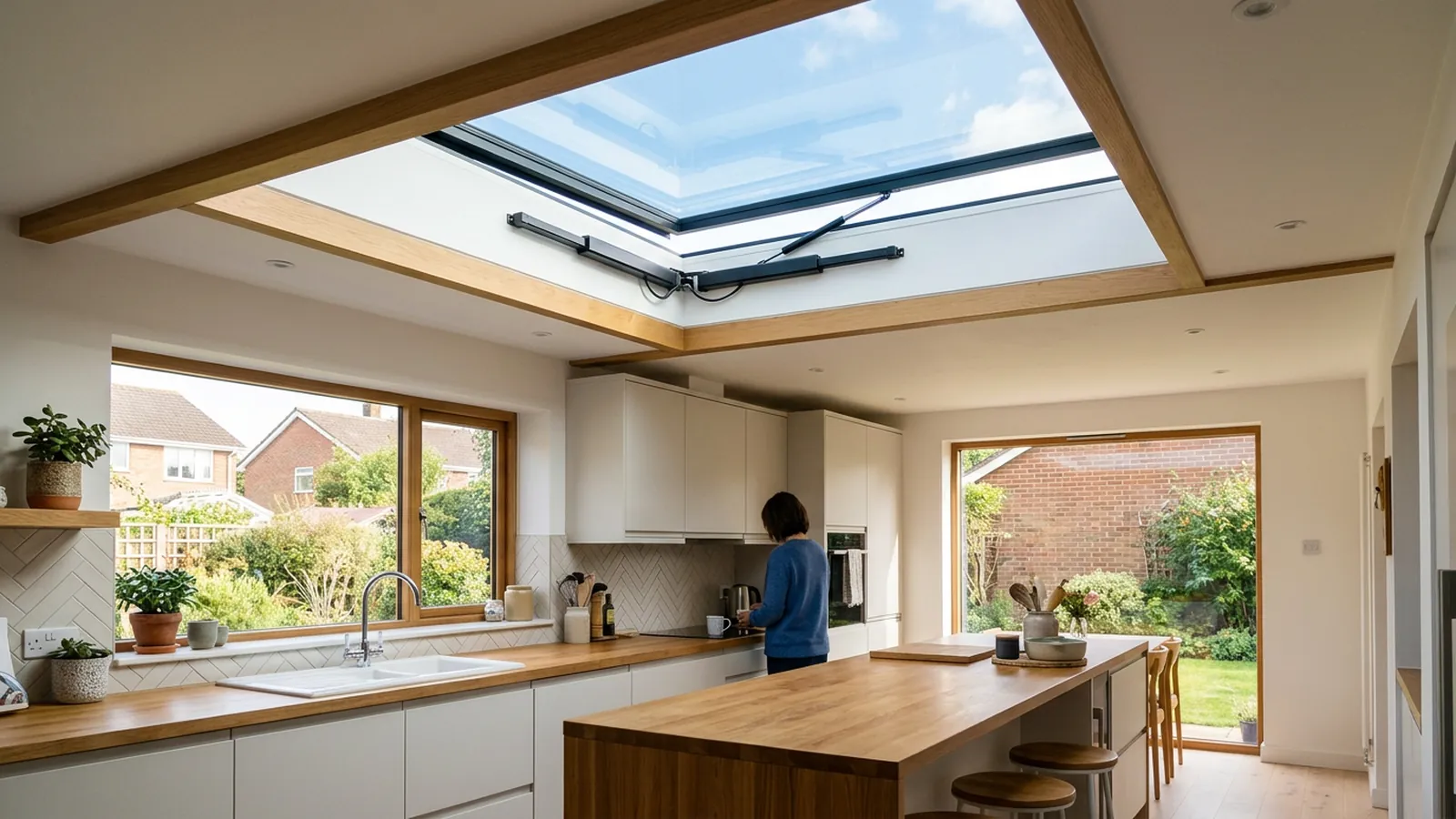
That hum matters most in a loft bedroom or a quiet study, and it is a fair thing to ask before the glass goes in. Our electric and opening rooflight service picks the drive with the room in mind, so a sleeping space above a Brighton Hill semi gets different thinking from a flat rooflight over a busy kitchen.
Where the sound actually comes from
Almost all of it comes from one part: the actuator, a small electric motor driving a gearbox that pushes a chain or a spindle to lift the sash. Our answer on what a rooflight actuator is explains the parts. For noise, three things are worth knowing. The motor itself makes a soft whirr. The gearing adds a slightly deeper note as it takes the load. And the frame the actuator is bolted to can pass that vibration into the roof timbers and the plasterboard lining, which can turn a small sound into a bigger one if the fixing is loose.
The glass, seals and hinges make almost no sound of their own when everything is aligned. A click at the start and end of travel is normal: that is the motor starting, and the limit switch stopping it when the sash reaches fully open or fully shut.
How rooflights and roof windows open
- Centre-pivot sash, turns so the lower edge tips out and the top swings in, handy for cleaning from inside
- Pivot point, the hinge line across the middle of the sash
- Top-hung sash, swings outward clear of the opening for a wider view
- Top hinge, where the sash is hung from the head of the frame
- Fixed rooflight, glazing sealed to the upstand with no moving parts
- Electric opening rooflight, the glazed lid lifts from one edge for ventilation
- Motorised chain actuator, pushes the lid open and draws it closed
- Rain sensor, closes the rooflight automatically when it starts to rain
How the different drives compare
| Drive | Typical use | What you hear |
|---|---|---|
| Chain actuator | Hinged flat rooflights and pitched roof windows | A light whirr with a faint ratchet note as the chain feeds out |
| Spindle actuator | Heavier hinged units and some access hatches | A smoother, deeper hum, usually for a little longer |
| Integrated roof window motor | Centre-pivot and top-hung roof windows on pitched roofs | A soft motor sound hidden in the head of the frame |
| Sliding drive | Sliding flat rooflights over extensions | A longer run of steady sound, as the glass travels further |
Sliding units move a larger pane a longer way, so the sound lasts for more of the cycle, though it is rarely sharper. The trade-offs between the two styles are laid out in our guide to hinged and sliding opening rooflights.
It helps to separate the motor from the weather. Rain drumming on glass is a different sound, and it carries on for as long as the shower lasts, whether the unit opens or not. On a flat rooflight over a single-storey extension that drumming is usually more noticeable than any motor. The glazing specification has some bearing on it, so if rain noise is part of the worry, raise it at the survey alongside the choice of drive.
Solar-powered units use the same kind of actuator as mains ones, drawing on a small battery charged by a panel on the frame, so the sound while opening is much the same. The difference lies in how the power reaches the motor, not in how loud it runs.
Why the same model can sound louder in one house
Two identical skylights can sound quite different once fitted. The usual reasons are to do with the installation, not the product:
- Fixing. An actuator bracket screwed firmly into solid timber stays quiet; one fixed into a thin lining or a loose packer can buzz against it.
- Alignment. A sash that binds on its seals or sits slightly out of square makes the motor labour, and a labouring motor is a louder motor.
- The room. A small loft room with hard plasterboard and a bare floor carries sound further than a kitchen with cabinets and soft furnishings.
- Time of day. A hum nobody notices at noon is obvious at night, when the house is still.
Each of these is dealt with on the day of fitting: brackets into solid timber, the sash checked through its full travel, and the lining finished so nothing touches the moving parts.
The bedroom question: rain sensors at night
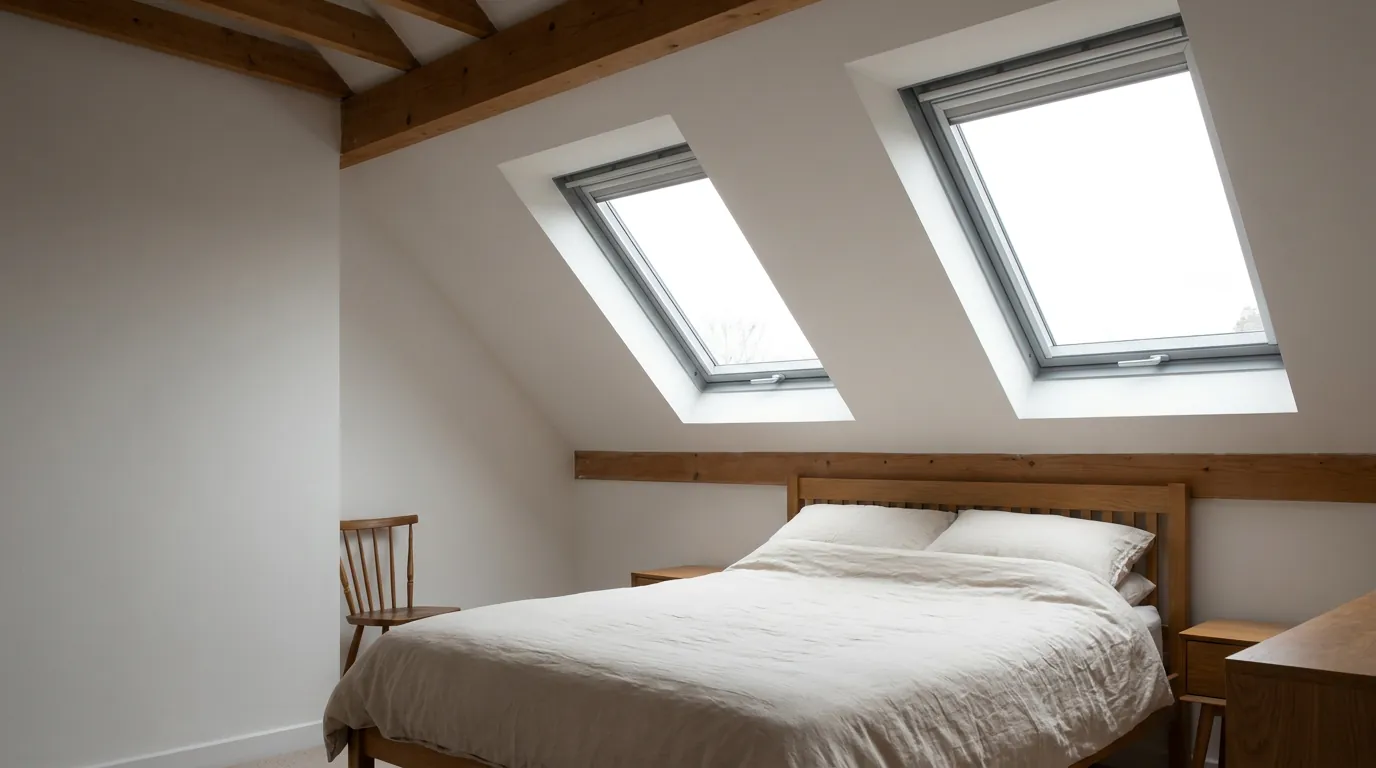
Where the sound bothers people is overnight. A rooflight with a rain sensor will close itself when the first drops land, and that can happen at three in the morning. In a trussed-roof loft conversion on one of the Chineham or Hatch Warren estates, the bed is often right under the glass, so the closing hum is close by.
The rule: if the bedroom rooflight is left open overnight, expect it to close itself when rain starts, and hear it do so. The exception is a unit set to close on a timer before you sleep, so the sensor has nothing to do at night; the sensor still acts as a backstop if the window is opened later.
Placement, controls and the fire escape position for a sleeping room all come together in our guide to an electric roof window for a loft bedroom.
When a new noise is worth a look
A drive that was quiet on handover and now grinds, clicks repeatedly or stops part way is telling you something has changed: a sash out of line, a fixing that has worked loose, or an actuator near the end of its working life. Our answer on how long an electric rooflight motor lasts covers wear. If the motor has stopped altogether, most units can still be closed by hand, which is explained in does an electric rooflight have a manual override?
Settling it before you choose
The quietest result comes from choosing the drive for the room, not the other way round. At the survey we look at where the rooflight will sit, what the room is used for, and what sits above and around the opening, then recommend a drive and a fixing to suit. Workmanship on the fitted unit, actuator mounting included, is covered for ten years by our guarantee, which is not insurance backed. If a quiet opening is high on your list for a loft bedroom or study, say so when you arrange a survey and we will factor it into the specification.