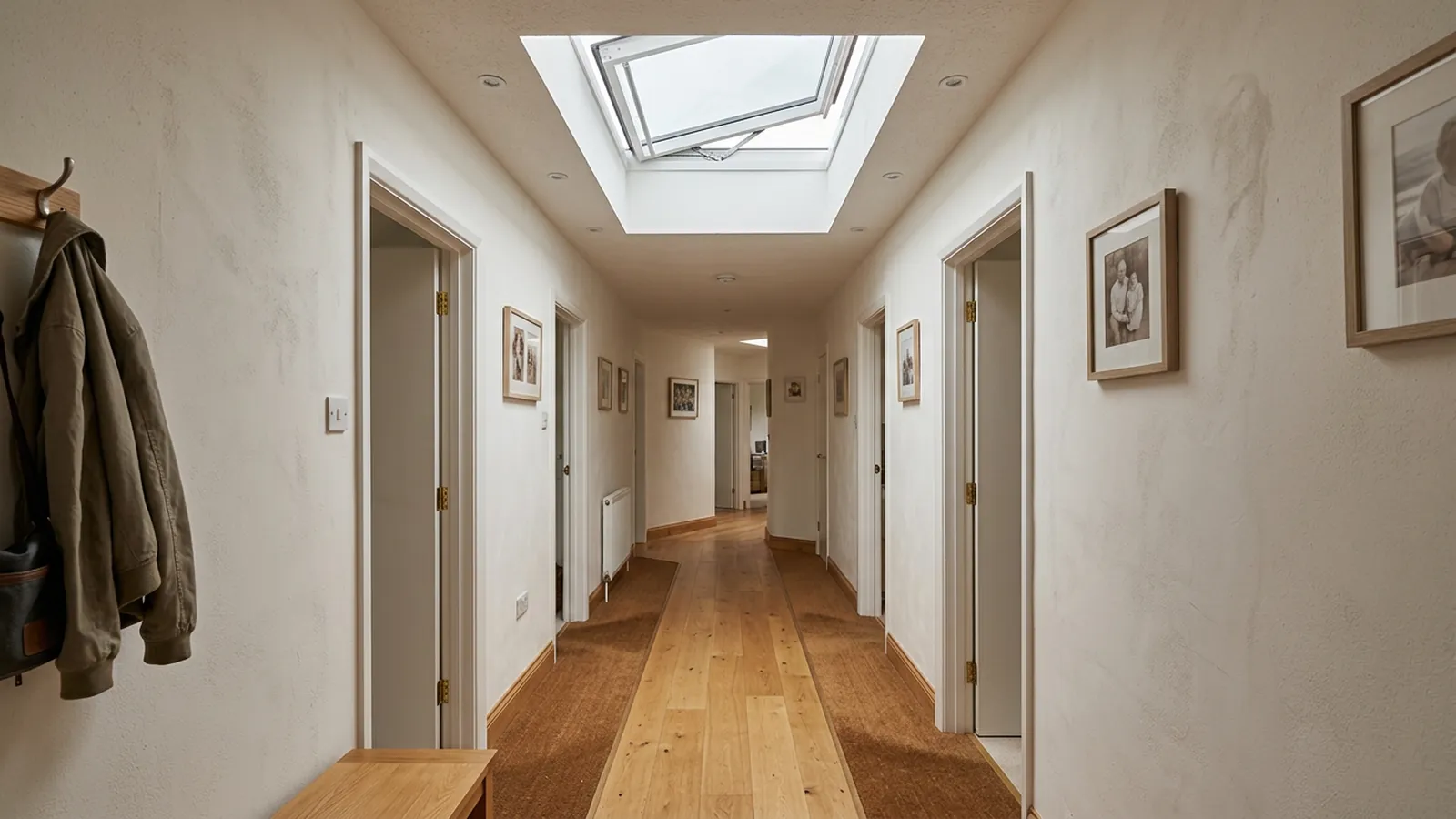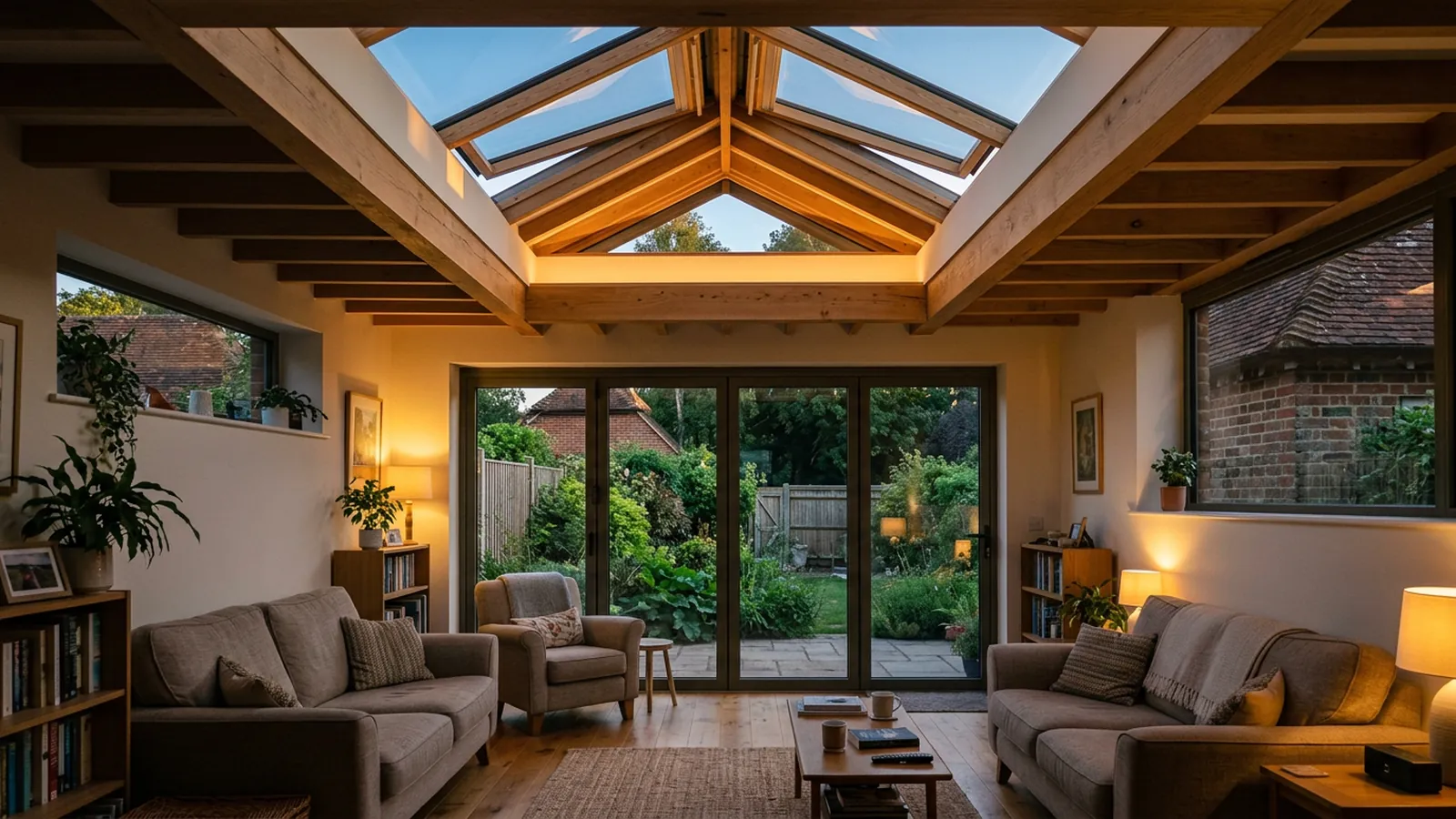
A room gets stuffy for one reason: the warm, used air has nowhere to go. It rises, gathers under the ceiling and sits there, while an ordinary wall window lets out only what drifts across to it. Put an opening in the roof and that same warm air has an exit at the highest point of the room. This guide is about using an electric opening rooflight for exactly that job: which rooms it helps, how it works with the windows lower down, what the Building Regulations mean by ventilation, and how to set one up so it actually gets opened.
The motor matters more than it sounds. A roof window in a vaulted ceiling or over a stairwell is often out of arm's reach, and a vent you cannot reach is a vent that stays shut. Being able to open it from a wall switch or a remote is what turns a skylight into a working part of how the house breathes.
Why an opening in the roof moves more air
Warm air is lighter than cool air, so it climbs. In a room with a high opening and a low one, the warm air leaves through the top and cooler air is drawn in through the bottom to replace it. This is the stack effect, and it keeps working on a still day when there is no breeze to push air through a side window. The taller the gap between the two openings, the stronger the draw.
A rooflight is the highest opening a room can have. On a sloping ceiling the sash sits right where the heat collects; on a flat roof it sits directly above it. Pair it with an open window, a door to the landing or a trickle vent lower down and the room starts to exchange its air rather than stewing in it. A wall window on its own relies far more on wind direction.
That is why an opening rooflight earns its place even in a room that already has windows. The electric and opening rooflight installation page covers the full range of units; this page stays with the ventilation side of the choice.
How rooflights and roof windows open
- Centre-pivot sash, turns so the lower edge tips out and the top swings in, handy for cleaning from inside
- Pivot point, the hinge line across the middle of the sash
- Top-hung sash, swings outward clear of the opening for a wider view
- Top hinge, where the sash is hung from the head of the frame
- Fixed rooflight, glazing sealed to the upstand with no moving parts
- Electric opening rooflight, the glazed lid lifts from one edge for ventilation
- Motorised chain actuator, pushes the lid open and draws it closed
- Rain sensor, closes the rooflight automatically when it starts to rain
Background air, purge air and extract: the three kinds the rules describe
Approved Document F, the part of the Building Regulations that deals with ventilation, separates the job into three kinds. It helps to know which one a rooflight is doing, because it does some of them well and one of them not at all.
| Kind of ventilation | What it is for | What an opening rooflight contributes |
|---|---|---|
| Background | A small, steady flow of fresh air all the time, with the windows shut | A ventilation flap or trickle vent in the frame, which lets air through while the sash stays closed and locked |
| Purge | Clearing a room quickly: after painting, cooking smells, a hot afternoon | The sash itself, opened wide, at the top of the room where the stale air collects |
| Extract | Removing moisture and smells at source in kitchens, bathrooms and utility rooms | Helps clear a steamy room once it is opened, alongside the fan, but is not a substitute for mechanical extract |
| Smoke clearance | Venting smoke from a stair or escape route in a fire | Only a certified smoke vent with its own control system does this; a comfort rooflight is a different product |
Whether a particular opening counts towards the purge figure for a room depends on its opening area and how far the sash swings, which varies by model. The short answer to whether an opening rooflight counts as purge ventilation sets that out, and the surveyor checks it against the room you have.
Rooms that gain the most from air at ceiling height
Every room benefits from fresh air, but some suffer from the lack of it more than others. The ones below share a feature: heat or moisture builds up high, and the existing windows are either low, small or missing.
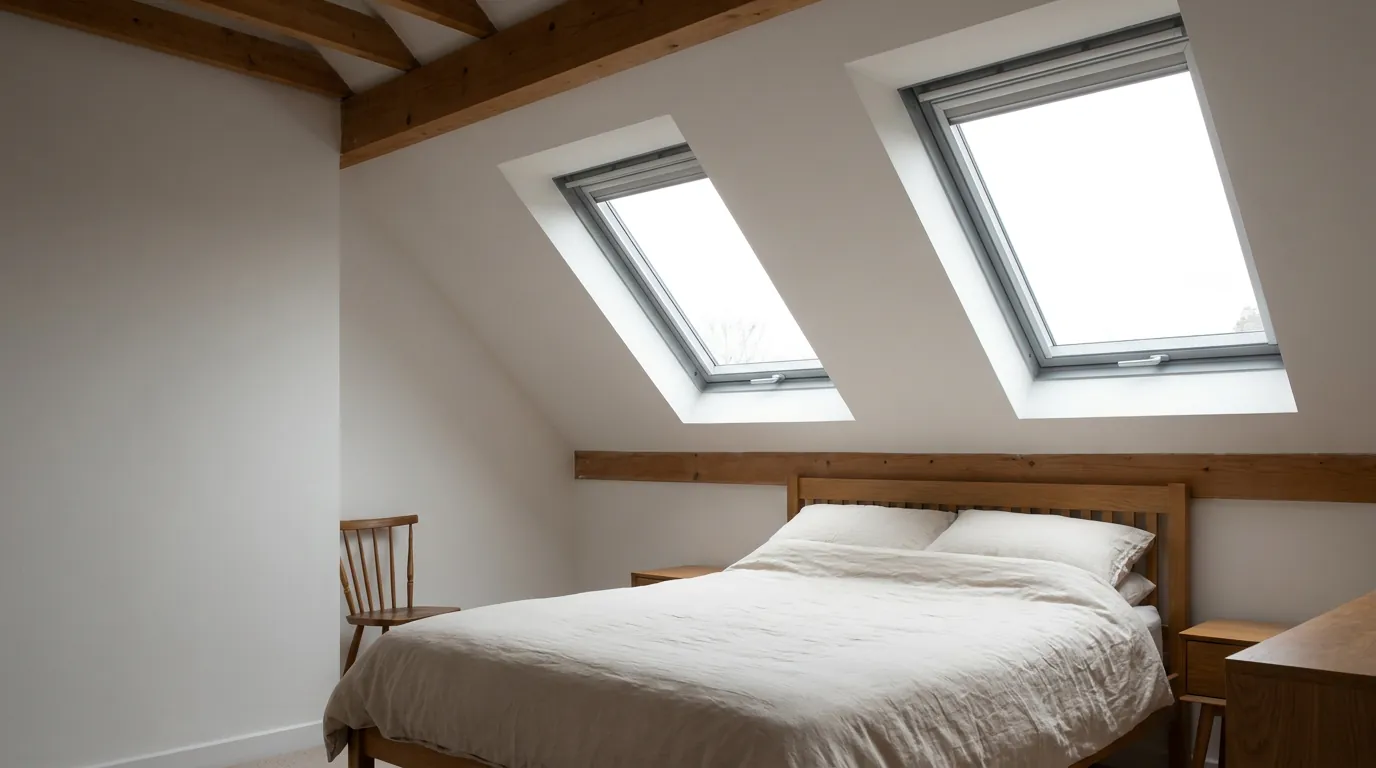
Loft rooms and top-floor bedrooms
A loft conversion sits directly under the roof covering, and a warm day heats the slopes above it. The room tends to be the warmest in the house by evening, and a sleeping space that will not cool down is the complaint people bring to a survey. An opening sash high in the slope, left on its ventilation setting overnight, lets that heat escape. Our guide to an electric roof window for a loft bedroom deals with the reach problem, and the answer on whether an opening rooflight cools a hot loft room is honest about what shading adds.
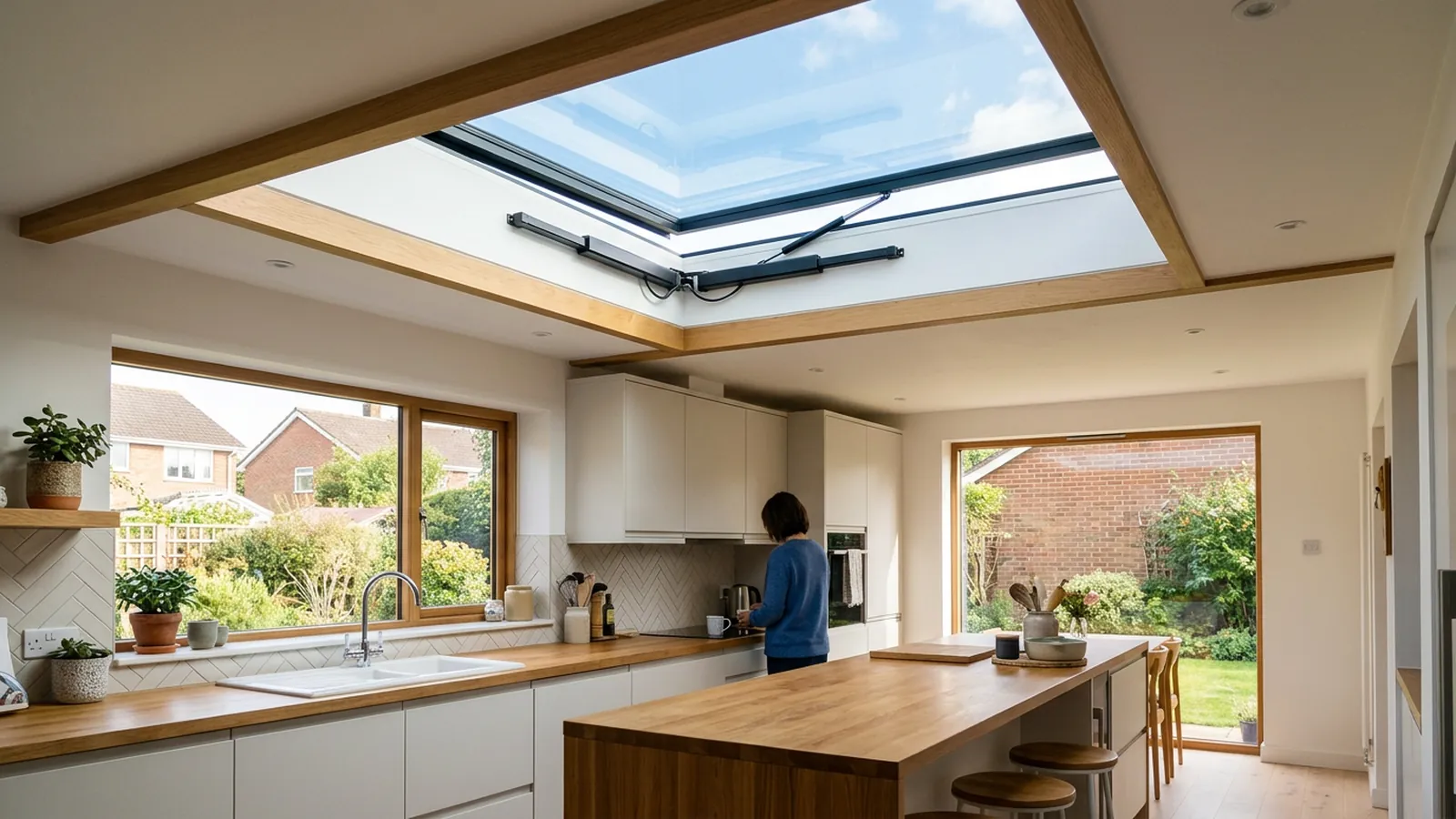
Kitchen extensions with a flat roof
Single-storey rear extensions on estate houses often end up with the cooker at the back, far from the original windows. Heat and cooking steam rise to the flat ceiling and stay there. A flat rooflight that lifts on an actuator gives that air a way out without opening the bifold doors in February. The detail of fitting one is in opening flat rooflights over a kitchen extension.
Stairwells and landings
The stair is the chimney of a house. Warm air from every floor finds its way up it, which makes the top of the stairwell the natural exhaust point for the whole home. An opening rooflight there, with a downstairs window cracked open, can draw a slow current through several rooms at once.
Bathrooms and en-suites
Steam is the problem here, and it condenses on the coldest surface it meets. An opening rooflight clears a bathroom quickly after a shower, but the extractor fan still does the everyday work. The answer on whether an opening rooflight suits a bathroom covers glazing and humidity.
Where the motor makes the difference
A roof window at the foot of a loft slope can be opened by hand, and a manual sash ventilates just as well as a motorised one. The trouble starts when the sash is high up. On a vaulted kitchen ceiling, above a stair or at the top of a tall loft slope, a manual window needs a pole, and a window that needs a pole is opened far less often than one that needs a button.
There is also the question of timing. Air is at its most useful on summer nights and early mornings, which are exactly the times nobody wants to climb onto a chair. An electric unit can be opened from bed, closed from the kitchen and, with the right controller, set to open on a schedule. Our guide to choosing between a manual winder, a pole or a motor sets the options side by side.
Planning airflow through the whole house
A rooflight on its own ventilates a room. A rooflight with a matching low opening ventilates a route. The best results come from thinking about where the air will come in as well as where it will leave.
- Find the high point. Identify where warm air gathers: the top of the stair, the ridge side of a loft room, the rear of a flat-roofed extension.
- Find the low inlet. A ground-floor window on the shaded side of the house, a trickle vent or an internal door left ajar gives the rising air something to replace it with.
- Check the path between them. Closed doors break the current. On a warm evening, open the doors along the route and the rooflight pulls air through them.
- Choose the opening style. Centre-pivot, top-hung and lifting flat units release air differently; the sash shape affects how much of the opening is useful.
- Set the controls. Decide who opens it, from where, and whether it should close by itself when rain starts or the house is empty.
This is a conversation worth having at the survey rather than after the unit is in, because the position of the rooflight in the slope changes how well it draws.
How the sash opens changes how the air moves
Not every opening rooflight releases air in the same way. A centre-pivot roof window opens at both the top and bottom edges, so warm air leaves over the top of the sash while some cooler air can come in underneath. A top-hung window opens along its lower edge only, giving a clear gap for warm air to escape and a wider view out. A flat rooflight on an actuator lifts from one side or rises evenly on all sides, depending on the design, so the air escapes around the lifted edges.
The distance a motorised sash opens is set by the actuator's stroke, which tends to be less than a manual window pushed fully open. For comfort ventilation that is usually plenty, because the stack effect does the work, but where a room needs a large purge area it is worth checking the figure for the exact model. The answer on how far an opening rooflight opens explains why the numbers differ.
A vent you cannot reach is a vent that stays shut.
Leaving it open: rain, security and insects
Ventilation works best when the sash can stay open for hours, and that raises three worries: weather, security and flying things. Each has a practical answer.
The rule: an electric rooflight left open for ventilation should have a rain sensor, so it closes itself when the first drops land. The exception is a unit fitted where it is sheltered and supervised, such as a small vent over a staircase you pass all day, and even there a sensor costs little in convenience.
The sensor sits on the frame and triggers the motor to close the sash when it detects moisture. It is covered in detail in rain sensors and automatic closing. For security, many roof windows have a ventilation position that holds the sash slightly open while it stays locked, and the frame's ventilation flap gives background air with the sash shut. For insects, an internal fly screen can be fitted to many models, as the answer on whether opening rooflights have insect screens explains.
Ventilation and condensation on the glass
Condensation forms when warm, moist air meets a cold surface. In a room with a roof window the glass is often the coldest thing in the ceiling, and on a winter morning it can mist over. Double or triple glazing with a warm edge spacer keeps the inner pane warmer, which helps, but the lasting answer is moving the moist air out before it settles.
That is where a vent at roof level earns its keep in the colder months too. The ventilation flap on a roof window gives a steady trickle of air without opening the sash, and a short purge after showering or cooking clears the moisture that would otherwise collect on the pane. A newly insulated loft room in a trussed estate roof is tighter than the loft it replaced, so it benefits from this more than most. Good glazing and good airflow work together here rather than one replacing the other.
Controls that keep the air moving without thinking about it
The simplest set-up is a wall keypad by the door with an open, stop and close button. That is enough for a room you use every day. For a room you do not always think about, such as the top of the stairwell or a guest bedroom, more automation keeps the ventilation working.
- A handheld remote or a second keypad by the bed, so the sash can be opened from where you sit.
- A timer that opens the sash for a set period each morning to purge overnight air, then closes it.
- An app or smart home link, useful for closing everything when you leave the house or opening the loft before you get home on a hot day.
- Group control, so several rooflights along a roof open together for a strong through-flow.
How the controls are wired, and where the switch goes, is explained in our guide to wiring and controls for an electric rooflight.
Regulations to be aware of when adding an opening
Swapping an existing roof window for an electric one of the same size is usually a like-for-like change. Cutting a new opening into the roof, or enlarging one, is a structural alteration and needs Building Control, and on a trussed roof it needs the trimming designed rather than improvised. Everlight looks after that notification when the work calls for it. The electrical side follows Part P; whether it is notifiable depends on where the new circuit or spur runs, as the answer on Part P and electric rooflights sets out.
In a conservation area, or where a house has had permitted development rights removed, the rooflight's position and profile may also need a planning conversation first. Each application is judged by the council on its own facts, so this is checked before any order is placed.
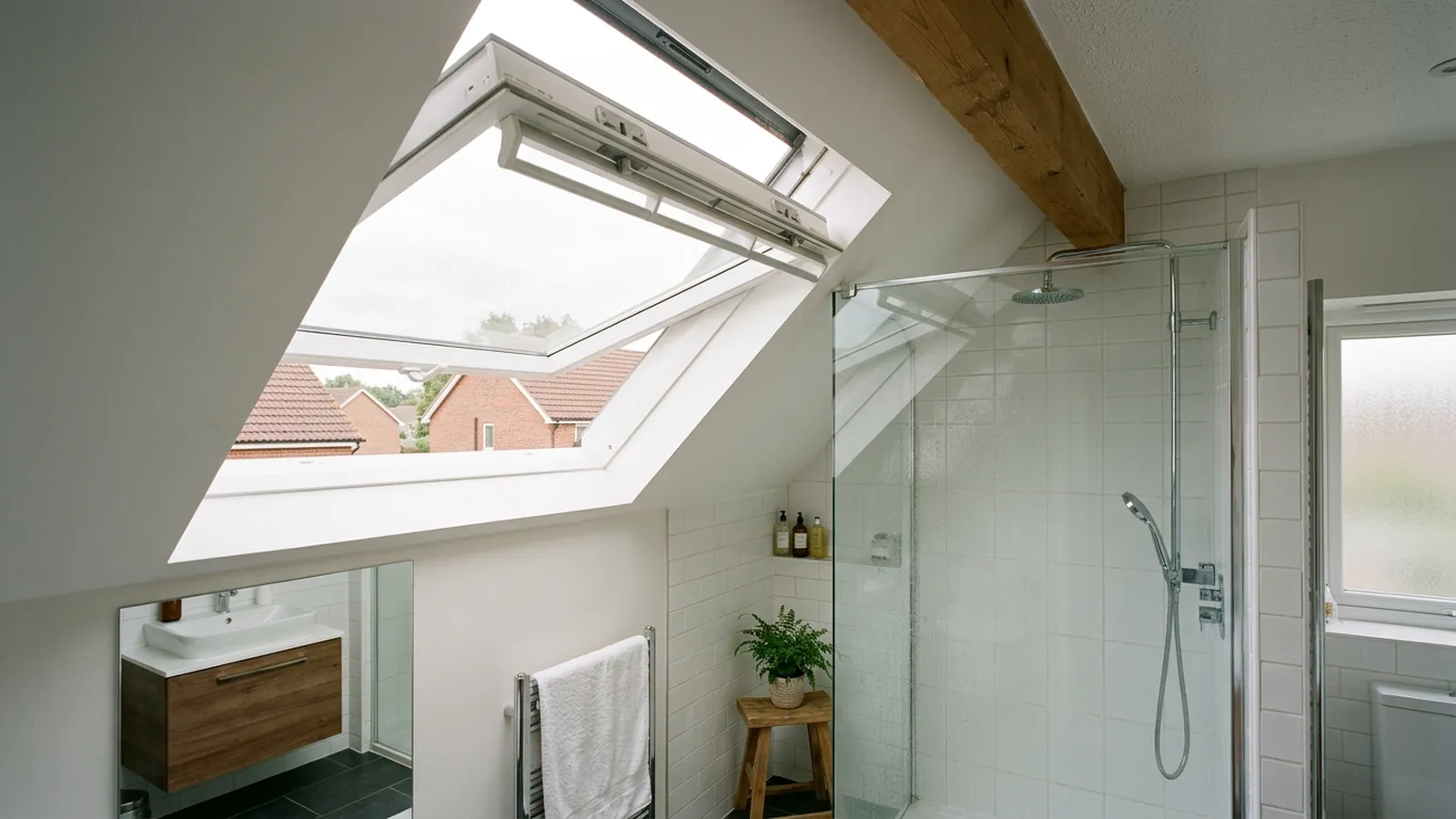
Choosing the right opening rooflight for your room
Getting good ventilation out of a skylight comes down to a handful of questions, answered on your actual roof: where the warm air gathers, where the replacement air will come from, whether the sash is within reach, whether it needs to be left open in the rain, and whether your roof structure lets the unit sit between the trusses or rafters without alteration. We survey the roof and the room before quoting, and the fitted unit carries a 10-year workmanship guarantee, which is not insurance backed.
To see the full range of units, controls and roof types we work with, go back to the opening rooflight service page. If a room in your house never quite cools down, arrange a survey of your roof and we will look at where the air should go.