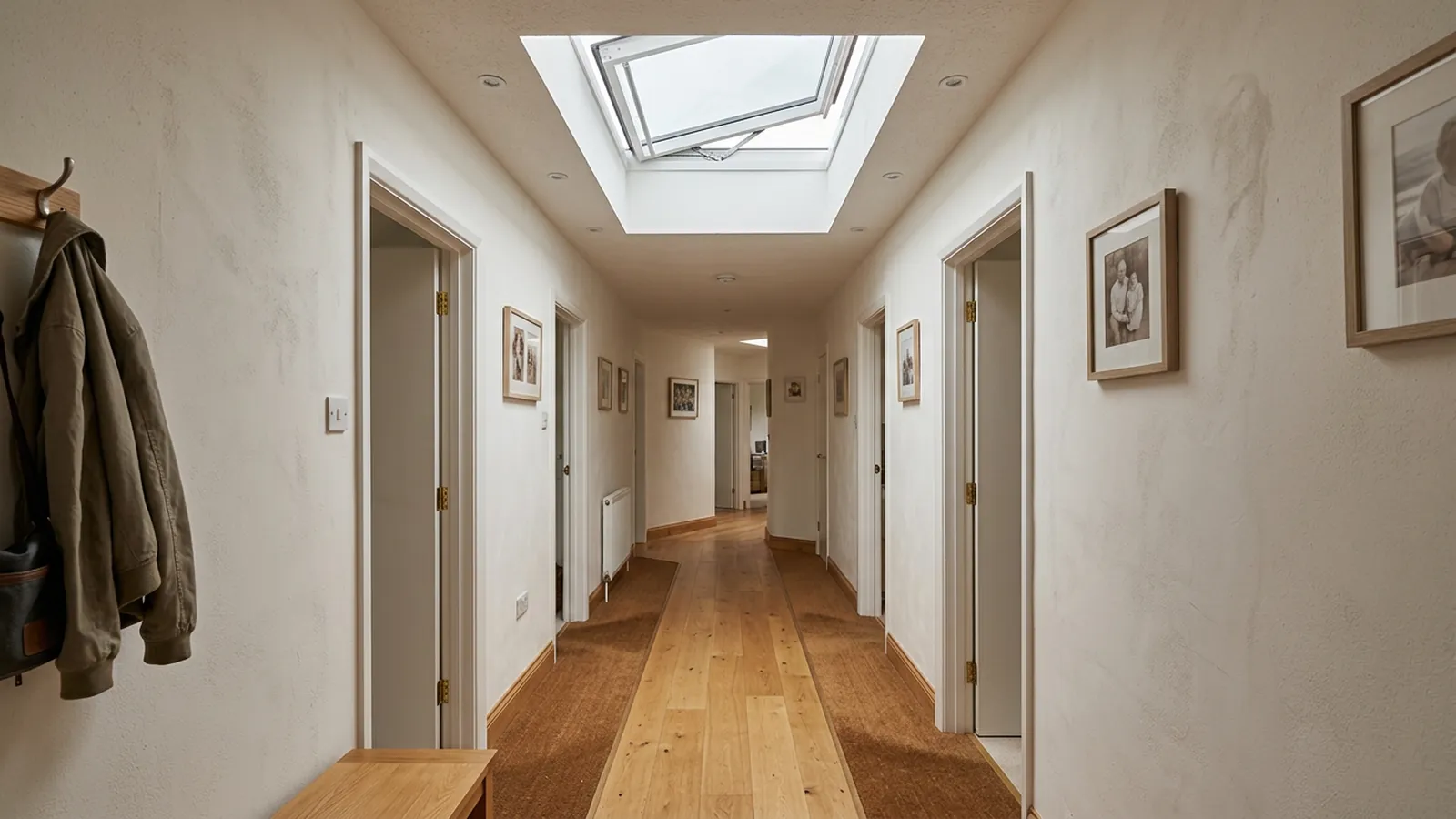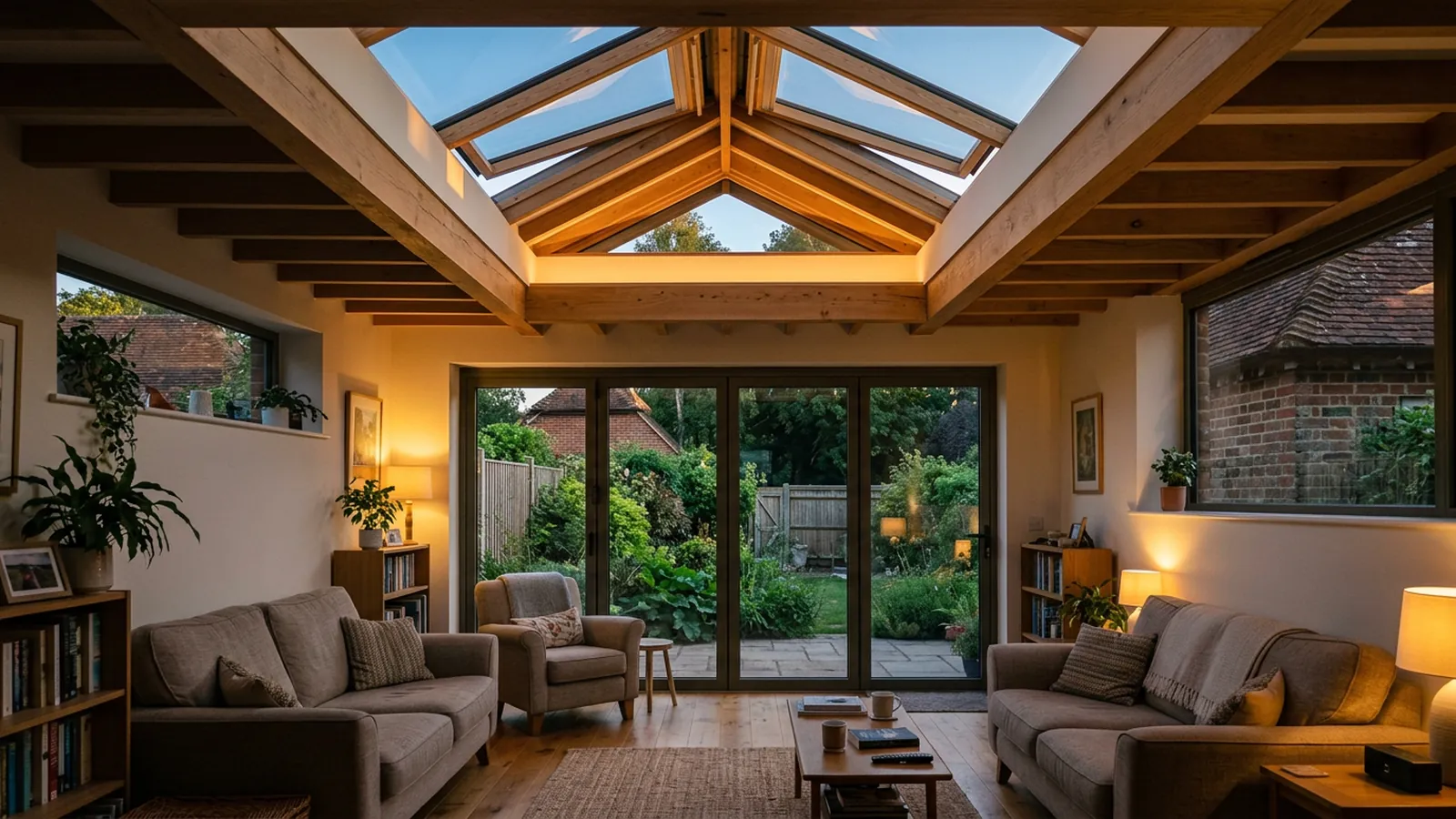
Fresh air on a warm, showery day is exactly why people choose an opening skylight, and the worry about a sudden downpour is a fair one. Our page on electric and opening rooflight installation covers the whole choice of how a window opens; this answer deals only with weather. What decides it is the shape of the roof, how far the sash is open and whether anything closes it for you when you are out.
Why pitch changes the answer
On a sloping roof, a centre pivot or top hung roof window opens outwards and downwards at the bottom edge. Water running down the glass and the tiles above is carried over the top of the frame by the flashing and off the outer face of the sash, so a narrow gap at the bottom mostly faces away from falling rain. Drizzle with no wind rarely gets past it.
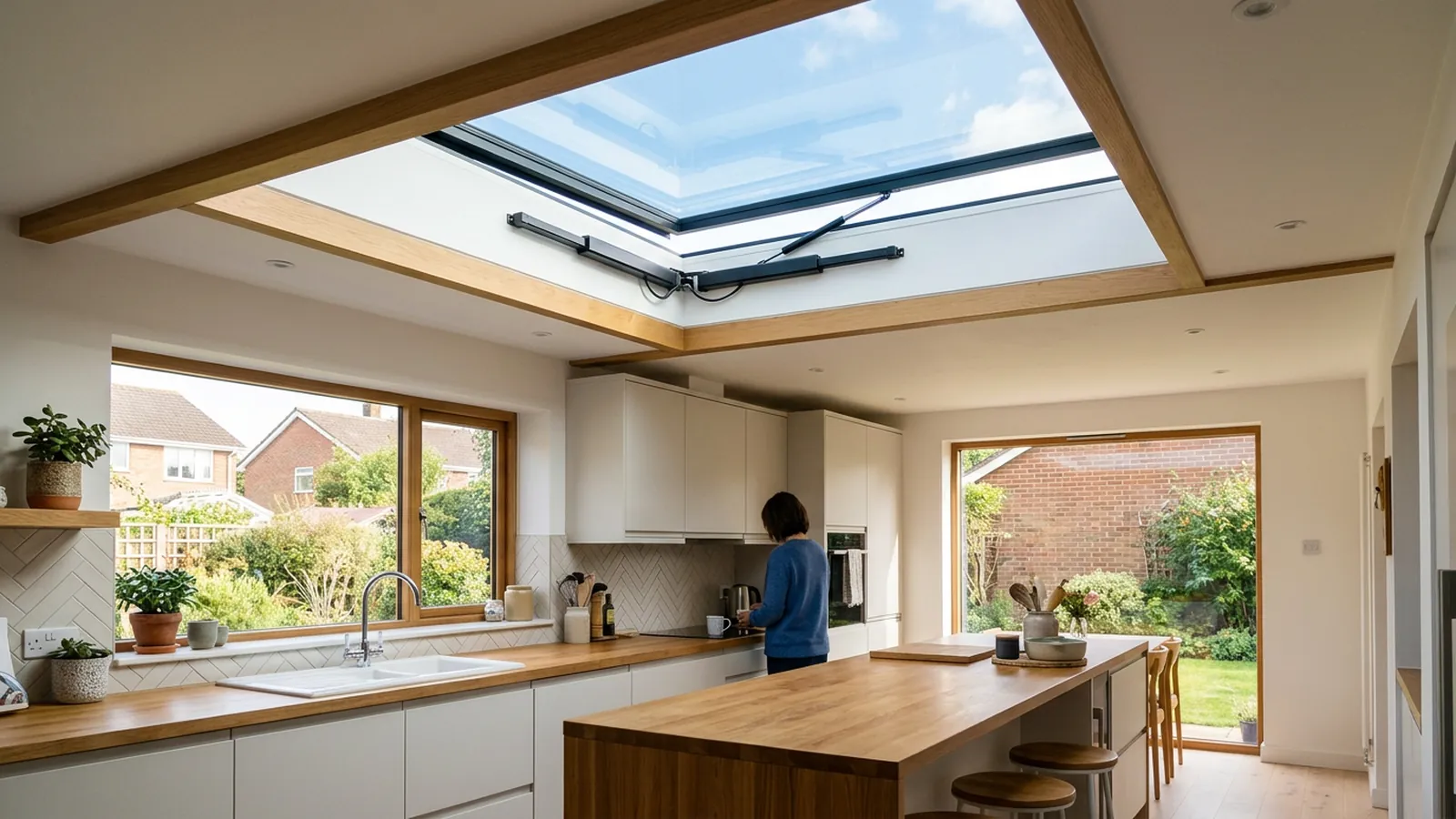
A flat roof is the opposite case. A hinged or sliding flat rooflight opens straight up to the sky, and whatever falls on the opening falls into the room. There is no slope to throw it clear, and on a kitchen extension the worktop or floor below takes it. How each kind of flat unit opens, and what that means for the room, is set out in our guide to hinged and sliding opening rooflights.
How rooflights and roof windows open
- Centre-pivot sash, turns so the lower edge tips out and the top swings in, handy for cleaning from inside
- Pivot point, the hinge line across the middle of the sash
- Top-hung sash, swings outward clear of the opening for a wider view
- Top hinge, where the sash is hung from the head of the frame
- Fixed rooflight, glazing sealed to the upstand with no moving parts
- Electric opening rooflight, the glazed lid lifts from one edge for ventilation
- Motorised chain actuator, pushes the lid open and draws it closed
- Rain sensor, closes the rooflight automatically when it starts to rain
How open is too open
The gap matters as much as the roof. Most roof windows have a ventilation position, either a small first notch on the sash or a vent flap in the head of the frame, meant to stay usable in poor weather. Past that, the wider the sash stands, the more wind can drive rain under it. How far the different types travel is covered in how far does an opening rooflight open?
| Position | Light rain, still air | Heavy or wind-driven rain |
|---|---|---|
| Vent flap in the frame head, sash shut | Designed to stay open | Generally fine; close it if water shows on the sill |
| Pitched sash on its first notch | Usually sheds the water | Can take in spray; close it |
| Pitched sash opened wide | Water can reach the lining and sill | Rain gets in; close it |
| Flat rooflight hinged or slid open | Rain falls straight into the room | Rain falls straight into the room |
Where a rain sensor earns its keep
A manual window relies on someone being at home and able to reach it. That is fine for a bedroom window at head height and much less fine for a stairwell top or a loft ceiling. A motorised rooflight can carry a small sensor on the outer frame that tells the motor to shut the sash when water lands on it, whether you are in the garden, at work or asleep.
The rule: if nobody can be sure of closing a window before the weather turns, give it a sensor. The exception is a window you can always reach and only open while you are in the room, where a winder or pole is enough.
How the sensor reacts, how quickly the sash comes down and what to expect from it on a very fine mist is the subject of our guide to rain sensors and automatic closing, which owns that detail.
Power, batteries and the manual fallback
A sensor can only close a window that has power to move. A mains unit waits during a power cut, while a solar unit runs from its own battery and keeps working as long as that holds a charge. If a storm arrives with the electricity off, knowing how to wind the sash shut by hand matters, which is covered in what happens to an electric rooflight in a power cut? and does an electric rooflight have a manual override?
Choosing for the room below
The room decides how much rain risk is acceptable. A loft bedroom with a carpet under the window, a landing above a stair and a kitchen extension with a hob below each ask for a different answer, so these are the points we weigh with you:
- Reach. Can the window be closed by hand from where people stand, or only with a pole, a step or not at all?
- Roof. Is it a pitched roof window, which sheds water on its vent setting, or a flat rooflight, which opens straight to the sky?
- Use. Will it be opened for a few minutes while someone is present, or left on vent for hours through a changeable day?
- Control. Winder, pole, switch or app, and whether a rain sensor comes with that choice or is added to it.
On a Basingstoke estate loft with trusses at 600mm centres, a roof window sized to fit between them and fitted with a sensor is a common, sensible pairing. Over a flat extension roof, a sensor matters even more, because the open rooflight has nothing to shelter it.
Getting the specification right
Whether the fresh air comes from a single roof window or a flat unit over a kitchen, the survey is where the weather question gets settled for your roof: we look at the pitch, the exposure, how the room is used and how the window will be reached, then quote in writing. Where new wiring or a new opening is involved and the job is notifiable, the Building Control side is dealt with as part of the work, and the fitting carries a 10-year workmanship guarantee (not insurance backed). If an opening rooflight is on your list and rain is the doubt, arrange a survey and we will specify one that closes when it should.