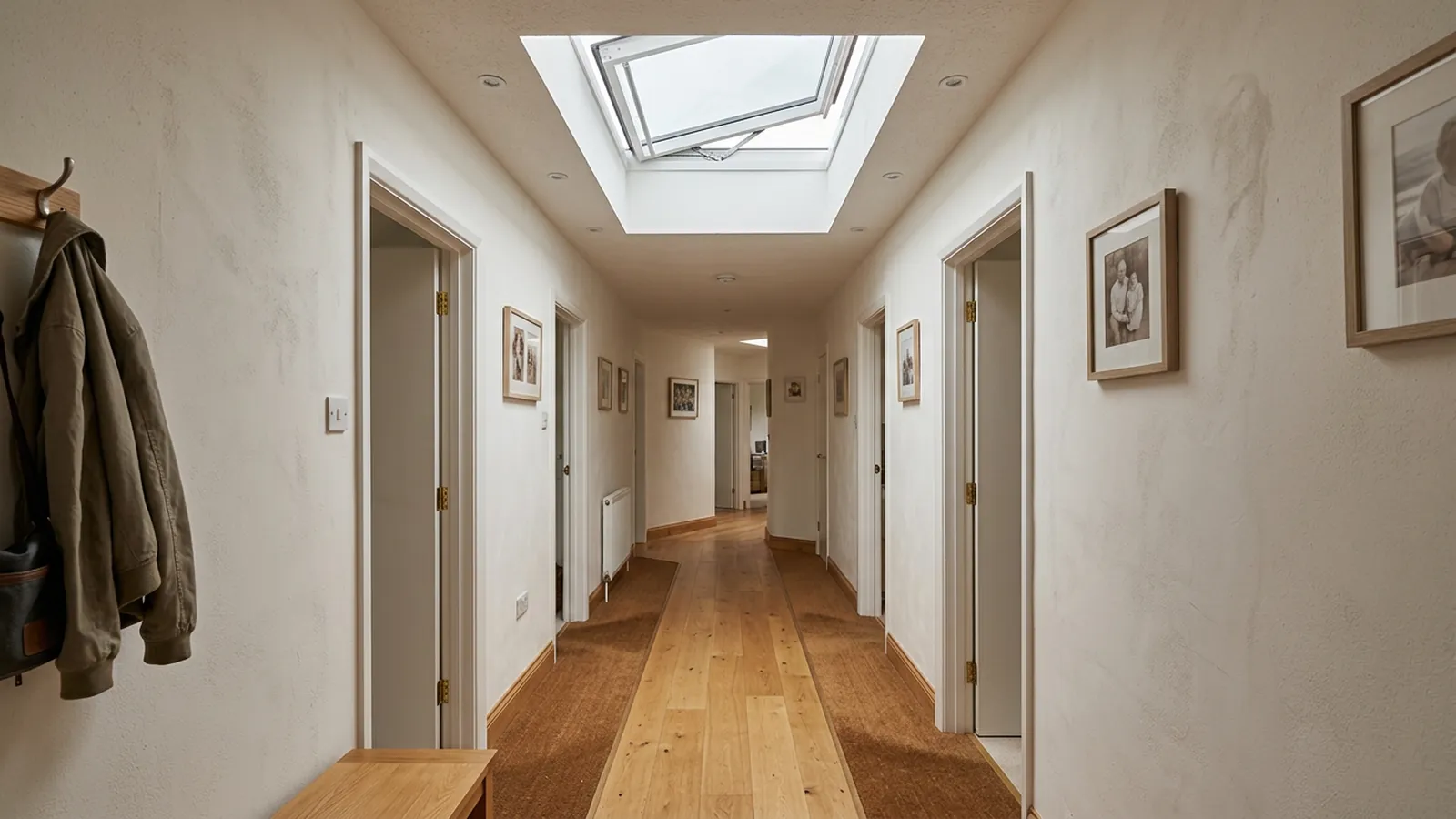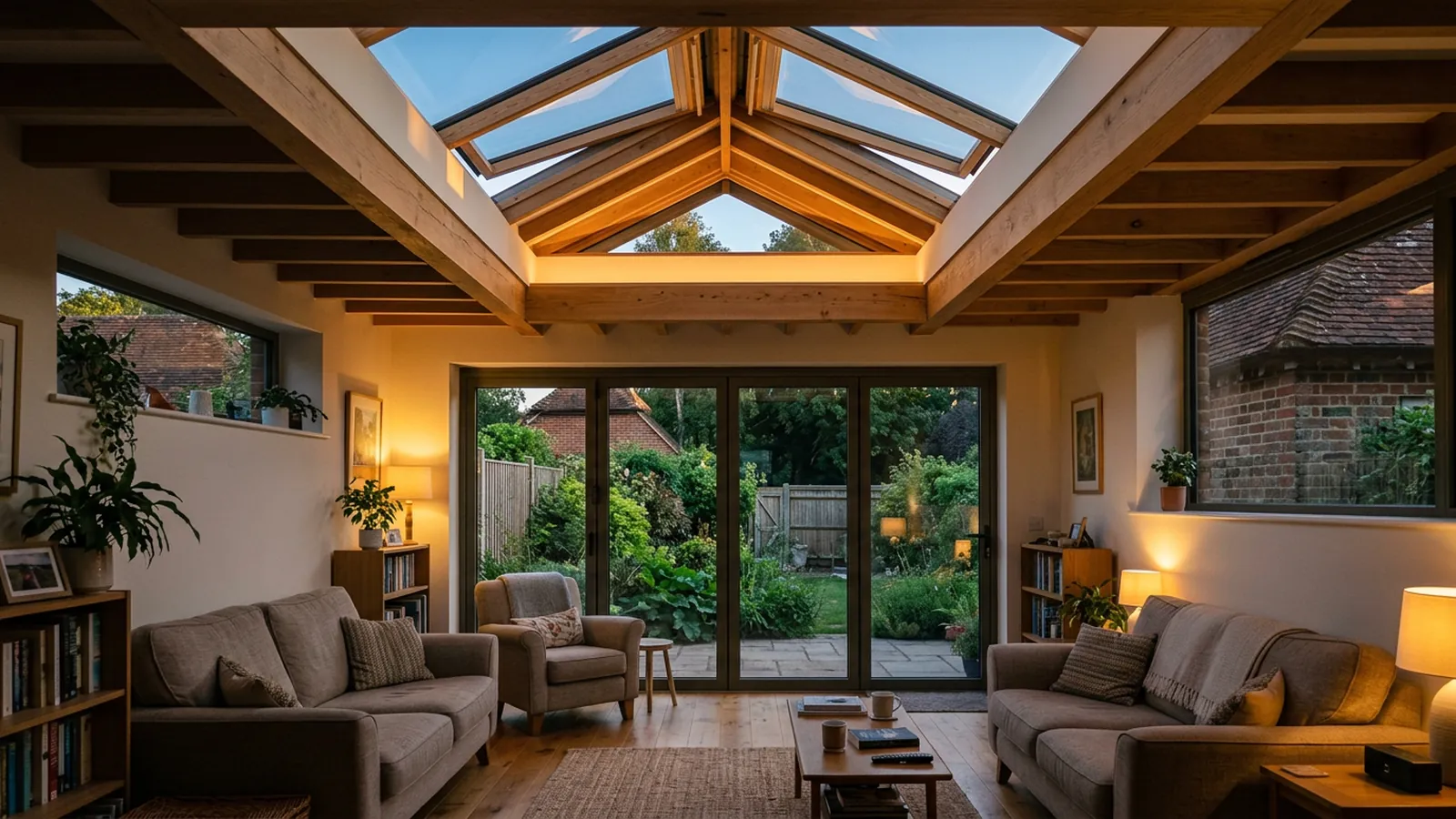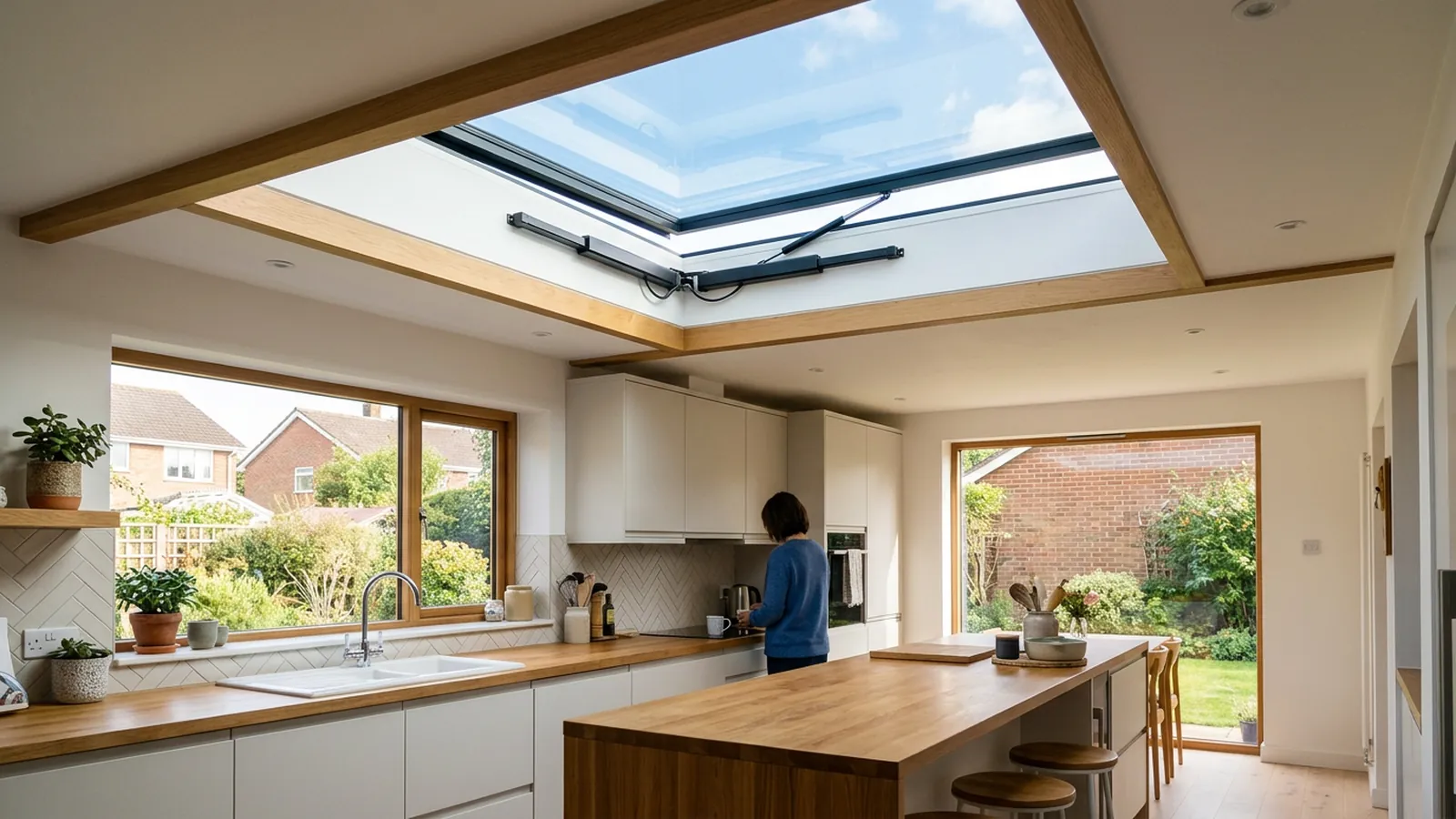
A screen matters most when the window is going to be open for long spells: a loft bedroom on a summer night, a bathroom that needs airing, a kitchen extension with the hob beneath it. Our electric and opening rooflight installation page covers the wider choice of opening units; this answer sticks to the mesh, where it goes, and what it changes about how you use the window.
The short version for a skylight you have not bought yet: ask for the screen at the same time as the window, because the lining, the blind and the control all have to agree with it. Retrofitting is sometimes possible, sometimes awkward, and occasionally not offered at all for an older frame.
Where the screen sits on each kind of opening rooflight
The position of the mesh depends on how the glazing moves. A pitched roof window pivots or hinges within its own frame, so the screen has to live inside the room, on the lining, and stay clear of the sash as it swings. An opening flat rooflight lifts outward on hinges or an actuator above the kerb, so the mesh can sit across the opening inside the upstand, with nothing in the room moving through it.
| Rooflight type | Where the screen goes | What to check |
|---|---|---|
| Centre-pivot roof window | A roller or pleated mesh in the inner lining, drawn across the reveal | Lining depth and whether a blind is going in the same reveal |
| Top-hung roof window | In the lining, set so the sash can swing clear | That the screen range lists your exact model and size |
| Hinged flat rooflight | Across the opening inside the kerb or upstand | Upstand height and the space left for the actuator arm |
| Sliding flat rooflight | Within the kerb beneath the sliding pane, where the maker offers one | Whether a screen is offered for that system at all |
The difference between hinged and sliding units, and why the mechanism affects what fits underneath, is set out in the guide to hinged and sliding opening rooflights.
How rooflights and roof windows open
- Centre-pivot sash, turns so the lower edge tips out and the top swings in, handy for cleaning from inside
- Pivot point, the hinge line across the middle of the sash
- Top-hung sash, swings outward clear of the opening for a wider view
- Top hinge, where the sash is hung from the head of the frame
- Fixed rooflight, glazing sealed to the upstand with no moving parts
- Electric opening rooflight, the glazed lid lifts from one edge for ventilation
- Motorised chain actuator, pushes the lid open and draws it closed
- Rain sensor, closes the rooflight automatically when it starts to rain
Why a motor makes a screen far easier to live with
This is the part that catches people out on a manual pitched window. The handle on a centre-pivot roof window is on the sash itself, so to open or close the glass by hand you have to reach past the mesh. With a screen drawn, that means rolling it back, working the handle, then drawing it again, every time. On a window within easy reach that is a small chore. On a window over a stair or high in a loft bedroom, it is enough to leave the screen permanently open.
An electric actuator removes the problem. The glass opens and closes from a wall switch or remote while the mesh stays drawn, and a rain sensor can shut the window without anyone touching the screen. For a flat rooflight the same point applies in a different form: a pole-operated hinge has to reach through the opening, whereas a motor sits in the kerb and leaves the mesh undisturbed. The trade-offs between turning a winder, using a pole and fitting a motor are compared in manual winder, pole or motor.
The rule: if you want a screen that stays drawn all summer, choose an electric or solar opener with it. The exception is a pitched window at chest height in a room you use every day, where rolling the mesh aside by hand is no real burden.
Screens, blinds and the depth of the lining
A screen and a blind both want the same few centimetres of reveal. Roof window makers design their accessories to share that space, usually with the mesh nearest the room or in a dedicated track, but only within their own ranges and only for listed sizes. Mixing a screen from one source with a blind from another can leave one of them fouling the other.
The lining matters too. A shallow or site-made lining may not give the screen frame anything square to fix to, which is one reason we would sooner fit the maker's lining with a new window than improvise one. In a trussed estate loft, such as a 1970s house in Brighton Hill or a later Chineham semi, the reveal is usually formed fresh at the time of fitting, so allowing for the screen costs nothing extra in thought if it is planned from the start.
Rooms where a screen earns its place
A screen pays its way in any room where the glass will stand open for long periods, and three rooms stand out.
- Loft bedrooms. A window open overnight with a light on nearby draws insects in. A screen lets the room breathe on a warm night; whether opening alone will cool the space is taken up in does an opening rooflight cool a hot loft room?
- Bathrooms. Airing after a shower is the point of an opening unit here. Check that the mesh and its frame suit a humid room; the wider case is covered in is an opening rooflight good for a bathroom?
- Kitchen extensions. An opening flat rooflight over the cooking area clears steam and smells, and a mesh inside the upstand keeps flies off the worktop while it does.
How wide the glass actually opens also shapes how much the mesh has to cover, and the answer varies by unit; see how far does an opening rooflight open?
Adding a screen to a window you already have
If your roof window or flat skylight is already in, the first step is to find the maker and model, usually from a label on the frame or sash. If the maker still lists a screen for that size, it can often be fitted inside the room without touching the roof. If the model is old, discontinued or unbranded, a matching screen may no longer be available, and a generic mesh cut to the reveal rarely works well with a pivoting sash.
Where the existing unit is ageing anyway, replacing it with a current opening model that has a listed screen, blind and motor can be the tidier route. That is a bigger decision than the mesh alone, and it sits naturally with a look at the frame, the flashing and the glazing.
What we settle at the survey
We survey the roof before we quote, and if a screen is on your list we note it then: the model and size that suit the roof, the lining depth, whether a blind shares the reveal, where the switch or remote will live, and on a flat roof how high the upstand stands. The written quote then shows the screen as its own line, so you can see what it adds.
If you are weighing up a fly screen with a new opening rooflight or wondering whether your present one can take one, arrange a survey visit and we will check the exact model against what its maker offers.