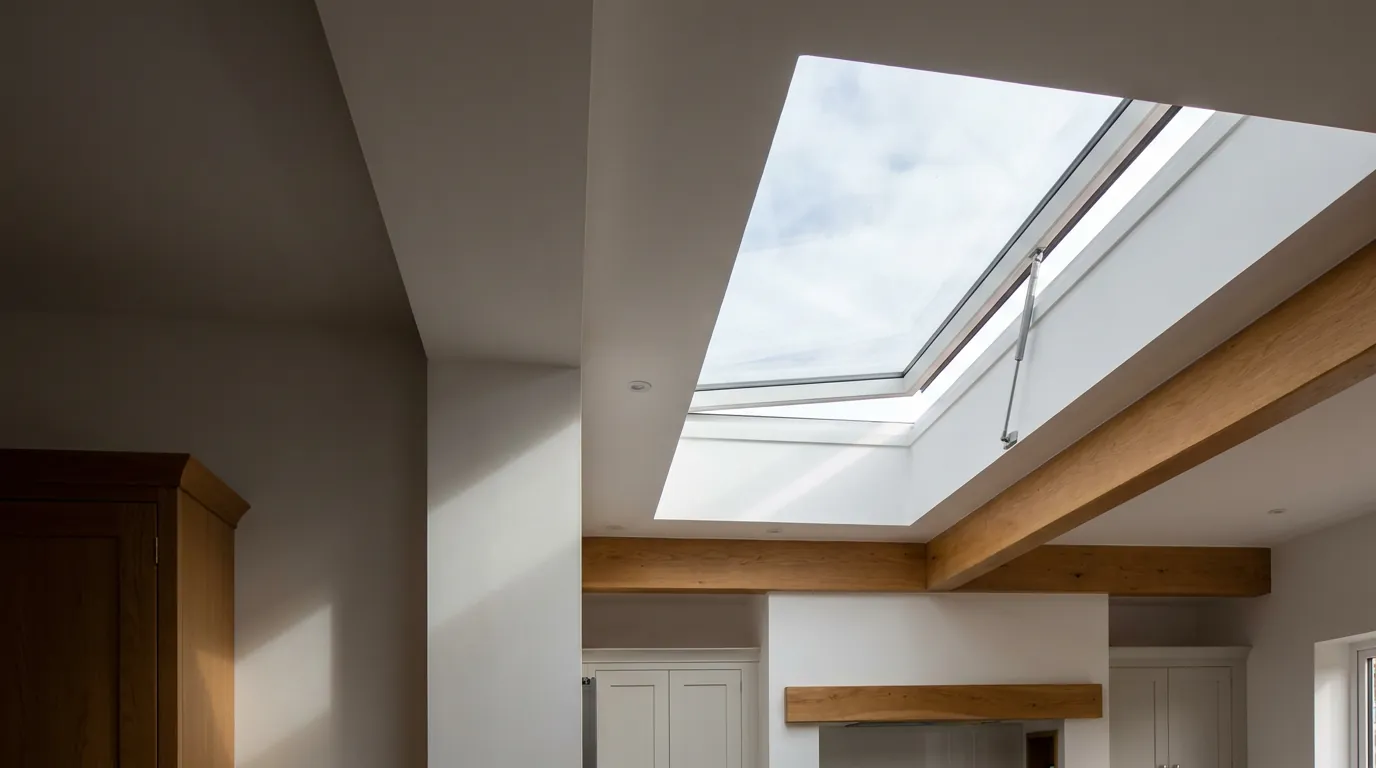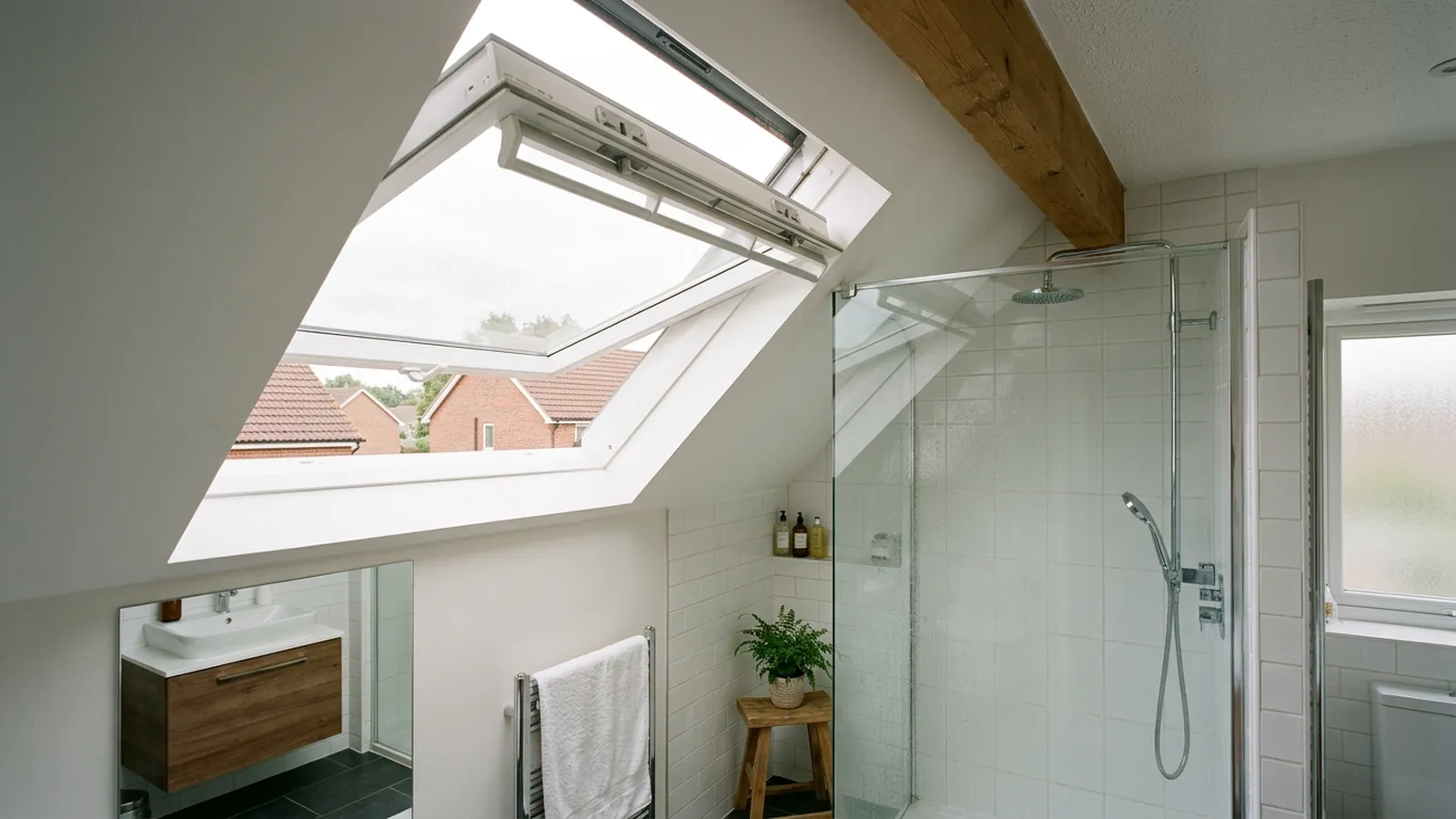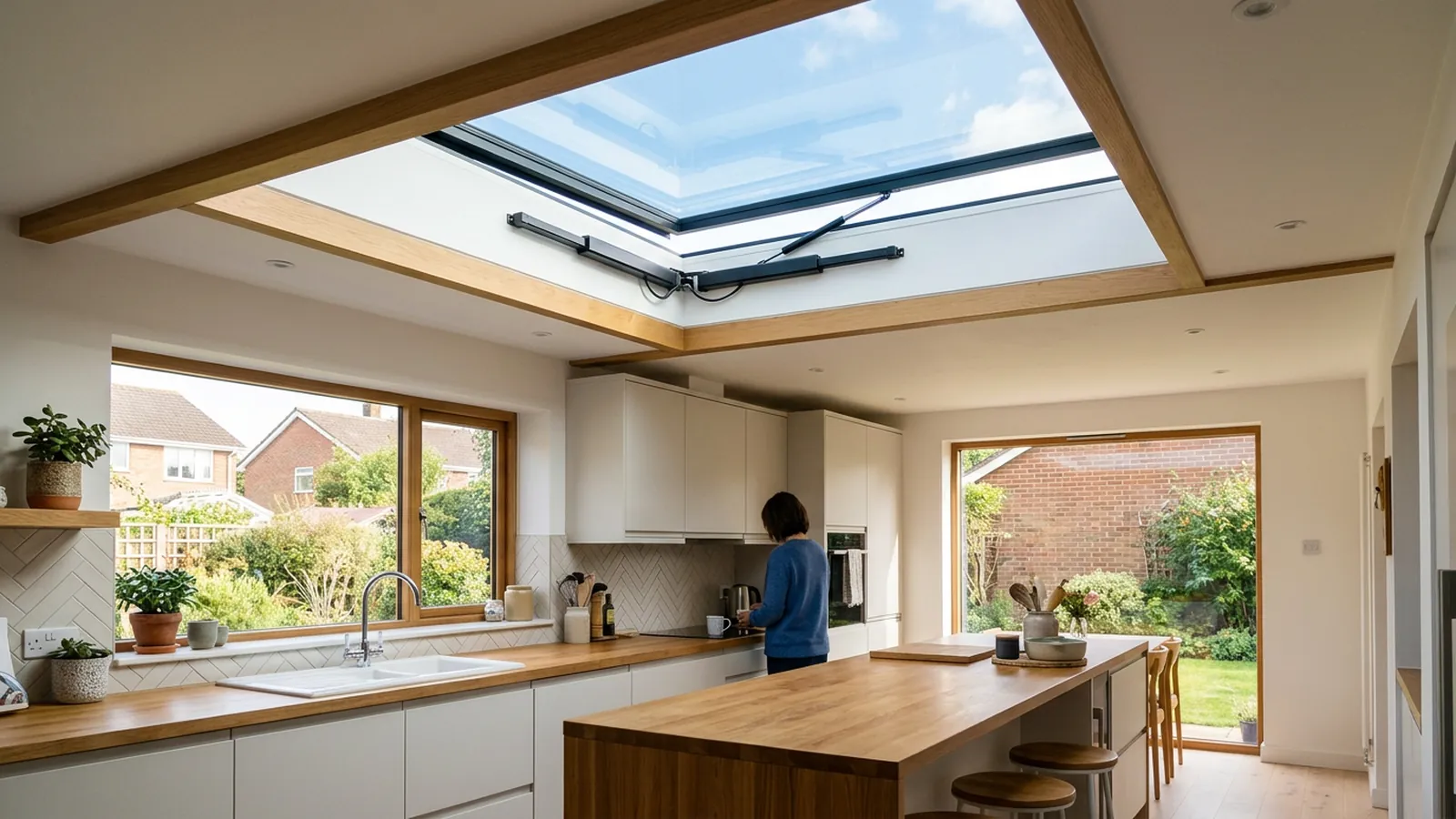
Three ways exist to open a roof window: a handle you reach, a rod you hook onto that handle from the floor, or a small motor that does the pushing for you. Which of the three belongs in your roof comes down to one measurement and one habit: how high the sash sits above the floor you stand on, and how often you actually want fresh air. This guide walks through each option honestly, including the places where the cheapest one is simply the right one, so that the choice is made for the room rather than for the brochure.
It sits under our electric and opening rooflight installation service, which covers the fitting itself. Here the job is narrower: deciding how the sash is worked before anything is ordered.
Start with where your hand can reach
Every opening rooflight has an operating point. On a centre-pivot roof window it is a bar or handle along the top of the sash; on a top-hung window it is usually a handle at the bottom; on a flat-roof opening skylight it is a spindle or winding point on the frame. The whole manual versus electric question starts with a simple test: stand in the room, lift your arm, and see whether you can take hold of that point without climbing on anything.
If you can, a hand-operated window will serve you well for years and needs no cable, no power and no fuse. If you can reach it only by standing on a chair, you are choosing between a pole and a motor. If you cannot reach it at all, even with a pole, the motor stops being a luxury and becomes the only sensible way to get air through that opening.
The height of the sash above the floor makes the first decision; how often you want air makes the second.
Roof pitch matters here too. On a steep roof the window is closer to vertical and its handle drops towards you; on a shallow pitch, the window lies back and the handle ends up further away and higher. Two identical windows in two different houses can therefore land in different answers.
How rooflights and roof windows open
- Centre-pivot sash, turns so the lower edge tips out and the top swings in, handy for cleaning from inside
- Pivot point, the hinge line across the middle of the sash
- Top-hung sash, swings outward clear of the opening for a wider view
- Top hinge, where the sash is hung from the head of the frame
- Fixed rooflight, glazing sealed to the upstand with no moving parts
- Electric opening rooflight, the glazed lid lifts from one edge for ventilation
- Motorised chain actuator, pushes the lid open and draws it closed
- Rain sensor, closes the rooflight automatically when it starts to rain
The three options side by side
Before the detail, here is the whole comparison on one screen. Read across the row that matches your room.
| Consideration | Manual handle | Pole operated | Electric motor |
|---|---|---|---|
| Best for | A sash you can touch from the floor, such as a loft room with a low knee wall | A sash just out of reach, opened now and then | A sash well out of reach, or one opened every day |
| Power needed | None | None | Mains supply or an integrated solar panel |
| Effort to open | A pull or a push on the handle | Hooking the rod on and turning or pushing | A button, remote or app |
| Closes itself in rain | No | No | Yes, where a rain sensor is fitted |
| Blinds | Manual blind by hand | Manual blind worked with the same pole | Can be paired with an electric blind |
| Upgrade later | Some ranges accept a retrofit motor kit | Some ranges accept a retrofit motor kit | Already motorised |
The retrofit line matters more than people expect. Several manufacturers make conversion kits for their own opening windows, so choosing a manual window today does not always close the door on a motor later. Whether your exact model accepts one is something to check against its range before buying, not to assume.
The manual handle: simple, silent and often right
A hand-worked roof window is the plainest option and, in the right room, the best. There is nothing to wire, nothing to charge, nothing to pair with a phone. Opening it is as quick as reaching up, and closing it before you go out takes the same second.
It suits rooms where the window sits low on the slope: a loft conversion in a 1970s Brighton Hill semi, where the dormer-free rear slope brings the sash down to shoulder height; a bathroom under the eaves; a bedroom where the bed is not in the way of the handle. It also suits people who like to set a sash to a small ventilation position and leave it there for days, because most centre-pivot windows have a separate vent flap on the handle bar that lets air through with the sash itself shut.
The limits are just as plain. A manual window does not know it is raining. If you leave it open and go to work, it stays open. And if the handle moves out of comfortable reach because the furniture changes, the window quietly becomes one that nobody opens.
The pole: the in-between answer
A telescopic or fixed-length rod with a hook on the end lets you work a handle that is above your reach without a stepladder. On many centre-pivot roof windows the pole engages the top handle bar and pulls it down to open the sash; on others it turns a winding point. The same rod can usually work a manual blind too, which saves a second trip up a ladder.
A pole makes sense when the sash is just out of reach and you open it now and then: a landing window you air on a warm afternoon, a stairwell sash you crack open when cooking smells drift upstairs. It costs nothing to run and nothing can fail except the rod getting mislaid, so a wall bracket beside the window is worth having.
Where a pole struggles is with very high sashes, over deep stairwells or in rooms with high sloping ceilings, where the rod has to be long enough to become awkward to handle. It is also a poor fit for anyone who finds reaching overhead and applying force difficult. Those two cases are where a motor earns its place.
The rule: if you would need a pole to open a sash every single day, treat that as a vote for a motor. The exception is a window you only want open in summer, where a pole kept beside it is often all the room ever needs.
The motor: when reach or routine decides it
An electric rooflight has a small actuator, usually a chain or spindle drive built into or onto the frame, that opens and closes the sash on command. Our guide to wiring and where the controls go covers the cable run and switch positions; this section is about when the motor is worth choosing at all.
It pays its way in three situations. The first is height: a skylight over a double-height stairwell or a vaulted room that no pole could comfortably reach. The second is frequency: a sash you want open most mornings, where a button by the door beats a rod. The third is weather: with a rain sensor, the window shuts itself when drops land on it, which is the one thing no manual option can do. A room you leave aired while you are out is a very different proposition once the window closes itself.
Motors also bring scheduling and remote control. A timer can air a bedroom every morning; an app can close the sash from a phone. Those are conveniences rather than necessities, and whether they matter depends on how you live, not on the window.
For a room where the sash sits high above a bed, our page on an electric roof window for a loft bedroom goes into the placement in more depth.
Power: mains, solar and what happens when it goes off
A motorised sash needs power from somewhere. A mains unit is wired back to a supply inside the house; a solar unit carries its own small panel and battery on the frame, so no cable runs through the ceiling. That second route is useful when the window goes into a finished room and nobody wants plaster chased. Our comparison of solar-powered and mains rooflights sets out the trade-offs.
Two questions follow naturally. The first is what the window does in a power cut; the short answer, and how it varies by range, is on what happens to an electric rooflight in a power cut. The second is whether you can still open the sash by hand if the motor ever stops; that is covered on does an electric rooflight have a manual override. For who connects a mains unit, see does an electric rooflight need an electrician.
Matching the method to the room
Room by room, the answer usually falls out quickly once you know the sash height and the habit. The pattern below is a starting point for the conversation at survey, not a verdict.
| Room | Usual starting point | What might change it |
|---|---|---|
| Loft bedroom with a low slope | Manual handle | A bed placed under the window, or a wish to air it while out |
| Stairwell or landing | Pole or motor | How high the sash sits above the stairs |
| Flat roof over a kitchen extension | Motor | A low ceiling where a spindle can be reached |
| Bathroom under the eaves | Manual handle | A bath or basin under the sash |
| Vaulted living room | Motor | Rarely anything; the sash is usually far out of reach |
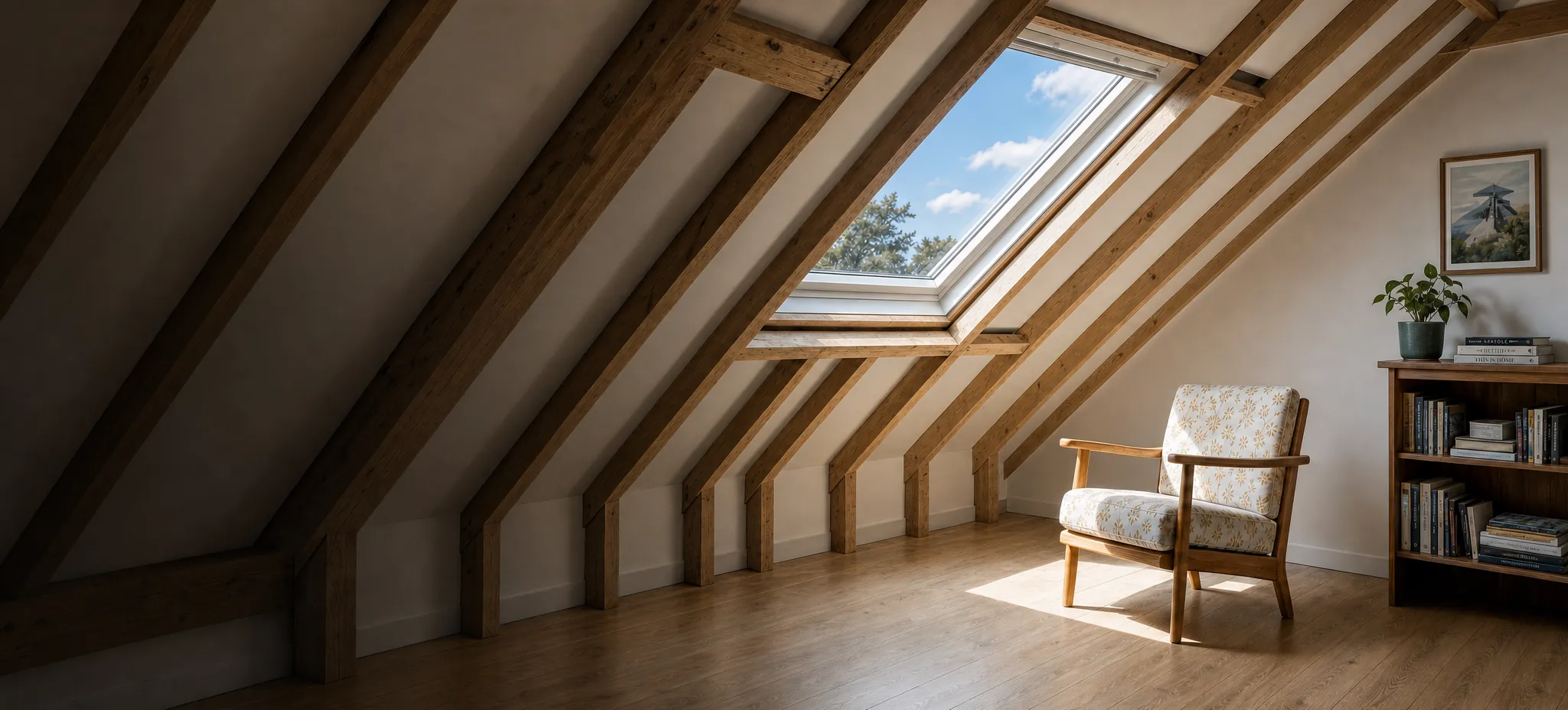
Flat roofs deserve a note of their own. A flat opening skylight over an extension is often set high in a ceiling and opens outwards and upwards, so a winder or motor is the usual choice; the details sit on the opening flat rooflights over a kitchen extension page.
Choosing on an estate roof or an older one
The opening method does not change the hole in the roof. A manual, pole or electric version of the same roof window has the same outer frame size, so on a trussed estate roof in Popley or Chineham the width is still chosen to sit between the trusses at their 600mm centres, whatever opens it. How that sizing works is set out under our roof window installation service.
What the opening method can change is the work inside. A mains motor needs a cable route, which in a finished loft room may mean a short run behind plasterboard; a solar unit avoids it. On an older cut rafter roof in Old Basing or Overton, a conservation rooflight may open by hand only, because the slim profile leaves no room for a motor, so if you want electric operation there it is worth raising early. And if you already have a fixed unit and wish it opened, whether a fixed rooflight can be changed to an opening one is answered separately.
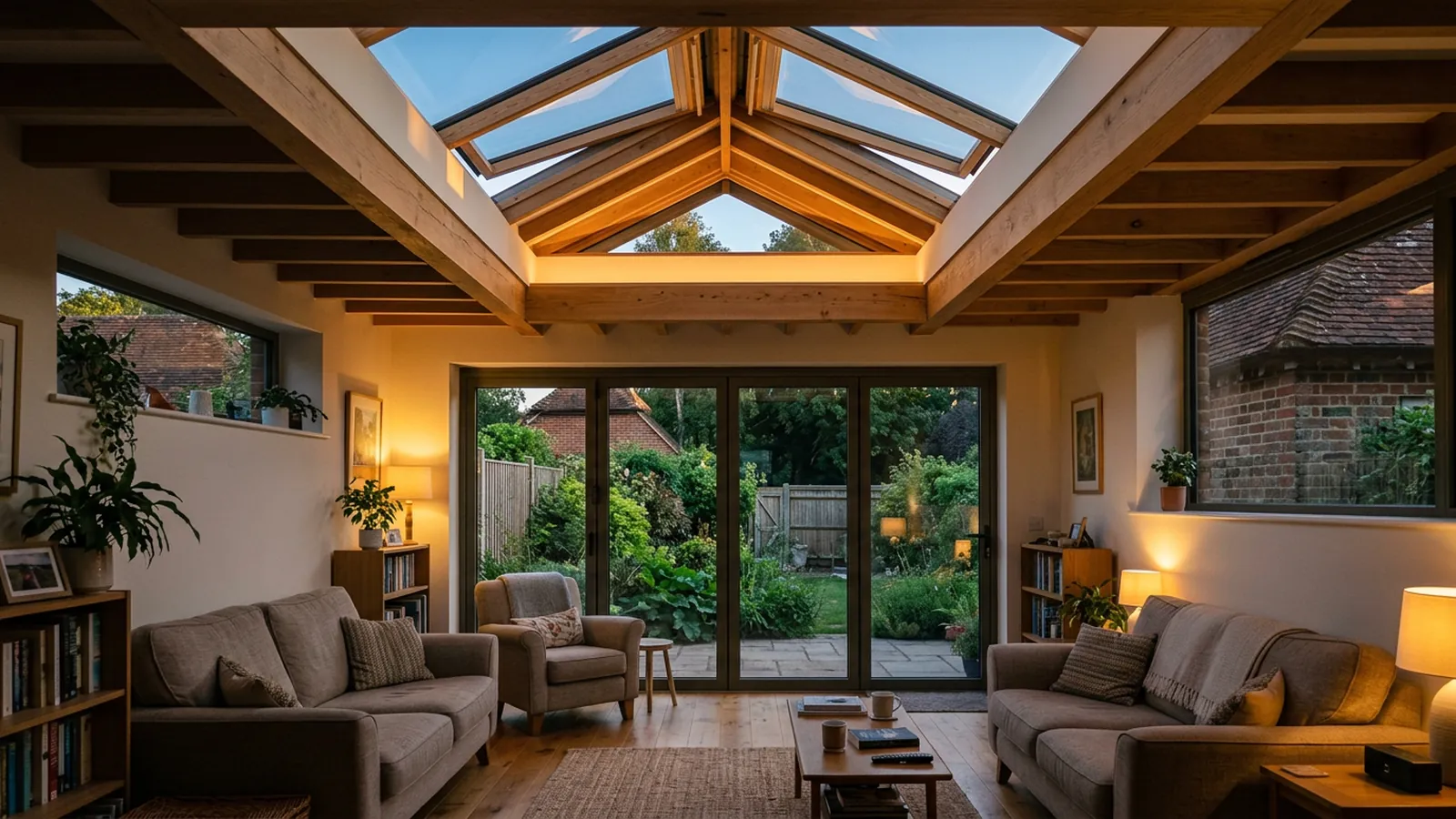
A short way to decide
If you want to reach an answer in a few minutes, work through these in order and stop at the first one that settles it.
- Reach. Stand where you would stand to open it. If your hand meets the handle comfortably, a manual window is a real option.
- Frequency. Picture a normal week. Daily opening above your reach points to a motor; occasional opening points to a pole.
- Weather. Do you want the room aired while nobody is home? If so, only a motor with a rain sensor will close it when the rain comes.
- Power. For a motor, decide between mains and solar based on whether a cable route to the window is easy.
- Blinds. Match the blind to the window: a manual blind with a manual or pole sash, an electric blind with an electric one if you want both on one control.
- Survey. Let the survey confirm the sash height, the roof structure and the range, and then order.
Whichever you pick, it is installed to the same standard and carries our 10-year workmanship guarantee on the fitting (a guarantee from us, not insurance backed); the Building Control notification, where the job needs one, is handled as part of the work. The wider picture of fitting is on the opening rooflight service page. To talk it through on your own roof, arrange a survey visit, or read more about rooflight installation around Basingstoke first.