Owners tend to raise this once the motor is on order and the thought arrives: what if it stops, and the glass is stuck open? It is a fair thing to settle before the rooflight goes in, and it is one of the points we go through when planning an electric or opening rooflight installation, because the override is chosen with the unit, not added later.
A manual override is simply a way to move the sash without the motor. It matters most in two moments: when the power is off and the window was left open, and when a motor has reached the end of its life and you are waiting for a replacement. Everything else about the skylight carries on as normal in the meantime.
Where the override sits on each kind of opening
The mechanism follows the way the window opens, so the quickest way to understand yours is to know which family it belongs to.
| Rooflight type | How the motor drives it | Usual manual option |
|---|---|---|
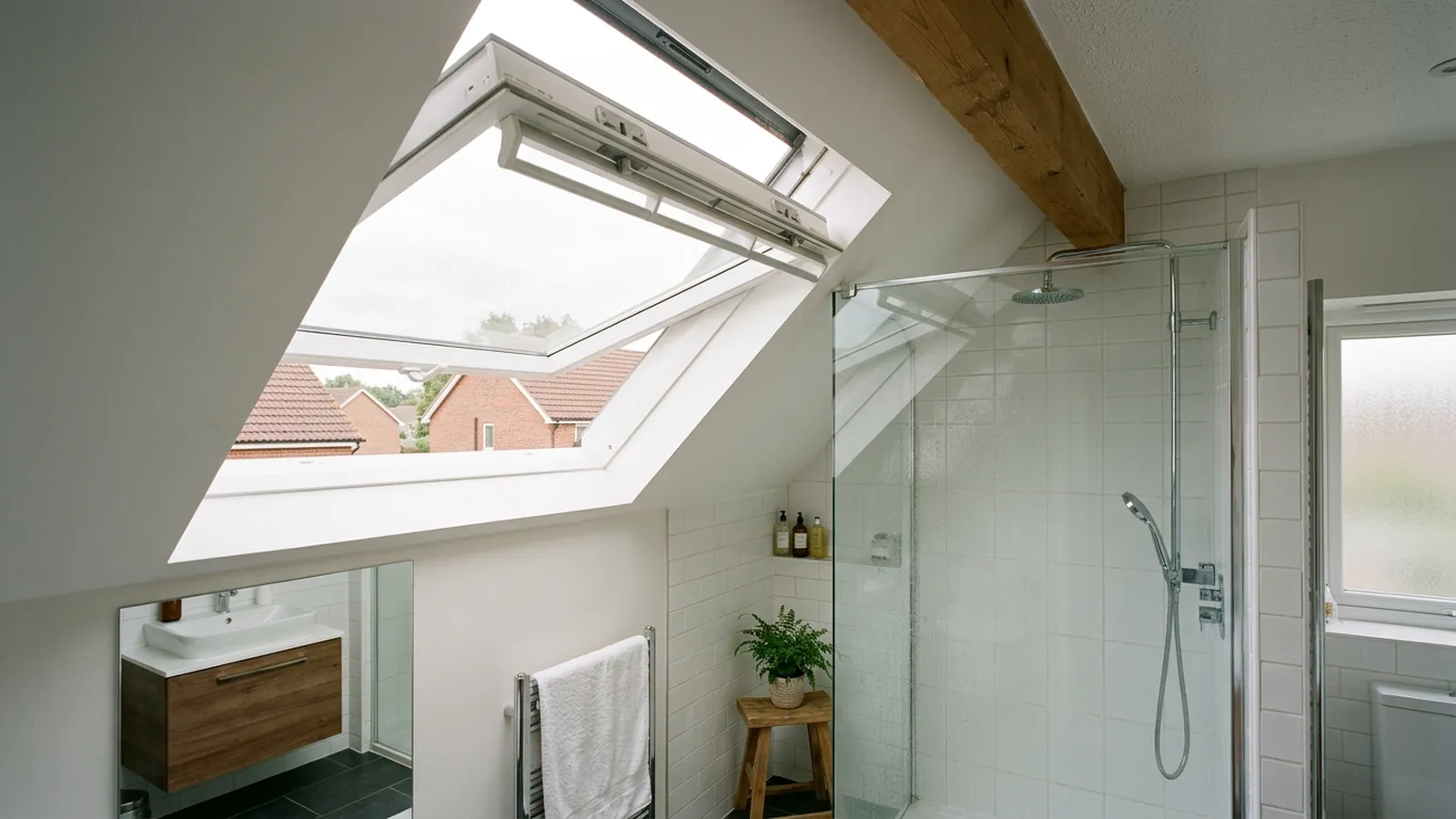
| Pitched roof window (centre-pivot or top-hung) | A chain actuator fixed to the frame pushes the sash open | The chain bracket is released from the sash, then the window is worked by its handle as a manual unit |
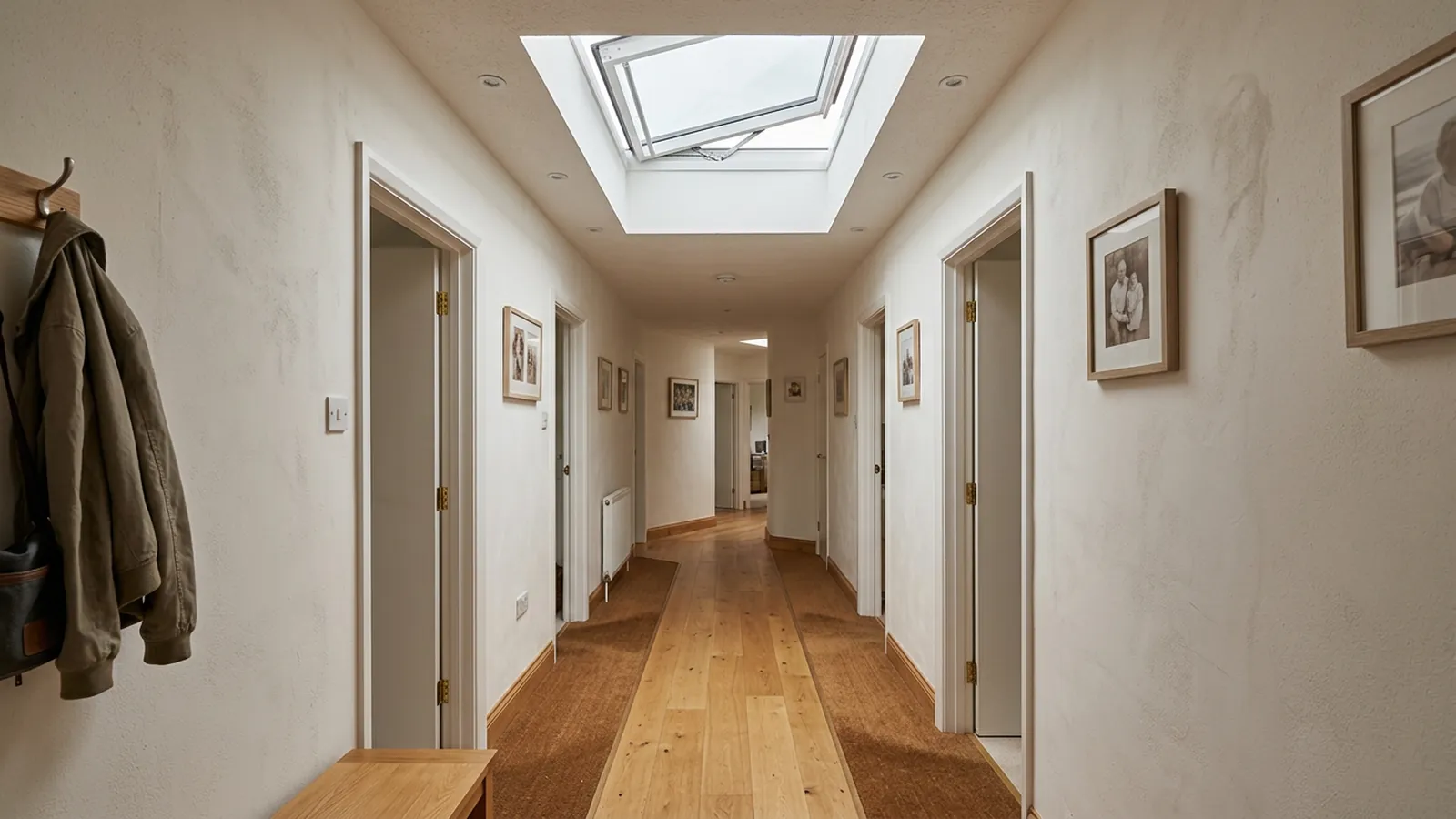
| Hinged flat rooflight | A spindle or chain actuator lifts one edge of the glazed panel | A release pin or clip frees the actuator; on some makes a winding key turns the drive by hand |
| Sliding flat rooflight | A track motor moves the panel along its runners | Varies widely by maker; some have a hand release, others depend on backup power |
| Solar opening rooflight | The same actuators, fed from a panel and battery | The battery gives a reserve of openings; a hand release, where fitted, works as on the mains version |
What moves the sash in each case is covered in our answer on what a rooflight actuator is. The point here is that the release is on or near the actuator, so it needs to be reachable.
How rooflights and roof windows open
- Centre-pivot sash, turns so the lower edge tips out and the top swings in, handy for cleaning from inside
- Pivot point, the hinge line across the middle of the sash
- Top-hung sash, swings outward clear of the opening for a wider view
- Top hinge, where the sash is hung from the head of the frame
- Fixed rooflight, glazing sealed to the upstand with no moving parts
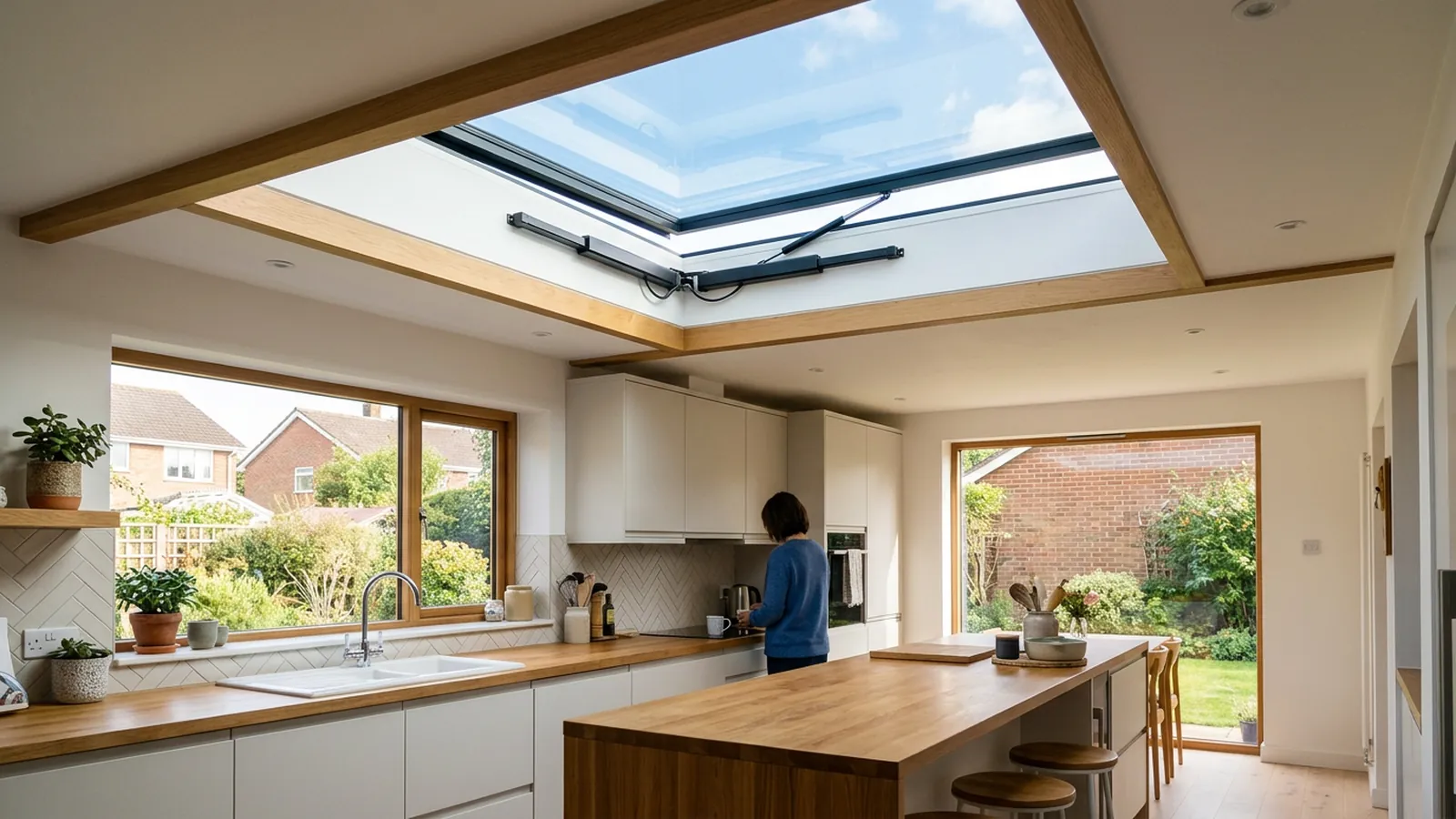
- Electric opening rooflight, the glazed lid lifts from one edge for ventilation
- Motorised chain actuator, pushes the lid open and draws it closed
- Rain sensor, closes the rooflight automatically when it starts to rain
Reaching the release on a high ceiling
An override you cannot get to is not much of an override. On a landing, over a stairwell or in the vaulted ceiling of a kitchen extension, the release on the actuator may sit well above head height. The motor was probably fitted precisely because the window is out of reach, so the same logic applies to the fallback.
There are three sensible answers. Keep a safe stepladder or platform that reaches the head of the frame; choose a unit whose release can be worked from a pole; or accept that on a very tall void the override is something you would call us back to do. Which of those suits your room is part of the conversation about choosing between a winder, a pole or a motor, and it is worth settling at that stage rather than after the plasterboard goes up.
The rule: a released sash no longer has the motor holding it, so close it and lock it by hand straight away. The exception is a unit whose instructions say the sash stays supported once released; follow those, not a general habit.
When the power goes off with the window open
This is the moment people worry about, and it is usually the least dramatic. A rain sensor may already have shut the sash before the supply failed, and some systems close on a backup battery. If neither happens, the hand release lets you shut the glass yourself. What each type does on its own when the mains drops is the subject of a separate answer, what happens to an electric rooflight in a power cut, so we will not repeat it here.
Using the override step by step
The exact sequence is in the maker's instructions for your unit, and those always come first. On a typical chain-driven roof window it runs like this.
- Isolate. Switch off the supply to the rooflight at its spur or controller so the motor cannot start while your hands are near the chain.
- Support the sash. Hold the glazed sash with one hand; once the actuator lets go, its weight is yours.
- Release. Free the chain bracket or pull the release pin as the instructions show.
- Close and lock. Bring the sash shut and engage the handle or catch so it stays weathertight.
- Reconnect later. When power returns or the motor is renewed, reattach the actuator and run one full open and close to check it.
If your ceiling makes step two awkward, that is a sign the release should have been planned for a pole or left to a visit, which is a decision for the specification stage.
Does using it damage anything?
Used as intended, no. The release is designed in by the manufacturer for exactly this purpose, and reattaching the drive puts the window back to normal. Forcing a sash against an engaged motor is a different matter: it can strain the chain and the gearbox. If the window will not move by hand, stop and check the release has actually let go. A motor that keeps needing the override may be nearing the end of its working life, which is covered in how long an electric rooflight motor lasts.
What to check before you choose a unit
Three questions are worth asking when comparing opening rooflights for your roof. Does this model have a hand release, and where on the frame is it? Can that point be reached from the floor, from a ladder, or only by someone on a platform? And will the controls, the spur and any battery pack sit where you can get to them as well? The last one belongs with the wiring and where the controls go, and is best drawn on the plan alongside the window position.
At the survey we look at the room height, the opening type your roof suits and where the release would end up, then name the units that give you a workable override. When the installation is finished we show you the release on your own window before we leave, so the first time you use it is not in the rain. If you would like that worked out for your ceiling, arrange a survey visit and we will look at the room with you.