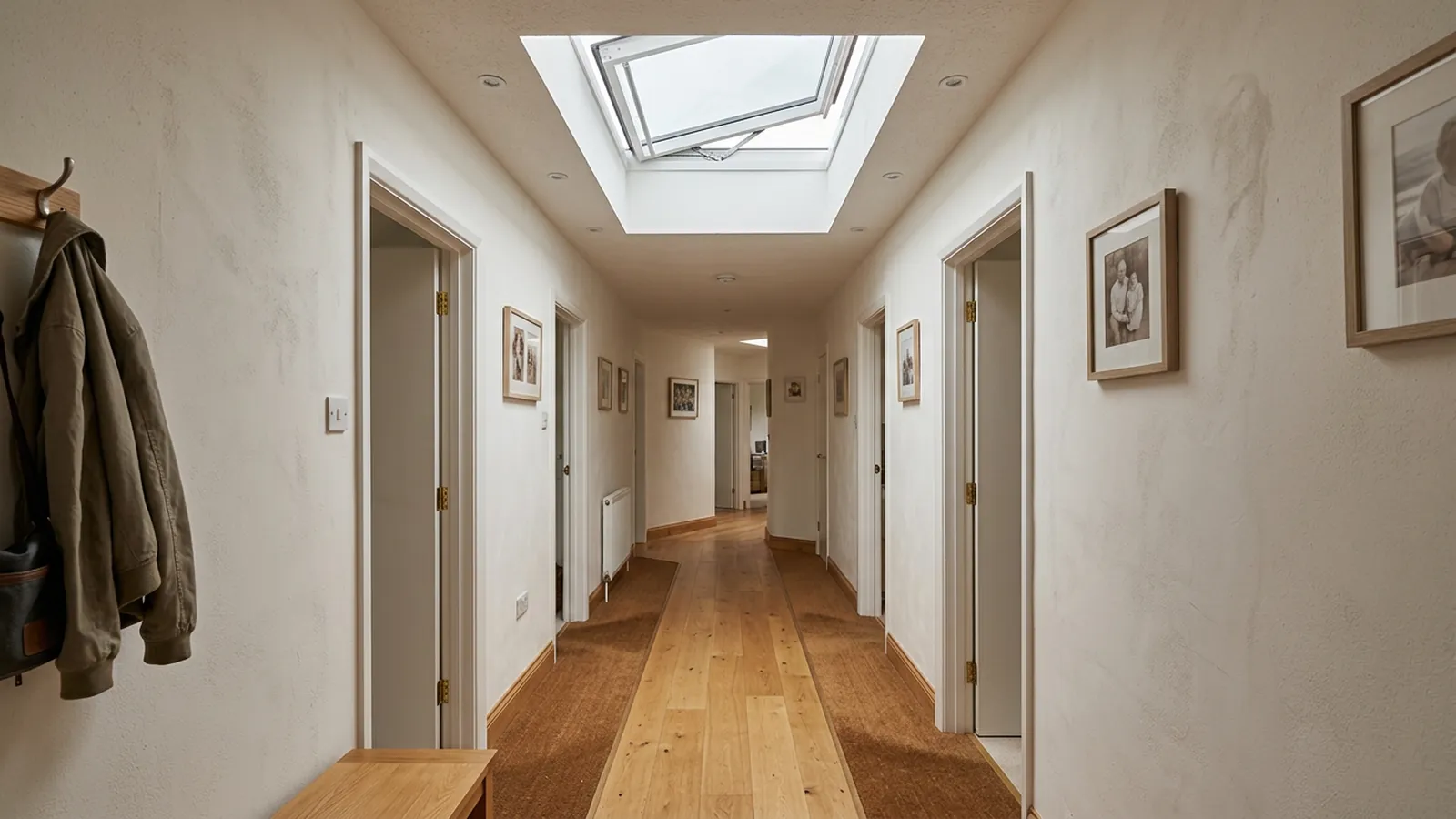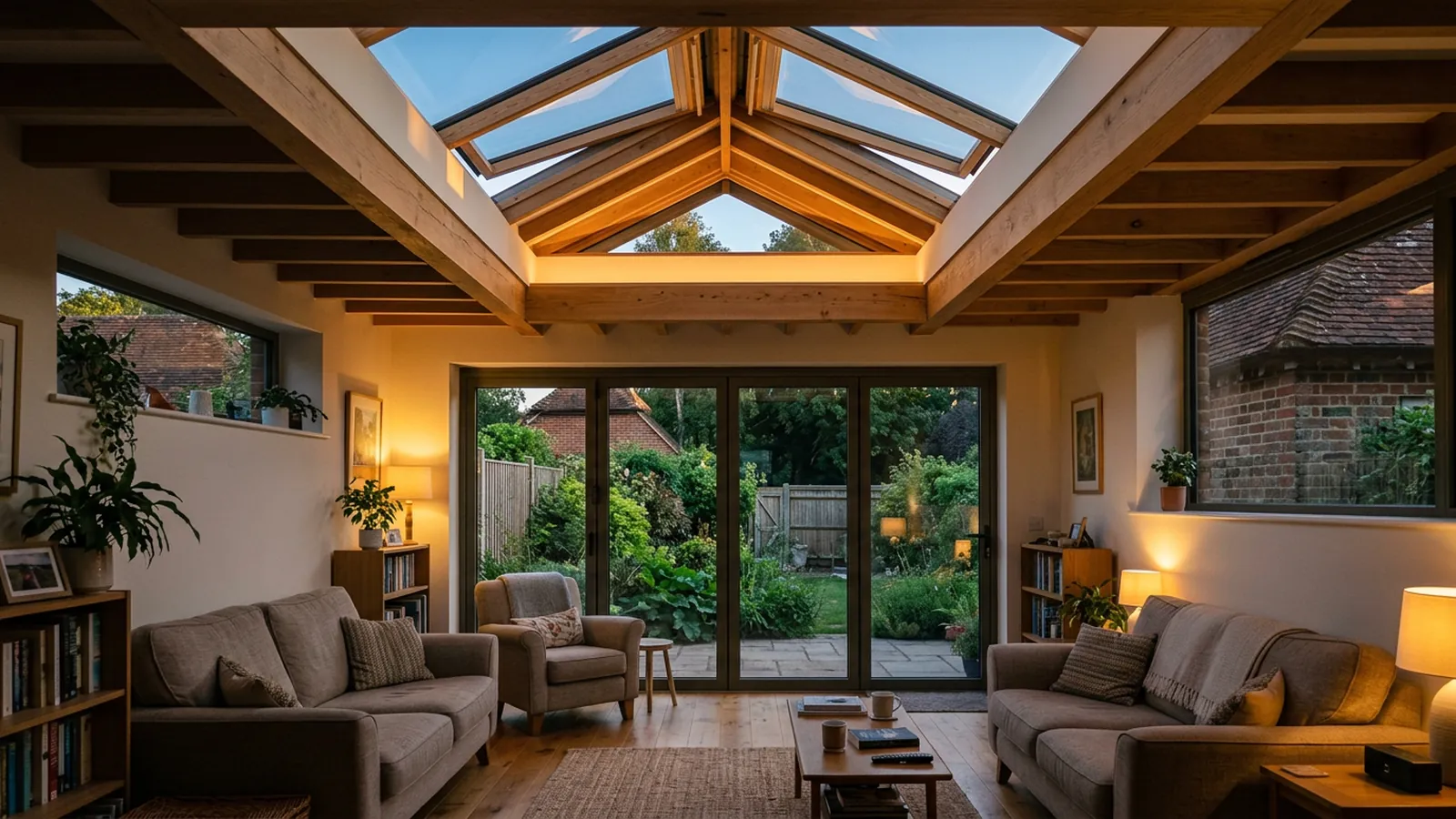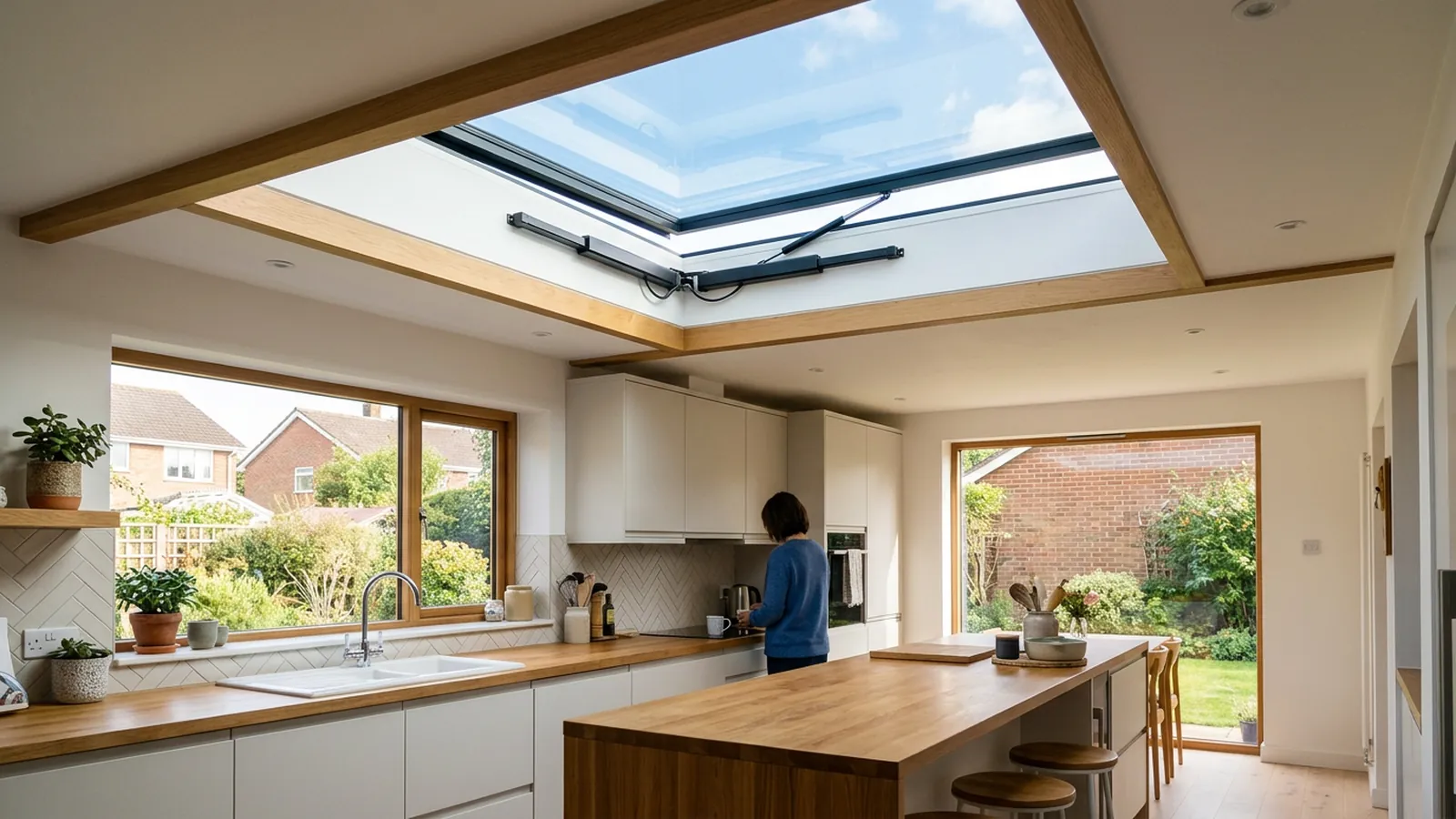
That is a less tidy answer than a figure, but it is the useful one. Before you choose an opening skylight for a room you cannot reach, it helps to know what actually wears, what you can do to slow it down, and what happens when the motor eventually reaches the end of its working life. Our electric and opening rooflight installation page covers the whole job; this answer stays on the motor.
What the motor is, and why it counts in cycles
On most electric roof windows and opening flat rooflights the moving part is a compact actuator: a small low-voltage motor driving a chain or spindle that pushes the sash open and draws it closed. Our answer on what a rooflight actuator is explains the parts. The point here is that the wearing components (the motor brushes or windings, the gears, the chain links and the end stops) wear a little on every stroke. Time in the box barely matters. A rooflight that never opens will keep its motor almost indefinitely; one that opens and shuts all day through summer uses its life up much faster.
So when a manufacturer states durability, it tends to do it as a tested number of cycles or through the length of its product warranty, and both vary between brands and models. We read the documents for the unit you choose and tell you what they say, rather than quote a general figure that would not hold for your window.
How rooflights and roof windows open
- Centre-pivot sash, turns so the lower edge tips out and the top swings in, handy for cleaning from inside
- Pivot point, the hinge line across the middle of the sash
- Top-hung sash, swings outward clear of the opening for a wider view
- Top hinge, where the sash is hung from the head of the frame
- Fixed rooflight, glazing sealed to the upstand with no moving parts
- Electric opening rooflight, the glazed lid lifts from one edge for ventilation
- Motorised chain actuator, pushes the lid open and draws it closed
- Rain sensor, closes the rooflight automatically when it starts to rain
The things that shorten or lengthen its life
| Factor | Wears it faster | Helps it last |
|---|---|---|
| How often it runs | Opened and closed many times a day, or cycled constantly by an automatic programme | Opened when the room needs air, with sensible timer settings |
| Weight on the sash | A heavy triple glazed sash, a large flat rooflight lid, or snow sitting on top when it opens | An actuator sized by the maker for that exact sash and glazing |
| Alignment | A frame fitted out of square, so the sash binds and the motor strains at each end of travel | A frame set square and true in the opening, with the sash closing freely by hand |
| Power supply | Undersized cable runs or a solar battery left flat for long spells | A correctly sized mains supply, or a solar panel with clear daylight on it |
| Obstruction | Blinds, screens or a stray pole fouling the sash so the motor stalls | A clear swing, with blinds and screens from the same maker |
Two of those rows are down to the installation rather than the product. A sash that binds because the frame was fitted in a twisted opening puts extra strain on the motor at the start and end of every stroke, which is exactly where wear builds. On a trussed estate roof in Chineham or Brighton Hill the opening between the trusses is usually regular, but it still needs to be packed and set square before the frame is fixed. On an older cut rafter roof in Old Basing or Overton, where the timbers are rarely straight, that setting out matters even more.
Mains and solar: does the power source change it?
The motor itself is similar on both. What differs is the rest of the circuit. A mains unit runs through a control box and transformer, and the motor sees a steady supply. A solar unit runs from a battery that the small panel on the frame tops up, and the battery is a separate wearing part with its own life. On a solar skylight the battery often needs renewing before the motor does, particularly on a north facing slope that sees little direct sun in winter. The trade off between the two is set out in our guide to solar-powered and mains opening rooflights.
Rain sensors and automatic programmes also add cycles. A sensor that shuts the window at the first drop, and a timer that reopens it when the shower passes, can put the motor through several strokes on a changeable afternoon. That is the sensor doing its job, and it is worth having, but it is part of why a heavily automated rooflight uses its motor up sooner than one worked by hand from a wall switch.
Signs the motor is nearing the end
- The sash moves more slowly than it used to, or hesitates before starting.
- It stops short of fully open or fully closed and needs a second press.
- A new grinding, clicking or labouring sound on each stroke, different from the normal hum.
- The window closes but does not pull tight against its seals.
Before blaming the motor, rule out the simple causes: a flat battery on a solar unit, a remote with tired batteries, a blind catching the sash, or a rain sensor still reading wet. If the window is stuck open, most models have a way to close it by hand; see whether an electric rooflight has a manual override. The same answer applies if the power goes off, which our page on what happens in a power cut covers.
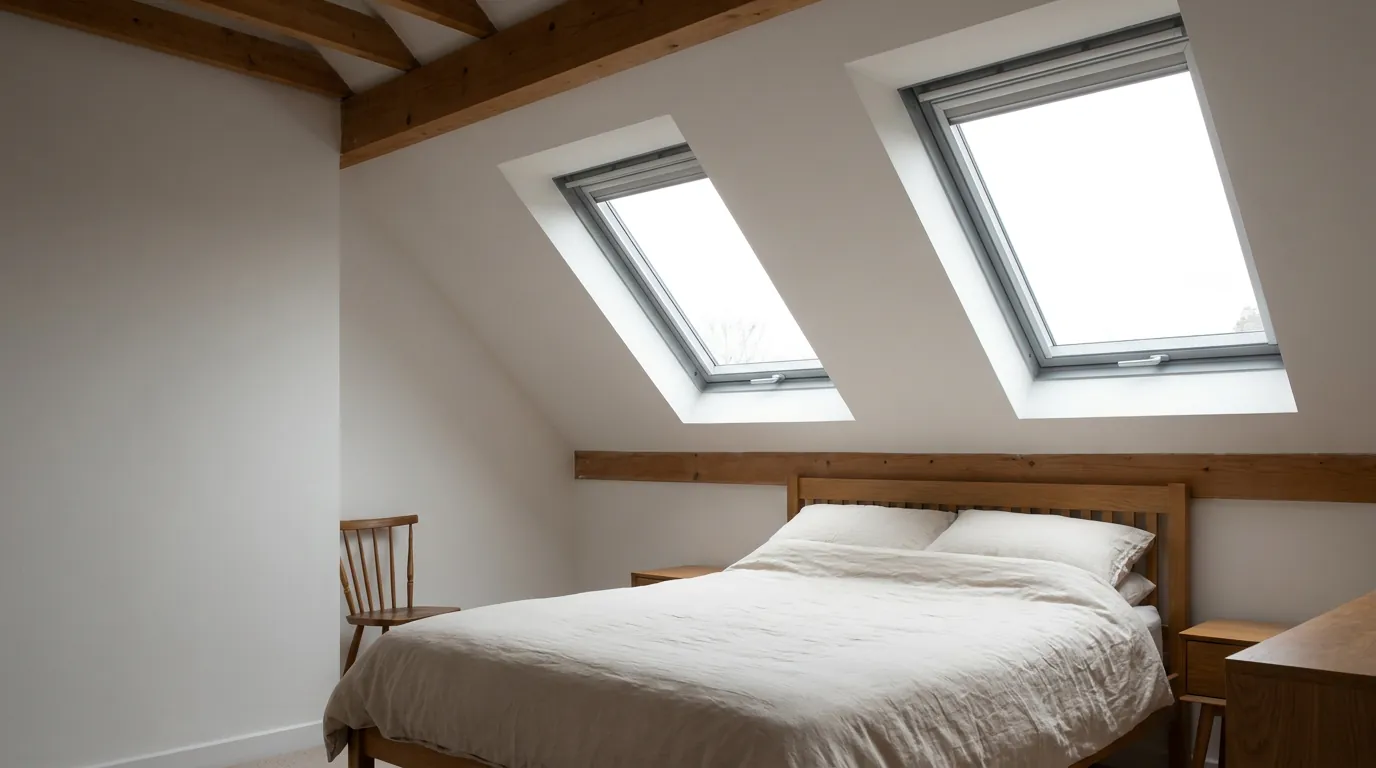
When it wears out, the window does not have to
The rule: a worn rooflight motor is replaced as a part, and the frame, glazing and flashing stay in the roof. The exception is an older unit whose maker no longer supplies a matching actuator, where the choice becomes a compatible retrofit kit or replacing the whole rooflight.
On most current electric roof windows the actuator clips or screws to the head of the frame and the sash, and a replacement goes in from inside the room without touching the tiles or the skylight's weathering. Where the whole rooflight has reached the end of its life as well, with misted glazing or a tired frame, it can make more sense to do both together; our misted and failed rooflight replacement page covers that route.
Infographic
How a rooflight job runs, from survey to guarantee
Roof survey
We look at the structure, the covering and the room below before anything is priced.
Specification
A size, type and position that fits your roof, and whether the work is notifiable.
Paperwork
Building Control notified where the work needs it, and planning checked where it applies.
Installation
Opening formed, frame fixed, flashed or dressed in, then lined and finished inside.
Sign-off and guarantee
Completion paperwork where needed and a 10-year workmanship guarantee.
What to decide before you buy
If the window will be opened daily in a room you cannot reach, such as a loft bedroom or the top of a stairwell, a motor is the right call, and a long motor life comes from choosing a model sized for the sash, fitting it square, and keeping the programme sensible. If the window will only open a few times a season, a winder pole may suit you better and has nothing to wear out electrically; our guide to manual winder, pole or motor weighs that choice.
At the survey we look at the room, the roof and how you will actually use the window, then recommend the operator and power source that match, with the maker's own durability and warranty terms written into the quote. Our workmanship on the fitting is covered for ten years, which is a guarantee from us and not insurance backed. If you want to talk through a motorised rooflight for a room of your own, arrange a survey and we will start from how often it will open.