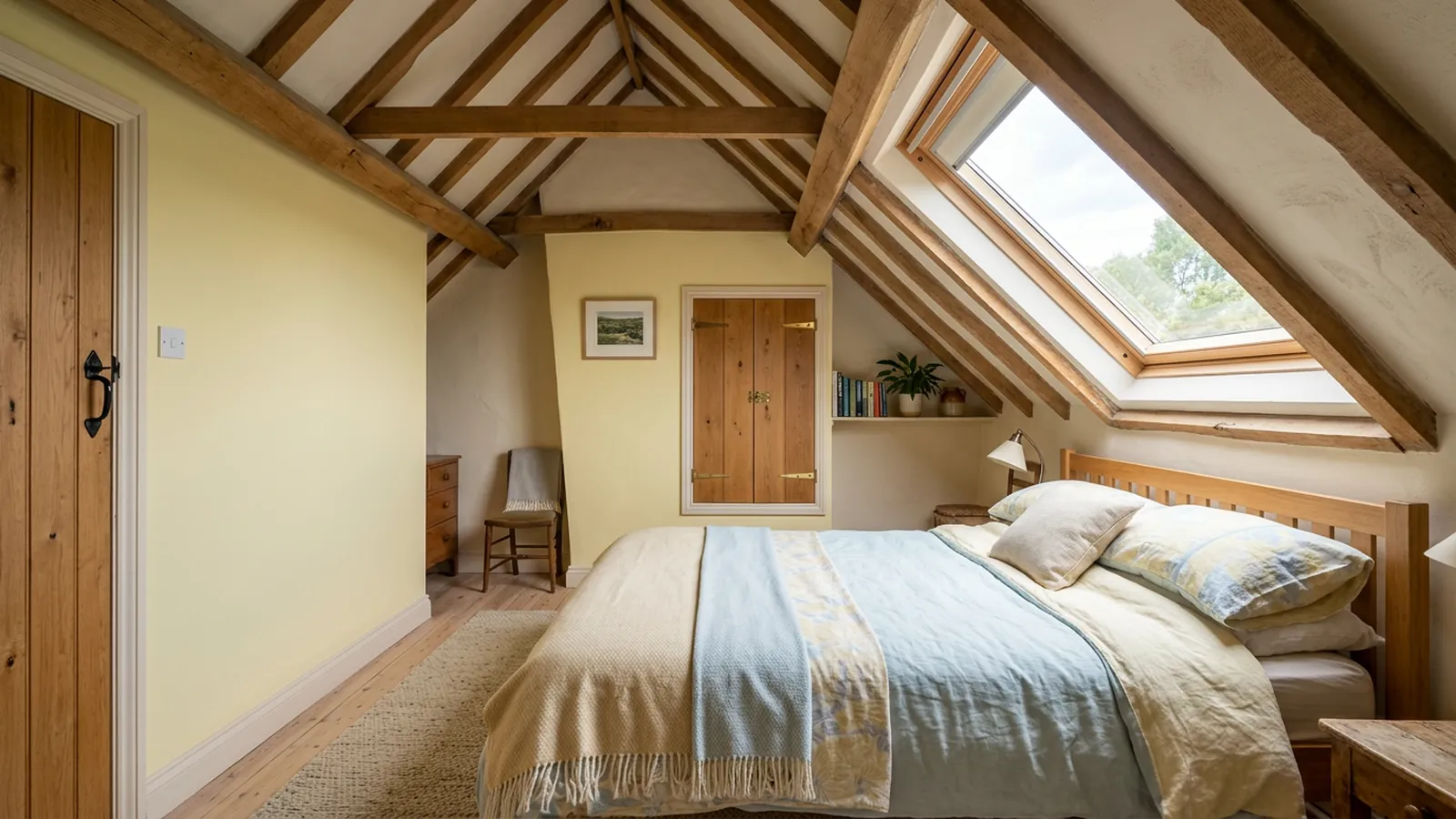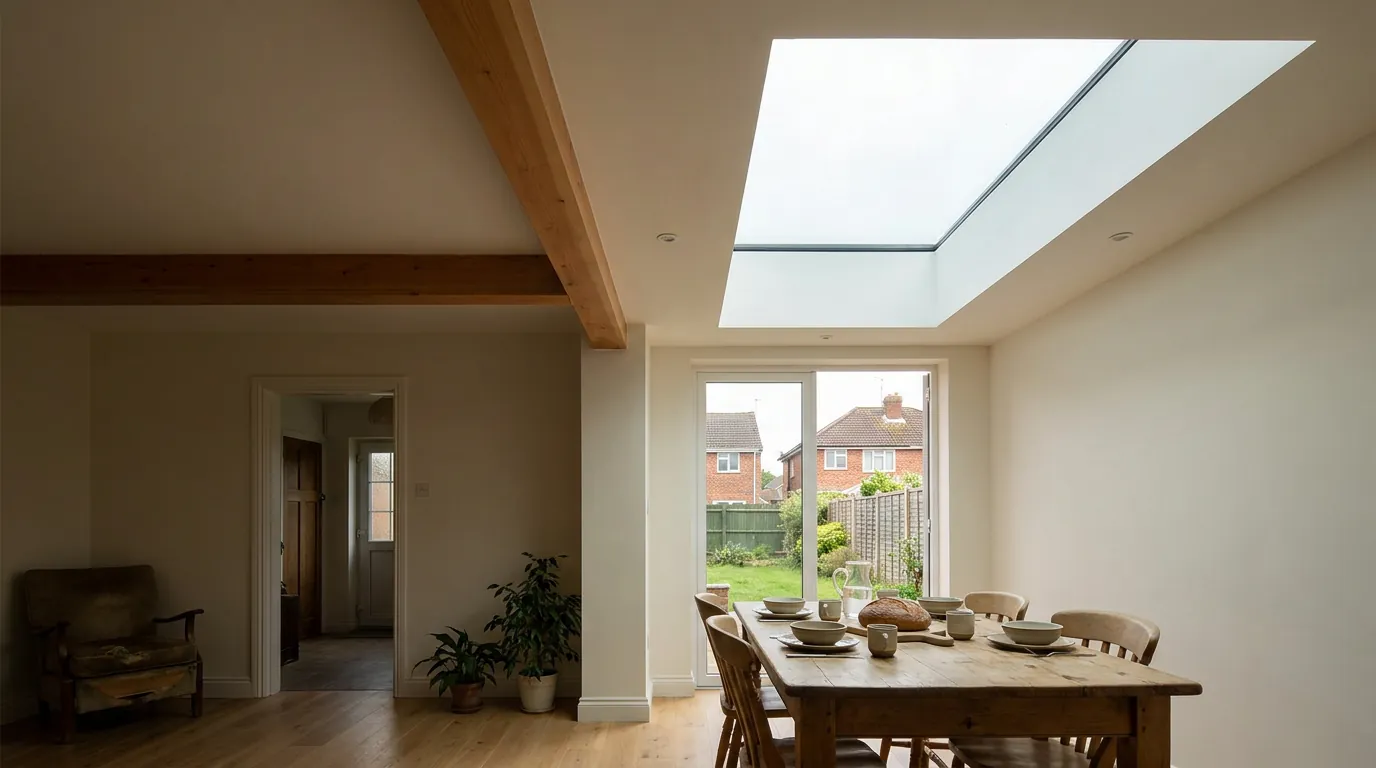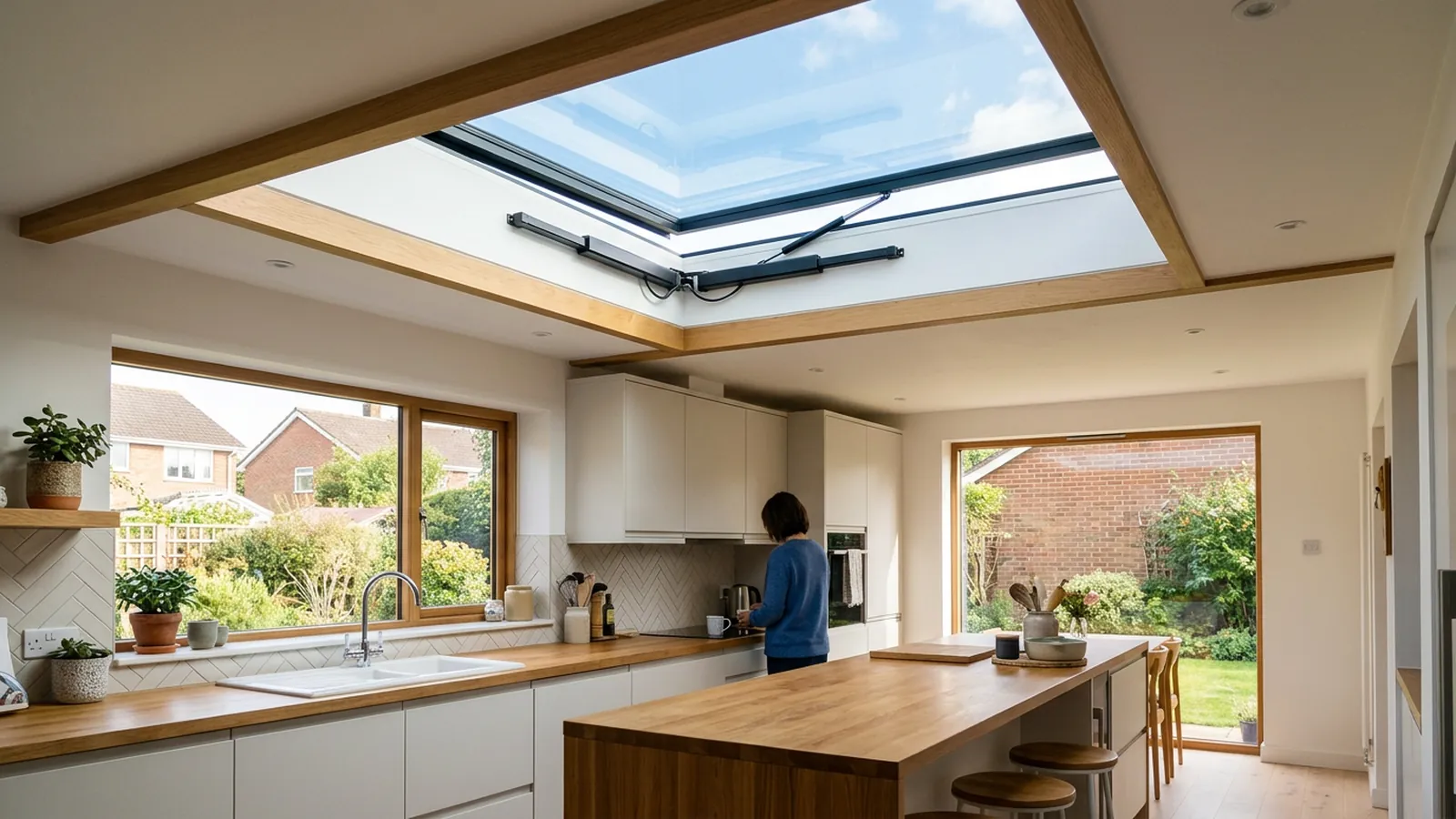
A converted loft sits directly under the tiles, with little between the sun and the room but insulation and plasterboard. On a still summer afternoon the room under a trussed estate roof can feel like the warmest place in the house, and the question is whether an opening skylight earns its place against that. Our electric and opening rooflight installation page covers the units themselves; this answer is about the heat.
Why the top of the room is the right place to vent
Warm air is lighter than cool air, so it rises and pools against the underside of the ceiling slope and in the space near the ridge. A dormer or gable window lets some of it out, but only the air at its own height. An opening in the roof plane sits in the warmest layer of the room and gives that air a direct way out. Trades call this stack ventilation: warm air leaves high, and cooler replacement air is drawn in lower down.
The effect depends on height difference. The further apart the air path's way in and way out, the stronger the draw. A loft is the highest room in the house, which is why a rooflight at the top of it can move air through a whole staircase when the right door and window below are open. The wider picture of how an opening unit changes the air in a room is in our guide to electric opening rooflights and ventilating a room.
How rooflights and roof windows open
- Centre-pivot sash, turns so the lower edge tips out and the top swings in, handy for cleaning from inside
- Pivot point, the hinge line across the middle of the sash
- Top-hung sash, swings outward clear of the opening for a wider view
- Top hinge, where the sash is hung from the head of the frame
- Fixed rooflight, glazing sealed to the upstand with no moving parts
- Electric opening rooflight, the glazed lid lifts from one edge for ventilation
- Motorised chain actuator, pushes the lid open and draws it closed
- Rain sensor, closes the rooflight automatically when it starts to rain
Venting on its own is only half of it
An opening rooflight lets hot air out, but the same glass lets sunshine in. On a south or west facing slope, direct sun through a clear pane warms whatever it lands on, the floor, the bed and the walls, and that heat then has to be carried away. Cooling a loft room is really two jobs: getting warm air out, and stopping so much heat coming in.
The rule: open high and shade the glass. The exception: on a north facing slope the sun rarely falls straight through the pane, so ventilation does most of the work and shading matters far less.
So the orientation of the slope is worth thinking about before choosing a unit. A rooflight on the shaded side of the ridge brings in steady daylight with little direct sun, and venting alone may keep the room comfortable. On the sunny side, plan the shading at the same time as the window.
What keeps the heat out during the day
Each of these tackles a different part of the problem, and they work together rather than in place of one another.
| Measure | What it does | Worth knowing |
|---|---|---|
| External awning blind | Shades the pane from outside, so the sun is stopped before it reaches the glass | Generally the most effective shading, and the unit can still stand open behind it |
| Internal blackout or pleated blind | Blocks light and some heat inside the room | Heat has already passed the glass, so it helps less than shading outside |
| Solar control glazing | A coated pane that lets through daylight while reflecting more of the sun's heat | Chosen when the unit is specified, and cannot be added to an existing pane |
| Opening position | Lets the warm air under the ridge escape | Works best with a lower opening elsewhere to pull fresh air through |
Glazing performance in general belongs to our energy efficient rooflights service; for a hot loft the point is simply to ask for solar control glass on a sunny slope rather than assume standard glazing will cope.
Night purging and the rain question
A loft room often cools most usefully overnight, when the outside air drops below the temperature of the room. Leaving the rooflight open after dark flushes out the heat stored in the day, so the room starts the next morning cooler. That only works if you are comfortable leaving it open, and two worries get in the way: rain and insects.
An electric unit with a rain sensor closes itself when the first drops land, so a sudden shower at night does not soak the room. Our answer on whether an opening rooflight can be left open in the rain goes through what the sensor does and what it cannot guard against. Insect screens that fit inside the lining let the window stand open on a summer evening without letting moths in, and our answer on whether opening rooflights have insect screens covers the options.
Why a motor matters in a loft
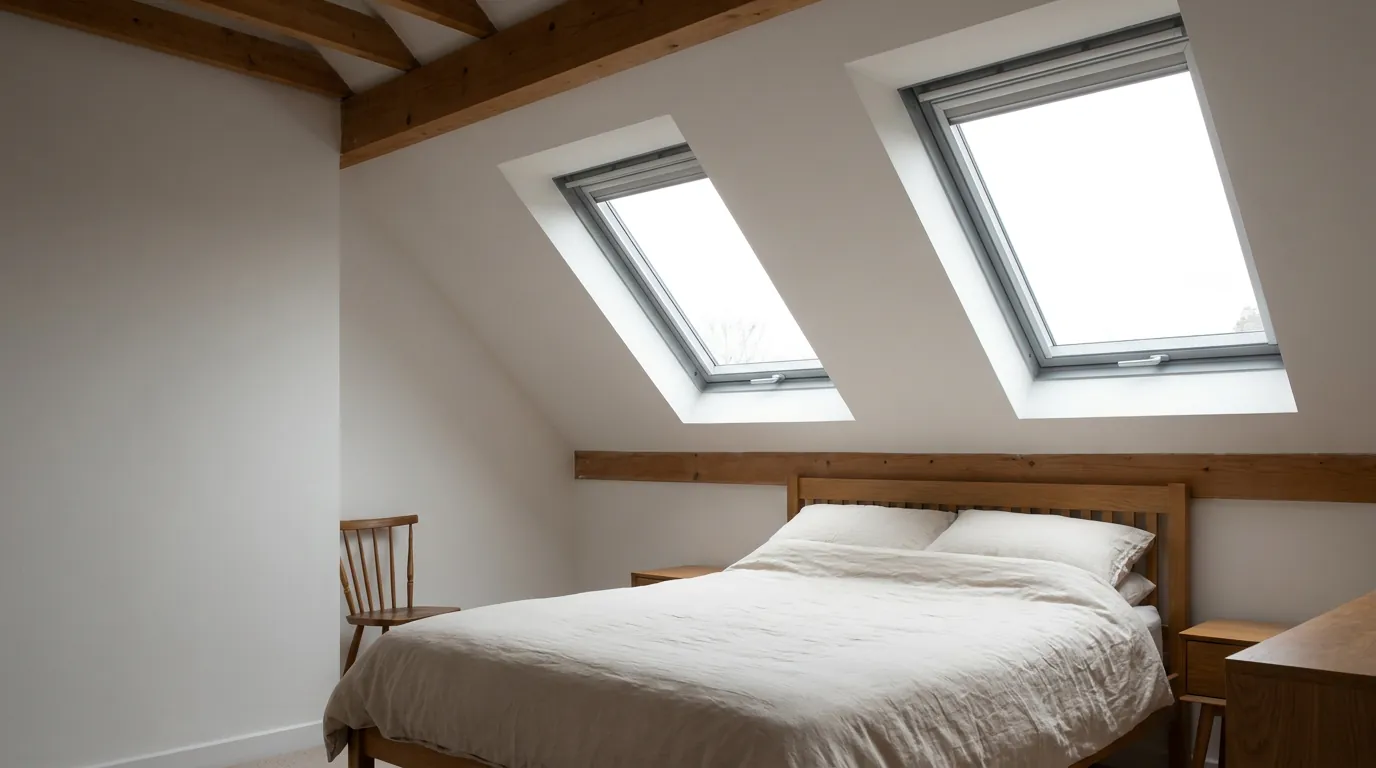
Most of what makes a rooflight cool a loft room comes down to using it: open in the morning before the heat builds, shaded through the afternoon, open again at night. A window high in a sloping ceiling, out of reach over a bed or a stair, tends to stay shut if opening it means fetching a pole. A motor, a wall switch or a remote removes that barrier, and a rain sensor removes the reason to close it every time the sky darkens.
A few ways the controls can be set up for a hot room:
- Morning. Open the unit while the outside air is still cool, then lower the external blind before the sun reaches the slope.
- Afternoon. Keep the blind down and the pane on a vent setting if the outside air is cooler than the room.
- Evening. Raise the blind once the sun has moved off the roof and open the window wider.
- Night. Leave it open with the rain sensor armed and the insect screen drawn.
How the motor, sensor and switch are wired and where the controls sit is covered in our guide on wiring and controls for an electric rooflight.
Where it will not be enough on its own
A rooflight is one piece of the answer, not a whole cure. A loft with thin insulation behind the plasterboard will keep soaking up heat from the tiles however well it is ventilated, and a room with only one opening and no lower way for air to enter will move far less air than one with a route through it. If the loft already has a fixed unit, fitting an opening one in its place is often possible; our answer on changing a fixed rooflight to an opening one explains when.
At the survey we look at which way your roof slopes face, where warm air would collect in your room, and whether a second opening lower down is available to draw air through, then recommend a unit, glazing and shading to suit. To see what would work on your loft, arrange a survey of the roof and we will put the options in a written quote.