Stand in a loft room and picture yourself opening the window. Do you reach up for a bar at the top of the glass, or down for a handle at the bottom? Does the glass swing into the room on a spindle, or lift out and away over the tiles? That small moment, repeated every day for as long as you live in the house, is the whole difference between a VELUX centre pivot and a VELUX top hung window. Both fill the same opening in the roof, both come in the same sizes, and both are flashed and finished the same way. What changes is how the sash moves, where your hand goes, and what sits in your line of sight when the window is open.
This guide sets the two side by side and then works through the questions that actually settle it: how high the frame sits in the slope, what lives under it, who needs to reach it, whether it has to double as a way out in a fire, and how it behaves with a blind fitted. The wider picture of choosing and fitting a roof window sits on our VELUX window installation page.
Two ways for one sash to open
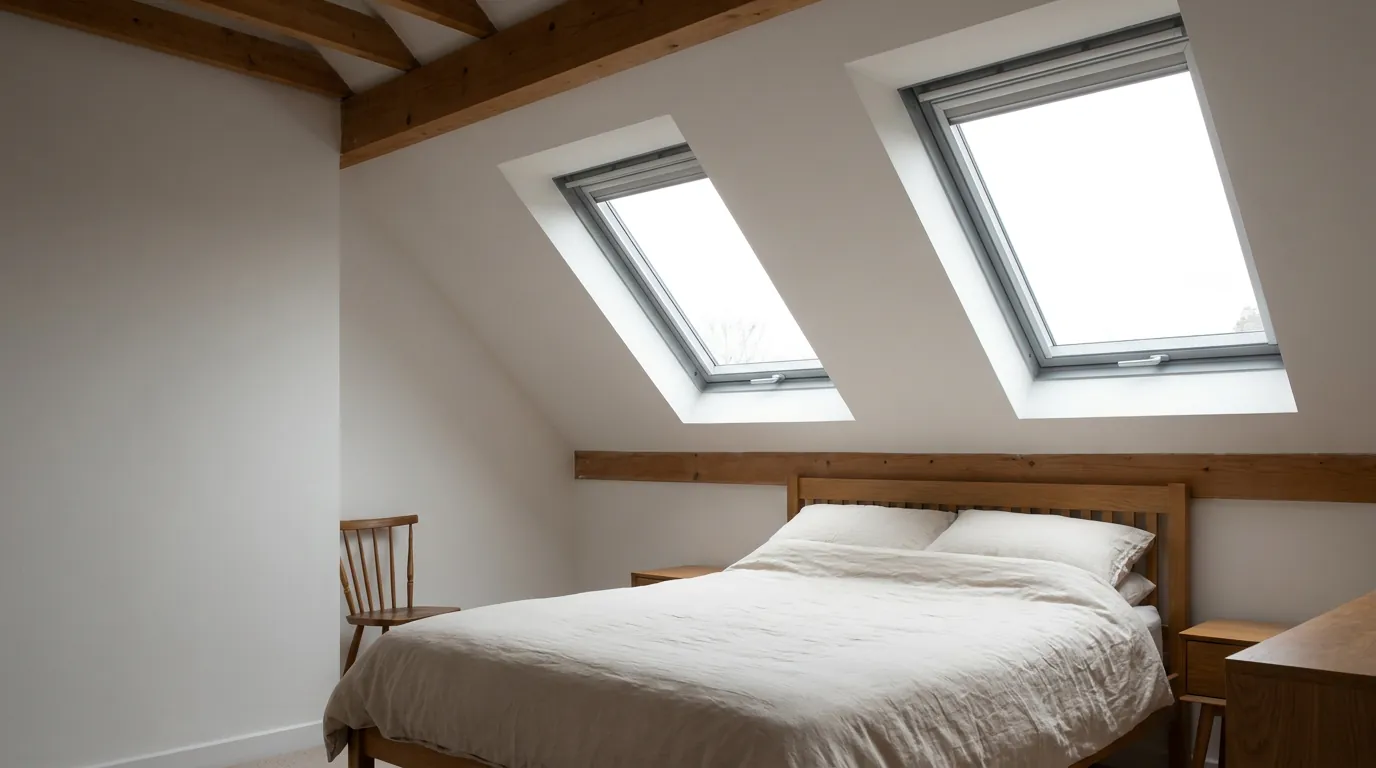
A centre pivot window turns on hinges set roughly halfway down each side of the frame. Pull the control bar along the top and the upper half of the sash tips outwards while the lower half swings inwards, so the glass ends up sitting at an angle across the middle of the opening. Keep turning and the sash rotates right round, which puts the outer face of the glass inside the room where you can clean it. The familiar GGL and GGU codes are centre pivot models; the only difference between those two is the finish of the frame, which the short answer on GGL or GGU explains.
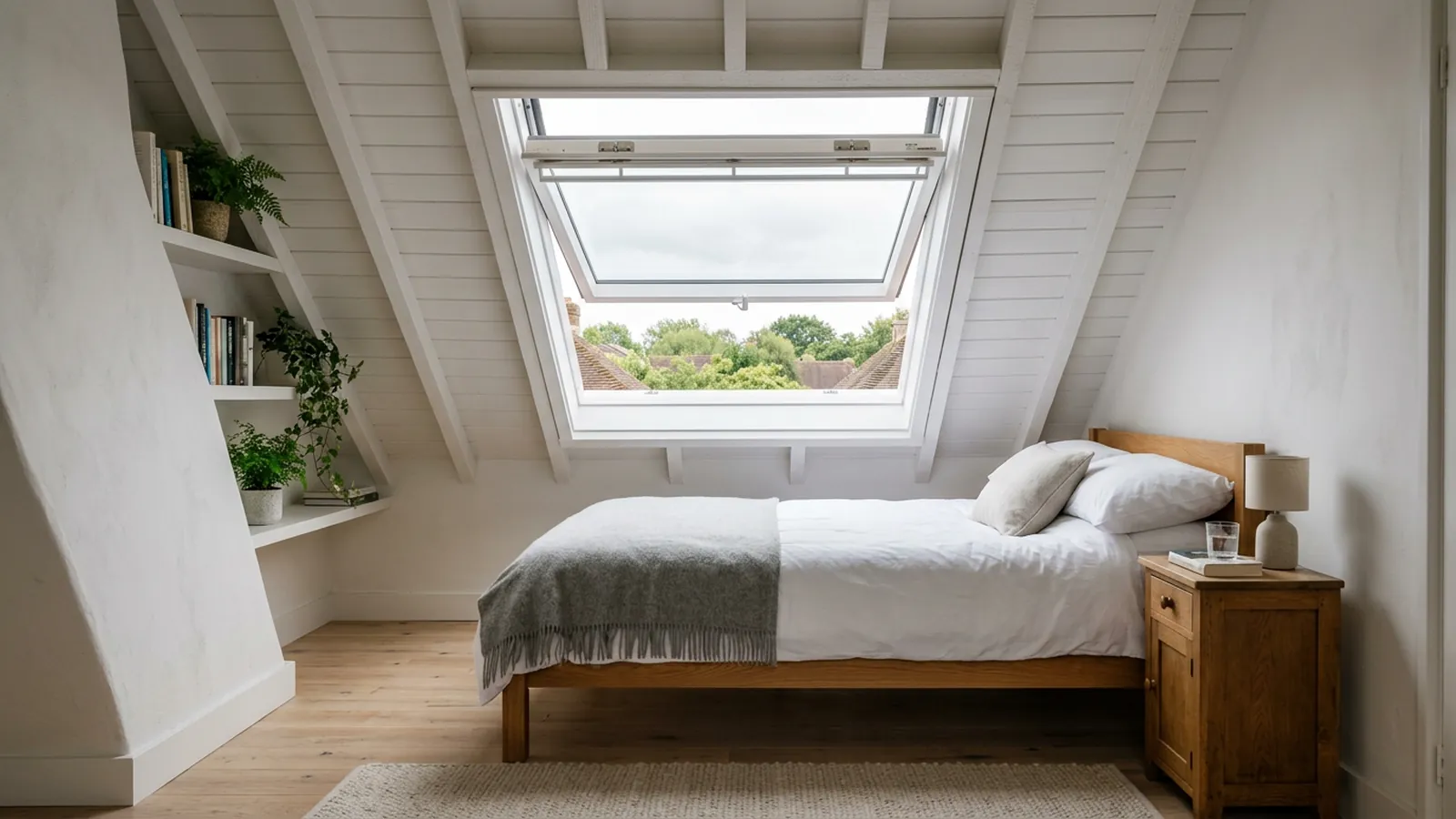
A top hung window, sold as GPL and GPU, is hinged along the top of the frame. You open it from a handle at the bottom, and the whole sash lifts outwards and upwards, pivoting away from you like the lid of a box. Nothing comes into the room. With the sash open the opening is clear from side to side, and you can stand close to it and look straight out. The same models also carry a second pivot action, so the sash can be turned for cleaning from inside in much the same way as a centre pivot.
So the choice is not about light, glazing or size. It is about movement, reach and view. Everything else in this guide follows from that.
How rooflights and roof windows open
- Centre-pivot sash, turns so the lower edge tips out and the top swings in, handy for cleaning from inside
- Pivot point, the hinge line across the middle of the sash
- Top-hung sash, swings outward clear of the opening for a wider view
- Top hinge, where the sash is hung from the head of the frame
- Fixed rooflight, glazing sealed to the upstand with no moving parts
- Electric opening rooflight, the glazed lid lifts from one edge for ventilation
- Motorised chain actuator, pushes the lid open and draws it closed
- Rain sensor, closes the rooflight automatically when it starts to rain
The same opening, compared line by line
Because both types share the size range and the flashing kits, you can hold the roof side of the decision still and compare only the part you live with. The table puts the differences in one place.
| Question | Centre pivot (GGL, GGU) | Top hung (GPL, GPU) |
|---|---|---|
| Where you hold it | Control bar along the top of the sash | Handle along the bottom of the sash |
| Which way it moves | Top half out, bottom half into the room | Whole sash lifts outwards from the top hinge |
| View when open | Glass sits across the middle of the opening | Opening clear, so you can stand at it and look out |
| Space needed inside | Room for the lower half to swing in | None beyond reaching the handle |
| Best height in the slope | Set so the top bar is within easy reach | Set so the bottom handle is within easy reach |
| Cleaning the outside | Sash turns right round and locks for cleaning | Secondary pivot turns the sash for cleaning |
| Electric and solar options | The INTEGRA range is built on this action | Chosen mainly for manual, hands-on opening |
| Sizes and flashings | Standard VELUX size codes and flashing kits | The same size codes and flashing kits |
The size code on the data plate reads the same on both types, so a CK04 is a CK04 whichever way it opens. If you are working from an existing window and want to decode what is there, what the code on a VELUX means reads the plate for you.
How high the frame sits decides a lot
Where the window lands on the slope is the single most useful thing to know before choosing. A roof window is positioned by the rafters or trusses, the height of the room and the view you want, and once that height is known the handle position all but picks the type for you.
If the bottom of the frame will sit around waist or chest height, a top hung window is comfortable. The handle falls naturally to hand, you can lift the sash and lean into the opening, and the view is framed at eye level. A centre pivot in that same spot puts its control bar well above the handle position, which is still reachable, but the lower half of the sash then swings towards your body as you open it.
If the frame sits higher, with its bottom edge above head height, the logic flips. A top hung handle up there is awkward to reach and awkward to push, because you are pushing the weight of the whole sash outwards and upwards from below. A centre pivot bar at the top of a high window is often no easier by hand, which is why high frames are usually centre pivot with an operating rod, or electric. On a stairwell or a tall vaulted ceiling, the reach question tends to answer itself.
The rule: choose the type whose handle ends up where your hand naturally goes. The exception is a window you cannot reach at all, where the choice moves to electric or solar operation, and that means a centre pivot.
Window height is tied to size, and size is tied to the roof structure. Choosing the right VELUX size covers the height and width decision in full, including how the frame length changes where the bottom edge falls.
What lives underneath the window
The lower half of a centre pivot sash swings into the room when it opens. In an empty stretch of sloping ceiling that makes no difference. Under it, though, it matters. A bed pushed against a knee wall, a desk under the slope, a fitted wardrobe, or a bath tucked beneath the window can all get in the way of that swing, or at least make the window feel fussy to open.
A top hung sash never enters the room, so furniture can sit closer. On the other hand you need to be able to get your hand to the bottom handle, so a tall piece of furniture directly under a low top hung frame just moves the problem.
Bathrooms and shower rooms
Over a bath or shower, the finish of the frame matters as much as the action, which is why the polyurethane versions (GGU and GPU) are usually specified in wet rooms. Whether the window should open over a shower at all, and what to think about with the steam and the reach, is covered in is a VELUX suitable over a shower or bath.
Children's rooms
In a child's bedroom some owners prefer a control bar at the top of the frame, out of easy reach from a bed, while others want the low top hung handle so that an older child can open the window for air. Both types lock, and both have a ventilation flap so the room can breathe with the sash shut. Decide who should be able to open it, then choose the handle position to suit.
The view: seeing out or letting light in
People often ask for a roof window without saying what it is for, and the answer changes the type. A window put in to light a dark landing or a stairwell is about sky, and a centre pivot does that job well: open or shut, it lets the daylight down and air through.
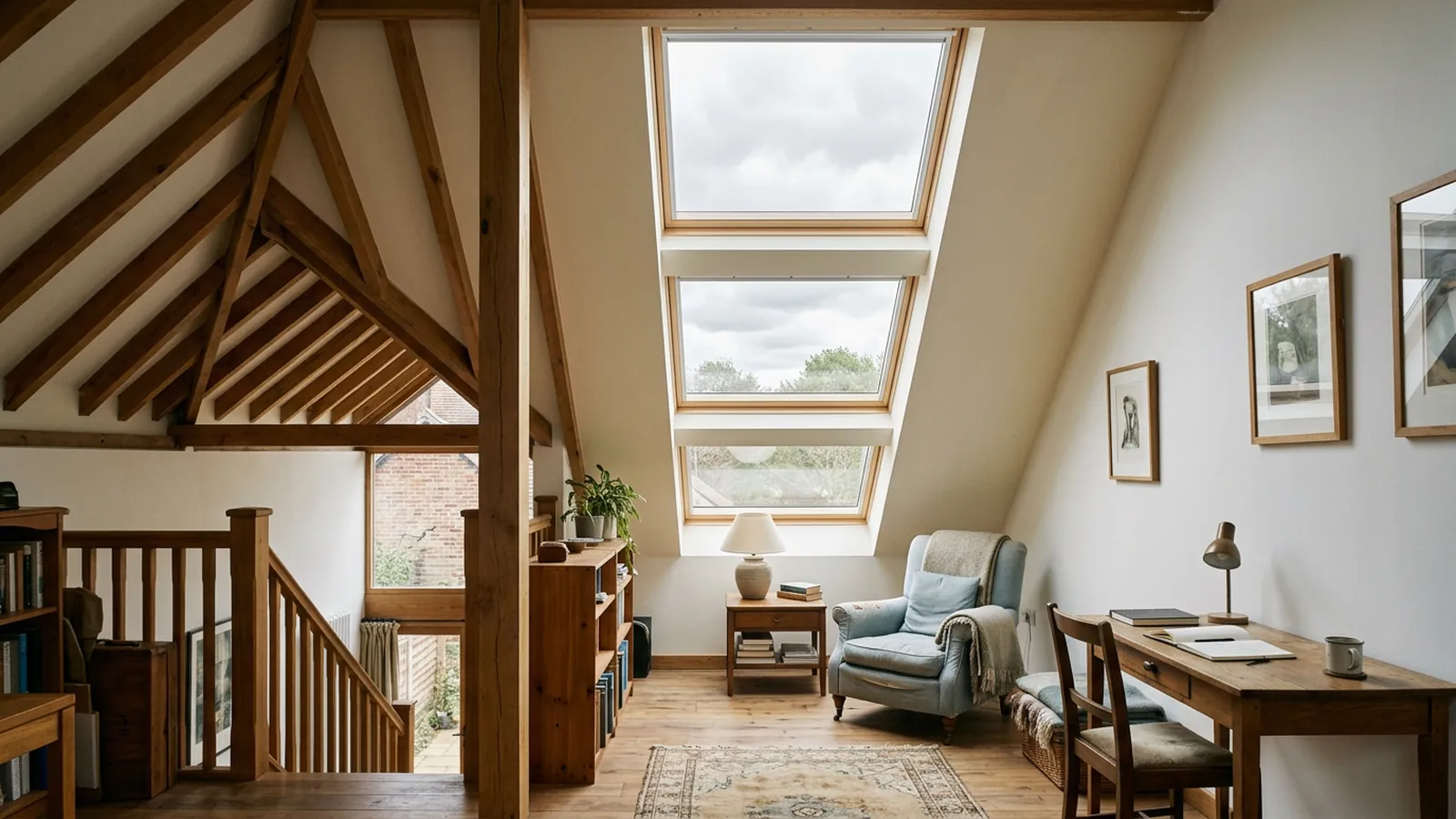
A window in a loft room you sit in is often about the view as much as the light. Opened, a top hung sash lifts clear and leaves nothing between you and the outside. You can stand in the opening, rest your arms on the frame and look out over the gardens, which feels far more like a real window than a sloping pane with a sash across the middle of it. On a loft conversion where the room has only one or two roof windows, that difference is worth thinking about.
A centre pivot brings the sky into the room; a top hung window lets you step towards the view.
If the view is the whole point and the slope is long enough, the larger answer is a balcony window, which is a different product with its own guide rather than a variant of either type here.
Escape from a loft room
When a loft becomes a habitable room, the fire escape route needs thought, and in some layouts an escape window forms part of the answer. That changes the conversation. An escape window has to give a clear opening of a size and at a height that meets the Building Regulations, and a sash sitting across the middle of the opening works against that. Top hung windows are the type usually chosen for the job, in a size large enough to meet the requirement, and VELUX also make models intended specifically for escape.
Whether your loft needs an escape window at all depends on the whole layout of the house, the stair and the route out, and that is a Building Control question rather than a window question. The detail is in can a VELUX be used as an escape window. Where the work is notifiable we deal with the Building Control notification, so the escape question is settled on paper before the window is ordered.
Blinds, linings and how each behaves on a sloping ceiling
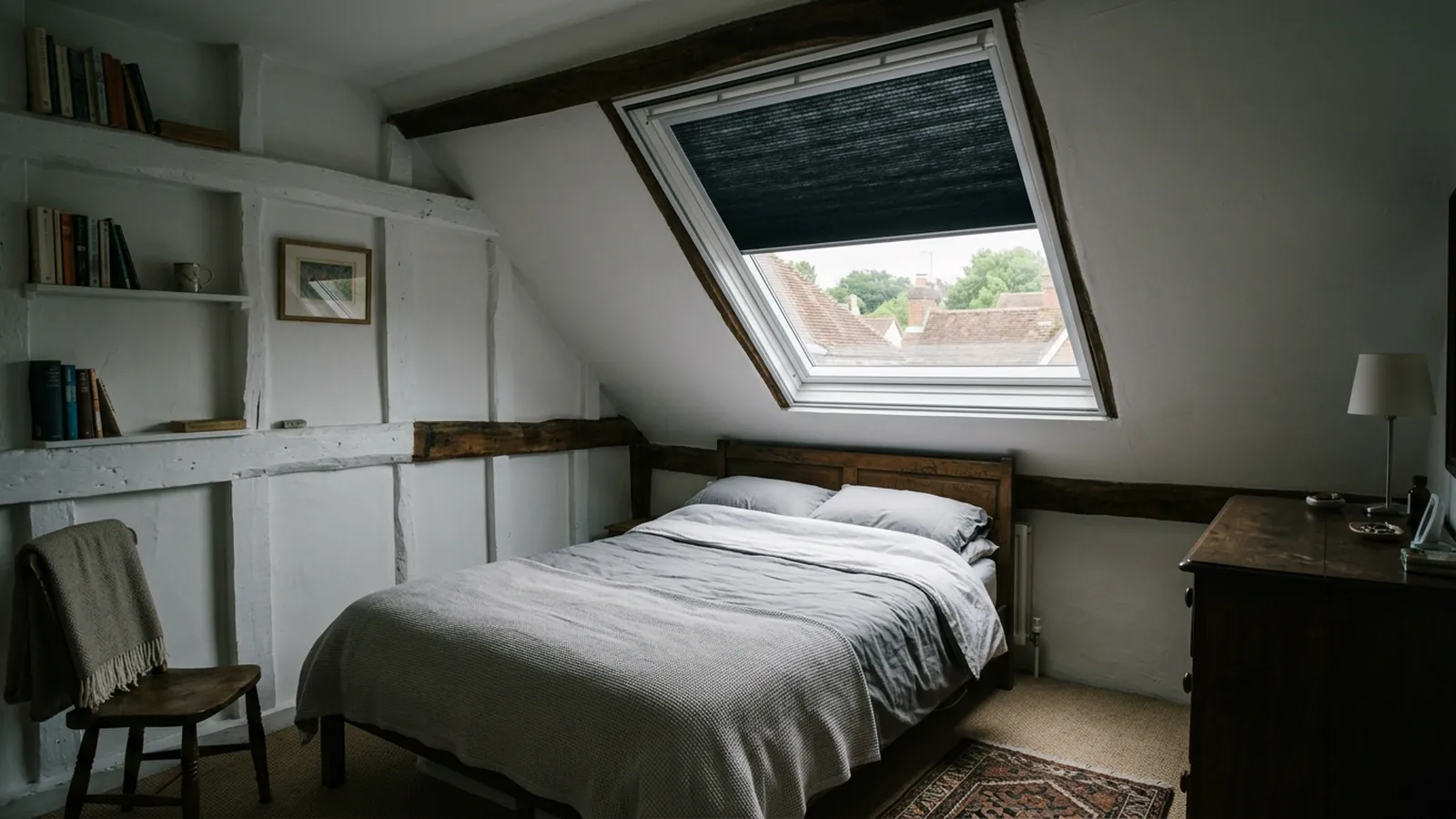
A VELUX blind is fitted to the sash and moves with it, which means the two types handle blinds differently. On a centre pivot, a blackout or roller blind stays with the glass as the sash turns, so the lower part of the blind swings into the room along with the lower half of the sash. On a top hung window the blind rides outwards with the whole sash as it lifts. Both work well; they simply feel different, and it is worth imagining a summer evening with the window open and the blind half down before deciding. VELUX blinds and shutters goes through the heat and blackout options for either type.
Inside, the lining and plasterwork around the frame are the same whichever type you choose. The splay of the lining below the window does affect how much room you have for the handle on a top hung frame, so the finish inside and the choice of type are worth settling together rather than one after the other.
Swapping from one type to the other
Because the two types share their size codes and flashing kits, an old centre pivot can usually be replaced by a top hung window of the same size, or the other way round, in the existing opening. That is useful if the room has changed. A landing window that always had a centre pivot may be better top hung once the space becomes a study with a desk under the slope, and a top hung frame in a room that now has a bed beneath it might be better as a centre pivot or an electric model.
The roof side of the job stays much the same. The flashing is chosen for the roof covering, and the frame drops into the opening that was already made for it. Upgrading an old VELUX in the same opening explains how the older generations match up with the current ones, and the pitch of your roof may narrow the choice: the product data for each model gives the range of slopes it is made for, and how shallow a roof a VELUX can go in covers the low end.
Settling it at the survey
By the time we look at the roof, most people already lean one way. The survey then checks the choice against the building rather than the brochure. On the trussed rafter roofs that cover most estates around Basingstoke, the width is set first by the space between the trusses, as VELUX sizes that fit between trusses explains, and the type is chosen within that.
- Measure the structure. Truss or rafter spacing, the pitch, and the roof covering, which together set the widths and flashing that are possible.
- Mark the height. Where the frame will sit in the slope, measured against the floor and the ceiling line inside.
- Check what is below. Furniture, a bath, a bed or a stair under the window, and how much room the lower half of a centre pivot needs.
- Confirm who opens it. Reach from the floor, children in the room, and whether a rod or electric operation makes more sense.
- Check the escape route. In a habitable loft, whether the window has to serve as a means of escape and what size that needs.
- Write it into the quote. The type, size, finish and flashing, so there is no guesswork on the day.
The fitting is then carried out under our 10-year workmanship guarantee (the guarantee is ours and is not insurance backed). If you have a room in mind and are torn between the two, ask us to survey the roof and we will set the frame height and the type against what is actually there. For a wider view of rooflights and skylights fitted around the town, start from the Everlight home page, and for more on the service itself go back to VELUX window installation.