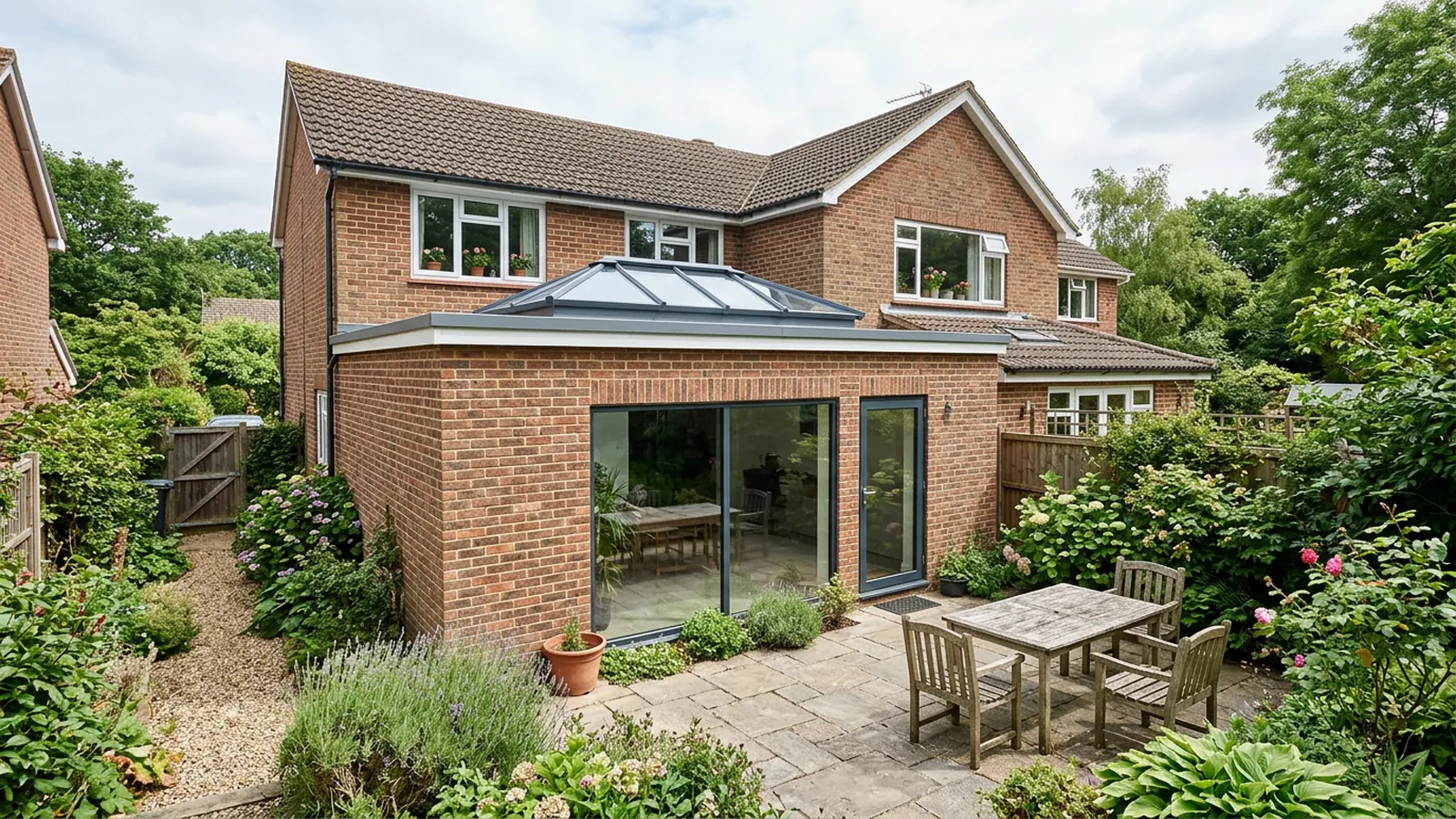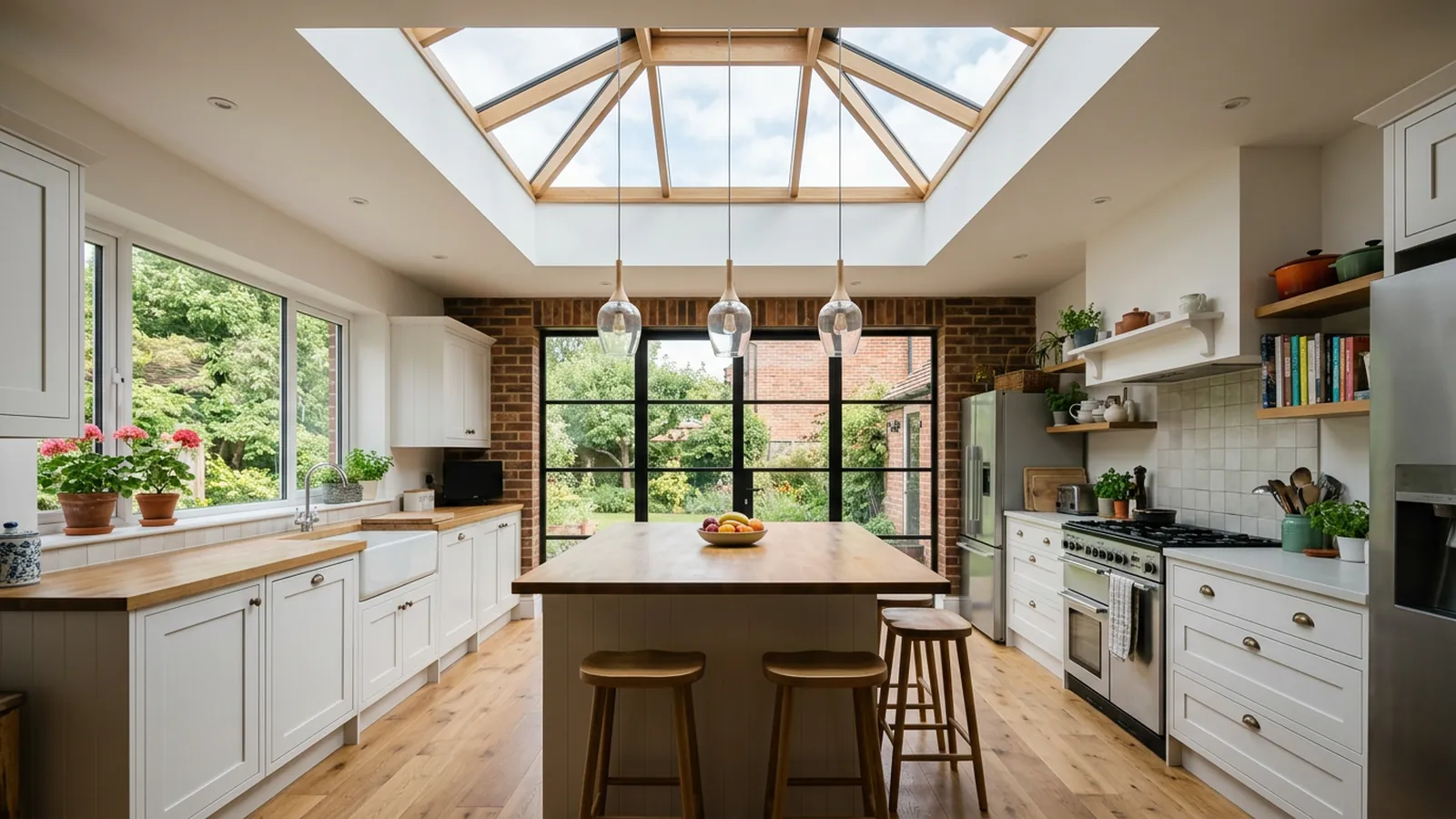
Heat under glass is a fair worry, especially on a south or west facing kitchen extension behind an estate semi. Overhead glazing catches the high summer sun for more of the day than a wall window does, so it behaves differently from the patio doors you already know. How a lantern is specified for that sits at the heart of our roof lantern installation work, and the choices below are the ones that decide whether the room stays pleasant in July.
Why overhead glass gathers more heat
A wall window takes low sun in the morning or evening and sees little of it at midday, when the sun is highest. Glass in a flat roof faces the sky, so it collects sunshine through the middle of the day as well, and that is when summer sun is strongest. Warm air also rises and gathers at the top of the room, right in the lantern itself, so without a route out the top of the space can feel stuffy even when the floor is fine.
None of that makes a lantern a bad idea. It means the glass, the size and the airflow have to be thought about together, the same way the pitch of the kerb and the fall of the roof are. A skylight fitted with no thought for the sun can overheat a room; a rooflight specified for its orientation usually does not.
How a roof lantern sits on a flat roof
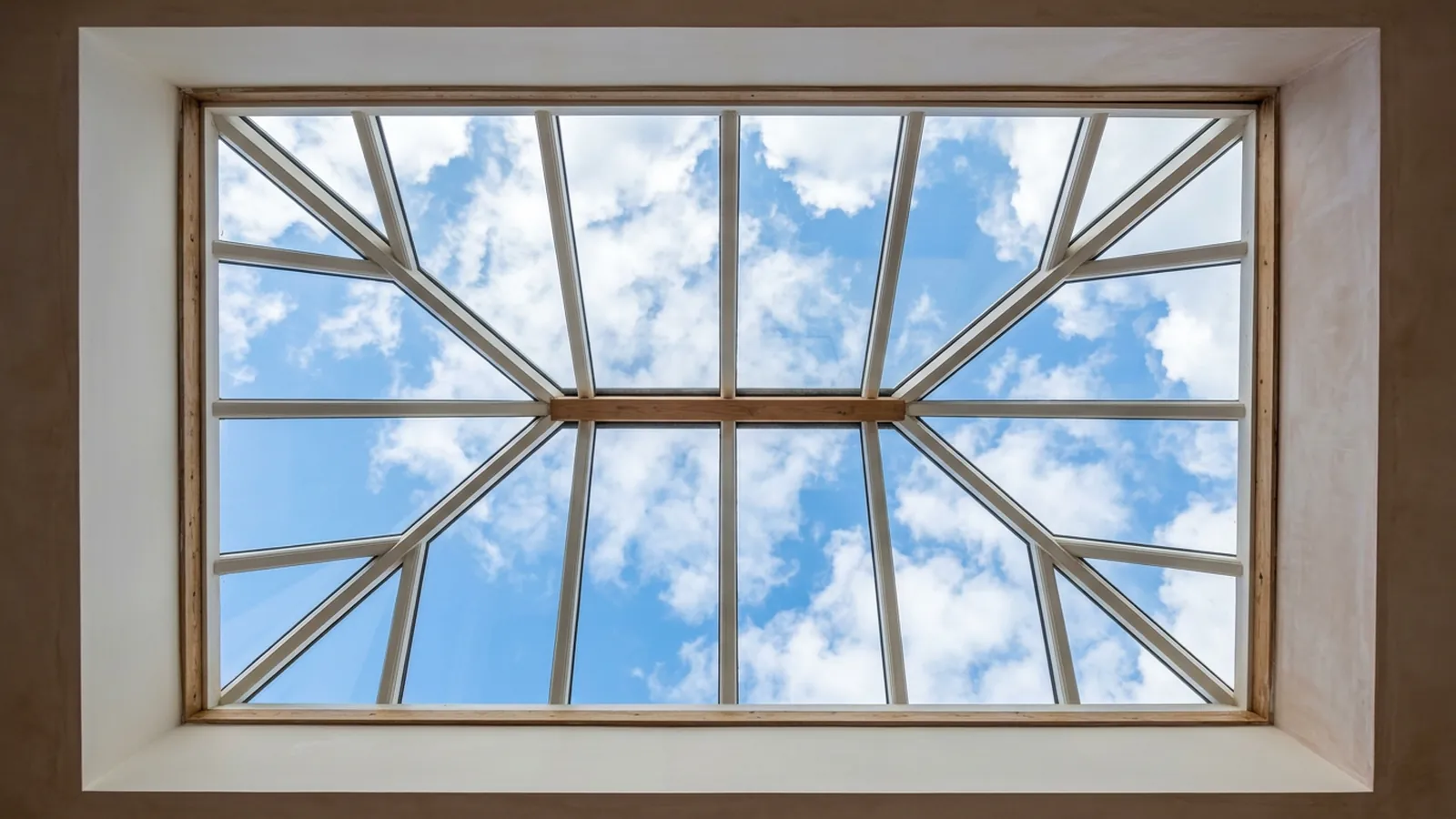
- Ridge, where the glazing bars meet at the top
- Hip bar, closing each sloped end of the lantern
- Glazing bar, holding the edges of the glass
- Glass panel, sealed double or triple glazed units
- Eaves or perimeter frame, which the whole lantern stands on
- Insulated kerb (upstand), raising the lantern clear of the roof
- Flat roof covering, dressed up the kerb and under the frame
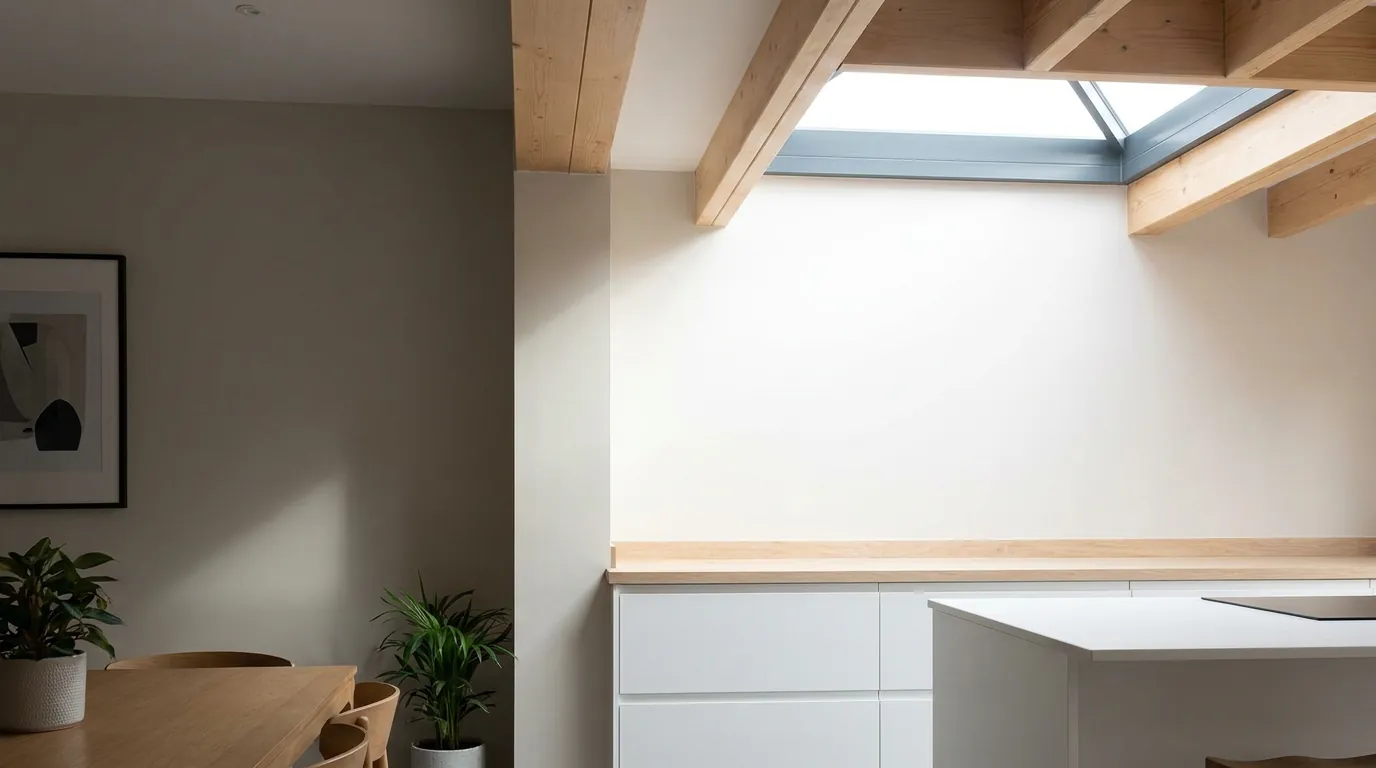
- Plastered reveal, lining the lantern well into the room below
What decides whether your room overheats
Several things push the temperature up or down, and each one is a choice made before the lantern is ordered.
| Factor | Warmer room | Cooler room |
|---|---|---|
| Glass | Standard clear double glazing | Solar control coating that turns back much of the sun's heat while letting light through |
| Orientation | Extension facing south or west, open to afternoon sun | North or east facing, or shaded by the house or trees |
| Size | Lantern sized to fill as much of the flat roof as possible | Lantern sized to the room and what happens in it |
| Ventilation | Fixed lantern and no cross draught | Opening vent in the lantern, with doors or windows lower down |
| Shading | Nothing between the sun and the room | Blinds made for the lantern's shape |
The one that matters most is the glass, because it works every sunny hour without anyone touching it.
Solar control glass does the heavy lifting
Solar control glass carries a thin coating that reflects a large share of the sun's heat while still passing plenty of visible light. The measure to compare is the g-value: the lower it is, the less solar heat comes through. Some coatings also add a slight tint, blue, grey or neutral, and it is worth seeing a sample in daylight before you choose, because a tint reads differently overhead than on a showroom stand.
How the coatings compare, and which suits which orientation, is set out properly in our guide to solar control glass and summer heat under a roof lantern. The make-up of the sealed unit itself, toughened and laminated panes included, is covered in the answer on what glass goes into a roof lantern. If you are swapping a tired polycarbonate top, the switch to coated glass is often where the biggest summer change comes from; see whether a polycarbonate lantern can be swapped for glass.
Letting warm air out
Glass holds back heat coming in. Ventilation moves out the heat that still builds up. Because warm air collects at the top of the lantern, a vent up there is the most direct way to release it, and pairing it with an open door or window lower down sets up a draught that pulls cooler air through the room.
- Top vent. An opening section or ridge vent in the lantern lets the warmest air leave first.
- Low inlet. Bifolds, a back door or a side window bring cooler air in at floor level.
- Control. A manual winder suits a vent within reach; an electric actuator with a rain sensor suits a high lantern and shuts it when showers arrive.
- Background air. Trickle ventilation keeps a steady change of air through the day and helps with condensation in winter too.
Whether your chosen lantern can take an opening section is answered in can a roof lantern be made to open? Opening vents and electric operation are also part of our electric and opening rooflight service.
Size the lantern to the room
A bigger lantern is not always a brighter or better room. More glass means more solar gain, and a kitchen of modest depth can be well lit by a lantern that leaves a generous border of solid roof around it. That border also gives room for downlights and insulation, and it keeps the glass away from the wall where it would light the brickwork rather than the table. Sizing to the space underneath, not to the full span of the flat roof, is one of the simplest ways to keep summer heat in proportion.
The rule: match the glass area to how the room is used, and pick a coating for the direction it faces. The exception is a north facing extension or one shaded by the house, where clear glass and a larger lantern can work well because direct sun rarely reaches it.
Blinds as the last layer
Coated glass and a vent cope with most summer days. On the hottest afternoons a blind adds shade on demand, and it can be drawn back the rest of the year so the daylight stays. Blinds for a lantern are made to the shape of each pane or slope, often inside the glazing bars, and electric ones make sense on a high roof. The options are covered in can you fit blinds to a roof lantern?
Getting the specification right for your extension
The answer for your house depends on which way the extension faces, how deep the room is, what shades it and how you use it through the day. At the survey we note the orientation and the room below, then recommend a glass, a size and a ventilation plan to suit, so the written quote covers a lantern chosen for your summers rather than a stock unit. Want to know how your kitchen would fare? Arrange a survey of your flat roof and we will talk it through on site.