Two separate trades meet at a motorised skylight: the roof work that sets the frame into the slope or the flat roof, and the wiring that feeds the motor. Our electric and opening rooflight installation page explains how the whole job is put together. This answer deals only with the electrical side, so you know before the survey whether your choice brings an electrician into the plan.
The short version, by power type
Every electric rooflight falls into one of two camps, and the camp decides the answer.
| Question | Solar-powered | Mains-powered |
|---|---|---|
| Electrician needed? | No, the unit is self-contained | Yes, for the connection to the house supply |
| Cable inside the room | None; a wireless keypad or remote | A cable from a spur or circuit to the control unit |
| Walls or ceilings opened | Not for power | Sometimes, to hide the cable run |
| Best suited to | Retrofits into finished rooms | New extensions and loft conversions with open walls |
The trade-offs between the two, including how a solar unit behaves through a dull Hampshire winter, are compared properly in our guide to solar-powered and mains rooflights.
How rooflights and roof windows open
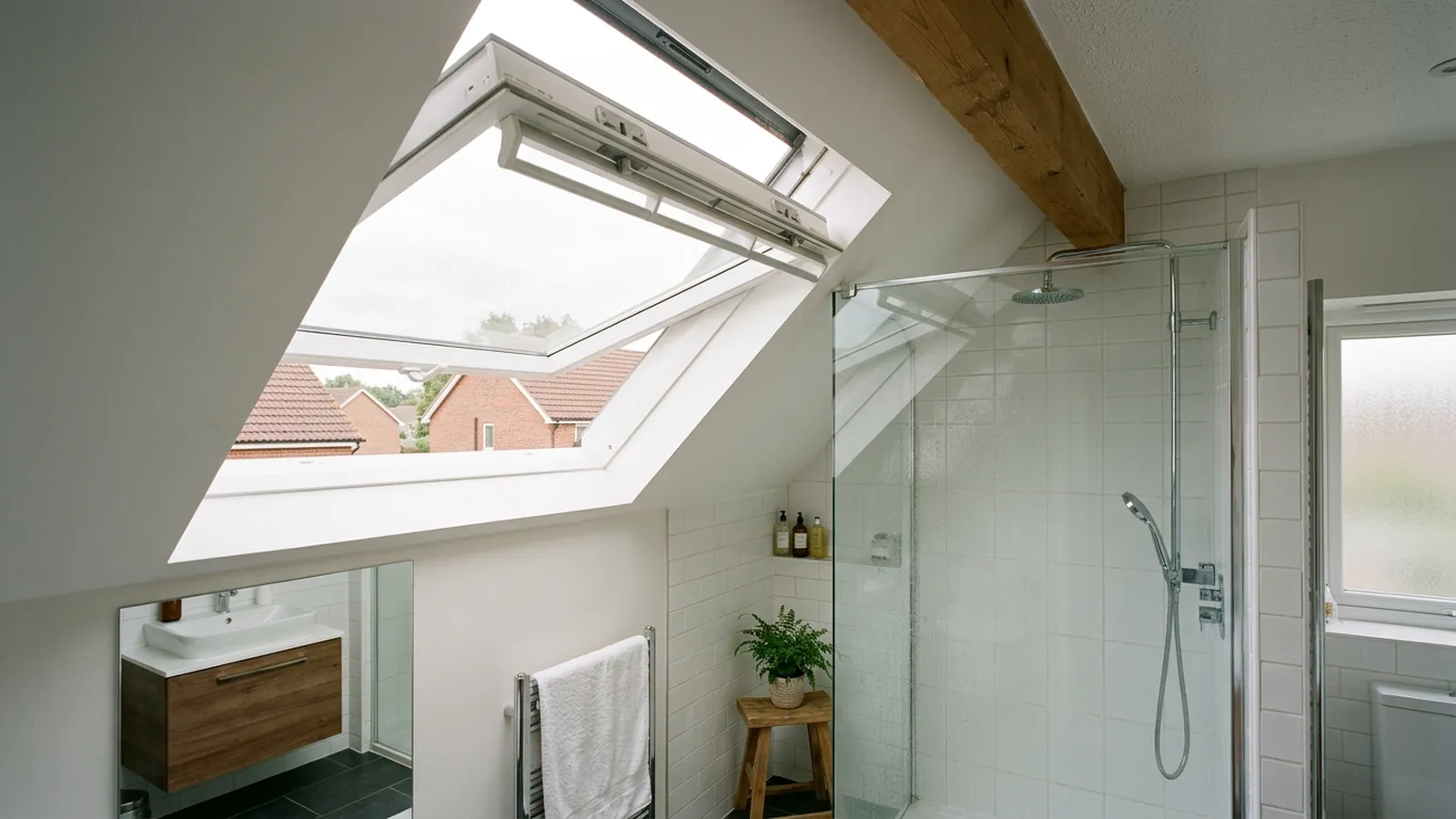
- Centre-pivot sash, turns so the lower edge tips out and the top swings in, handy for cleaning from inside
- Pivot point, the hinge line across the middle of the sash
- Top-hung sash, swings outward clear of the opening for a wider view
- Top hinge, where the sash is hung from the head of the frame
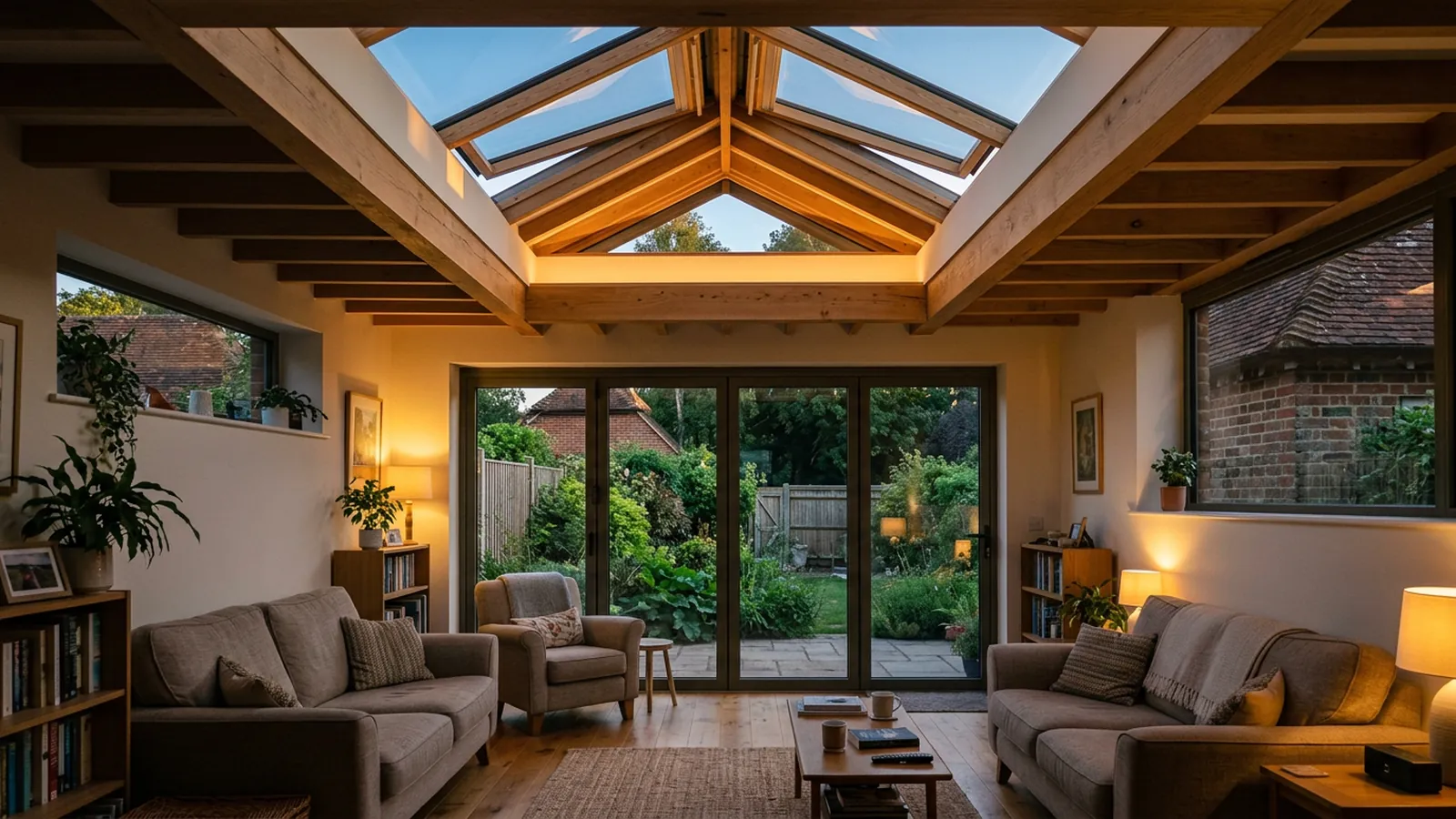
- Fixed rooflight, glazing sealed to the upstand with no moving parts
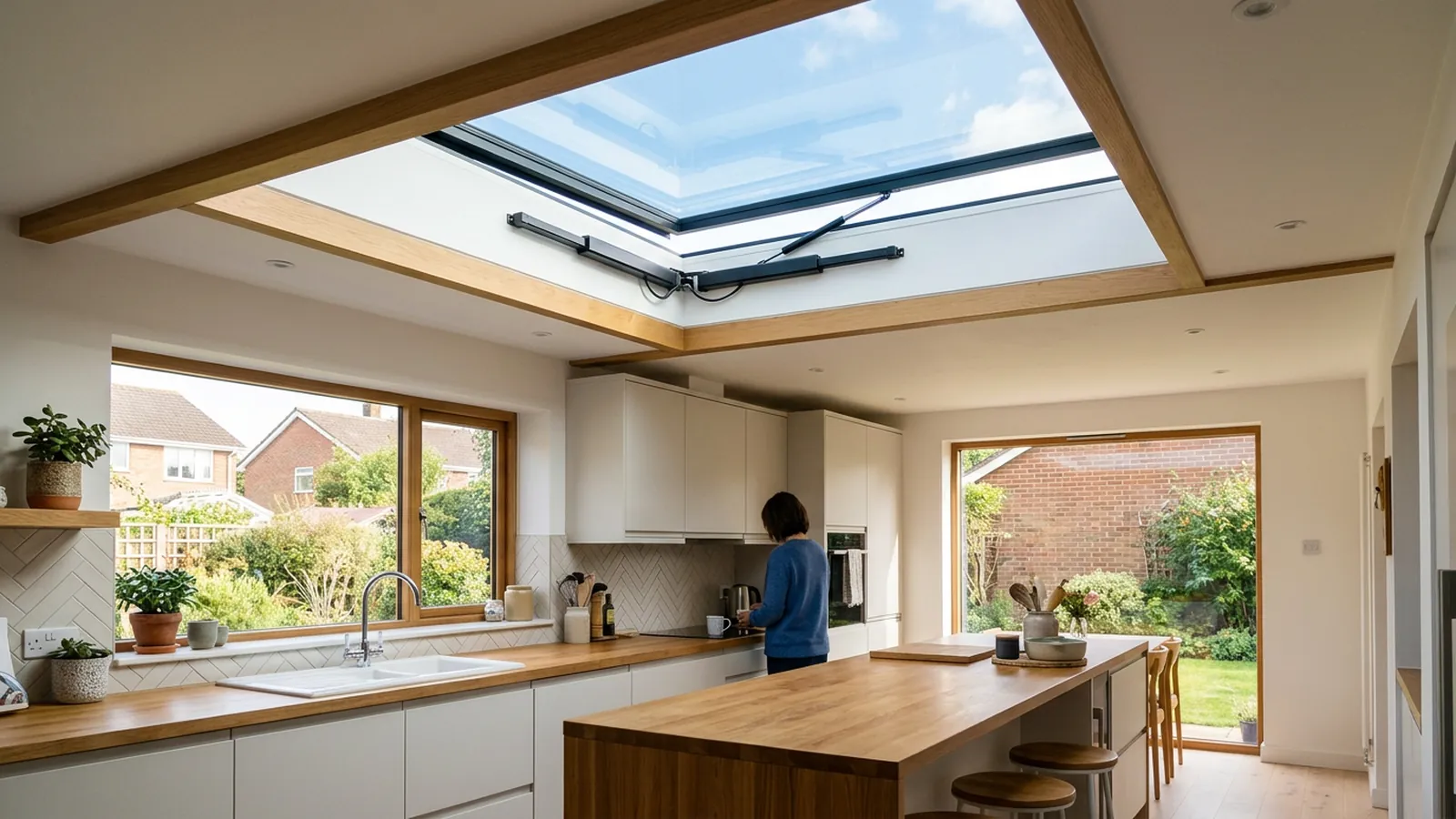
- Electric opening rooflight, the glazed lid lifts from one edge for ventilation
- Motorised chain actuator, pushes the lid open and draws it closed
- Rain sensor, closes the rooflight automatically when it starts to rain
What the electrician actually connects
A mains opening rooflight does not run its motor straight off 230 volts. The makers supply a control unit that takes the mains feed and sends low voltage to the motor in the frame, and it also talks to the rain sensor and the wall keypad or remote. The electrician's part is the bit between your consumer unit and that control unit: usually a fused connection unit on an existing circuit, or a new circuit where the existing ones are unsuitable, plus a cable run to wherever the control unit sits.
The low-voltage wiring from the control unit up to the frame is part of the rooflight system itself and follows the maker's instructions. Where that control unit goes, and how the cable is routed through the roof build-up, is covered in our guide on wiring and controls for an electric rooflight.
When the electrical work is notifiable
In England, domestic electrical work falls under Part P of the Building Regulations. Broadly, a brand new circuit is notifiable, and so is work in special locations such as the zones around a bath or shower. Adding a fused spur to an existing circuit in an ordinary room usually is not, though it must still be done safely and to the wiring regulations. A registered electrician can self-certify notifiable work; otherwise it goes through Building Control.
The rule: a spur for a loft bedroom or landing rooflight is often straightforward. The exception is a bathroom ceiling or a supply that needs a new circuit, where notification applies, so it is worth settling at the planning stage rather than on the day.
The full picture, including how this sits alongside the Building Control notification for the roof opening, is set out in our answer on whether an electric rooflight is notifiable under Part P.
How the two trades fit together on the day
Order matters, because the roof and the wiring cross paths at the lining.
- Survey. We look at the roof, the room and the likely route for a supply, and confirm whether solar or mains suits the space before quoting.
- First fix. With the opening formed and the frame set, the cable from the control unit is taken to the frame and the mains feed is run to the control position while linings are still open.
- Linings and finish. Plasterboard reveals go in around the frame with the cables hidden inside them.
- Connect and test. The supply is connected, the motor is run through its full travel, and the rain sensor and keypad are paired and checked.
On a trussed estate roof in somewhere like Brighton Hill or Lychpit, the loft is often open above the ceiling, which makes a hidden cable run easier. In a finished room with no void above, the route takes more thought, and that is where a solar unit can save disruption.
Controls, sensors and power cuts
People sometimes ask for an electrician because they want the skylight on a wall switch, a smart hub or a timer. Those are control choices, not supply choices: most systems use a wireless keypad as standard, and extra control points are paired to the control unit rather than wired back to the fuse board. Our answer on how an electric rooflight is controlled runs through the options.
It is also fair to ask what a mains unit does if the supply drops. That is answered in what happens to an electric rooflight in a power cut, and it can be a reason some owners lean towards a battery-backed or solar model for an opening that sits out of reach.
Older wiring in an established Basingstoke house
On the estates built as Basingstoke expanded, in places such as South Ham or Oakridge, the fuse board may be the original or an early replacement, and nobody has looked at the circuits since. Before a spur goes in, the electrician checks that the circuit it comes from is sound, protected as current regulations expect, and not already carrying more than it should. If it falls short, the fix is on the electrical side and needs agreeing before the rooflight arrives, so the connection is not held up once the frame is in. A quick look at the consumer unit during the survey tells you early whether the mains route is simple or whether solar spares you that extra work.
Getting it planned before anything is ordered
The useful time to answer this question is before the rooflight is chosen, because the power choice changes the order of work and who needs to be there. Tell us the room, the roof and whether the ceilings are finished, and we will show you which route fits. The work carries our 10-year workmanship guarantee, which is not insurance backed, and where the roof opening is notifiable we deal with Building Control. When you are ready, arrange a survey of the roof and we can settle solar or mains on the spot.