Bathrooms are where overhead glass earns its keep. Wall space is short, a side window often faces a neighbour, and a loft en suite may have no vertical wall to the outside at all. The electric and opening rooflight service covers the whole range of hinged, pivot and motorised units; this page is about the one room where steam, privacy and reach all change the choice.
What an opening rooflight does well in a bathroom
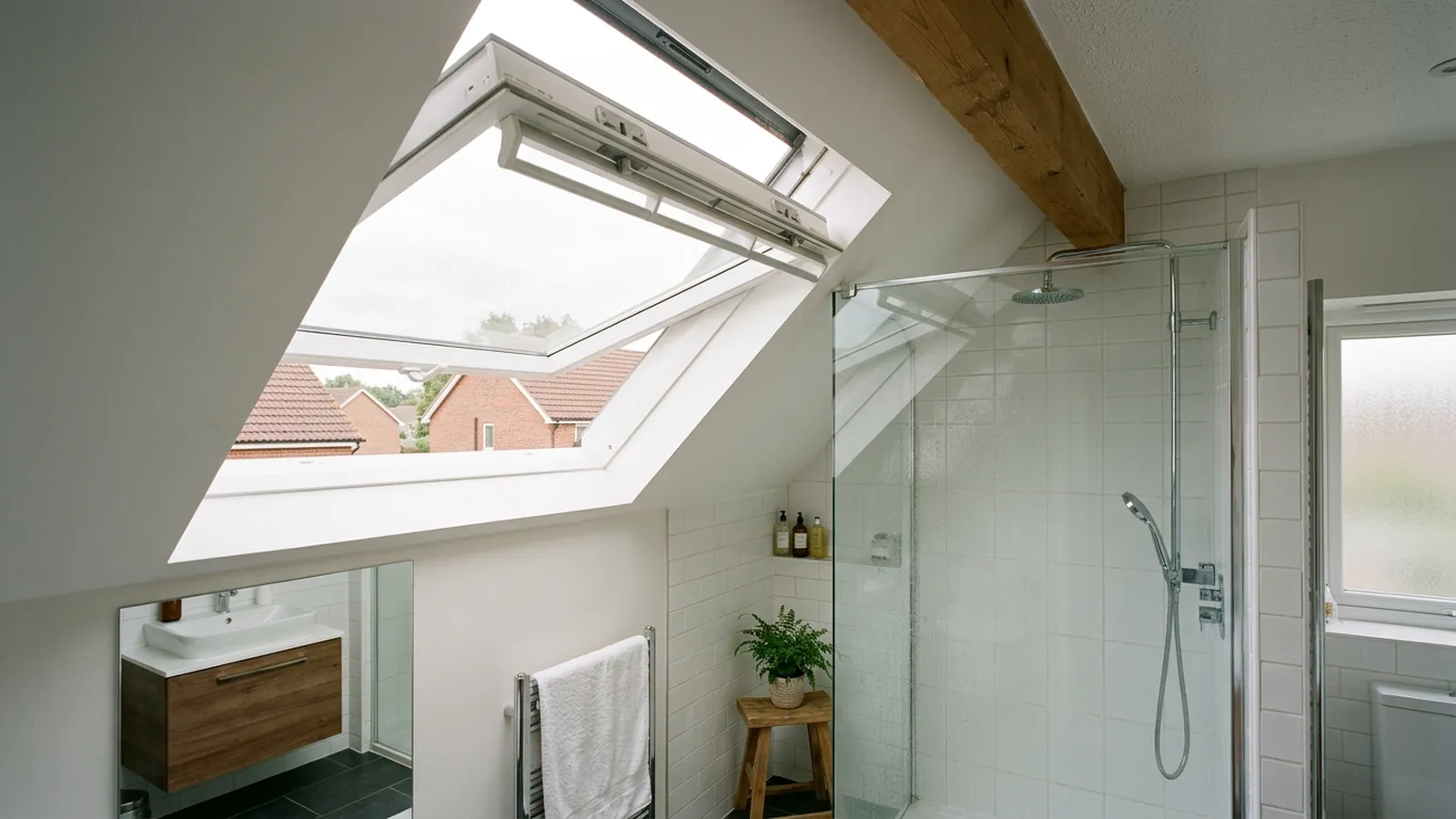
Daylight from above lands on the basin and the bath rather than across them, so the room reads brighter than a side window of similar size would make it. Privacy looks after itself: nobody can see down into a room through a pane set in the roof slope, which frees you from frosted film and permanently closed blinds.
Opening it matters most after a shower. Warm, wet air rises and collects at the highest point of the ceiling, which is exactly where a skylight sits. Swing the sash open and that pocket of steam leaves quickly, far faster than an extract fan alone can shift it. The guide to ventilating a room through an electric rooflight explains how the airflow behaves in more depth.
How rooflights and roof windows open
- Centre-pivot sash, turns so the lower edge tips out and the top swings in, handy for cleaning from inside
- Pivot point, the hinge line across the middle of the sash
- Top-hung sash, swings outward clear of the opening for a wider view
- Top hinge, where the sash is hung from the head of the frame
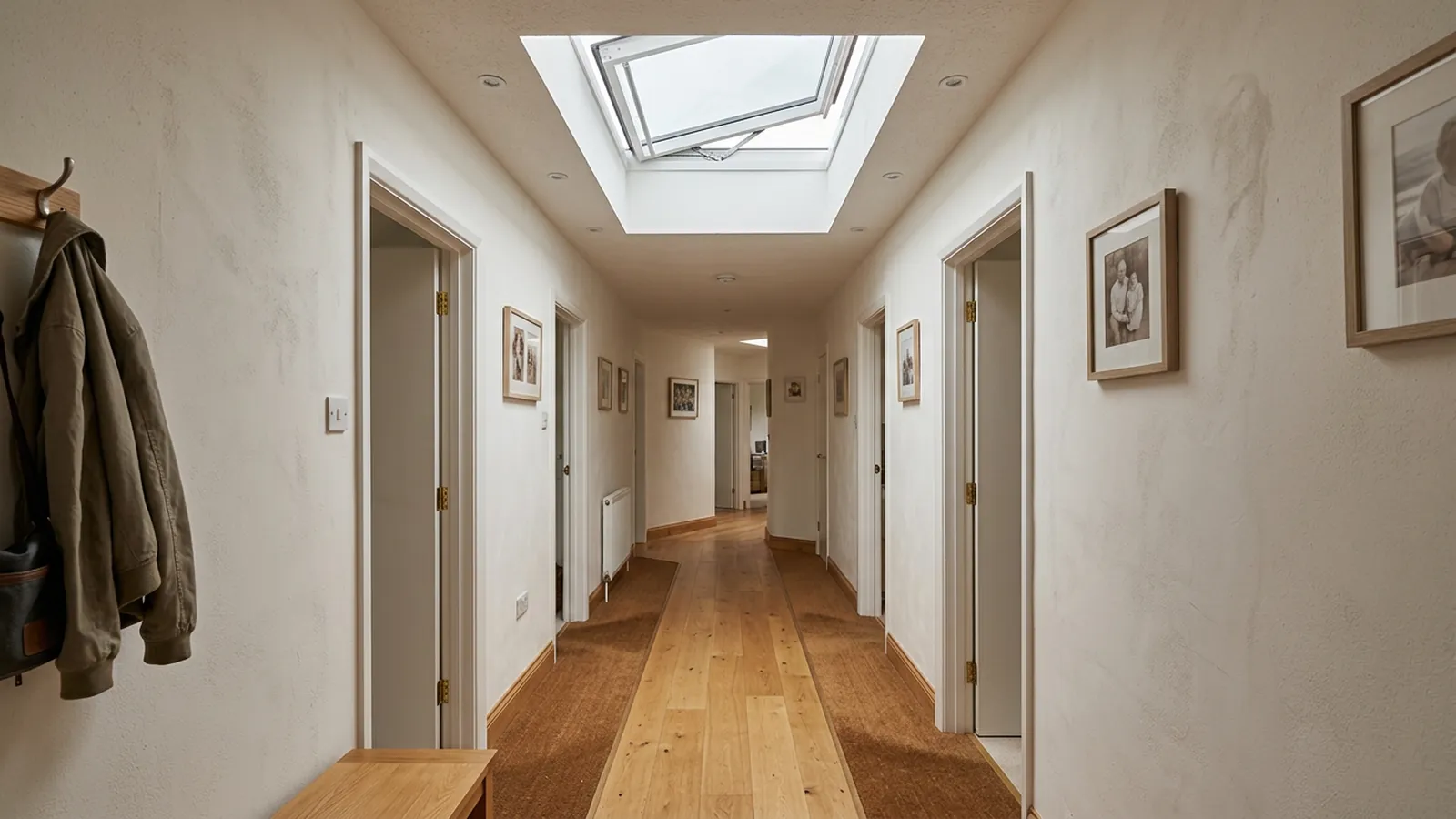
- Fixed rooflight, glazing sealed to the upstand with no moving parts
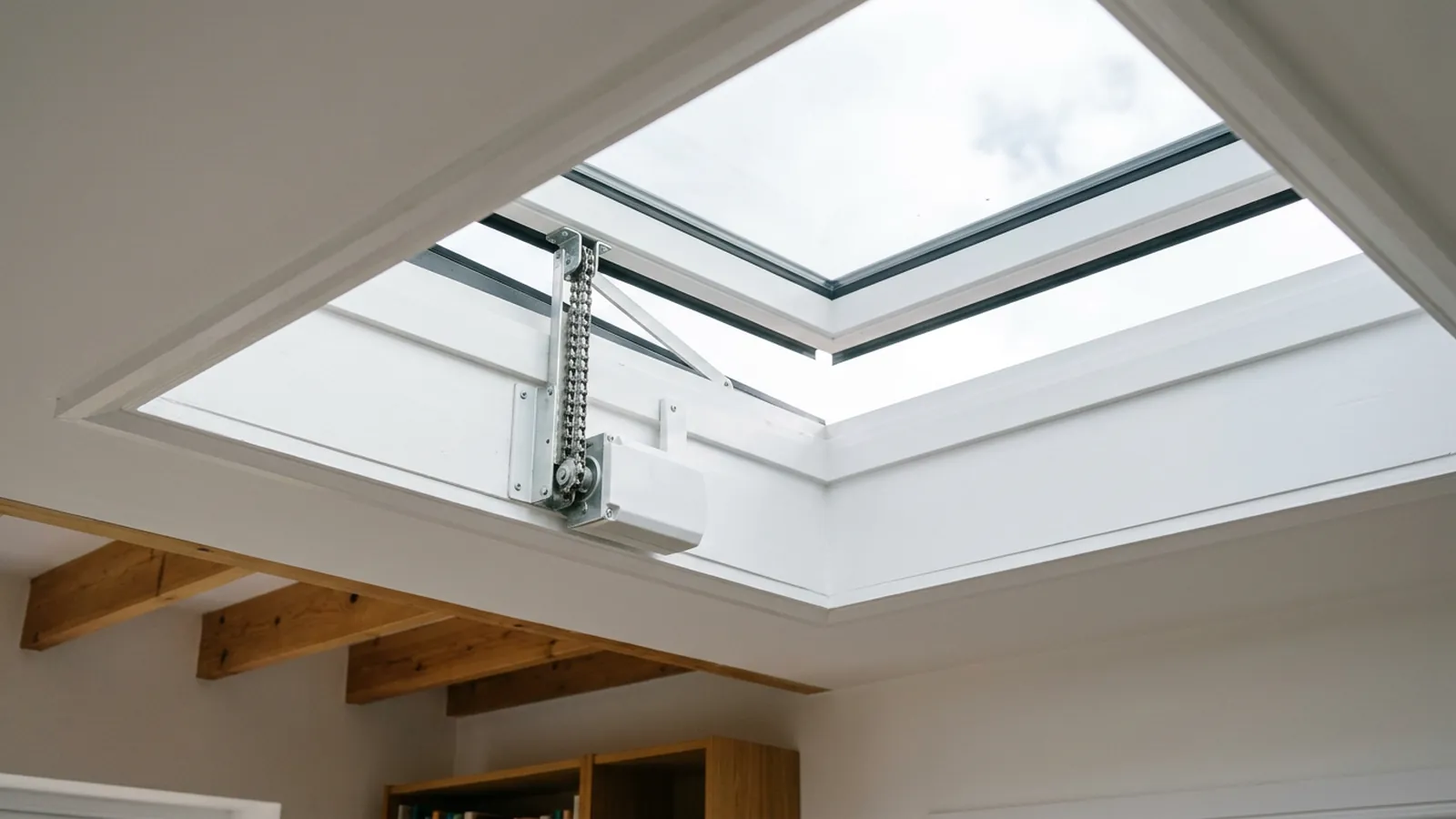
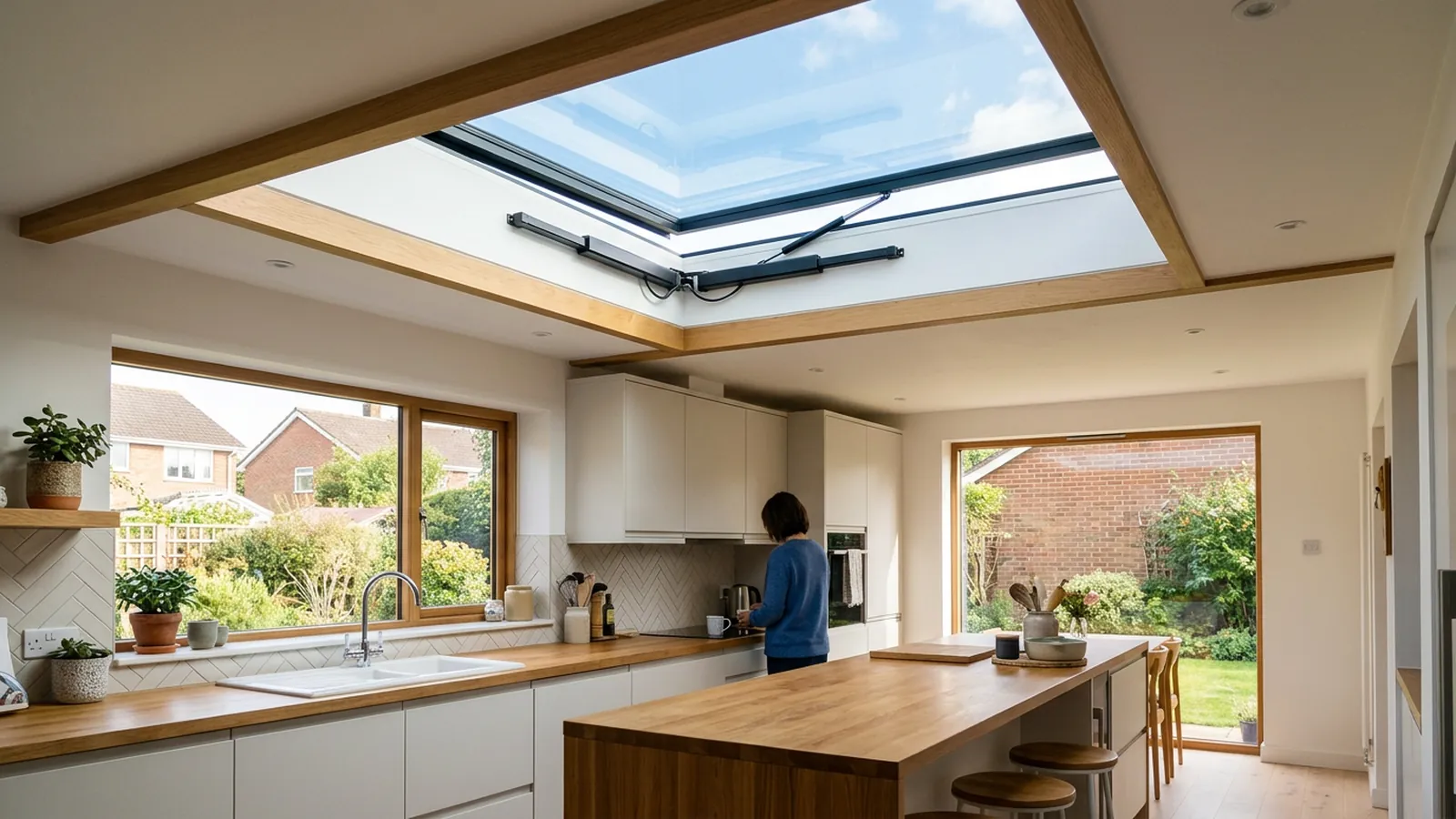
- Electric opening rooflight, the glazed lid lifts from one edge for ventilation
- Motorised chain actuator, pushes the lid open and draws it closed
- Rain sensor, closes the rooflight automatically when it starts to rain
Why it does not replace the extract fan
The rule: Approved Document F asks for mechanical extract in a bathroom, and an openable rooflight does not stand in for it. The exception worth knowing: the rooflight can provide the room's purge ventilation, the rapid airing used to clear steam or smells, so the two work as partners rather than rivals.
The distinction is simple once you see it. An extract fan runs whether or not anyone remembers it, including on a January morning when nobody wants a window open. A roof window only ventilates while it is open. The answer on purge ventilation sets out where an opening rooflight satisfies the rules and where it stops.
So the sensible bathroom has both: a fan on the light switch or a humidistat for everyday moisture, and a rooflight for the big clear-out after a bath and for fresh air on warm days.
Choosing a unit that copes with steam
Bathroom air is hard on timber and on the seals of a sealed unit, so the specification changes a little here compared with a landing or a bedroom.
| Part | Bathroom choice | Why it matters |
|---|---|---|
| Frame finish | White polyurethane or a sealed moisture-resistant finish | Plain lacquered pine can mark and swell in daily steam |
| Glazing | Laminated inner pane, obscure option if the slope is overlooked | Safer overhead glass; the obscure option adds privacy from a taller neighbour |
| Opening type | Centre pivot or top hung, sized to clear the bath or shower | The sash must open without catching a shower screen or a towel rail |
| Blind | A blind made for humid rooms | Fabric blinds meant for bedrooms can hold damp |
| Lining | Moisture-resistant board, well sealed, splayed reveals | Keeps warm air off cold timbers so condensation has nowhere to form |
A warm, well-insulated lining around the opening does more to stop condensation than any other detail, because droplets form wherever warm, wet air meets a cold surface.
Reaching it over a bath or shower
This is where the electric option earns its place. Over a bath, the natural spot for a rooflight is exactly where nobody can stand to reach it, and leaning across a wet tub to turn a handle is not a habit anyone should form. A pole works for a manual unit if the ceiling is modest; a motorised sash with a wall switch or a remote handset solves it outright.
Electrics in a bathroom carry their own rules. Switches and control panels belong outside the wet zones around the bath and shower, and new circuits in a bathroom are generally notifiable, which the Part P answer covers. A battery remote or a switch by the door keeps every control away from water. For where cables run and how the motor is fed, see wiring and controls for an electric rooflight.
One more reason to pick a motor here: a rain sensor. A bathroom rooflight is often left open to air the room and then forgotten, and a sensor closes the sash at the first drops. The answer on leaving a rooflight open in the rain explains how that works.
Fitting one into a Basingstoke estate roof
Many bathrooms that want a rooflight are loft en suites in the trussed-rafter homes of Brighton Hill, Lychpit or Hatch Warren, or single-storey extensions with a flat roof. On a trussed pitched roof with trusses at 600mm centres, a narrow roof window that sits between two trusses is the first choice, and it usually suits a bathroom anyway, where a tall, slim pane over the bath makes more sense than a wide one. Wider openings need trimming designed on paper before any timber is touched.
- Look at the room first. Where the bath, shower and basin sit decides where the glass should go and which way the sash can swing.
- Measure the roof. Truss or rafter spacing, pitch and covering set the widths that will fit.
- Plan the extract and controls together. Fan, switch position and any wiring are settled before the lining goes up.
- Written quote. Once the survey is done you get a price in writing, with the Building Control notification included where the work needs one.
When a fixed unit is the better answer
An opening sash is not always right. If a strong extract fan already copes and the room only lacks light, a fixed rooflight or a sun tunnel brings daylight with fewer moving parts to think about. And if a fixed unit is already in place, it is sometimes possible to swap to an opening one later; the answer on changing a fixed rooflight explains what that involves.
For most bathrooms, though, the ability to open the glass for a few quiet minutes after a shower is what owners value most once it is in. If you would like the roof above yours measured and a unit matched to it, arrange a survey of your bathroom roof. Our work is backed by a 10-year workmanship guarantee, not insurance backed.