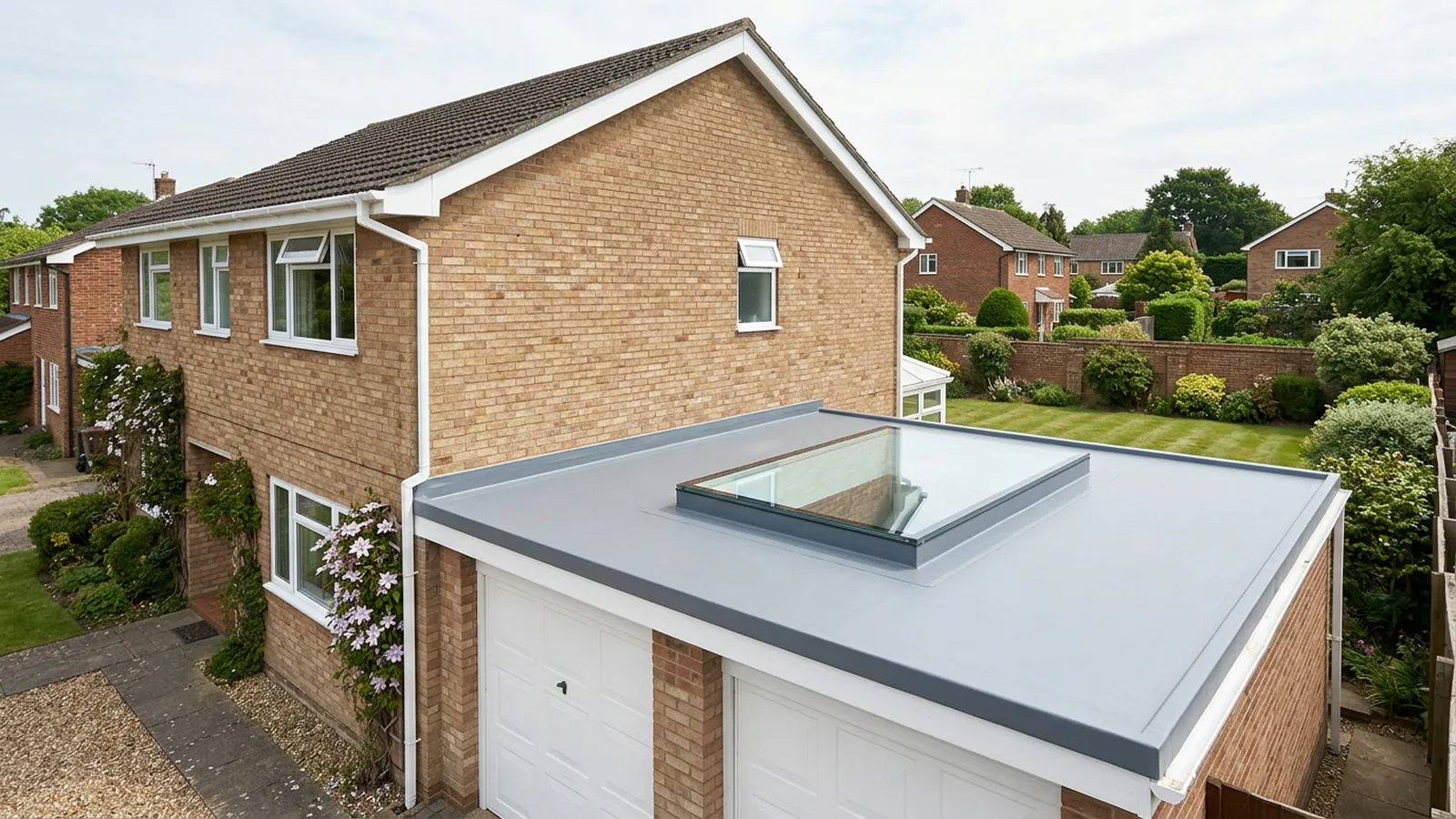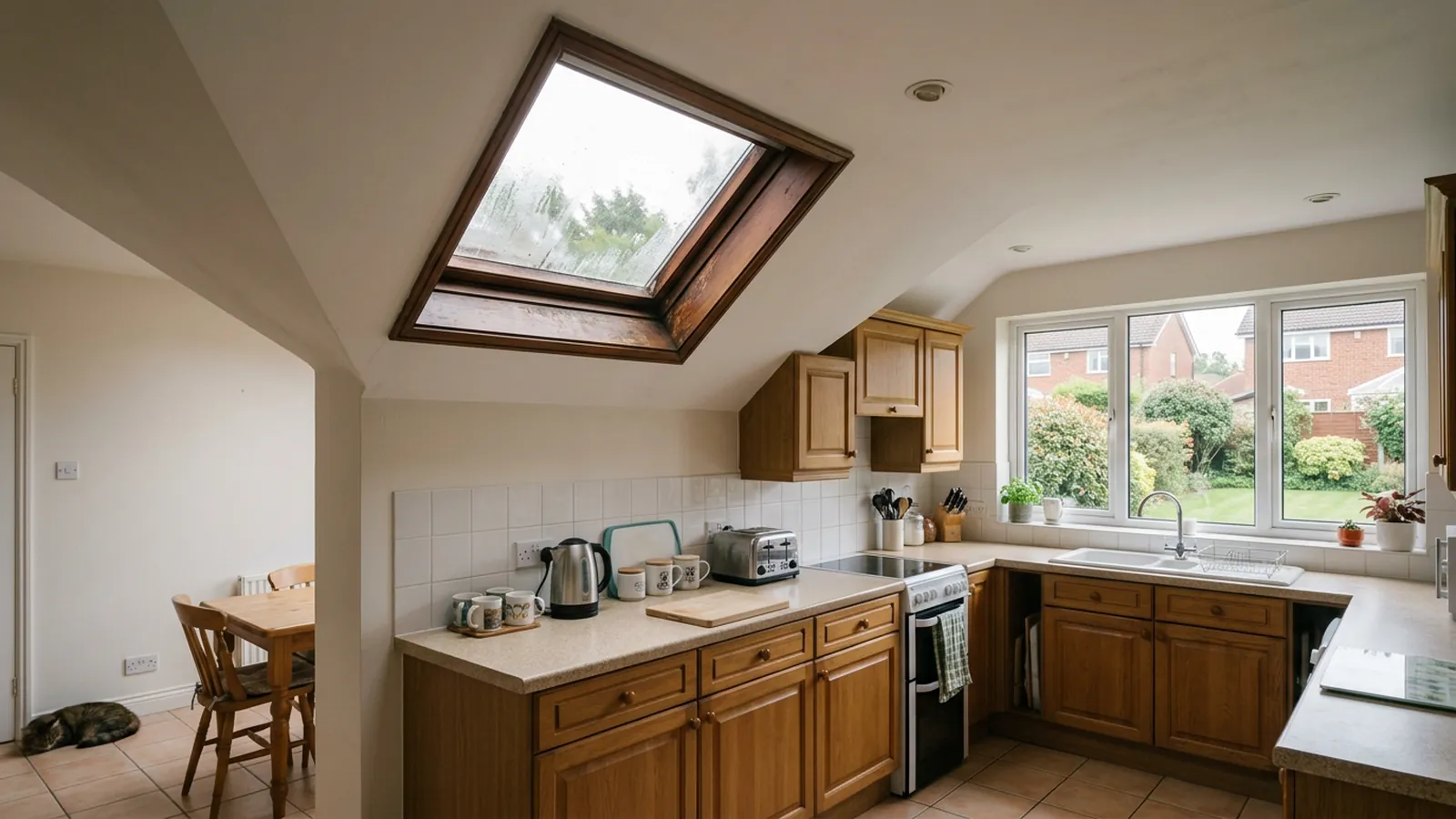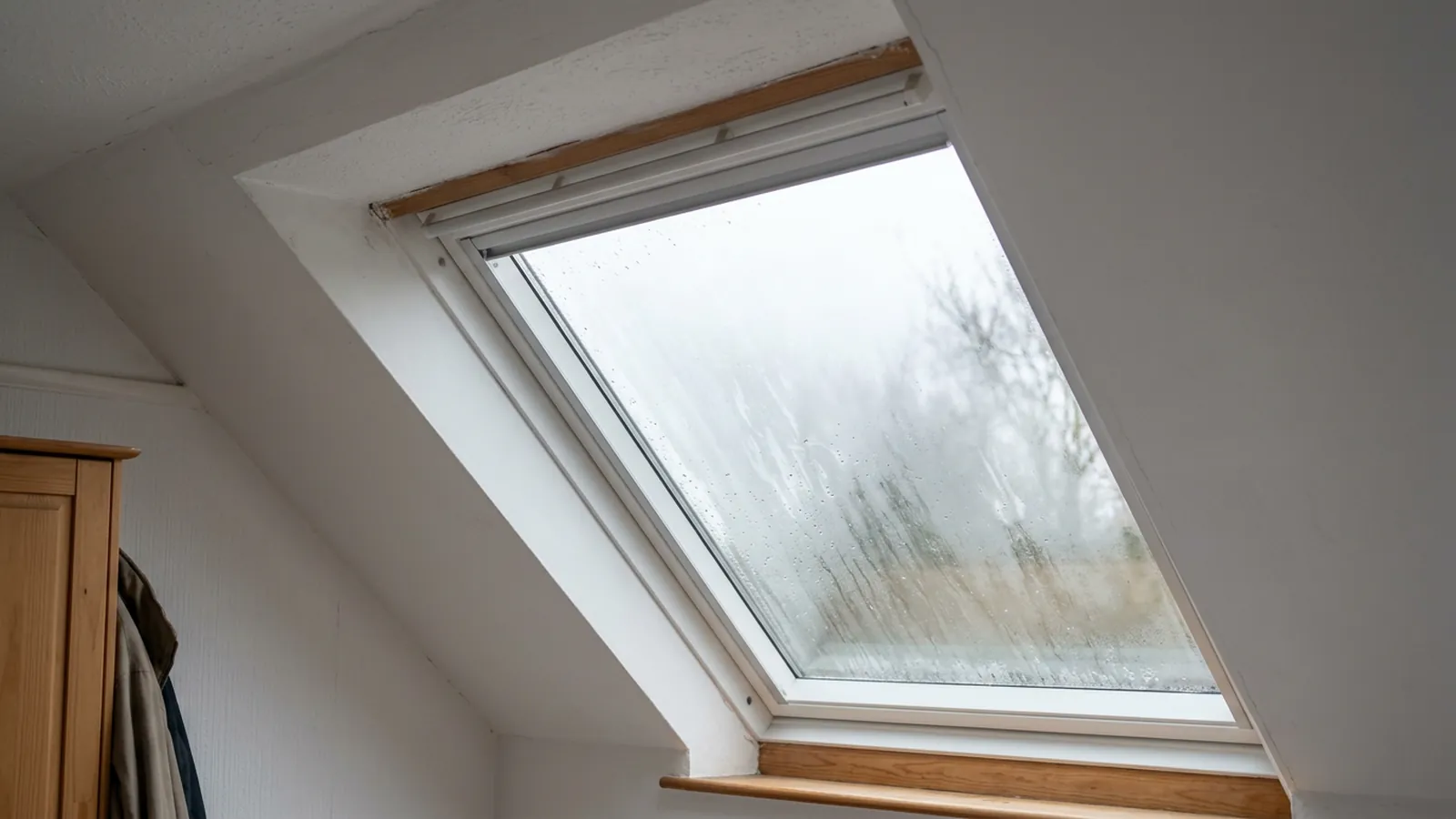
The glass itself has not changed. What has changed is the air gap between the two panes, and that is why a misted skylight can look perfectly clean on both faces and still leave a landing or a loft bedroom duller than it was. Our page on misted and failed rooflight replacement covers the whole job; this answer stays with one thing: what the mist does to the light, and when that is worth acting on.
How moisture in the cavity steals daylight
A sealed unit is built dry. The spacer bar round its edge holds a desiccant, and the edge seal keeps outside air out. When that seal lets go, damp air creeps into the cavity. On a cold night the inner face of the outer pane chills, the water vapour condenses into tiny droplets, and those droplets act like frosted glass: they bend light in every direction instead of letting it pass straight through.
Some of that scattered light still reaches the room, which is why a misted rooflight never goes fully dark. But more of it is bounced back out through the roof, and what does arrive is diffuse. You lose the direct pool of sun on the floor, the crisp shadows and the view of sky and cloud. The reason the edge seal fails in the first place belongs in our guide on why a rooflight mists between the panes.
How a sealed rooflight unit works and fails
- Outer and inner glass panes, with the outer pane facing the weather
- Low-emissivity coating on one inner face, reflecting heat back into the room
- Warm-edge spacer bar holding the panes apart, filled with desiccant to soak up trace moisture
- Primary seal against each pane, backed by the secondary seal around the edge
- Dry sealed cavity, the insulating layer between the panes
- Broken edge seal: moist air gets in and the desiccant becomes saturated
- Mist and droplets trapped between the panes; they cannot be wiped off and the sealed unit needs replacing
- Inset: condensation on the room-side face of the glass is a ventilation or humidity issue, not a failed unit
What changes from one day to the next
The dimness of a failed unit comes and goes with the weather. That is the physics of a leaking cavity, and it is a useful clue.
| Conditions | What the cavity does | Effect on the room |
|---|---|---|
| Cold, still morning | Vapour condenses into a dense layer of droplets | At its dullest; the pane looks white or grey |
| Sun on the roof by midday | Warmth drives some droplets back into vapour | Brighter, though often streaky or hazy |
| Long wet spell | More damp air is drawn in as the unit breathes | Mist lingers for longer through the day |
| Seal failed for some time | Droplets dry out and leave a chalky film on the inner faces | A permanent cloud, even on warm dry days |
That last row is the one that matters most for light. Early on, a failed unit can look nearly clear on a warm afternoon. Given time, the residue left by each cycle of condensing and drying builds into a haze that no weather clears. At that stage the pane is dimming the room every hour of daylight, not just on cold mornings.
Where you feel the loss most
How much a clouded pane matters depends on how much the room relies on that one opening. A small roof window over a stairwell may be the only daylight a windowless landing gets, so even a light haze turns it gloomy. A loft bedroom with a single skylight on a north-facing slope already works with softer, indirect light, and a milky pane pushes it further toward needing a lamp in the afternoon. A flat rooflight over a deep kitchen extension, the kind added to the back of many estate semis around Basingstoke, is there to carry daylight into the middle of the house; cloud that glass and the back of the room goes dim first.
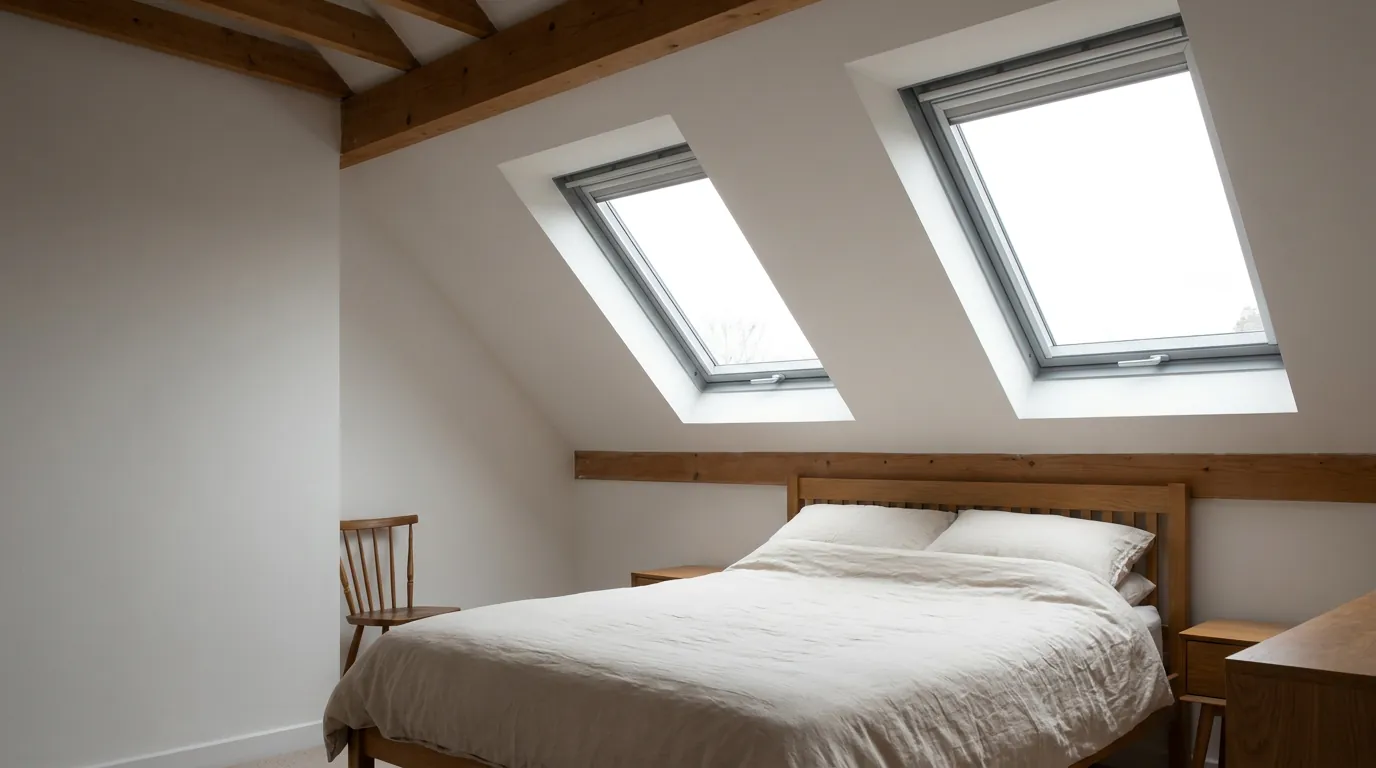
Rooms with several openings, such as a converted loft with a pair of roof windows or a lantern with many panes, hide the problem better. One misted pane among several dims the room a little and draws the eye a lot. Lanterns have their own route, which is set out in our answer on changing one misted pane in a roof lantern.
The rule: judge the pane by the room, not by the glass. The exception is a unit that has also cracked or is dripping inside, where the question stops being about daylight and becomes about getting the glazing changed promptly.
Can the clarity be brought back?
Cleaning the outer and inner faces helps only with dirt, moss or algae on the surfaces you can reach, and it is worth ruling those out first. Mist between the panes sits in a sealed space. Drilling and drying services exist for some glazing, but they leave the failed seal in place, so the cavity can take up damp again; our answer on whether misted rooflight glass can be cleared goes through that honestly. The dependable way to get clear light back is a new sealed unit or a new rooflight.
A misted unit usually loses some insulating value as well, since the dry gas or air it was sealed with has been swapped for damp outside air. That side of it is covered in does a misted rooflight lose more heat? For light alone, the gain from fresh glass is immediate: the sky comes back into view on the first clear day.
Pane or whole unit: which brings the light back
For a roof window from one of the main makers, a replacement pane often slots into the existing sash, and the light returns without touching the roof. For an older plastic dome, a flat rooflight with a failed perimeter or a timber roof window whose frame has also aged, a complete new rooflight in the same opening is usually the better route, and it is a chance to choose glazing specified for more daylight. Which one fits your roof is weighed up in our guide to replacing the sealed unit or the whole rooflight.
- Look from inside and out. Check whether the haze wipes off either face. If it does not, it is in the cavity.
- Note the pattern. Mist that comes and goes points to an early failure; a fixed chalky film points to one that has run for a while.
- Find the label. Most roof windows carry a data plate on the sash or frame, which tells us the type and size.
- Arrange a survey. We look at the unit, the frame and the flashing before quoting, so the price reflects what the rooflight actually needs.
Is dim light a reason to act now?
A pane that is only misting on cold mornings is not an urgent matter, and it can wait a season while you plan. The light will not improve on its own, though, and once residue has built up the cloud is fixed. If the room already feels darker than it did, that is a fair signal that the unit has run its course. Our answer on whether a misted rooflight is a problem looks at the wider picture beyond daylight.
New glazing, fitted into a sound frame or as a new rooflight, comes with our 10-year workmanship guarantee, which is a promise on our own work rather than an insurance product. If you would like the daylight back in that room, ask us to survey the rooflight and we will tell you plainly whether a new pane will do or the whole unit is due. For new openings elsewhere in the house, see our skylight installation across Basingstoke.