Between the two or three panes of a modern rooflight there is a sealed pocket that looks empty. It is not. In a sealed unit made to current standards that pocket is usually filled with argon, and in some slimmer or higher specification units with krypton. You cannot see either gas, you cannot smell it, and you will never touch it, yet it does a real share of the work of keeping a loft room or a flat roof kitchen warm. This guide explains what the fill is, why argon is the everyday choice, where krypton earns its place, and what an owner in an estate house around Basingstoke should actually check on a quote.
It is a narrow subject, so the page stays narrow. For the bigger picture of how glass, frame and upstand add up, the energy efficient rooflights hub is the place to start.
Why the cavity is filled at all
A sealed glazing unit slows heat in three ways. The coating on the glass cuts radiant heat. The spacer bar at the edge controls what escapes around the perimeter. The cavity itself slows heat passing from the warm pane to the cold one, and that is the job the gas does.
Ordinary dry air is a reasonable insulator, but it moves. Warm air rises against the inner pane, cools against the outer pane and falls again, so a slow loop of convection carries heat across the gap. Air also conducts a little heat directly, molecule to molecule. Swapping that air for a heavier, more sluggish gas slows both processes. The heavier the gas, the less readily it conducts and the more lazily it circulates.
That is the whole principle. Argon and krypton are both inert noble gases found naturally in the air we breathe. They do not react with the glass, the coatings or the seals, they are not toxic, and there is nothing in them that affects the room below.
How a sealed rooflight unit works and fails
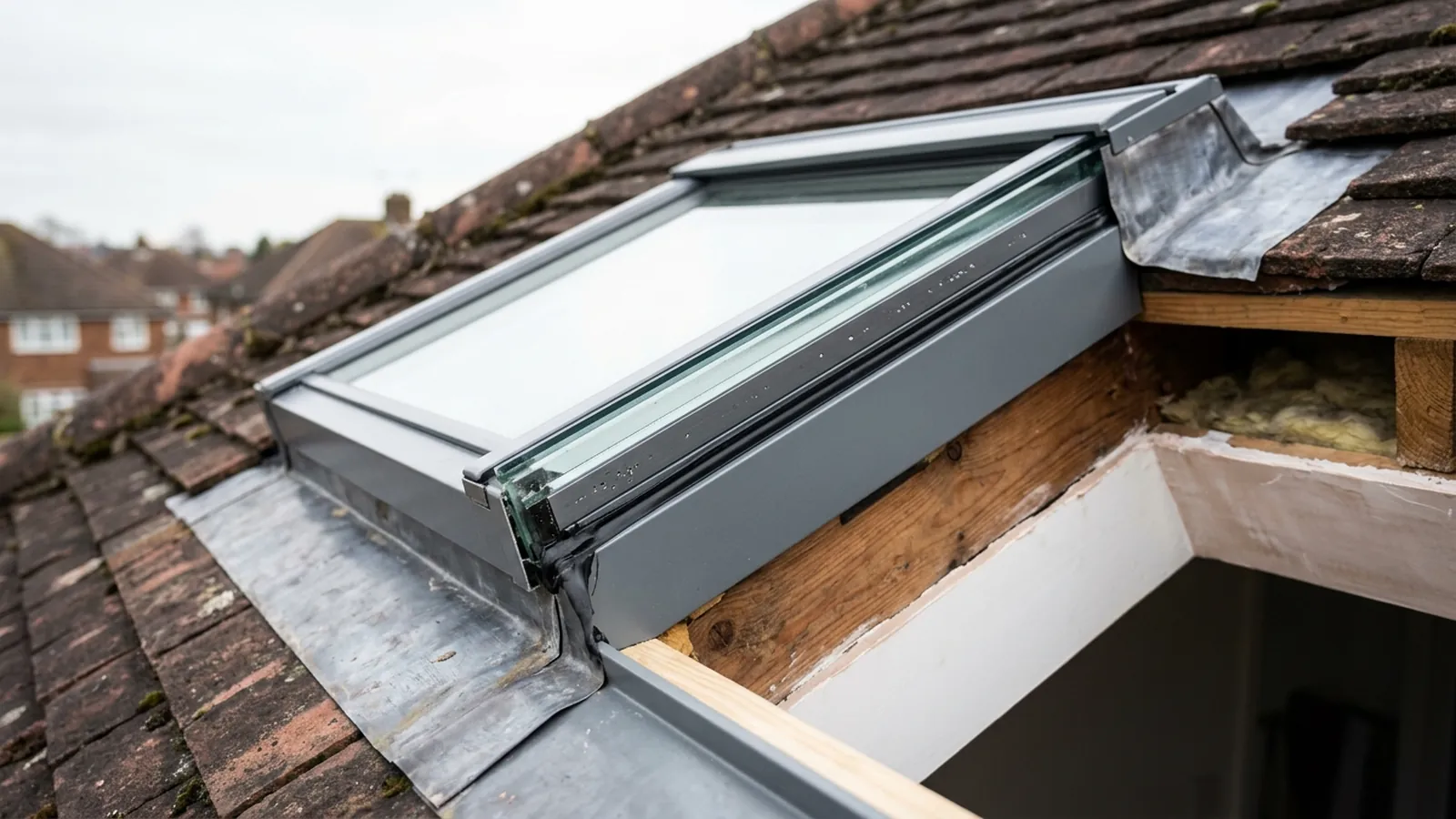
- Outer and inner glass panes, with the outer pane facing the weather
- Low-emissivity coating on one inner face, reflecting heat back into the room
- Warm-edge spacer bar holding the panes apart, filled with desiccant to soak up trace moisture
- Primary seal against each pane, backed by the secondary seal around the edge
- Dry sealed cavity, the insulating layer between the panes
- Broken edge seal: moist air gets in and the desiccant becomes saturated
- Mist and droplets trapped between the panes; they cannot be wiped off and the sealed unit needs replacing
- Inset: condensation on the room-side face of the glass is a ventilation or humidity issue, not a failed unit
Argon: the standard fill in a modern rooflight
Argon is the workhorse. It is plentiful, it is separated from air at scale as a by-product of other industrial gas production, and it costs little to put into a unit. For those reasons almost every double and triple glazed roof window and flat rooflight sold today arrives argon filled as standard, whether or not the brochure makes a fuss about it.
Argon works best in a cavity of moderate width. Too narrow and the panes are close enough that conduction across the gap climbs; too wide and there is room for convection loops to form. Glass makers size the gap to suit the gas, which is why an argon filled rooflight unit often has a slightly deeper cavity than a krypton one of similar performance.
The gas you cannot see is doing part of the job the glass gets credit for.
On its own, argon is not what makes a rooflight efficient. It sits alongside a low-e coating, which does the heavier lifting, and a warm edge spacer that keeps the perimeter from becoming a cold line. Those two are covered in solar control and low-e coatings and warm edge spacers and why the glass edge matters. Argon is the third partner, and the unit is only as good as all three together.
Krypton: when a slimmer unit has to work harder
Krypton is heavier than argon and insulates better for a given gap, and it reaches its best performance in a narrower cavity. That is its real selling point. Where a frame can only take a slim sealed unit but the performance target is high, krypton lets the glazing get there without a deeper, heavier unit.
The trade-off is supply. Krypton is present in air in far smaller amounts than argon, so it is much more expensive to extract. You tend to meet it in specific places: triple glazed units where two cavities have to fit inside a frame designed for a set overall thickness, slim profile conservation rooflights where the glass has to stay thin to keep the sightlines right, and some high performance flat rooflights. In a standard estate roof window with room for a normal cavity, argon usually does the job and krypton adds cost for little extra.
A few makers use an argon and krypton blend, which sits between the two. Whether that is worth paying for is a question about the specific unit, not about the gas in general.
Argon and krypton side by side
The table sets the two fills against plain air, as a guide to the differences an owner will notice on a specification sheet. It is general trade knowledge, not a quote for any one product.
| Fill | Insulating effect | Best cavity width | Where it is usually found |
|---|---|---|---|
| Dry air | The baseline; conducts and circulates most freely | Moderate | Older sealed units and some budget glazing |
| Argon | Better than air for the same gap | Moderate, slightly deeper than krypton | Standard fill in most current roof windows and flat rooflights |
| Krypton | Better again, especially in a narrow gap | Narrow | Slim triple glazing, slim conservation units, higher specification flat glazing |
| Argon and krypton blend | Between the two, depending on the mix | Narrow to moderate | Selected premium units |
Notice that the gas only changes one part of the heat path. It does nothing for the frame, the upstand or the way the unit is insulated into the roof. A krypton unit set badly into a cold, uninsulated lining will still leave a chilly margin around the opening.
How the gas figures in the U-value
Manufacturers quote a U-value for the glass centre and, more usefully, for the whole window. The gas fill is one of the inputs to the centre-pane figure, alongside the number of panes, the coatings and the gap. It is never listed as a separate score. If two units have the same coating and spacer and the same number of panes, the one with argon will show a lower centre-pane figure than the air filled one, and a krypton one lower again at the same slim gap.
That is why comparing gases directly is less helpful than comparing whole-window U-values. Rooflight U-values explained in plain terms walks through what those figures mean, and the short answer to what U-value a new rooflight should have is on its own page. Read the whole-window number first; the gas is a detail inside it.
Does the gas escape over time?
Every sealed unit loses some fill slowly through its edge seals over its life. A well made unit with a good primary and secondary seal holds its gas for a long time, and the thermal loss from a gradual drop is modest because the glass coating is still working. It is not something an owner needs to monitor.
The rule: a sealed unit that looks clear is still doing its job, whatever the gas level inside. The exception is a unit that has started to mist or fog between the panes. That means the edge seal has failed, moisture has got in, and the fill has gone with it; the unit, or the whole rooflight, is due for replacement.
Misting between the panes is one of the common reasons older roof windows on 1970s and 1980s estates in Popley, Oakridge or Brighton Hill come up for renewal. A misted unit cannot be refilled in place as a lasting answer, and a replacement is the clean route. The misted and failed rooflight replacement service covers how that is handled on the roof you have.
Double or triple glazed, and which gas goes where
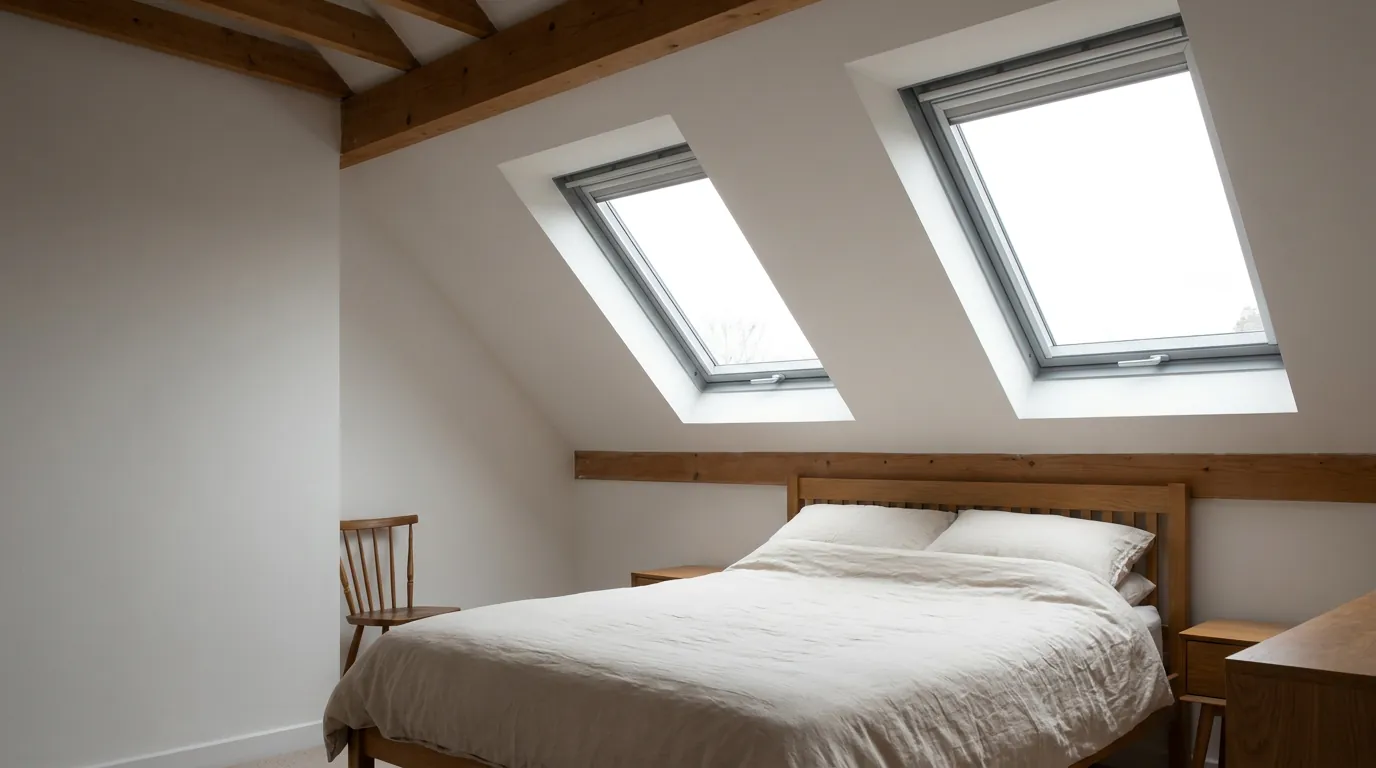
In a double glazed rooflight there is one cavity, and argon fills it in almost every current product. In a triple glazed unit there are two cavities and both are filled. Because a triple unit has to fit into a frame of fixed depth, the cavities are usually narrower, and that is precisely where krypton starts to justify itself.
Whether a triple unit is right for a particular loft room is a separate question, and the answer depends on orientation, the size of the opening and how the rest of the room is insulated. The comparison is in double or triple glazed rooflights, and the direct verdict is in is triple glazing worth it in a rooflight? The extra panes also make the unit heavier and thicker, which is covered in how thick the glass is in an energy efficient rooflight.
For a roof window going between 600mm trusses on a Chineham or Hatch Warren semi, the extra weight of triple glazing matters less for the roof than people fear, because the window is sized to sit between the trusses without cutting any of them. It matters more for the handling and the hinge, which the manufacturer designs for.
What the fill does for condensation and comfort
A better insulated sealed unit keeps the inner pane warmer on a cold night. A warmer inner pane is less likely to fall below the dew point of the room air, so it is less likely to run with condensation, and it feels less like a cold spot when you sit under it. Argon helps with that, but only as part of the whole unit. A loft shower room with no extract fan can still produce more moisture than any glazing can cope with.
The fuller answer is in do energy efficient rooflights reduce condensation? The short version: good glass, good edges, good ventilation, and the gas fill is one quiet part of the first of those.
What to check on a rooflight quote
You do not need to become an expert in noble gases to buy a good skylight. A few plain checks are enough to see whether the glazing is doing its share.
- Find the whole-window U-value. It is the number that includes the gas, the glass, the spacer and the frame. Compare products on that, not on the name of the gas.
- Read the glazing description. It should say how many panes, which coating, and whether the cavity is argon or krypton filled. If it does not say, ask.
- Check the spacer. A warm edge spacer matters as much as the fill for the margin of the glass, and it is where cold lines and edge condensation start.
- Ask how the frame is insulated into the roof. The best filled unit loses its advantage if the lining and upstand around it are cold.
- Match the unit to the frame depth. A slim conservation frame or a narrow triple unit is where krypton can be worth the extra; a standard frame with a normal cavity usually is not.
If a new rooflight is being fitted where there was none, or an old one is being replaced, the glazing also has to satisfy Part L. Part L and what it asks of a new rooflight covers that, and our installers deal with the Building Control notification as part of the job where the work is notifiable.
Where the gas stops and the specification begins
Gas fill is a genuine improvement, but it is the smallest of the choices that decide how warm a rooflight feels, and the energy efficient rooflight service weighs them together. On a trussed estate roof the bigger ones come first: a window width that fits between the trusses, a lining that is insulated to the same standard as the rest of the loft, a flashing that suits the tile, and glazing chosen for the way the slope faces. On a cut rafter cottage in Old Basing or Overton the frame profile and the conservation look lead, and that is often where a slim krypton unit makes sense.
Newer thinking such as vacuum glazing in rooflights removes the gas altogether and uses a near vacuum instead. It is a different approach with its own trade-offs, and worth reading about if the frame is especially slim.
Whichever route suits the room, we look at the roof before we price anything, and the fitting carries a 10-year workmanship guarantee (it is not insurance backed). If you are weighing up a new or replacement rooflight on your home, rooflight installation around Basingstoke sets out how we work, or you can ask for a survey of your roof and we will measure what fits.