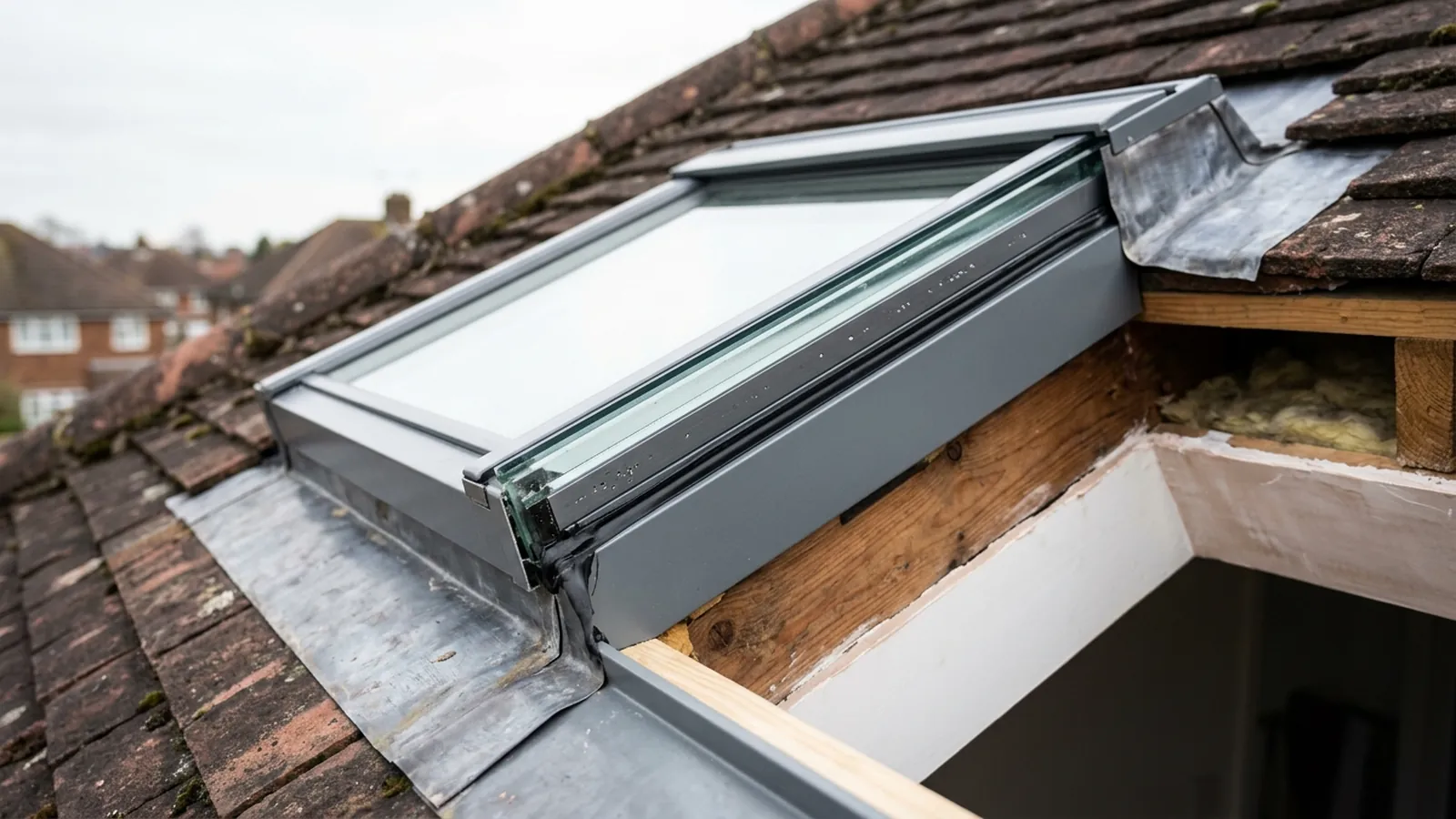
Hold a vacuum glazed unit up to the sky and you notice two things. It is thin, close to the depth of an old single pane, and if you look closely there is a faint grid of tiny dots running across the glass like the stitching on a quilt. Those dots are the reason the unit works at all. Between the two panes there is no air and no gas, only a gap so narrow it is hard to see, held open by those little pillars against the weight of the atmosphere pressing on both faces.
This guide is about that one technology and where it earns a place in a roof. It covers how a vacuum glazed rooflight stops heat, why it behaves differently from gas filled glass once it is tilted into a slope, what the pillars and the edge seal mean in daily life, and the kinds of Hampshire and Berkshire houses where it makes the most sense. It sits within our wider energy efficient rooflights service, which covers the whole range of glazing choices.
How a vacuum unit stops heat
Heat crosses a pane of glass in three ways: conduction through anything solid or gaseous, convection as a gas circulates and carries warmth from the warm face to the cold one, and radiation, which travels as infrared even across empty space. A conventional sealed unit tackles the first two with a gas that conducts poorly and a cavity sized to limit circulation, and tackles the third with a low emissivity coating on one of the inner faces.
Take the gas away entirely and two of those three routes close. With nothing in the gap there is nothing to conduct and nothing to circulate. What is left is radiation, which the coating handles, plus the small paths through the pillars and around the perimeter where the two panes are bonded together. That is why a vacuum unit can match or beat much thicker glazing on paper while being a fraction of the depth.
If you want the background on how the headline number is worked out, our guide to rooflight U-values covers it. Here the useful point is narrower: a vacuum unit reaches its figure by removing the medium rather than improving it.
How a sealed rooflight unit works and fails
- Outer and inner glass panes, with the outer pane facing the weather
- Low-emissivity coating on one inner face, reflecting heat back into the room
- Warm-edge spacer bar holding the panes apart, filled with desiccant to soak up trace moisture
- Primary seal against each pane, backed by the secondary seal around the edge
- Dry sealed cavity, the insulating layer between the panes
- Broken edge seal: moist air gets in and the desiccant becomes saturated
- Mist and droplets trapped between the panes; they cannot be wiped off and the sealed unit needs replacing
- Inset: condensation on the room-side face of the glass is a ventilation or humidity issue, not a failed unit
Why the slope favours a vacuum
A roof window is glass laid back at an angle, and in a gas filled unit that matters. When the cavity tilts away from vertical, the warm and cold faces sit one above the other rather than side by side, and the gas inside starts to roll more freely between them. Convection picks up and the unit loses more heat than the same glass would standing upright in a wall. This is why manufacturers quote rooflight figures for the glazing in its sloped position, and why a unit can look better on a vertical window data sheet than it performs in a roof.
A vacuum has no gas to roll. Tilt it to a shallow pitch or lay it almost flat on a flat roof kerb and the convection penalty simply is not there. For a roof slope, that is the single most interesting property of the technology, and it is the one worth asking a supplier about when you compare units.
Gas filled glass loses ground as it tilts; a vacuum has nothing to lose.
The pillars, the edge and the pump port
Three physical features set vacuum glazing apart once it is in your ceiling.
The pillar grid
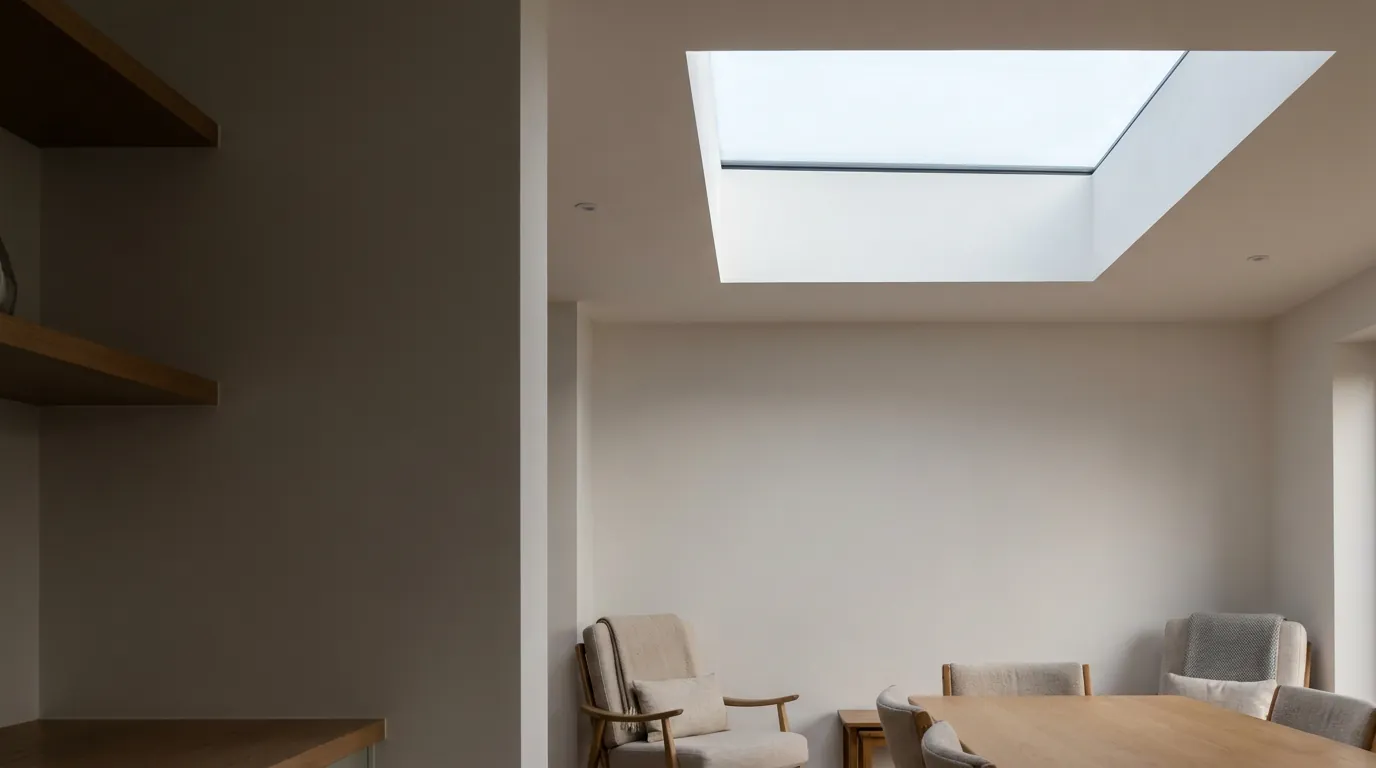
The support pillars are very small and spaced evenly across the whole pane. From across a room most people stop seeing them, much as you stop seeing a fly screen. Up close, or with low winter sun raking across the glass, the grid is visible. In a loft bedroom where you lie looking straight up at the sky it is worth seeing a sample before you choose, because a skylight above a bed is looked at in a way a wall window is not.
The edge seal
The perimeter is where the two panes are fused or bonded to hold the vacuum. It has to be completely airtight for the life of the unit, and it is also the part that conducts most heat, since it is a solid bridge from inner pane to outer pane. Good products manage this with a slim, well designed edge and a frame that covers and insulates it. The same thinking that drives warm edge spacers in ordinary units applies here, with higher stakes.
The evacuation point
Many vacuum units have a small sealed port, usually near one corner, where the air was drawn out during manufacture. On some products it is capped and tucked under the frame; on others it is a small visible mark on the glass. Ask where it sits on the unit you are considering.
Vacuum glazing next to the familiar options
The table compares the broad character of each type as installed in a sloping roof. It deliberately avoids quoting figures, because the performance of any unit depends on the exact coating, frame and product, and the manufacturer's declared values for the whole window are what count.
| Glazing type | Depth of the glass | Behaviour when tilted | Where it tends to suit |
|---|---|---|---|
| Double glazed, gas filled | Moderate | Some convection loss as the pitch flattens | Everyday roof windows where frame depth is not a constraint |
| Triple glazed, gas filled | Deepest and heaviest | Two cavities, so the loss is spread but still present | Frames built for the weight, where the lowest heat loss is the aim |
| Vacuum glazed | Close to a single pane | No gas, so no convection penalty at any pitch | Slim and conservation frames, shallow pitches, thin glazing bars |
| Hybrid vacuum plus gas cavity | Moderate | The vacuum layer carries most of the insulation | Standard depth frames wanting very low heat loss without triple weight |
For the trade between the two familiar choices, read double or triple glazed rooflights, and for what goes inside a conventional cavity, argon and krypton filled glazing. If you are weighing up the heaviest option, is triple glazing worth it in a rooflight? gives the short answer.
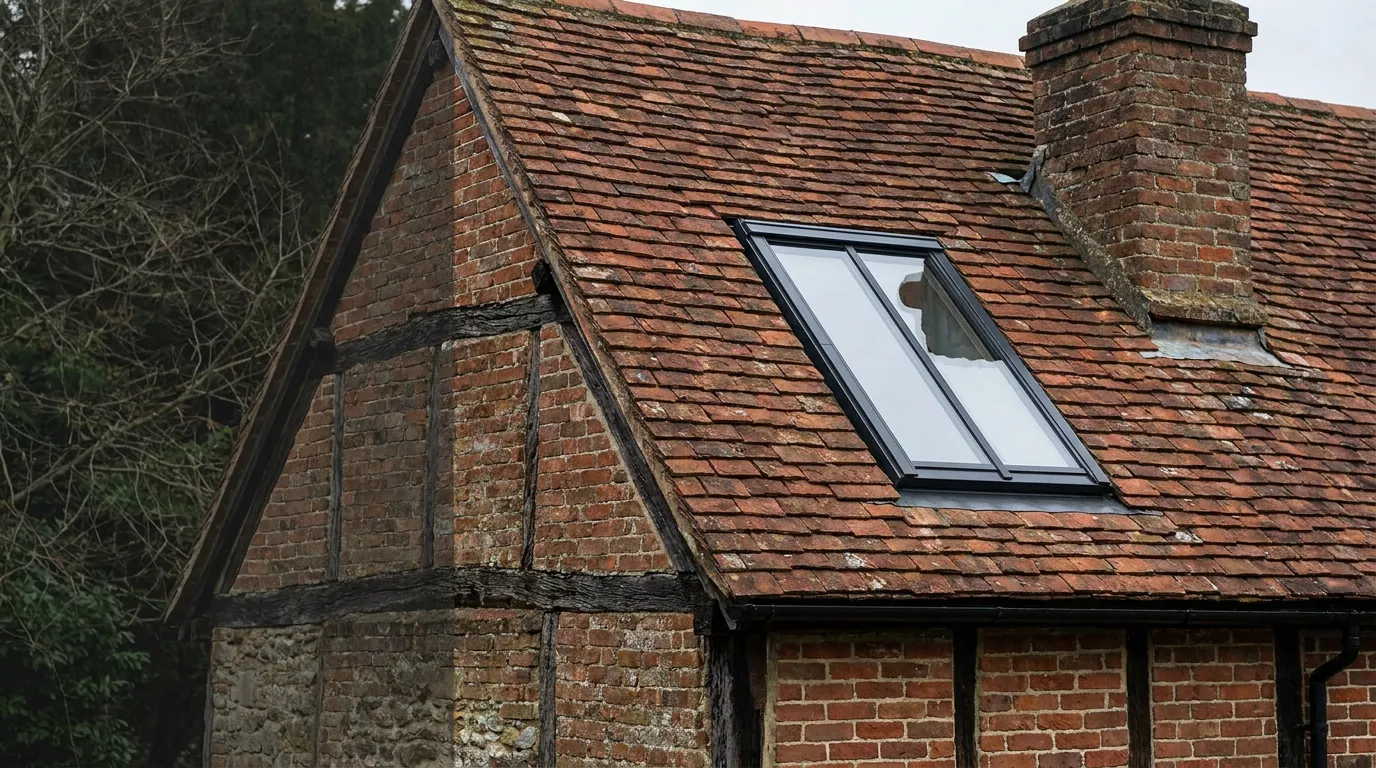
Where thinness pays: old village roofs
The strongest case for vacuum glazing is a frame that cannot take a deep unit. Conservation rooflights are designed to sit low in the roof covering with slim steel or aluminium profiles and, often, a central glazing bar, so that from the lane they read like the cast iron lights of a Victorian barn or cottage. A thick triple glazed unit forces a deeper, bulkier frame that stands proud of the tiles and undoes the point of the thing.
That is the situation in the old cores of places like Old Basing, Overton, Kingsclere and Hartley Wintney, where cut rafter roofs carry handmade clay tile or slate and any new rooflight is weighed by the local planning authority for its effect on the street. Glass close to single pane depth lets a slim frame keep its proportions while insulating far better than the original single glazed pattern it imitates. Our conservation rooflight installation service covers the planning conversation that comes first; the glazing is one part of the specification the authority will look at, never a guarantee of how it will view the proposal.
The rule: choose the frame for the roof and the street first, then pick the glass that fits it. The exception: where the roof is out of view and the frame has depth to spare, a conventional unit may reach the same comfort for less, and vacuum glazing is then a preference rather than the answer.
Estate homes and the loft room
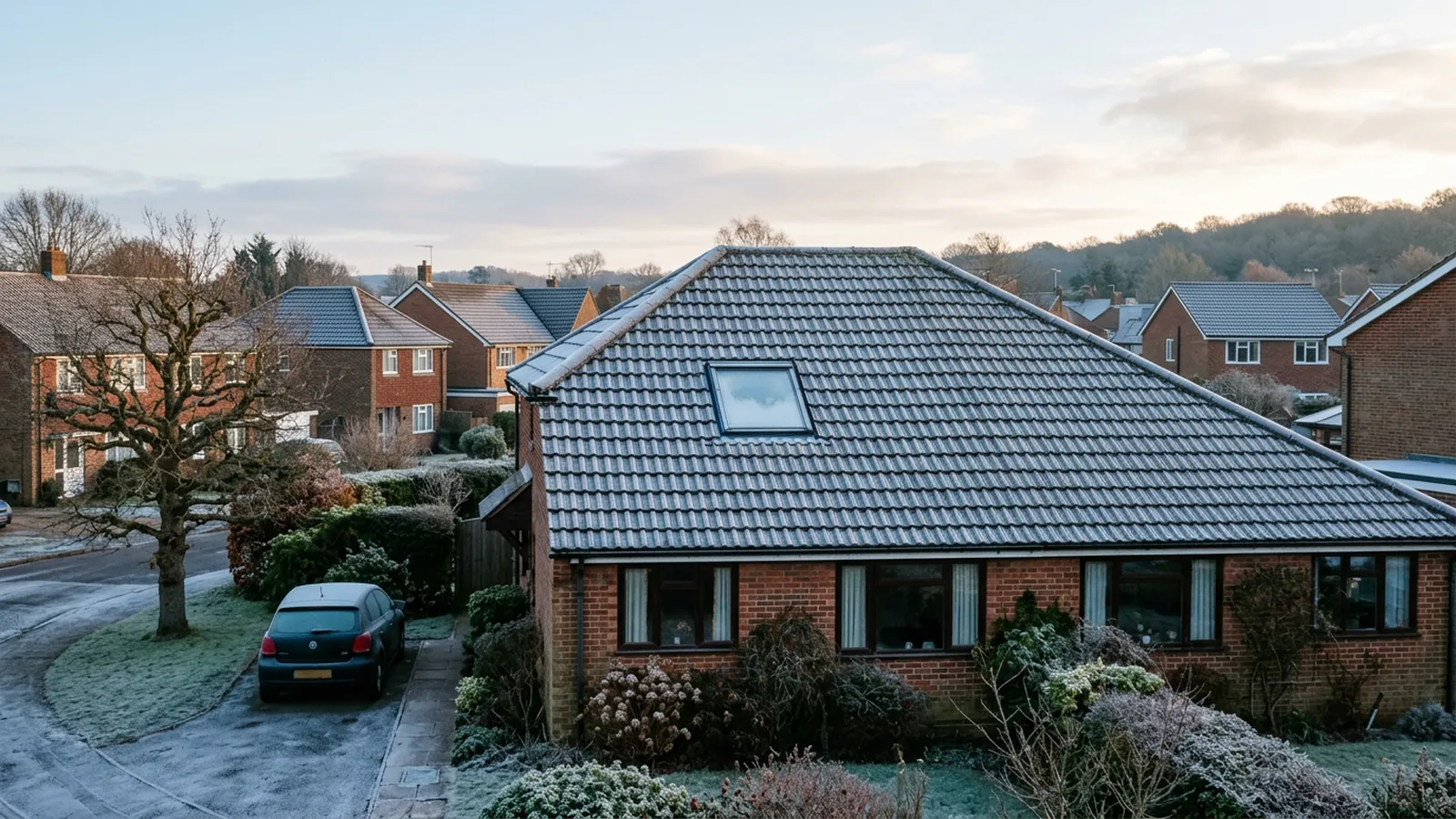
On a trussed rafter house from the sixties to the eighties, the kind that fills Popley, Brighton Hill or Oakridge, the roof window sits between trusses at close centres and the frame depth is set by the window, not by a planning officer. Standard roof windows already take a good double or triple unit, so vacuum glazing is not needed to hit the requirement. Where it does help is comfort in a small loft room.
A vacuum pane keeps its inner face closer to room temperature on a cold night. That reduces the chill you feel radiating down from the glass when you sit under it, and it lowers the chance of condensation forming on the inside, since a warmer surface stays further from the dew point. Our answer on whether energy efficient rooflights reduce condensation explains why ventilation still matters just as much.
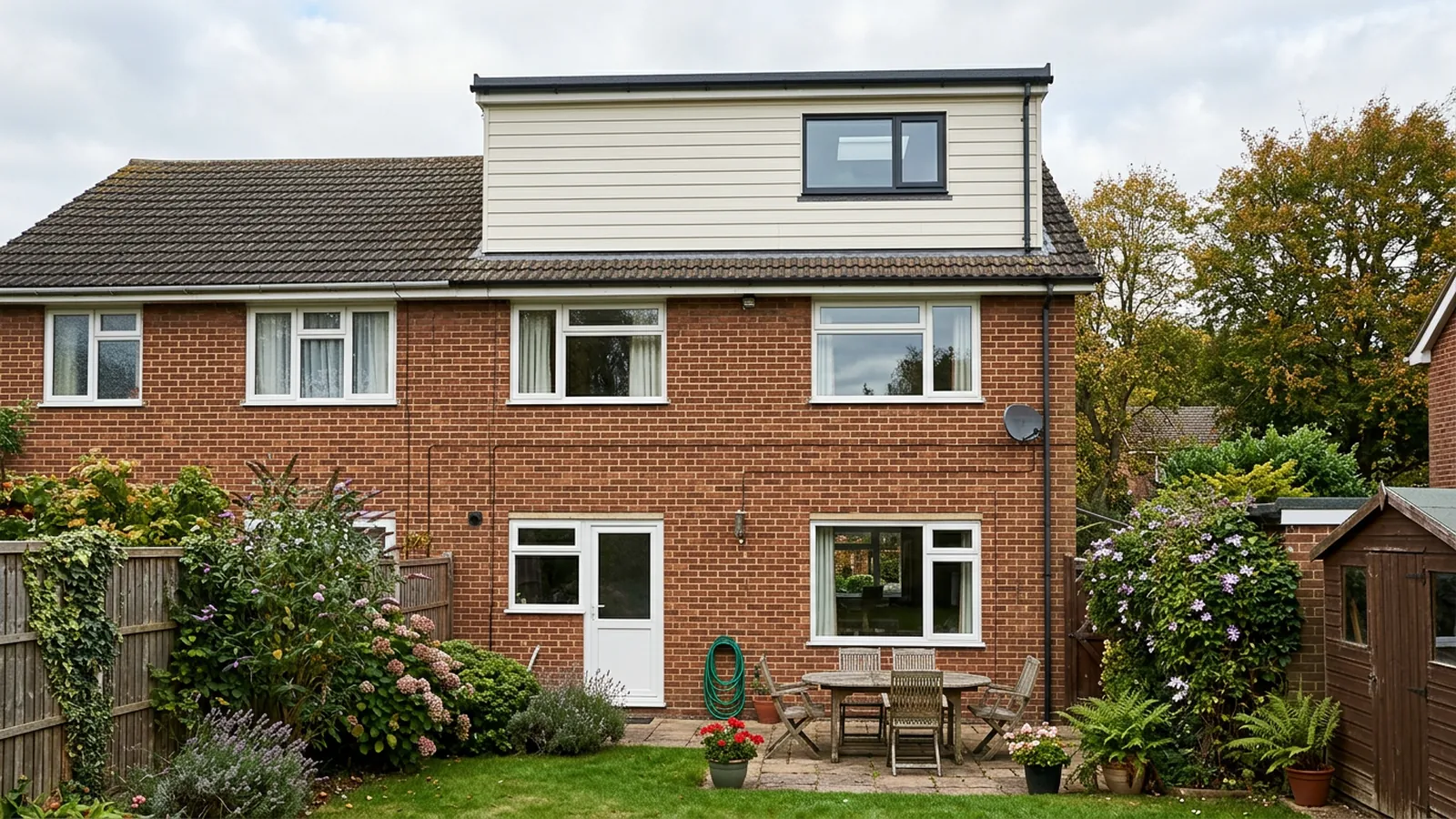
The other estate case is a shallow pitched rear extension or a garage conversion with a very low slope, where the tilt penalty of gas filled glass is at its worst. There the vacuum's indifference to angle is worth more than it is on a steeper main roof.
Safety glass, weight and the inner pane
Overhead glazing needs an inner pane that holds together if it breaks. In most rooflights that means laminated glass on the room side. Vacuum units are made from toughened glass because the panes have to resist the constant load of the atmosphere, and on their own they are not laminated. Products for roofs deal with this by bonding a laminated layer to the inner face or by pairing the vacuum unit with a laminated pane across a second cavity, which is where the hybrid units come from. Check which build the unit you are offered uses, and ask for it in writing.
Weight is where vacuum glass does well. Two thin panes weigh far less than three panes of standard glass, which eases the load on hinges and opening gear and makes a large opening sash lighter to use. Adding a laminated layer puts some of that weight back, but the result usually still sits well below a full triple unit. On the glass build itself, see how thick the glass is in an energy efficient rooflight and whether laminated glass makes a rooflight warmer.
Sun, temperature swings and stress
A roof takes more sun and more cold sky than any wall. On a summer afternoon the outer pane of a skylight can run far hotter than the inner, and on a clear winter night the reverse. In a vacuum unit the two panes are locked together at the edge, so when one expands more than the other the seal and the glass take the strain. Manufacturers design and test for this, and they set limits on size, tint and the blinds or films that can go against the glass, because a dark blind hard against the inner pane can heat it unevenly.
In practice that means two things for you. Stay within the maker's size range for the product rather than asking for a special. And if you plan an internal blind or a solar control coating, confirm with the manufacturer that the combination is approved for that unit before you order.
What to ask before choosing vacuum glass
The technology is newer to roofs than argon and krypton, so the questions are a little different. These are the ones we would put to any supplier, in this order.
- Whole window figure. Ask for the declared U-value of the complete rooflight in its roof position, frame included, not the centre of glass number alone. The frame and edge often decide the result.
- Inner pane build. Confirm the room side is laminated safety glass and how it is combined with the vacuum layer.
- Pillar visibility. See a sample in daylight, ideally at the angle you will view it from bed or desk.
- Size and pitch limits. Check your opening and roof pitch sit inside the approved range for the product.
- Blinds and coatings. Get written confirmation that any blind or solar control option is approved with that glass.
- Warranty terms. Read what the manufacturer covers on the edge seal and for how long, since the vacuum depends on it.
Part L and whether it is worth it
A new rooflight has to meet the thermal limits in the Building Regulations, and a replacement generally has to as well; our guide to Part L and a new rooflight sets out what applies. Vacuum glazing is one way to reach the limit, not a requirement. For many roofs a good gas filled unit does the job, and what U-value a new rooflight should have answers the target question directly.
Whether it is worth the premium comes down to where it goes. It is most worthwhile where the frame must be slim, where the pitch is shallow, or where comfort under the glass is the point of the room. It is least worthwhile in a standard roof window on a steep estate roof, where a conventional unit already fits the frame and performs well at that angle. The things that shape the quote are the product, the size, whether a slim conservation frame is involved, access to the roof and the making good inside; we price only after seeing the roof.
Getting it specified for your roof
Vacuum glass is a detail of the specification, and it only makes sense once the roof itself is understood: cut rafters or trusses, the pitch, the covering, the view from the street and what the room below is for. That is the order we work in. We survey before we quote, notify Building Control where the work needs it, and stand behind the fitting with a 10-year workmanship guarantee (not insurance backed).
If you are weighing a slim rooflight for an old village roof or a warmer skylight over a loft bed, you can arrange a survey of your roof and see whether vacuum glazing belongs in your specification. For the full range of glazing we fit, go back to the energy efficient rooflights page.