Look closely at the edge of any sealed glass unit and you will see a thin strip running round the inside, a few millimetres in from the frame, holding the two panes apart. It is easy to ignore. On a rooflight it is worth a second look, because that strip decides how cold the last band of glass gets on a winter night, and on sloping or flat glass that band is exactly where water gathers first. This guide is about that strip: what it is, why the older metal kind runs cold, what a warm edge spacer changes, and how to make sure a new skylight has one.
The part that holds the panes apart
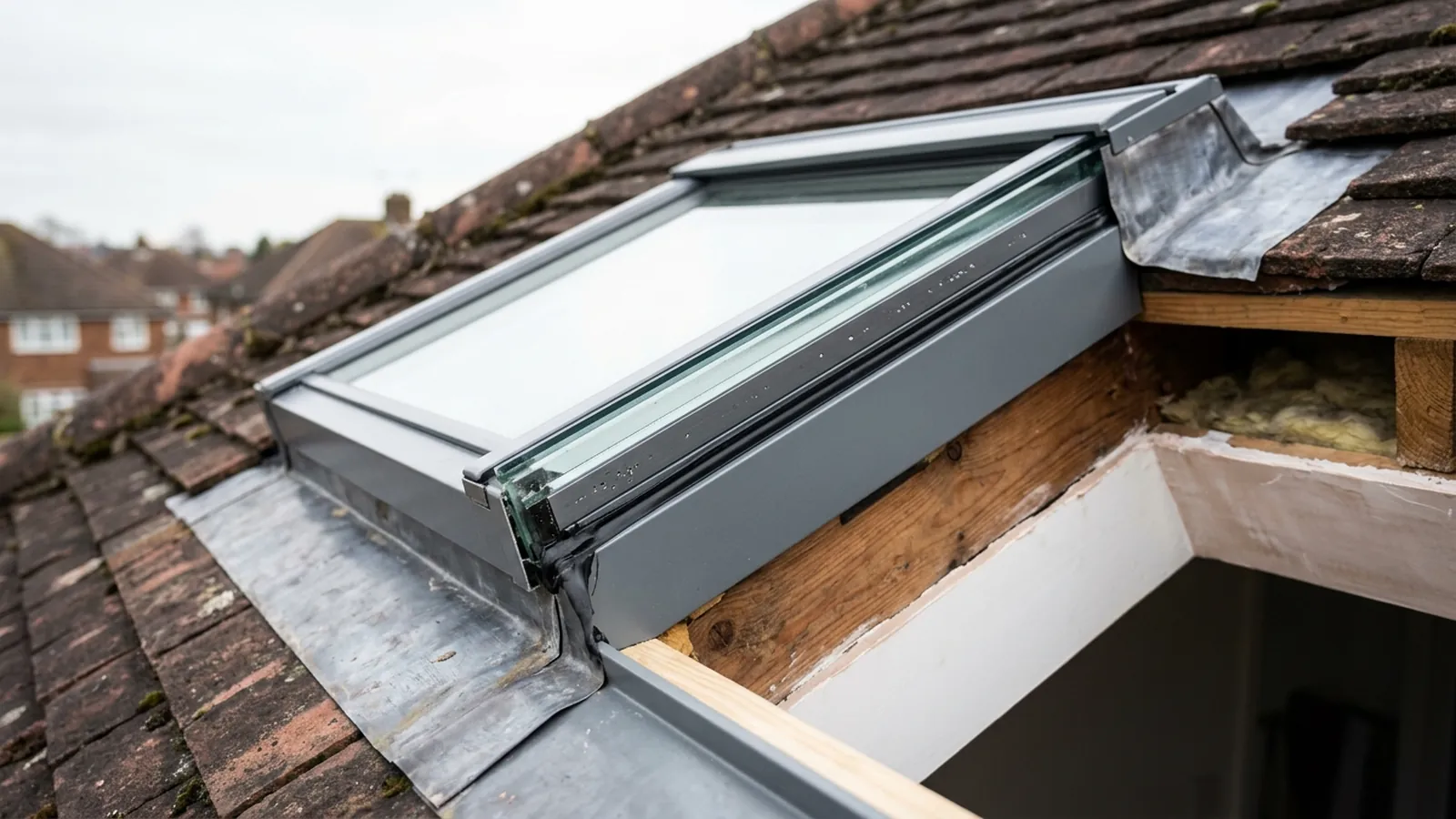
A sealed unit is two or three sheets of glass bonded to a frame of their own, separate from the window frame you can see. That inner frame is the spacer bar. It sets the width of the cavity between the panes, it carries the seals that keep dry gas in and damp air out, and it is hollow and filled with a desiccant that soaks up any moisture trapped when the unit was made.
Around the spacer sit two seals. The primary seal, usually a butyl strip, is bonded between the spacer and each pane and is the main barrier against vapour. The secondary seal is laid round the outside of the spacer to hold the whole sandwich together and protect the primary seal. The completed unit is then set into the rooflight frame on glazing blocks, with gaskets or beads over the top.
So the spacer is structural, it is part of the vapour seal, and it forms a continuous bridge between the inner pane and the outer pane all the way round. That last role is the one this page is about.
How a sealed rooflight unit works and fails
- Outer and inner glass panes, with the outer pane facing the weather
- Low-emissivity coating on one inner face, reflecting heat back into the room
- Warm-edge spacer bar holding the panes apart, filled with desiccant to soak up trace moisture
- Primary seal against each pane, backed by the secondary seal around the edge
- Dry sealed cavity, the insulating layer between the panes
- Broken edge seal: moist air gets in and the desiccant becomes saturated
- Mist and droplets trapped between the panes; they cannot be wiped off and the sealed unit needs replacing
- Inset: condensation on the room-side face of the glass is a ventilation or humidity issue, not a failed unit
Why the glass edge runs cold
For decades spacers were made from aluminium. Aluminium is light, easy to bend into a rectangle and simple to fill with desiccant, which is why it became the default. It is also an excellent conductor of heat. Put a strip of it between a warm inner pane and a cold outer pane and it carries heat straight across the cavity, bypassing the gas fill and the coatings that do the insulating in the middle of the glass.
The result is a band round the edge of the unit that sits noticeably colder than the centre on the room side. You cannot see it, but you can often feel it with the back of a hand on a cold morning, and you can certainly see what it does: the first beads of condensation on an older unit almost always appear along that edge, not in the middle.
The principle: the centre of a modern sealed unit is insulated by gas, coatings and the cavity; the edge is only as warm as the spacer lets it be. Swap a metal spacer for a low-conductivity one and the edge band warms towards the centre-pane temperature. It never matches it completely, because the frame and the seals still sit there, but the gap narrows.
What warm edge spacers are made of
"Warm edge" is not one product. It is a family name for any spacer that conducts less heat than plain aluminium. The main types found in rooflight and roof window units are set out below. Manufacturers publish the thermal figures for their own spacers, so the table describes how each type behaves rather than quoting numbers.
| Spacer type | What it is made of | How the edge behaves |
|---|---|---|
| Aluminium box | Hollow aluminium section, desiccant inside | Coldest option; conducts heat freely across the cavity |
| Stainless steel | Thin-walled stainless section, sometimes with a plastic body | Warmer than aluminium because the metal wall is far thinner and stainless conducts less |
| Hybrid or composite | Plastic body with a very thin metal foil or film as the vapour barrier | Warm; the plastic carries the load and the foil keeps the seal gas-tight |
| Flexible foam | Silicone or similar foam strip with desiccant built into the material | Among the warmest; also takes up movement as the glass heats and cools |
| Thermoplastic | Extruded plastic compound applied by machine directly to the glass | Warm, with no joints at the corners because it is laid as one continuous bead |
Any of the warm types is a clear step up from bare aluminium. Between them, the differences are smaller and come down to how the unit is built and what the manufacturer has tested. On a quote, the useful question is simply whether the spacer is warm edge and what the whole-window figure is, which is covered further down.
Why a sloping pane makes the edge matter more
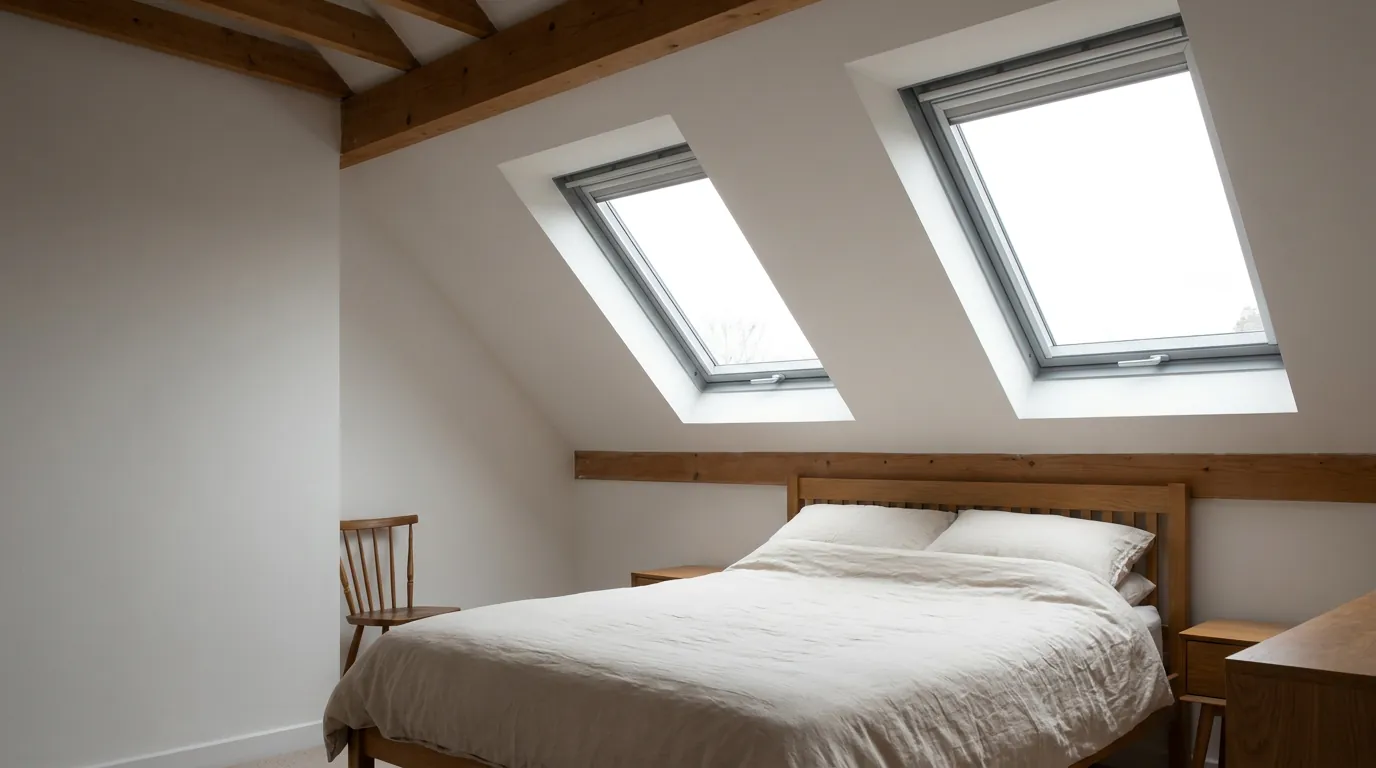
In a vertical wall window a cold edge produces a thin line of condensation along the bottom rail, and that is usually the end of it. A rooflight lies at an angle, or nearly flat, and that changes the behaviour in three ways.
First, warm moist air rises. The ceiling of a loft room, a bathroom under the slope or a kitchen extension with a flat roof is where the dampest, warmest air in the house ends up, and the rooflight is in the middle of it. Second, the glass faces the open sky. On a clear night a roof-mounted pane radiates heat away to the sky much more than a wall window facing a garden fence, so the whole unit runs cooler. Third, any water that does form does not stay put: on a pitched roof window it runs down the glass to the lower edge and sits against the bottom of the frame, the spot that was already coldest.
Put those together and the lower edge of an older sloping unit is the likeliest place in the room for water to collect. Over time that means stained linings, a darkened finish on timber frames and a damp line on the plaster below. A warm edge spacer does not remove the causes, but by lifting the edge temperature it moves the point at which that edge starts to wet up. For the wider picture on damp at the glass, see whether energy efficient rooflights reduce condensation.
On a rooflight the edge of the glass is not a detail at the margin; it is the part that meets the wettest air and the coldest sky together.
Narrow windows between trusses have more edge for their size
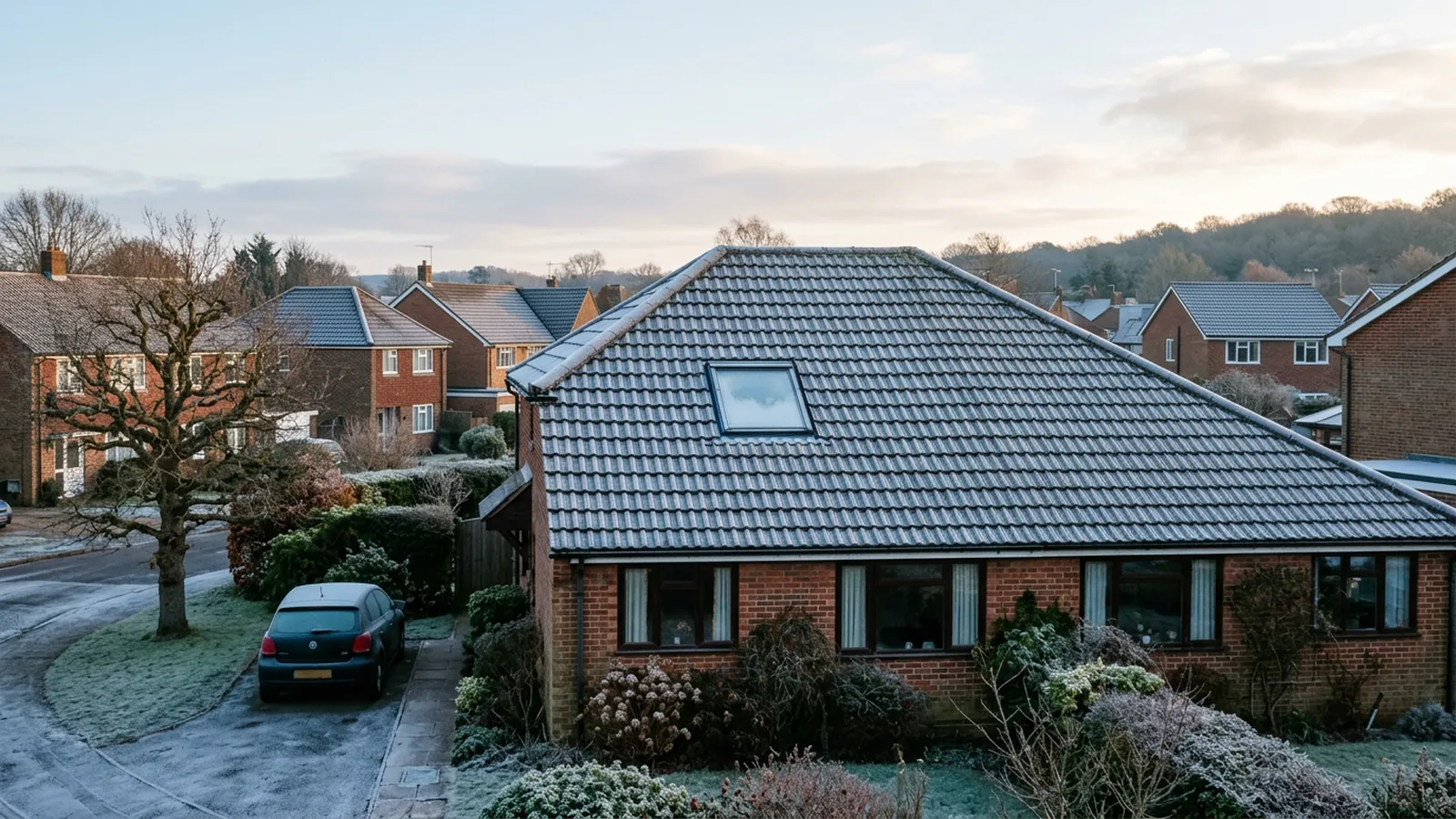
Here is where the housing around Basingstoke comes in. On the trussed rafter roofs that cover most of the estates, from the older parts of Popley and Oakridge through to Hatch Warren and Chineham, the first choice is usually a roof window narrow enough to sit between trusses set at 600mm centres. That keeps the engineered roof intact, which is the right call. It also produces a tall, slim pane.
A tall, slim pane has more perimeter for every square metre of glass than a squarer one. Geometry alone means the cold edge band makes up a bigger share of the whole unit. Two windows side by side, each between its own pair of trusses, carry two full perimeters rather than one. The same is true of a roof lantern or a multi-pane flat rooflight, where glazing bars divide the roof into several smaller units, each with its own spacer running round it.
So the configurations that suit estate roofs best are also the ones where the choice of spacer has the most influence on how the finished window performs. That is not a reason to pick a wider window and cut trusses; it is a reason to make sure the narrow one is specified with a warm edge. How the between-truss sizes are chosen is covered on the energy efficient rooflights service page and in the fit tables across the site.
How the edge shows up in the window's figures
Glazing figures come in two kinds, and the spacer only appears in one of them. Both belong to the wider picture of choosing an energy efficient rooflight, but they measure different things. The centre-pane figure, often written Ug, describes the middle of the glass, well away from any edge. Change the spacer and Ug does not move at all. The whole-window figure, written Uw, takes the glass, the frame and the edge together, and that is where the spacer counts.
Behind the whole-window figure sits a linear value, usually written with the Greek letter psi, which describes the extra heat lost along each metre of glass edge because of the spacer and its seals. A warm edge spacer gives a lower psi value. Multiply that by the length of the perimeter and you get the edge's contribution to the whole window, which is why the slim, many-edged units described above feel the difference more.
The practical point is to compare like with like. A quote that gives only a centre-pane figure is telling you nothing about the spacer. Ask for the whole-window value for the size being fitted. The plain-terms guide to rooflight U-values walks through reading both figures, and what U-value a new rooflight should have gives the direct answer on targets.
Spacers, gas fill and how long a unit stays sealed
A warm edge is only worth having if the unit stays sealed. The spacer and its seals are what keep argon or krypton in the cavity and keep moist air out, and they are the part of the unit that is working hardest over its life. Every warm day the gas in the cavity expands and pushes the panes outward; every cold night it contracts and pulls them in. On a roof, in full sun, that daily cycle is harsher than on most wall windows.
When the seal eventually gives way, damp air gets into the cavity faster than the desiccant can soak it up. The first sign is a faint haze on the inner faces of the glass that will not wipe off from either side, followed by the familiar misted unit. Flexible and thermoplastic spacers are designed to take up some of that movement, and a good secondary seal protects the primary one, but the quality of manufacture matters as much as the material.
For how the gas itself contributes, see the guide to argon and krypton filled rooflight glazing. If an older unit has already misted, the glass is past saving and the route is a replacement, which the misted and failed rooflight replacement page covers.
Finding out what spacer your rooflight has
It is usually possible to make a fair guess at the spacer in an existing roof window from the room side, without taking anything apart. Treat the result as a clue rather than proof; the manufacturer's data or the unit's markings settle it.
- Look at the strip inside the glass. Stand close and look at the band just inside the frame. A bright, shiny silver strip with a slightly ridged look is typical of aluminium. A matt black or dark grey strip is common on warm edge units, though some aluminium spacers were painted.
- Check for printing. Many spacers carry a printed code along the strip: a manufacturer name, a date or a standard reference. A torch held at an angle helps. The name can be looked up.
- Look at the corners. Aluminium spacers are usually bent or joined with a corner key, which can leave a visible joint. A continuous, rounded corner with no join points towards a thermoplastic or foam type.
- Find the window's own label. Branded roof windows usually carry a data plate on the frame, often visible when the sash is opened. The model and glazing code on it tell a supplier exactly what unit was fitted.
- Watch the edge on a cold morning. If condensation regularly forms as a strip round the edge while the middle of the glass stays clear, the edge is running cold, whatever the spacer is made of.
Asking for the right unit on a replacement
Most new rooflights and roof windows from the main makers now come with warm edge spacers as standard in their better glazing options, but "standard" varies between ranges, and budget units or bespoke flat glass can still be built with plain aluminium. It is worth confirming in writing rather than assuming.
When a replacement or new window is being specified, three questions cover the edge: is the spacer warm edge, and what type; what is the whole-window U-value for this size; and does that figure meet what Building Regulations ask of the job. On that last point, whether a replacement rooflight has to meet Part L gives the short answer, and the work is notified to Building Control on your behalf where it is notifiable.
The spacer also interacts with glass build. A thicker triple unit with two cavities has two spacers, and both should be warm edge. The guide to double or triple glazed rooflights weighs up the second cavity, and how thick the glass is in an energy efficient rooflight explains the overall depth a frame has to take.
The edge of the glass and the edge of the opening
A warm edge spacer deals with heat crossing between the panes. It does nothing about heat crossing the window frame, or running round the frame into the roof structure, or slipping through a gap in the insulation between the lining and the rafters. Those are separate paths, and on a real roof they often matter more than the spacer does.
That is why a warm glass edge set into a cold, poorly insulated opening still gives a damp corner. The guide to thermally broken frames and cold bridging follows the heat out through the frame and the upstand, and the loft room side of the same problem is about how the lining and insulation are packed round the window. The glass edge, the frame and the opening need to work as one.
On a trussed estate roof, the window, its lining and the insulation between the trusses are fitted together in one visit, so the warm edge in the glass is matched by a warm, continuous insulation line round the frame rather than left to meet a gap.
Getting the edge right on your roof
The spacer is a small line on a specification sheet, and it is easy to lose among bigger decisions about size, pitch and opening type. On a sloping or flat pane in a warm room it earns its place more than it would in a wall. If you are weighing up a new window or replacing an older one on a rooflight or skylight installation around Basingstoke, the survey is where the roof, the truss spacing and the glazing get pinned down together, and the written quote names the spacer type and the whole-window figure for the size that fits. Everything we fit comes with a 10-year workmanship guarantee. When you are ready, arrange a survey of your roof and the edge detail comes as part of it.