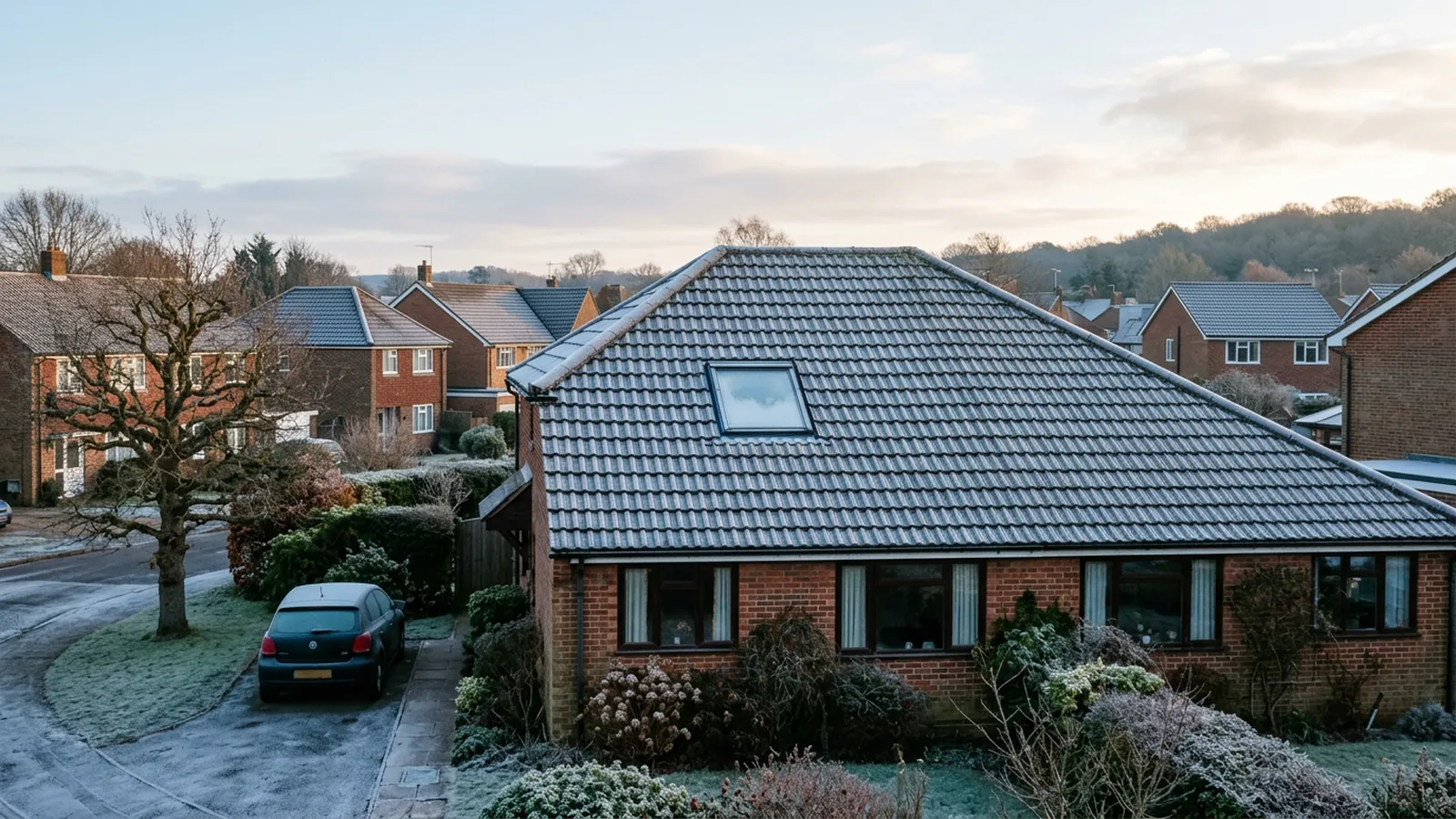
Orientation is one of those things people expect to choose, then discover the house has already chosen for them. On a Basingstoke estate the ridge runs the way the builder laid out the road, and the rear slope faces wherever the garden does. What you can decide is the specification, and that is where our energy efficient rooflights work begins: read the slope first, then pick the glass.
So the useful question is not which way is best in the abstract. It is what each direction does to a room under a pitched roof, and which glass and blinds make the most of it.
What each direction does to the room below
Sloping glass sees far more sky than a wall window, so a roof window or skylight on any face brings in more daylight and more sun than its size suggests. The direction changes when that sun arrives and how strong it is.
| Slope faces | What the room gets | Glazing and shading to consider |
|---|---|---|
| South | Strongest sun for most of the day; welcome warmth in winter, heat build-up in summer | Solar control glass with a lower g-value, plus an external awning blind on bedrooms and loft rooms |
| West | Afternoon and evening sun at a low angle, arriving when the room has already warmed up | Solar control glass and an external blind, since low sun slips past most internal shading |
| East | Bright morning sun that eases off by midday; the room cools through the afternoon | Standard low-e glass is often enough; a blackout blind for a bedroom that wakes early |
| North | Even, diffuse daylight with little direct sun and little solar gain | The best insulating glass you can fit, with a higher g-value so the room keeps what warmth reaches it |
None of these is a bad direction. Each asks for a slightly different specification, and the mistake is fitting the same glass whatever the slope.
How a sealed rooflight unit works and fails
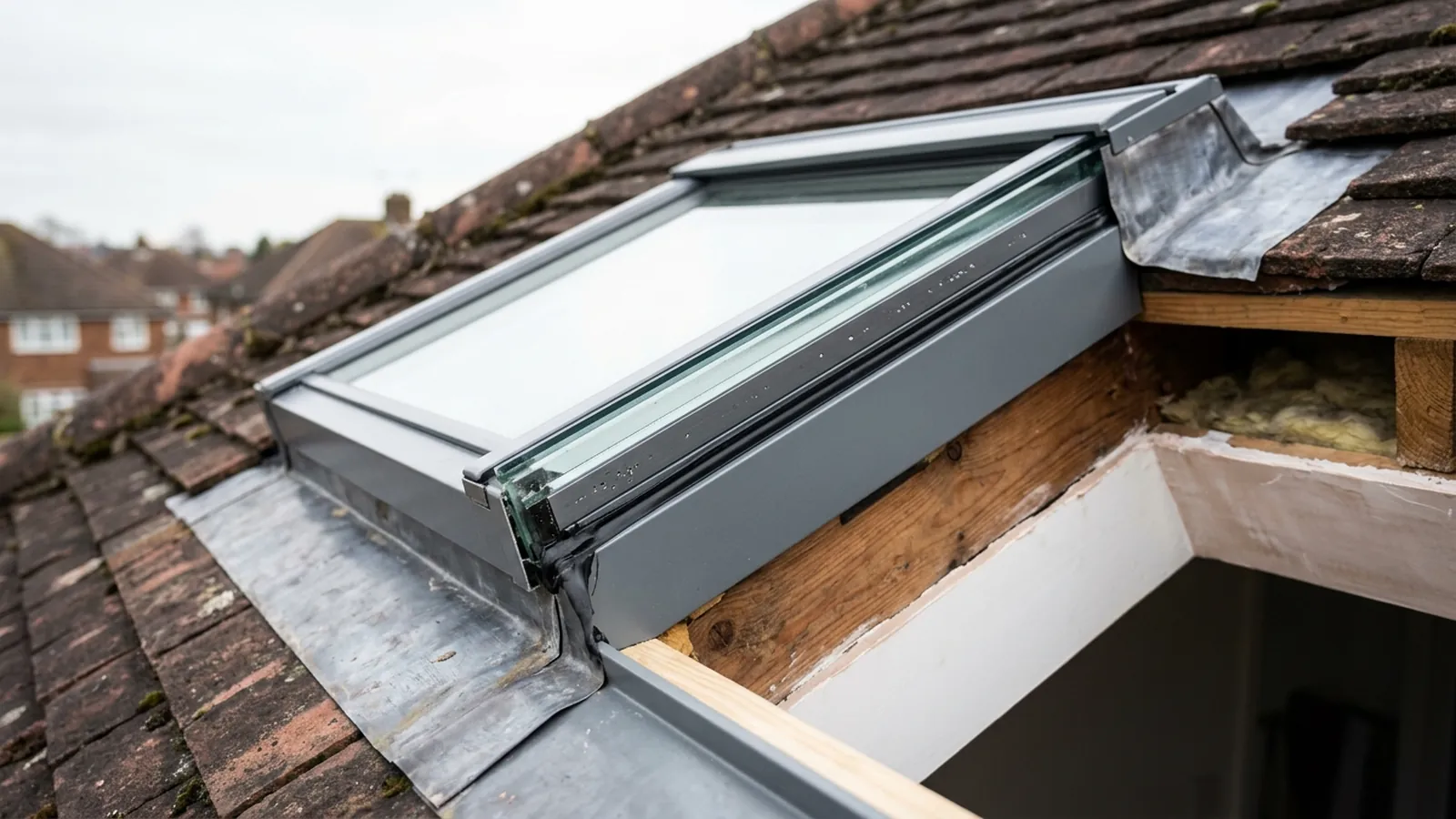
- Outer and inner glass panes, with the outer pane facing the weather
- Low-emissivity coating on one inner face, reflecting heat back into the room
- Warm-edge spacer bar holding the panes apart, filled with desiccant to soak up trace moisture
- Primary seal against each pane, backed by the secondary seal around the edge
- Dry sealed cavity, the insulating layer between the panes
- Broken edge seal: moist air gets in and the desiccant becomes saturated
- Mist and droplets trapped between the panes; they cannot be wiped off and the sealed unit needs replacing
- Inset: condensation on the room-side face of the glass is a ventilation or humidity issue, not a failed unit
South and west: the free heat, and its price
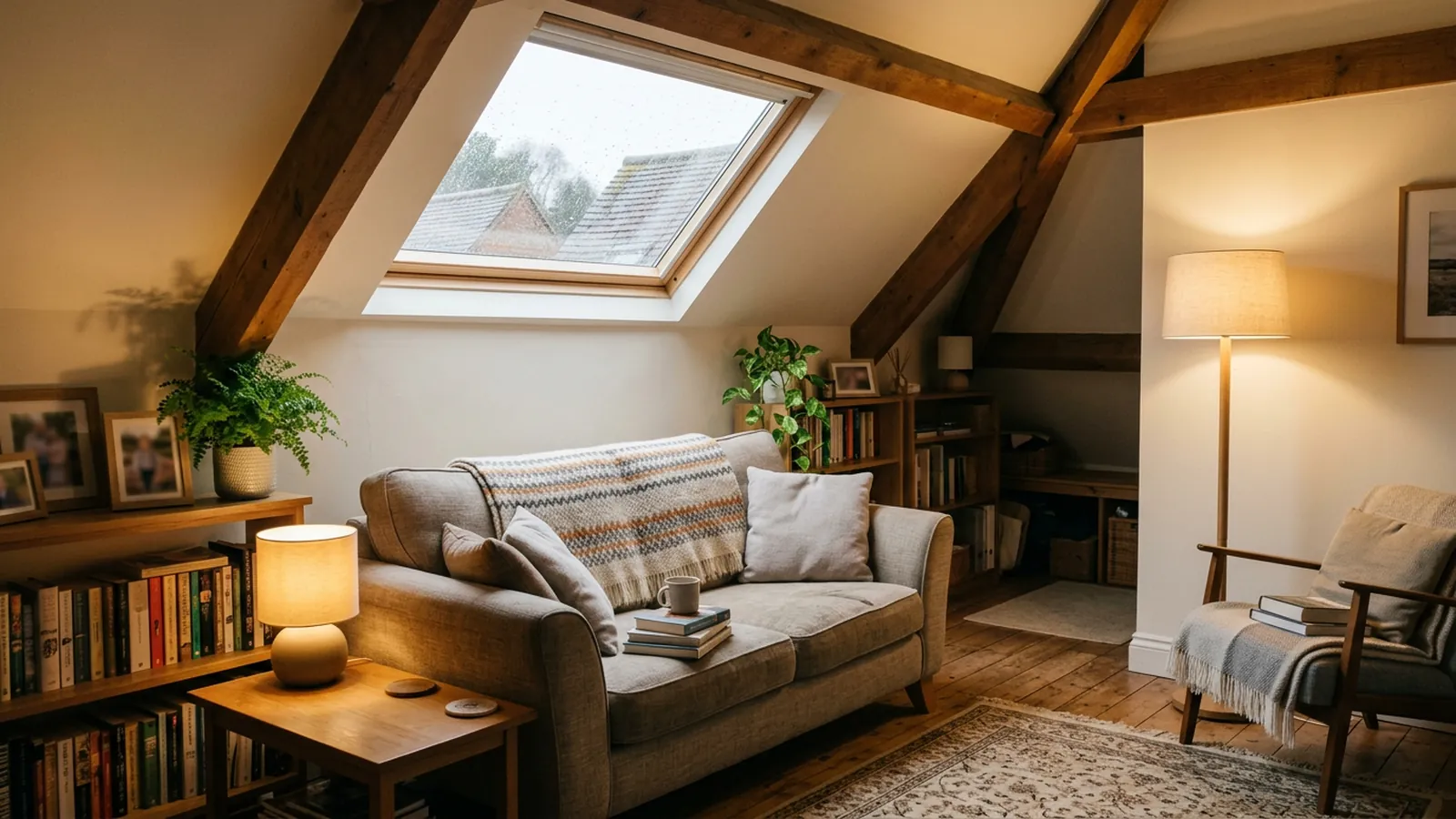
A south-facing roof window in a loft bedroom can take the chill off on a clear February afternoon without the heating doing anything. That is genuine solar gain, and in the colder months it counts in your favour. The same glass in July, under a roof that has been soaking up sun since mid-morning, turns a bedroom into the warmest room in the house.
West slopes are the harder case. The sun reaches them late, low and square-on, after the room and the roof structure above it have already stored the day's heat, and it is still there at bedtime. How glass and blinds tackle that is set out in our guide to overheating in south-facing loft rooms, which applies just as much to a west slope. For the short answer on whether glazing alone can keep a room comfortable, see can a rooflight keep a room cool in summer?
The rule: on a south or west slope, choose solar control glass and plan for an external blind on any room you sleep in. The exception: a stairwell or landing you pass through rather than sit in can often take the extra warmth without trouble.
North and east: steady light, less gain
A north-facing rooflight is the artist's choice for a reason. The light is cool, even and free of hard shadows, and the room never cooks. The trade-off is that the glass rarely earns much heat back, so on a north slope the loss through the pane matters more than the gain. That points to the lowest U-value your budget and roof allow, and to a glass that lets through what little winter sun there is rather than reflecting it away.
East is the gentle middle. Morning sun lifts a kitchen or a home office at the start of the day and has moved round well before the afternoon peak. Most east-facing rooms manage happily with ordinary low-e double glazing and an internal blind.
Flat roofs change the question
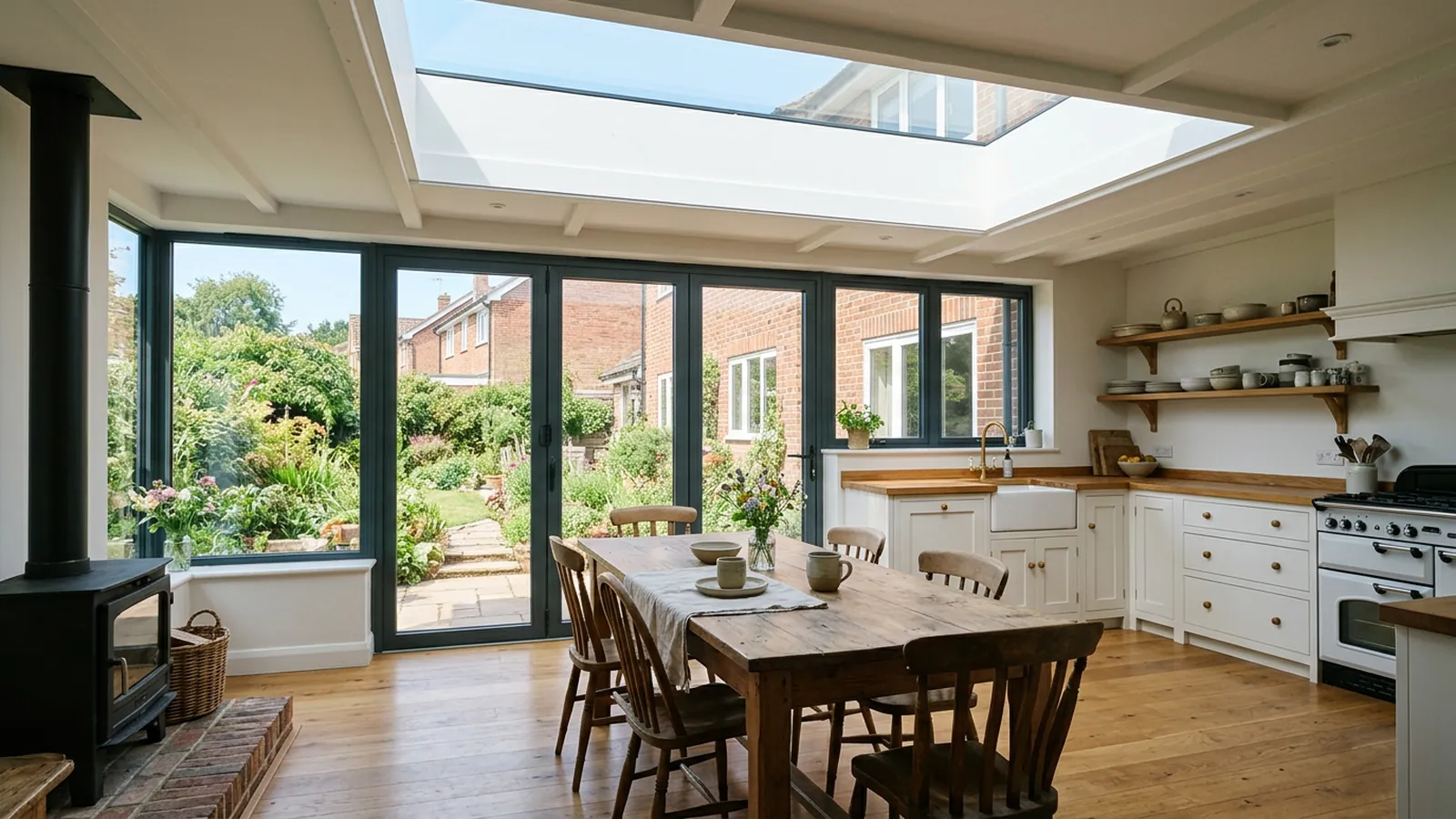
On a flat roof, orientation almost disappears. A flat rooflight looks straight up at the sky, so it takes the high summer sun whatever direction the extension faces, and it gains least in winter when the sun is low. For a kitchen extension with a flat rooflight or a lantern, solar control glass is the usual answer on every elevation, and the orientation of the house mainly decides which side of the room gets the evening glare. The flat roof rooflight service covers those units in their own right.
Picking the glass for the slope you have
Two numbers do most of the work. The U-value tells you how much heat leaks out through the unit; the g-value tells you how much solar heat the glass lets in. On a north slope you want a low U-value and can live with a higher g-value. On a south or west slope you still want a low U-value, but a lower g-value becomes the thing that keeps the room usable in summer. Our answer to what is the g-value on rooflight glass? explains the number, and the guide to solar control and low-e coatings shows how the coatings shift it.
- Name the slope. Stand in the garden at midday: if the sun is over that face of the roof, it faces broadly south.
- Name the room. A bedroom, office or loft room you sit in for hours needs more care than a landing.
- Match the glass. Lower g-value for south and west, best U-value you can manage for north, standard low-e for most east slopes.
- Add the shading. External blinds stop heat before it reaches the glass; internal ones mostly control glare and privacy.
Daylight is part of the energy sum too. A well-placed rooflight on any slope can mean fewer lights switched on in a landing or a dark kitchen, which our answer on cutting daytime lighting use weighs up honestly.
When you have a choice of slope
Sometimes a loft conversion or a hipped roof gives you more than one face to work with. Then it is worth putting the larger glass where it serves the room best rather than where it gains the most: north or east light over a desk, south light over a stairwell that can shed heat, and smaller openings on a west slope above a bedroom. On a trussed roof the window width still has to suit the truss spacing on whichever face you pick, so the structure and the orientation get decided together.
Whichever face your new skylight lands on, we look at the slope, the room and the roof timbers on site and then recommend the glass, with a written quote that follows the survey. If you want that done for your own roof, arrange a survey visit and we will talk it through with the loft hatch open.