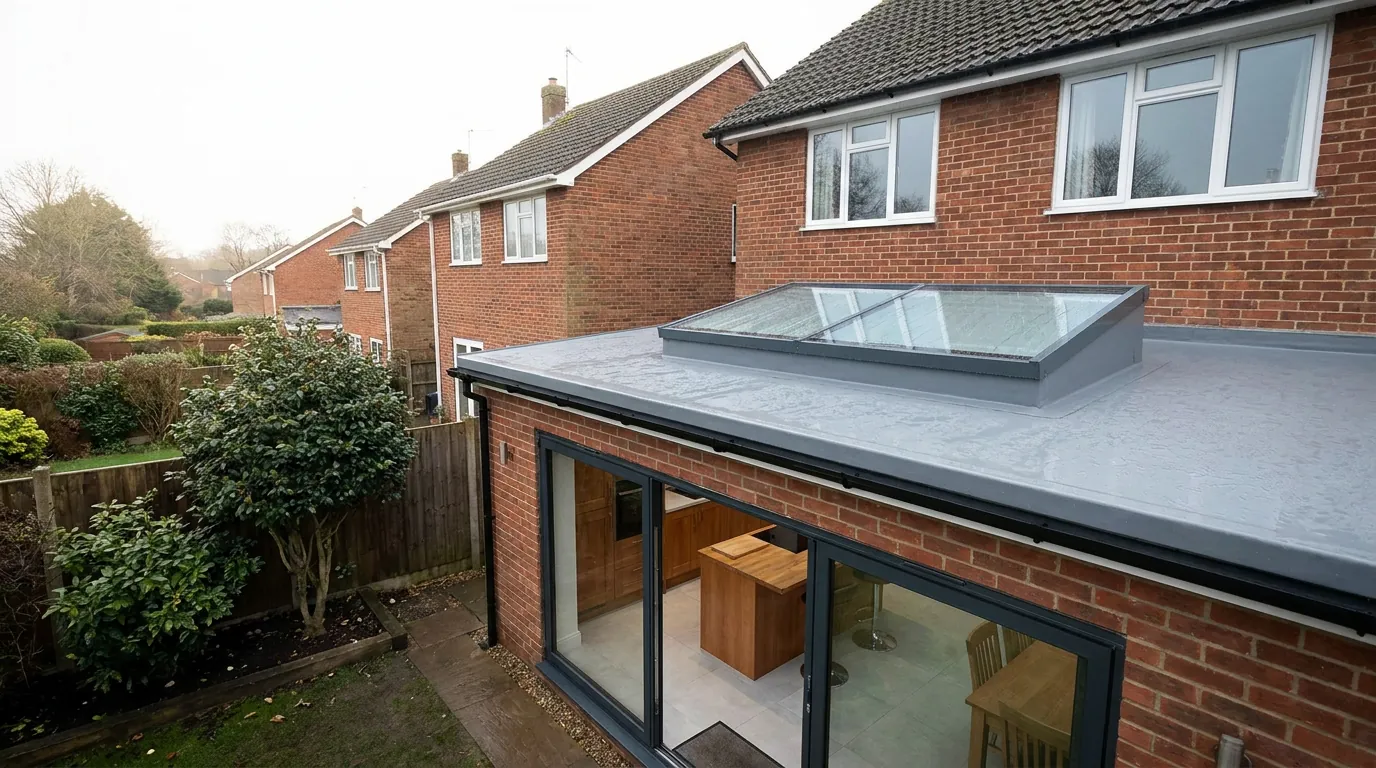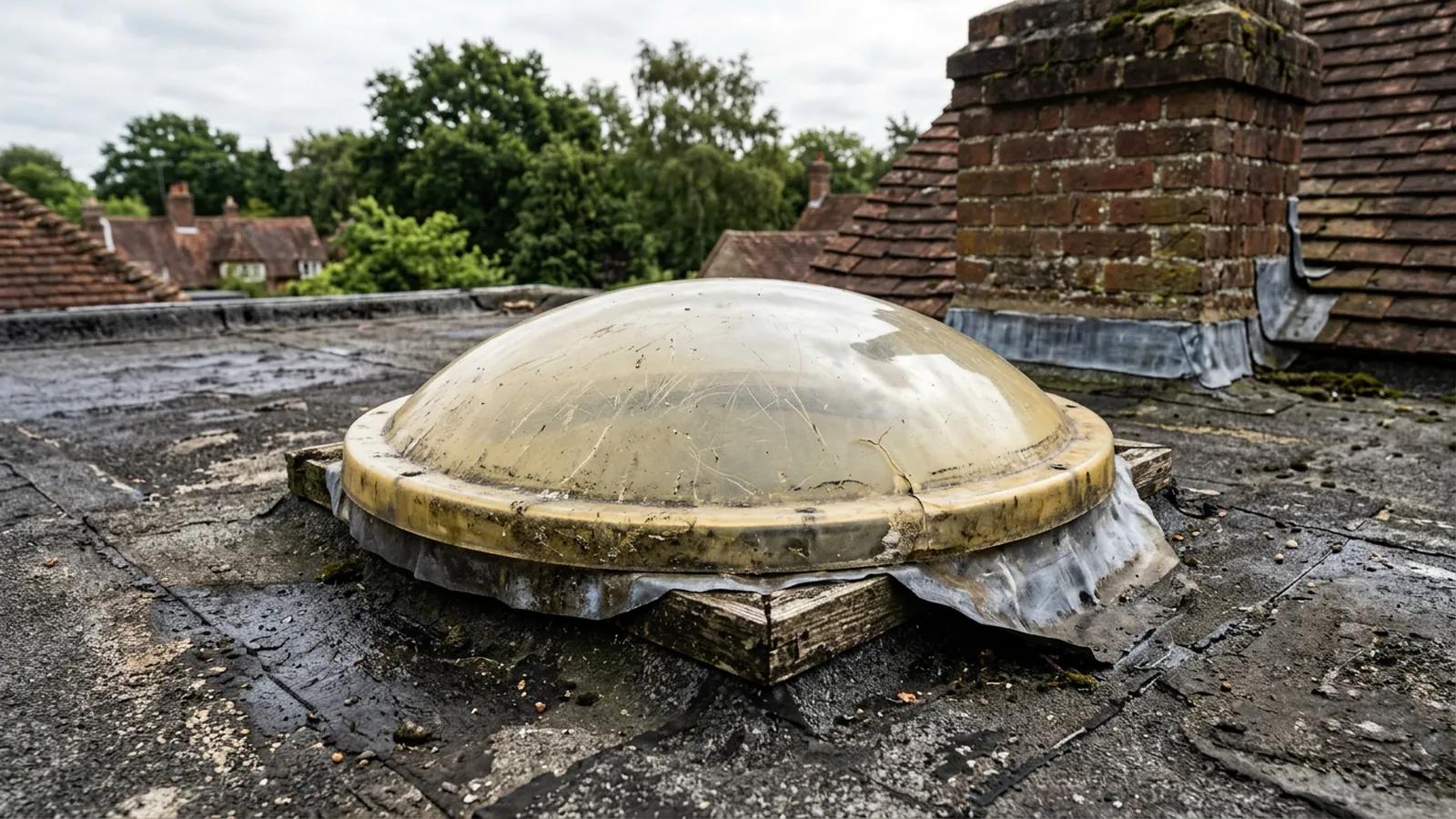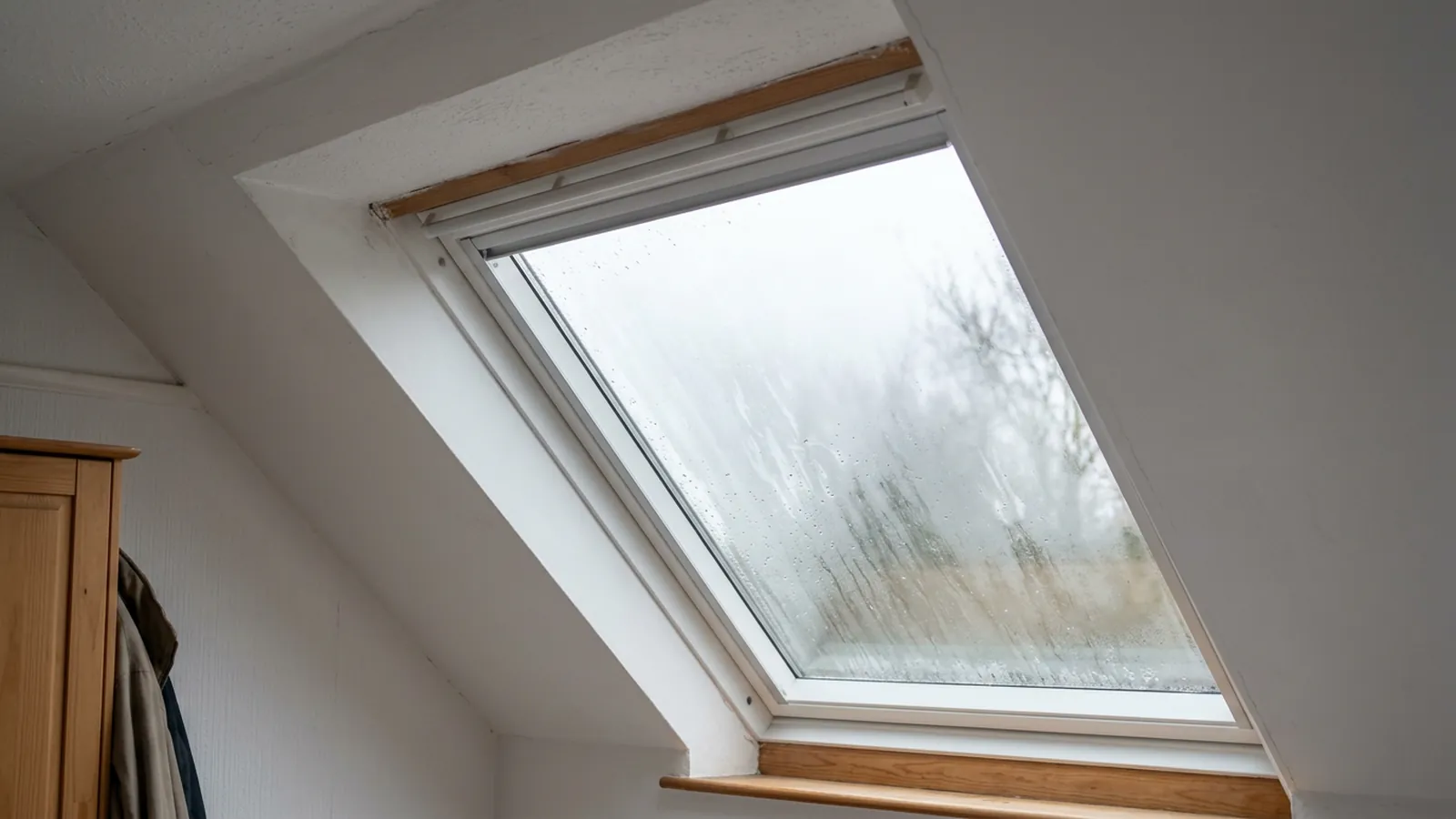
Two rooflights can look exactly alike on a cold morning: grey, beaded with water, the sky reduced to a blur. One needs nothing more than a cloth and a window left on the latch. The other has a sealed unit that has stopped doing its job, and no amount of wiping will bring it back. Telling them apart takes a couple of minutes, a dry cloth and a little patience, and it is worth doing before anyone books anything, because the answer changes what happens next.
This guide is about that one question: is the moisture on the glass, or inside it? It sets out the checks in the order a surveyor would make them, the signs that fool people, and what each result means for the skylight above your landing, loft room or kitchen.
Where the water sits is the whole answer
A modern rooflight is glazed with a sealed unit: two or three panes held apart by a spacer bar around the edge, with the gap between them sealed and filled with dry air or an inert gas. That gives the glass three places moisture can appear. It can form on the inner face, the one you can touch from the room. It can form on the outer face, the one the rain lands on. Or it can form in the cavity between the panes, where no cloth can reach.
The first two are surface condensation. They come and go with the weather and the way the room is used, and they say nothing bad about the unit. The third is different. Dry gas in a sealed cavity cannot produce water by itself, so moisture between the panes means the seal around the edge has let damp air in. That is a failed unit, and it is a one-way change: the unit will not dry out and stay clear on its own.
Water you can wipe away is the room talking; water you cannot reach is the glass giving up.
How a sealed rooflight unit works and fails
- Outer and inner glass panes, with the outer pane facing the weather
- Low-emissivity coating on one inner face, reflecting heat back into the room
- Warm-edge spacer bar holding the panes apart, filled with desiccant to soak up trace moisture
- Primary seal against each pane, backed by the secondary seal around the edge
- Dry sealed cavity, the insulating layer between the panes
- Broken edge seal: moist air gets in and the desiccant becomes saturated
- Mist and droplets trapped between the panes; they cannot be wiped off and the sealed unit needs replacing
- Inset: condensation on the room-side face of the glass is a ventilation or humidity issue, not a failed unit
The cloth test, step by step
You do not need tools for this. Pick a morning when the glass is misted, because a clear pane tells you nothing, and work through the checks in order.
- Wipe the room side. Use a dry, clean cloth on the inner pane. If the glass comes up clear and stays clear for a while, the moisture was on the inside surface.
- Look at what is left. If a haze or a band of droplets remains where you have just wiped, the moisture is not on the face you touched.
- Check the outside where you safely can. On a low flat roof over a single storey extension the outer face can sometimes be seen from a bedroom window. Dew on the outer pane on a clear, still morning is normal and burns off as the sun comes up. Never climb onto a pitched roof to check.
- Watch it through the day. Surface condensation fades as the room and the glass warm up. Mist trapped in the cavity tends to linger, shift with the sun, and return in the same place.
- Look along the edges. A failed seal tends to show first near the spacer bar: a milky line, a tide mark, or droplets hugging the frame on the inside of the glass.
If the pane wipes clear, you have a room problem, not a glass problem. If it will not, the unit has failed, and the rest of this guide will help you describe it accurately when you get in touch.
Side by side: the signs that separate them
The table sets the clues next to each other. No single row settles it on its own; the wipe test is the one that decides, and the others back it up.
| Clue | Room-side condensation | Failed sealed unit |
|---|---|---|
| Wipe with a dry cloth | Clears straight away | Nothing changes; the mist is behind the pane you touched |
| Timing | Worst on cold mornings, after showers, cooking or drying washing | Present in all weathers, sometimes clearer in dry spells, never fully gone |
| Pattern on the glass | Even film or beads across the whole inner face | Cloudy areas, streaks, a band near the edge, or white mineral marks inside |
| Other windows in the house | Often mist too, especially in the same room | Can be clear while this one stays cloudy |
| Runs onto the frame or sill | Yes, droplets gather at the bottom of the glass and drip | No, the water is trapped between the panes |
| Changes with ventilation | Improves when the vent is open or the extractor runs | Makes no difference |
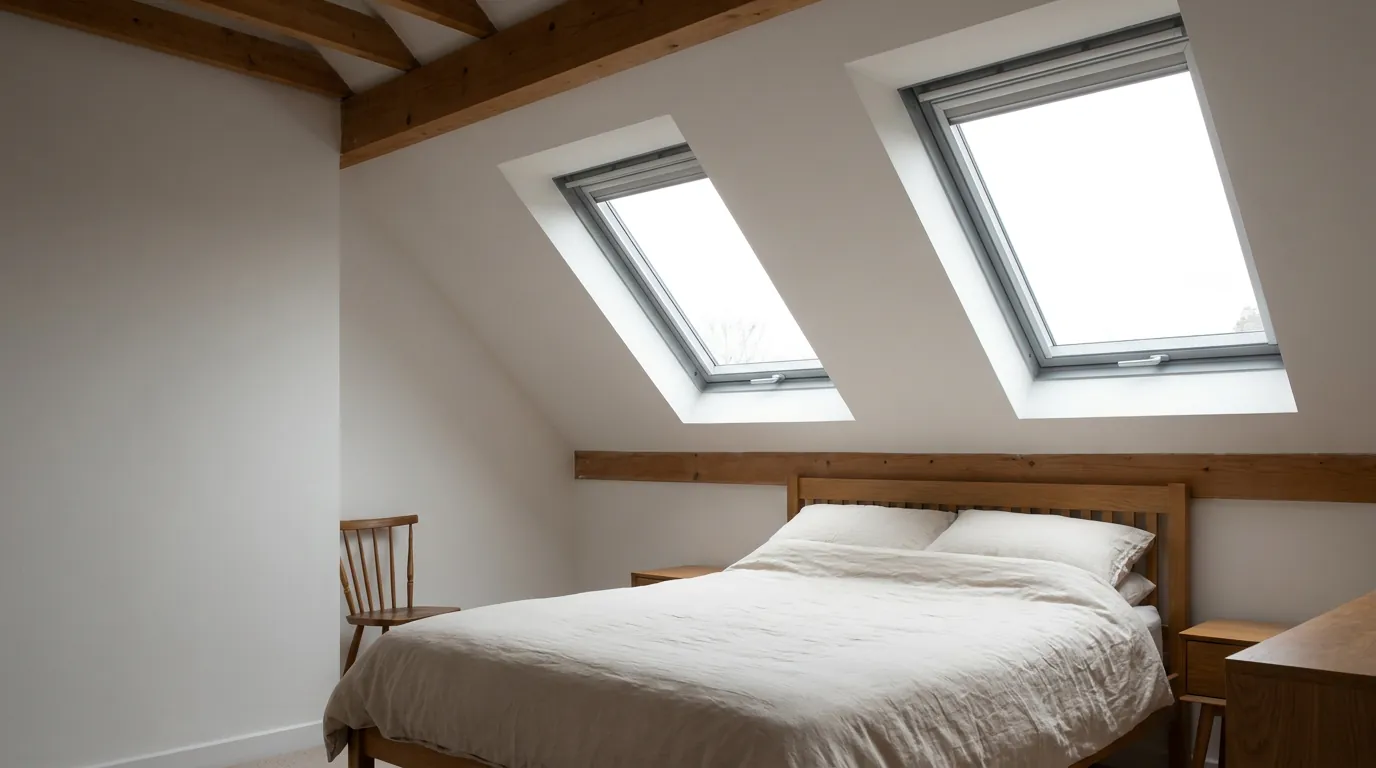
Why the room side of a rooflight mists up
Warm air carries moisture. When it meets a surface colder than its dew point, the moisture comes out as water. A rooflight sits in the coldest plane of the house, facing the open sky, and on a clear night the glass loses heat upwards faster than an upright window in a wall. So the inner pane of a skylight will often be the first surface in a room to mist, even when the rest of the house seems dry.
Where the rooflight is matters as much as how old it is. A roof window over a shower in a loft bathroom, a flat rooflight above an extension kitchen with the hob beneath it, or a Velux in a bedroom where clothes are dried on an airer: each puts a lot of warm, wet air right against cold glass. In the loft conversions common on trussed-rafter estates around Basingstoke, the new room is often small and snug under the slope, which concentrates moisture from people sleeping in it overnight.
Room-side condensation on a newer unit is not a sign the glass is poor. A well insulated pane actually runs warmer on the inside face than an old single-glazed dome, so it tends to mist less, not more. If a new rooflight mists on the room side, look at the air in the room before looking at the glass.
Why a sealed unit fails from the inside
The edge seal is what keeps the cavity dry. Over time it is worked by sun, frost and the daily swelling and shrinking of the glass and frame, and a rooflight gets more of all three than a wall window does. A desiccant inside the spacer bar soaks up the small amount of moisture that creeps in; once that is saturated, mist starts to show between the panes.
That is only a summary. The full story, including why flat and pitched units age differently, is in the guide on why a rooflight mists between the panes. For this question, one point matters: a unit that has misted inside has already lost its seal, and nothing done from the room will change that. Products sold to clear the cavity are covered in the short answer on whether misted rooflight glass can be cleared.
Things that look like a failed unit but are something else
A few signs send people looking at the glass when the cause sits somewhere nearby. Each deserves its own look, because the fix is different.
Water dripping from the frame
Drips gathering on the bottom rail of a roof window and running down the lining are, on a cold morning, far more likely to be room-side condensation running off the glass than anything passing through the unit. The answer to whether dripping water always means a failed unit walks through how to tell which you have.
Stains on the ceiling or lining
Brown rings on plasterboard around the opening, or a swollen timber lining, point at the flashing, the frame joint or years of condensation soaking in, not at the cavity between the panes. Reading those marks properly is the subject of the guide on water staining around an old rooflight.
Dark spots in the reveal
Black mould in the corners of the lining grows on surfaces that stay damp. It is a condensation clue, and a strong one. The answer on black mould round a rooflight explains why the reveal is where it starts.
Scratches, film and dirt on the outside
An older polycarbonate dome can go cloudy with age and weathering. That is a different kind of wear from a misted glazed unit, and the dome itself is the thing to change.
When both are happening at once
A failed unit and a damp room are not either/or. An older rooflight with a tired seal can also sit in a bathroom with no extractor, and then the glass is misted on the inside surface and in the cavity at the same time. Wiping clears one layer and leaves the other, which can make the result confusing.
The rule: a pane that stays cloudy after a dry wipe has failed, whatever else is going on in the room. The exception: if the haze you are left with is on the outer face, from dew or dirt, the cavity may still be sound. Check the outside where it can be seen safely, or leave it for the survey, before deciding the unit has gone.
When both are present, deal with both. A new sealed unit or a new rooflight will be clear between the panes, but if the room still produces the same moisture, the new inner pane will still mist on cold mornings and the reveal will still grow mould. The glass and the ventilation are two jobs, and fixing one does not fix the other.
Timing, weather and season
When you look matters. Room-side condensation peaks on the first cold, clear nights of autumn, when the heating comes on and windows stay shut. It eases through a mild, breezy spell. Cavity mist in a unit that has only just started to fail can do something similar, appearing on cold mornings and fading on warm afternoons, which is why a single look can mislead.
A sensible approach is to note the pattern for a week or two: the time of day, the weather, whether the wipe cleared it. That diary is useful at a survey, and it also shows whether a slow failure is getting worse. A unit in its early stages may show a faint haze only near one edge; later the mist spreads, and white deposits can dry onto the inside of the glass when the moisture evaporates and condenses again.
What to do about room-side condensation
If the cloth test cleared the glass, the answer lies in the air, not the rooflight. Most of it is simple.
- Keep the ventilation flap or trickle vent on the roof window open, especially overnight in bedrooms and loft rooms.
- Run the bathroom or kitchen extractor during and after showers and cooking, and leave the door closed while it clears.
- Avoid drying washing on airers directly under the skylight.
- Keep blinds from being pulled tight against cold glass for long periods, which traps a cold, damp layer.
- Give the heating time to warm the room evenly rather than in short bursts.
If a rooflight in a wet room has no opening function and the room has little other ventilation, an opening or vented unit may be the better long term choice when the time comes to replace it. That is a design decision rather than a quick fix, and the options for performance glazing are set out under energy efficient rooflights.
What a failed unit means next
If the mist is between the panes, the choice is between replacing the sealed unit alone and replacing the whole rooflight. That depends on the make, the age of the frame, whether a matching unit is still made, and the state of the flashing and seals around it. The guide on replacing the sealed unit or the whole rooflight covers how that call is made, and the wider picture, including how a replacement slots into the existing opening, sits on the misted and failed rooflight replacement service page.
A failed unit is not usually urgent in the way a broken pane is. It lets in less clear light and it insulates less well, but the outer glass still keeps the weather out. That gives you time to plan, to pick a dry spell, and to decide whether this is the moment to upgrade the size, the opening type or the glazing. The short answer on how to know whether a rooflight has failed lists the other signs worth noting before a visit.
Bringing it to a survey
Whatever the cloth test showed, a look at the roof confirms it. At the survey the glass, frame, flashing and lining are checked together, the room is considered as well as the rooflight, and the written quote that follows says plainly whether the work is a new unit, a new window in the same opening, or advice on ventilation. Replacement work carries a 10-year workmanship guarantee, which is not insurance backed, and if the job is notifiable the Building Control side is dealt with as part of it.
For the whole range of roof glazing across the borough, the skylight and rooflight specialists for Basingstoke page is the place to start. If you already know the glass has gone cloudy for good, you can arrange a survey of the misted rooflight, or read more on the failed rooflight replacement page first.