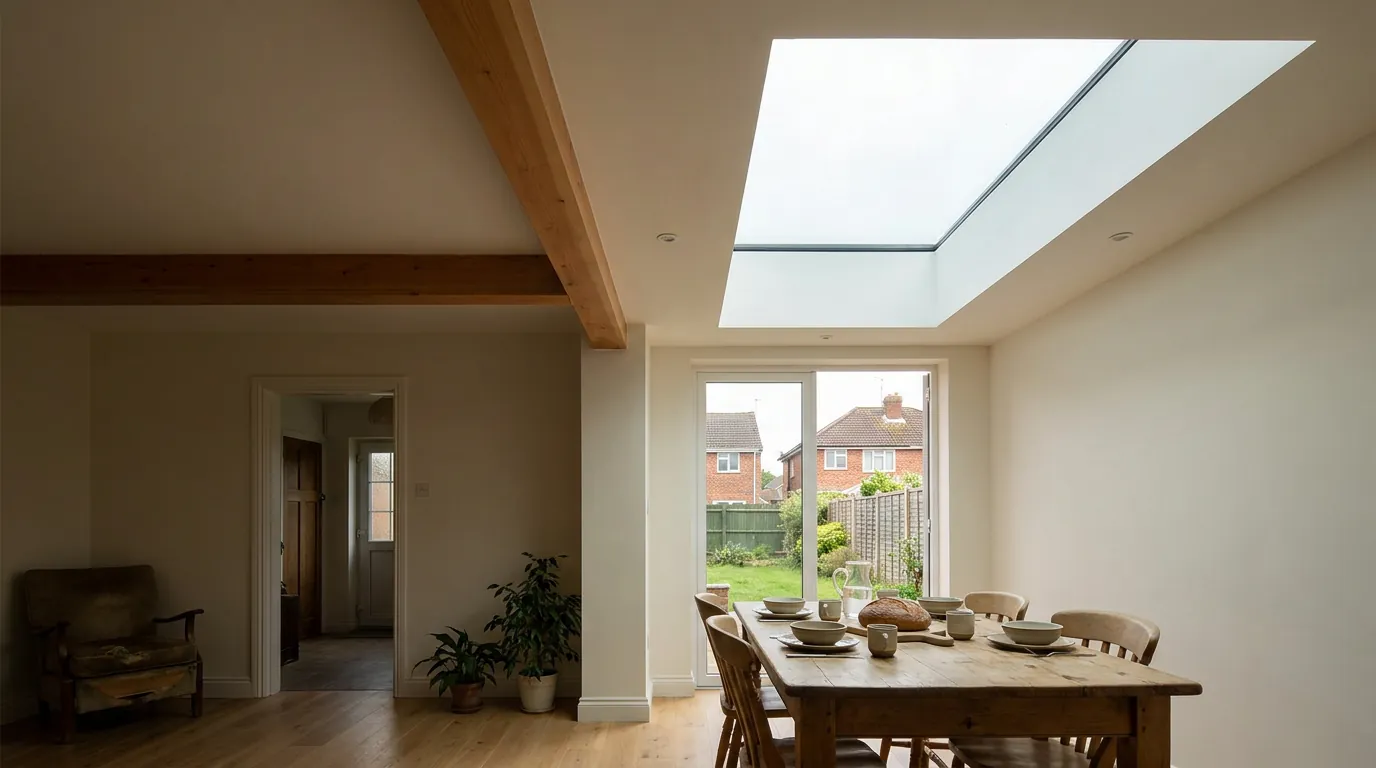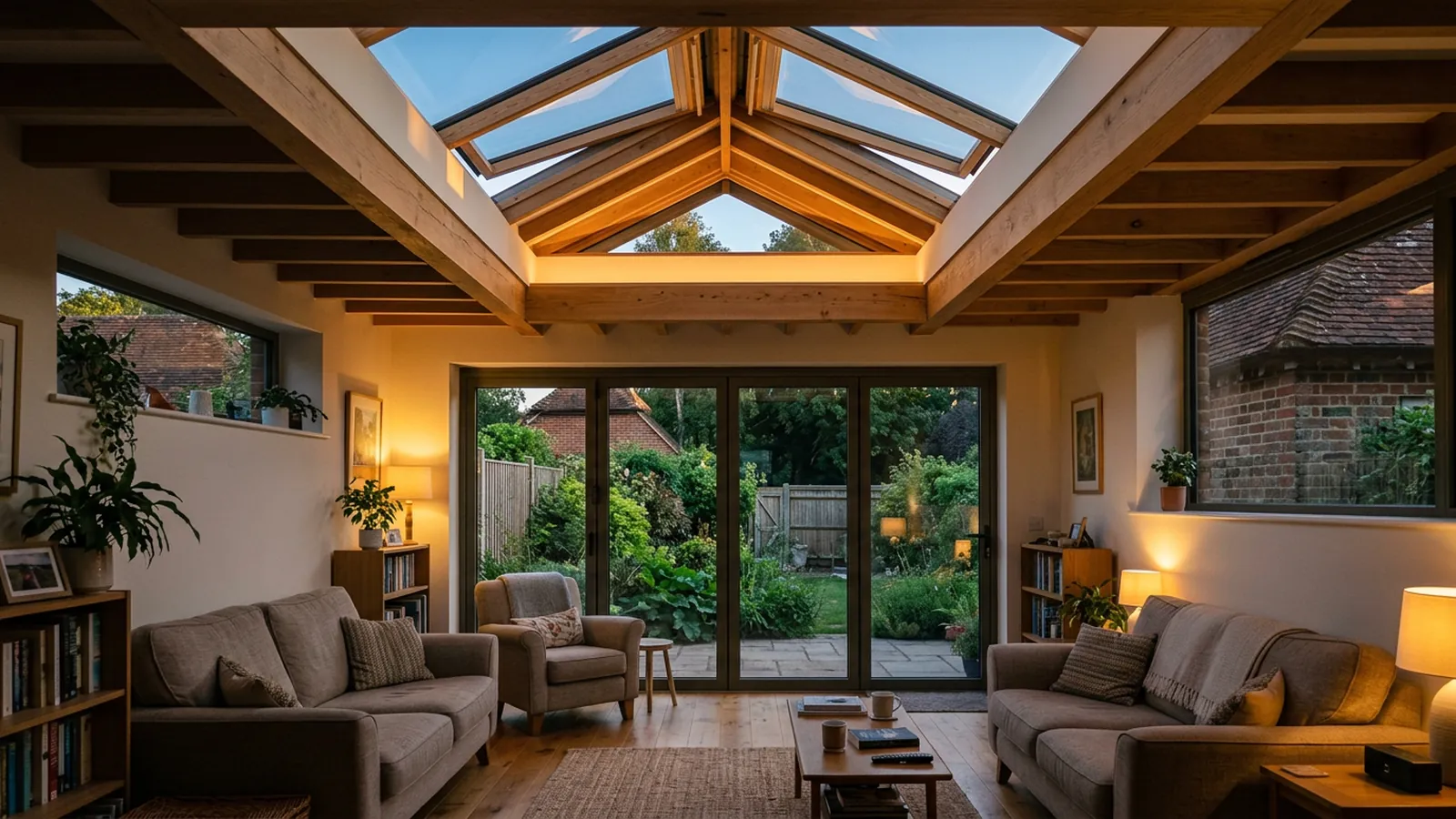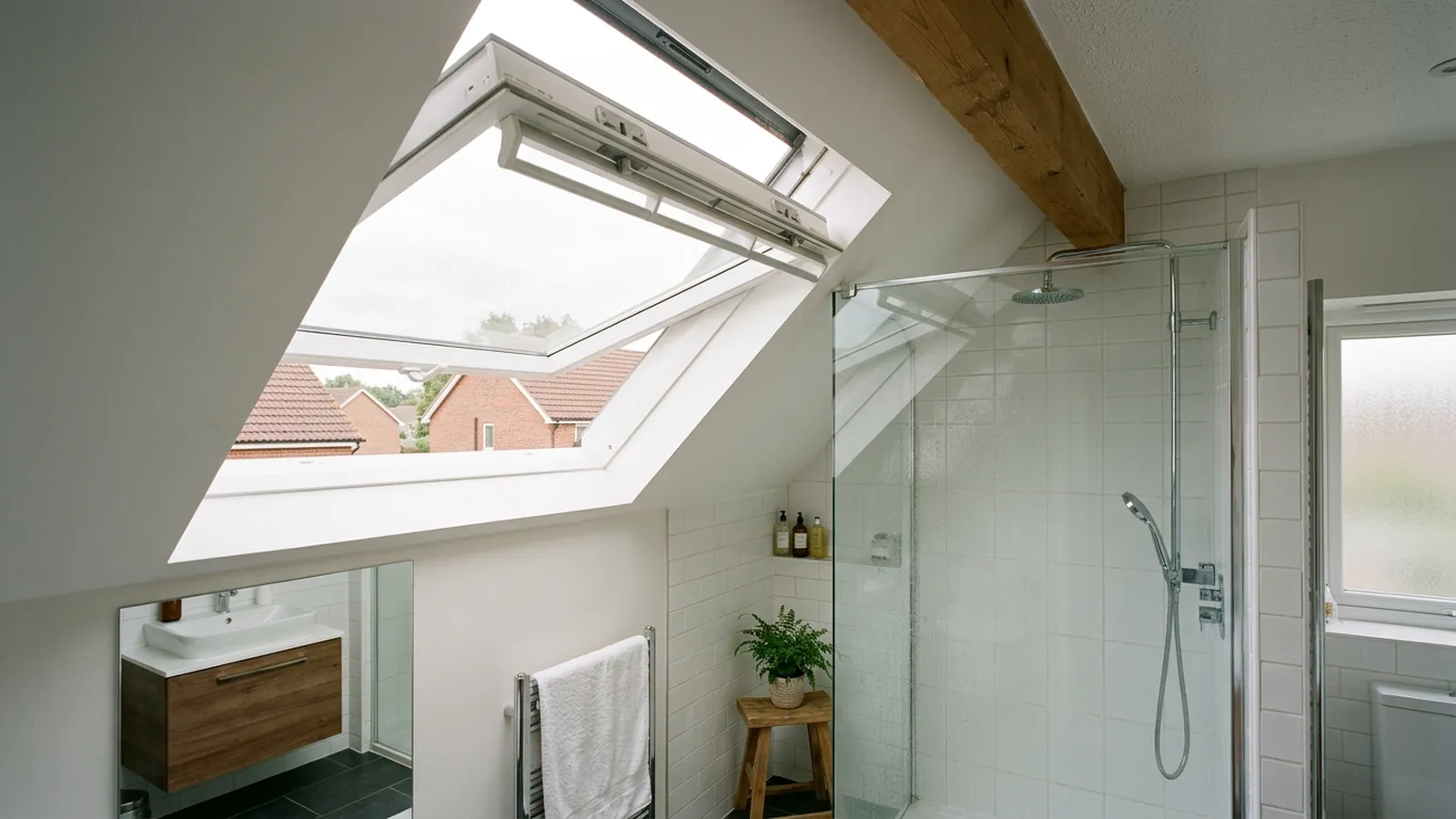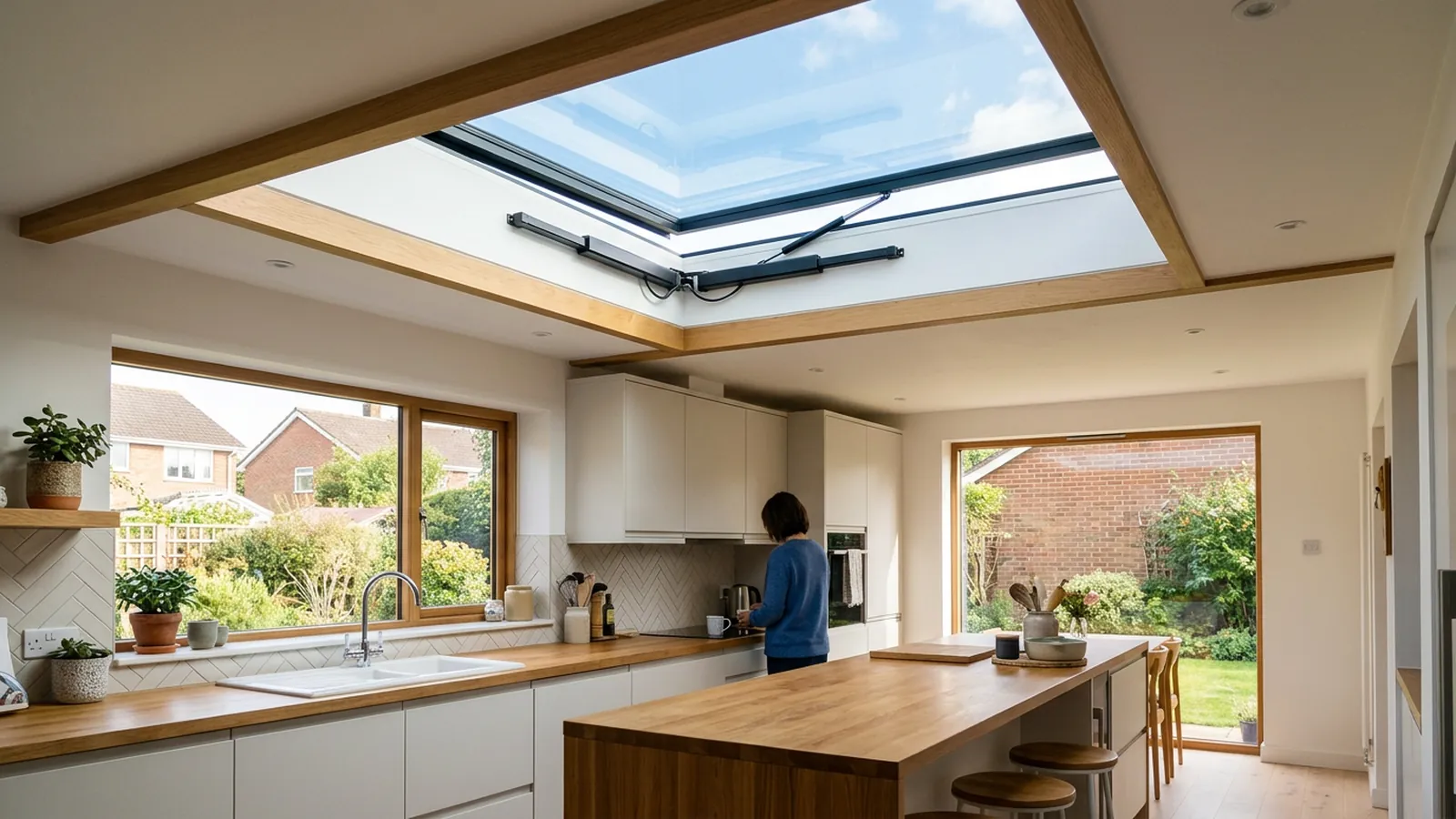
The control is the part you touch every day, so it is worth choosing as carefully as the glass. Our electric and opening rooflight installation work settles the control layout at survey, before anything is ordered, because where the keypad sits and how the power reaches the motor are decided at the same time. This page walks through each way of working the window, what it suits, and how they sit together in one room.
The wall keypad: the everyday control
A keypad fixed to the wall near the door is the simplest arrangement to live with. Open, stop and close buttons, sometimes a row of presets, and it is always in the same place. Some keypads are wired back to the control unit; others are battery-powered radio units stuck or screwed to the wall, which means no new cable run through a finished plaster wall.
In a loft bedroom on a Brighton Hill or Lychpit semi, the natural spot is beside the light switch at the top of the stairs, so the skylight can be shut on the way to bed without crossing the room. On a stairwell, it usually belongs on the landing, within reach of whoever is last up.
The rule: put the keypad where you stand when you want the window to move, not where the wiring is easiest. The exception: a radio keypad can go almost anywhere in range, so the wiring route stops being the thing that decides it.
How rooflights and roof windows open
- Centre-pivot sash, turns so the lower edge tips out and the top swings in, handy for cleaning from inside
- Pivot point, the hinge line across the middle of the sash
- Top-hung sash, swings outward clear of the opening for a wider view
- Top hinge, where the sash is hung from the head of the frame
- Fixed rooflight, glazing sealed to the upstand with no moving parts
- Electric opening rooflight, the glazed lid lifts from one edge for ventilation
- Motorised chain actuator, pushes the lid open and draws it closed
- Rain sensor, closes the rooflight automatically when it starts to rain
The handheld remote
A handheld remote does the same job as the keypad but travels with you. It suits a kitchen extension where the rooflight is over the island and you want to crack it open from the sofa end, or a bedroom where you would rather not get up. The trade-off is plain: a remote gets lost down the side of a cushion, and a keypad does not. So the sensible layout keeps a fixed keypad as the main control and adds a remote as an extra, never as the only way to work the window.
A remote talks to the rooflight by radio, so it works through the ceiling lining and does not need to be pointed at anything. One remote can drive more than one window, and several windows can be grouped so that one press closes the lot, which is useful on a flat roof with a pair of opening units over one room.
Phone apps and smart home hubs
An app adds a third layer: schedules, scenes and control from outside the house. It usually needs a small hub or gateway plugged in somewhere with a Wi-Fi signal, which then passes commands to the window over the maker's own radio system. Once that is in place, the rooflight can open for an hour on a summer morning, close at a set time, or be shut from the office when the forecast turns.
How the hub links to the rest of a smart home, and which platforms each system talks to, is covered in our guide to app and smart home control of opening rooflights. If voice is what you are after, our answer on whether an electric rooflight works with a smart speaker deals with that directly.
Sensors that act on their own
Some control needs no hand at all. A rain sensor on the frame detects water on its surface and tells the motor to close, and it overrides every other instruction while it is wet. Depending on the system, temperature, humidity or air quality sensors can open the sash when the room gets warm or steamy and close it again once it recovers. On a hot loft room in a trussed estate house, that turns the skylight into something that looks after itself through a July afternoon.
| Control | Best for | Worth knowing |
|---|---|---|
| Wall keypad | Daily use from a fixed spot, such as a landing or bedroom door | Wired or battery radio; position it where you stand |
| Handheld remote | Rooms where you sit away from the wall, such as a kitchen extension | Radio, so no line of sight; can group several windows |
| App and hub | Schedules, scenes and closing it from away from home | Needs a gateway on your Wi-Fi |
| Sensors | Closing for rain and venting heat or steam without anyone there | A rain sensor overrides the other controls while wet |
Whether the sash can safely stay open through a shower, and what the sensor does about it, is answered in can an opening rooflight be left open in the rain?
What powers the controls
The control method and the power source are separate choices. A mains-powered rooflight takes a spur to a control unit, usually hidden in the lining or the loft void, and the keypad or remote simply sends it signals. A solar-powered unit carries a small panel and battery on the frame, so no cable runs into the room, and it pairs with a radio keypad or remote in the same way. Where the cable goes, and who connects it, is set out in the guide to wiring, power and where the controls go.
It is also worth knowing what the window does when the power drops. Our answer on whether an electric rooflight has a manual override explains how the sash can still be closed by hand.
Choosing a control layout for your room
Start with how the room is used, then match the controls to it. A loft bedroom out of reach wants a keypad by the door and a rain sensor, so it can be left open overnight without worry. A flat roof skylight over a kitchen wants a remote as well, because the cook is rarely by the wall. A home office in the roof might add an app, so the rooflight can be shut from a train. At the survey we note the room, the ceiling height, the path of any cable and where the Wi-Fi reaches, then put a specific layout in the written quote, and the fitting itself sits under our 10-year workmanship guarantee.
If you already know which room it is for, arrange a survey of the roof and we will set out the control plan alongside the window itself.