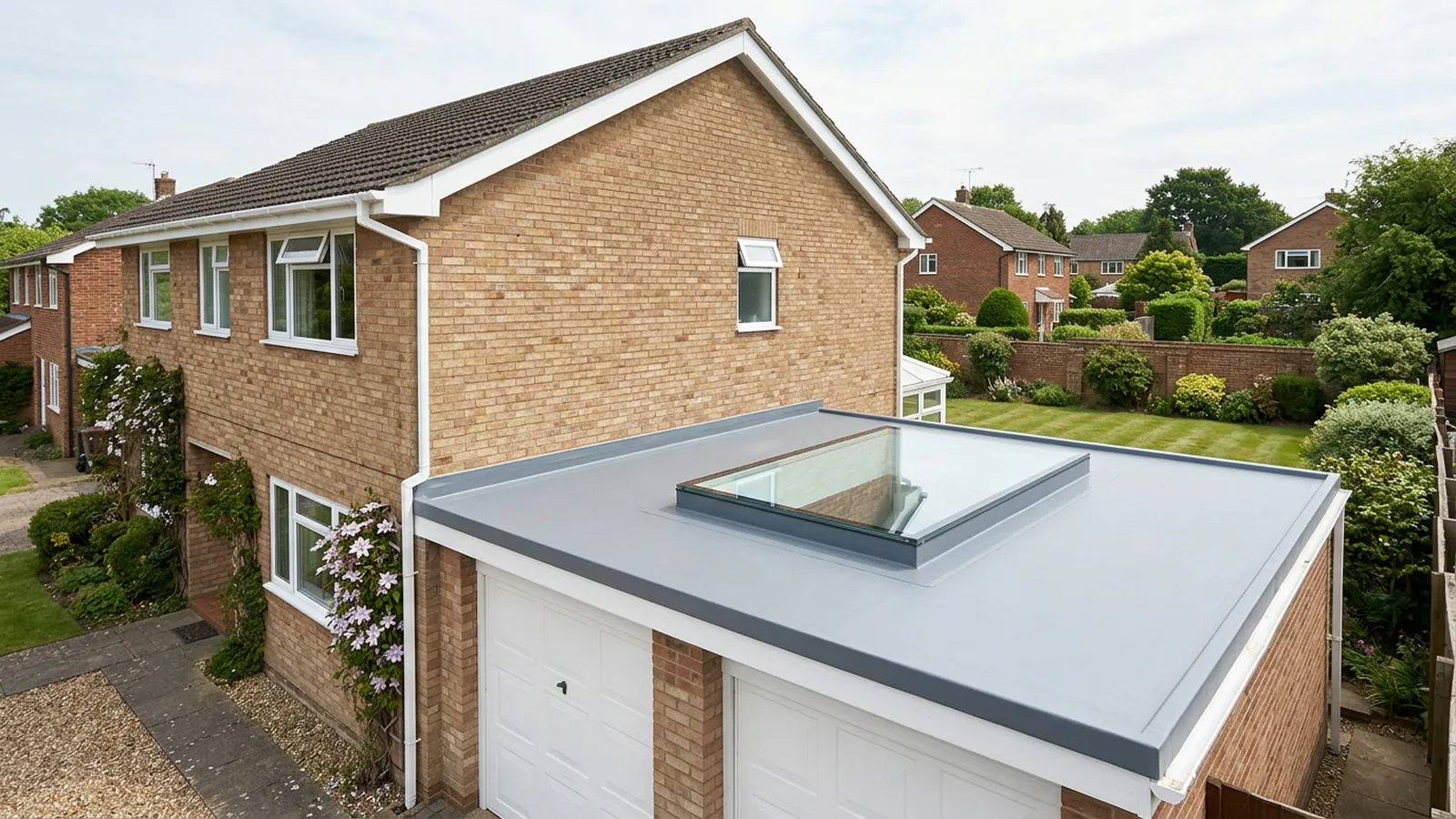
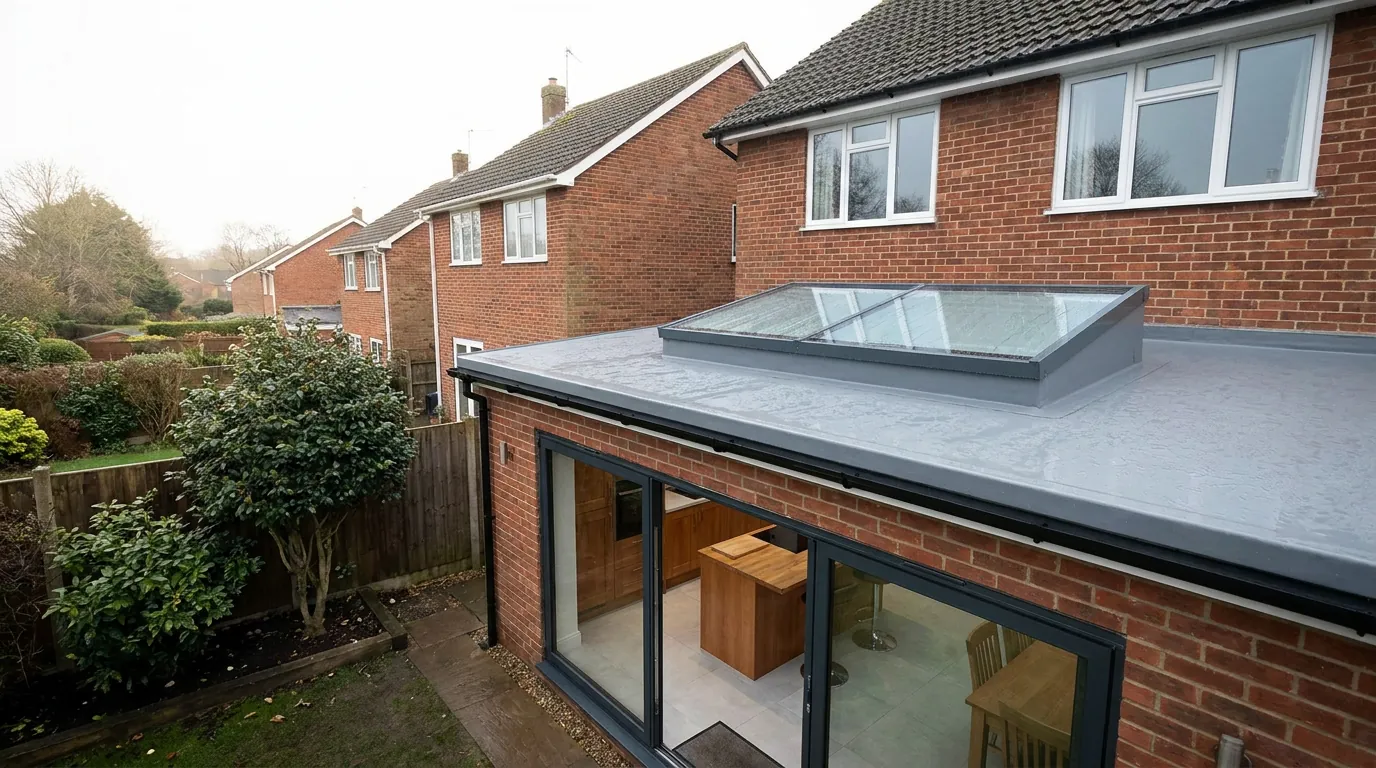
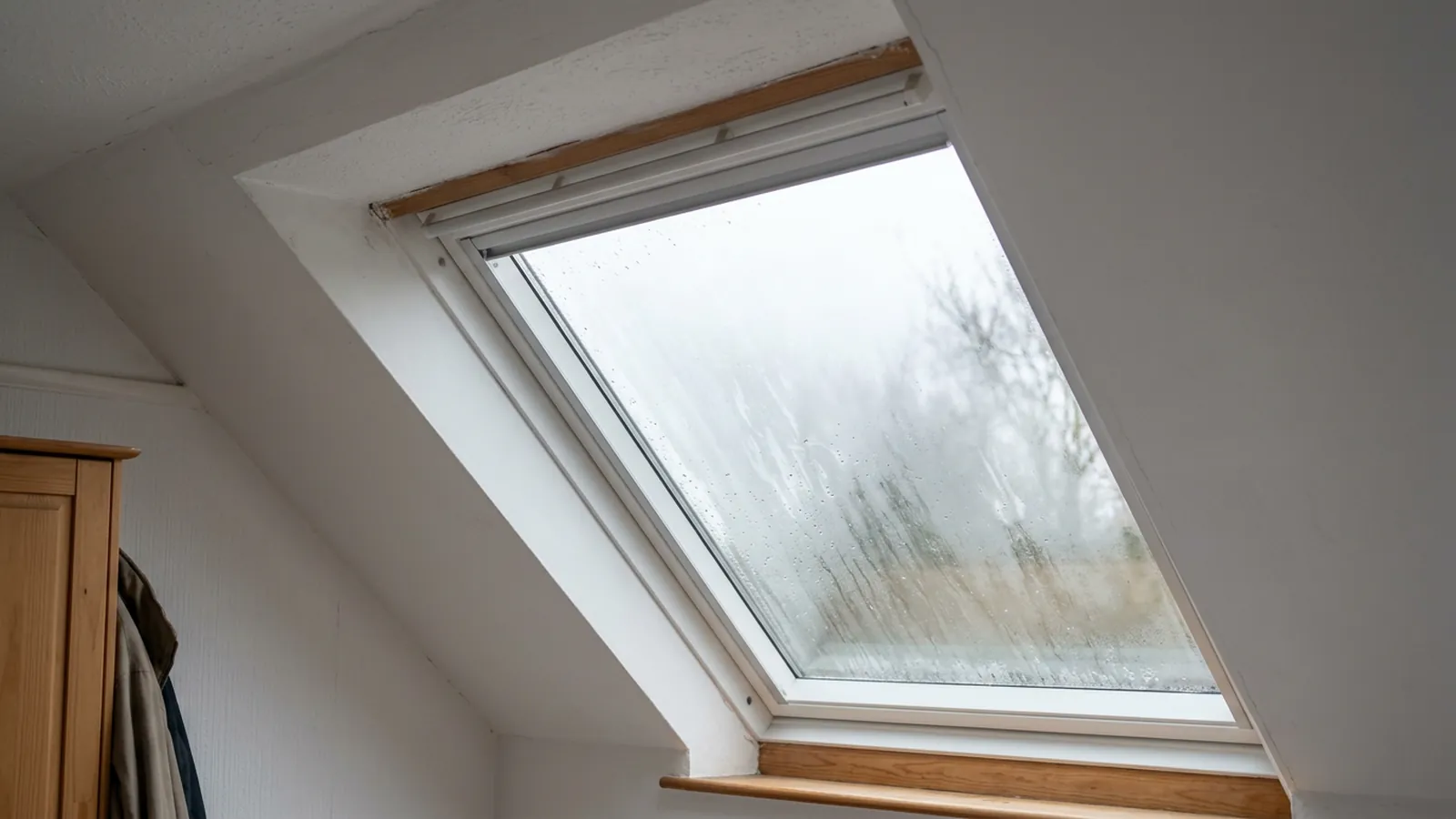
A crack across a rooflight is one of those things you notice at an odd moment: lying in bed in a loft room, or glancing up from the kitchen sink under a flat roof extension. A line has appeared in the glass that was not there last week. Nothing has fallen, the room is dry, and the obvious question is what you are meant to do now. This guide walks through the next few days in order: how to read the crack, what to do straight away, what can wait, and how a cracked unit is replaced without turning it into a bigger job than it needs to be.
It is written for the kind of roofs found around Basingstoke: roof windows in the trussed roofs of estate houses and loft conversions, flat rooflights and lanterns on single storey extensions, and the occasional older skylight or plastic dome that has been up there since the house was new. The replacement itself belongs to our misted and failed rooflight replacement service; this page is about getting from the moment you see the crack to the moment the new glass is in.
First, which pane has cracked?
A modern rooflight is rarely a single sheet of glass. A roof window or a flat rooflight usually carries a sealed double or triple glazed unit: two or three panes held apart by a spacer bar round the edge, with a sealed cavity between them. The crack you can see could be in the outer pane, the inner pane, or both, and the answer changes almost everything that follows.
Run a clean fingertip gently over the inside face of the glass near the line. If the room side feels perfectly smooth and the crack still shows, the break is in the outer pane or a middle pane. If you can feel the edge of the crack from inside, the inner pane is broken. Do not press on it; a light touch is enough. From a loft room you can often see the crack sitting at a different depth when you move your head from side to side, which is another way to place it.
Older skylights work differently. A moulded plastic dome on a flat roof does not crack like glass. It crazes into a web of fine lines, turns brittle and cloudy, and eventually splits. A single glazed timber roof light from an older house may simply have one cracked pane in a putty or bead frame.
How a sealed rooflight unit works and fails
- Outer and inner glass panes, with the outer pane facing the weather
- Low-emissivity coating on one inner face, reflecting heat back into the room
- Warm-edge spacer bar holding the panes apart, filled with desiccant to soak up trace moisture
- Primary seal against each pane, backed by the secondary seal around the edge
- Dry sealed cavity, the insulating layer between the panes
- Broken edge seal: moist air gets in and the desiccant becomes saturated
- Mist and droplets trapped between the panes; they cannot be wiped off and the sealed unit needs replacing
- Inset: condensation on the room-side face of the glass is a ventilation or humidity issue, not a failed unit
Reading the crack: what the pattern tells you
The shape of the break says a lot about the glass and about what caused it. Look at it from indoors before anyone goes near the roof.
| What you see | What it usually means | What happens next |
|---|---|---|
| A single line running in from the edge of the pane | Often a stress crack: the glass was held too tightly, the frame moved, or one part of the pane was far warmer than the rest | The sealed unit is replaced; the survey checks whether the frame or the fixing caused it, so the new unit is not put under the same strain |
| A star or spider pattern from one point | An impact: hail, a falling branch, a stone, something dropped on a flat roof | Check nothing is still resting on the glass; the unit is replaced and the surrounding flashing looked over for damage from the same knock |
| A pane of small granules still held in place | Toughened glass that has broken, but is being held by the other panes or the frame | Keep the space below clear until it is replaced; do not tap or press it |
| Cracks held together by a clear film, pane still in one piece | Laminated glass doing its job: the interlayer is holding the broken pieces together | Safe to leave in the short term while the replacement is arranged, though the unit is still due for replacing |
| Fine crazing and cloudiness across a plastic dome | An old polycarbonate or acrylic dome that has aged in the sun | The whole skylight is replaced, usually with a glazed flat rooflight on a new or reused kerb |
None of this replaces someone looking at the actual unit, but it helps you describe it clearly when you get in touch, and it tells you how calmly you can treat the next few days.
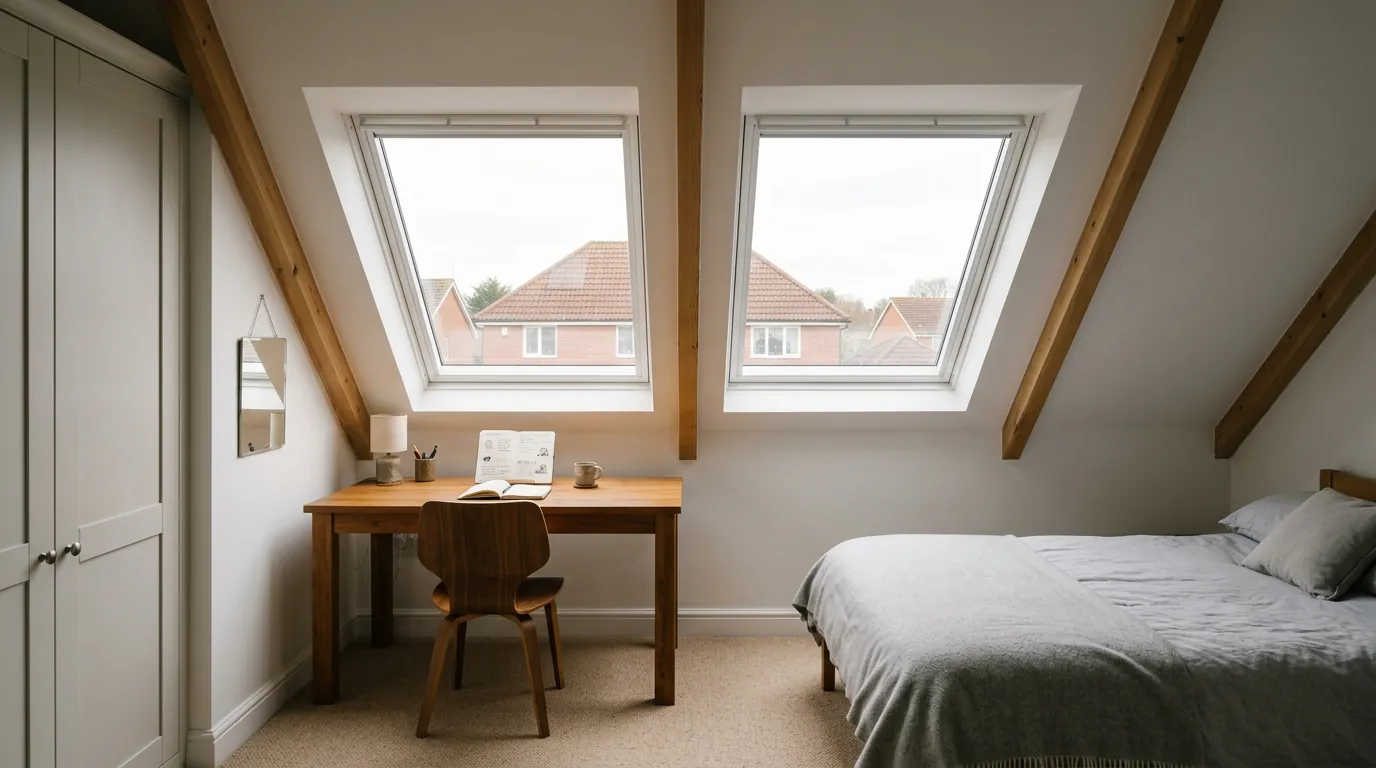
What to do on the day you notice it
The first hours are about keeping everyone safe and keeping a clear record. None of it involves going onto the roof.
- Keep the area below clear. If the crack is in the inner pane, or you cannot tell which pane it is in, move the bed, the high chair or the kitchen stool out from underneath until you know more. A laminated inner pane is designed to stay put when it breaks, but you do not yet know what you have.
- Stop opening it. If it is an opening roof window or an electric rooflight, leave it shut. Opening and closing a cracked sash flexes the glass and can lengthen the crack. On an electric unit, switch off the automatic rain or ventilation setting so it does not open by itself.
- Take pictures from inside. Photograph the crack from a couple of angles, plus the whole window, plus any label on the frame. Roof windows usually carry a data plate on the frame when the sash is open, or on the sash edge; if the sash will not open safely, leave it and photograph whatever is visible.
- Look for anything that caused it. From a window or the garden, check whether a branch, a slipped tile or anything else is lying on or above the rooflight. Do not climb up to move it.
- Check the room is dry. A crack in the outer pane of a sealed unit rarely lets rain straight in, because the inner pane is still whole. Look at the reveal and the ceiling round the window after the next shower.
- Get it booked in. Send the photographs through or ring us, and the survey can be arranged around the weather.
The rule: stay off the roof. Trussed estate roofs, steep tiled slopes and flat roofs over extensions all look easy from below. A rooflight with a cracked pane is not something to stand on or lean on, even a walk-on unit, until someone has looked at it. The exception is a unit you can reach entirely from inside the room, such as a sash you can see and photograph from a stepladder on a flat floor.
How long a cracked rooflight can wait
Whether a crack is urgent depends on which pane it is in and what that pane is made of. A crack in the outer pane of a double glazed unit, with a whole inner pane beneath it, is weathertight for now, but the sealed cavity has been opened to the air. Moisture gets in and the unit will start to mist from the inside, which is the same failure described in why a rooflight mists between the panes, only started by a knock instead of age.
A broken inner pane over a room is the one to move quickly on, because it is the pane between the glass and the people below. A crazed plastic dome that is splitting is the one most likely to let water in during the next storm. We go through these cases one by one in how long can a cracked rooflight wait?, so this page does not repeat the detail.
A crack is a timetable, not a crisis: which pane has broken decides how soon, and the survey decides how.
Why rooflight glass cracks in the first place
Knowing the cause matters because it decides whether new glass alone is enough. Glass in a roof has a harder life than glass in a wall. It sits nearly flat to the sky, it takes the full heat of a summer afternoon and the cold of a clear night, and it carries hail, leaves and standing water.
Impact
Hailstones, a branch from a garden tree, a dropped tool during other roof work, or a ball on a flat roof extension. Impact breaks usually show a point of origin with lines running out from it.
Thermal stress
If part of a pane is shaded and part is in strong sun, or a blind or a heavy frame edge traps heat against one area, the glass expands unevenly. A crack that starts at the edge and wanders across the pane is the classic sign. It is why the survey looks at where blinds sit and whether anything shades part of the glass.
Frame and roof movement
A rooflight kerb that has twisted, a frame fixed out of square, or timber that has moved over the years can pinch the glass at one corner. On an older roof window in a 1980s estate house, a sash that no longer closes evenly can put the same strain on the pane. If this is the cause, new glass in the same frame would crack again, which is why the next section matters.
Glass only, or the whole rooflight?
Once the cracked pane is identified, there are two routes. The first is a new sealed unit in the existing frame. The second is a complete new rooflight in the same opening. Which one is right depends on the frame, not the crack.
A new unit makes sense when the frame is sound, square and still available with matching glass from its maker, and when the cause of the crack was an outside knock rather than something in the frame. Many branded roof windows have replacement panes made for them, which we cover in misted VELUX glazing and the replacement pane route and more briefly in can just the glass be replaced in a VELUX?
A whole new rooflight is the better answer when the frame is tired, when the seals and gaskets have perished, when replacement glass for that model is no longer made, or when a stress crack points to a frame that is holding the pane badly. It is also the only answer for a crazed plastic dome. The full comparison, including what each route involves inside the room, sits in replacing the sealed unit or the whole rooflight.
| Question | New sealed unit | Whole new rooflight |
|---|---|---|
| When it suits | Sound frame, impact crack, glass still made for that model | Tired frame, stress crack from movement, obsolete model, plastic dome |
| Work on the roof | Often little or none; many roof window panes change from inside | Flashing and roof covering round the frame are lifted and relaid |
| Inside the room | Lining and plaster left alone | Some making good round the lining, depending on the size match |
| Building Control | Glass alone is not usually notifiable | Replacing the window itself is notifiable work |
Infographic
How a rooflight job runs, from survey to guarantee
Roof survey
We look at the structure, the covering and the room below before anything is priced.
Specification
A size, type and position that fits your roof, and whether the work is notifiable.
Paperwork
Building Control notified where the work needs it, and planning checked where it applies.
Installation
Opening formed, frame fixed, flashed or dressed in, then lined and finished inside.
Sign-off and guarantee
Completion paperwork where needed and a 10-year workmanship guarantee.
What the survey looks at
We look at the roof before quoting for any replacement, and a cracked pane is no exception. On the day, the surveyor identifies the make and model from the frame or data plate, checks which pane has broken and what kind of glass it is, and measures the frame. On a roof window in a trussed estate roof, the trusses either side are looked at too, because a like-for-like size keeps the new frame between the same trusses without any change to the structure.
The survey also looks for the cause. A crack from an overhanging branch needs a word about the tree. A crack from frame movement needs the frame or the kerb put right, which usually means the whole unit. On a flat roof, the kerb, the upstand and the roof covering round it are checked, because a knock hard enough to break glass can also disturb the flashing. Where the replacement has to match the old opening exactly, the detail is in replacing a failed rooflight in the same opening.
You then get a written quote that says which route we recommend and why, what glass goes in, and what happens inside the room.
Choosing the replacement glass
A crack is a chance to put the right glass overhead, not just the same glass. Over a room where people sit or sleep, a laminated inner pane is the standard choice for roof glazing: if it ever breaks, the pieces stay bonded to the interlayer instead of falling. A toughened outer pane stands up better to hail and temperature swings. If the cracked unit was ordinary float glass on the inside, the replacement is specified differently.
The same visit is the moment to think about the pane's other jobs. A triple glazed unit, a solar control coating on a south facing flat rooflight over a kitchen, or a self cleaning outer coating on a low pitch where dirt settles can all be chosen now for little extra disruption. On a walk-on unit in a terrace or balcony, the glass specification is set by the loading, and that is handled on the walk-on rooflight side of the work.
Paperwork, weather and timing
Swapping only the glass in an existing frame is not generally treated as notifiable work. Replacing the whole roof window or rooflight is, because it has to meet the current thermal standard. Where it is notifiable, we submit the Building Control notification ourselves and pass you the certificate. The short version for your situation is in does replacing a failed rooflight need Building Regulations?
Replacement glass for a roof window or a sealed unit for a flat rooflight is usually made to order, so there is a gap between the survey and the fitting day. If the crack is in the outer pane and the room is dry, that gap is simply a wait. If the inner pane has gone or a plastic dome has split, the survey covers what to do in the meantime so the room stays safe and dry. Fitting itself is planned around dry weather, especially where flashing is lifted, as explained in replacing a failed rooflight around the weather and the season.
If water appears before the new glass arrives
A drip under a cracked rooflight does not always come through the crack. Condensation running off the cold inner pane, water tracking down from worn flashing, or a blocked gutter on a lantern can all put water on the floor, and a crack can be a coincidence. Put a towel or a bowl down, keep electrics nearby dry, and send us a photograph of where the water lands. Is water dripping from a rooflight always a failed unit? explains how to tell the sources apart, and the answer changes what the fitting day involves.
After the new glass goes in
When the new unit or rooflight is fitted, the surveyor's findings about the cause should have been dealt with too: the branch cut back, the frame squared, the kerb corrected or the blind moved. You get the glass specification in writing, which helps if you ever need a matching pane again. The work is covered by our 10-year workmanship guarantee, which is not insurance backed and comes from us directly. If a cracked pane has made you wonder about the rest of the house, the wider picture of rooflight and skylight replacement around Basingstoke starts on the homepage.
To get the cracked pane looked at and a written recommendation, book a roof survey, or read more about replacing a failed or misted rooflight first.