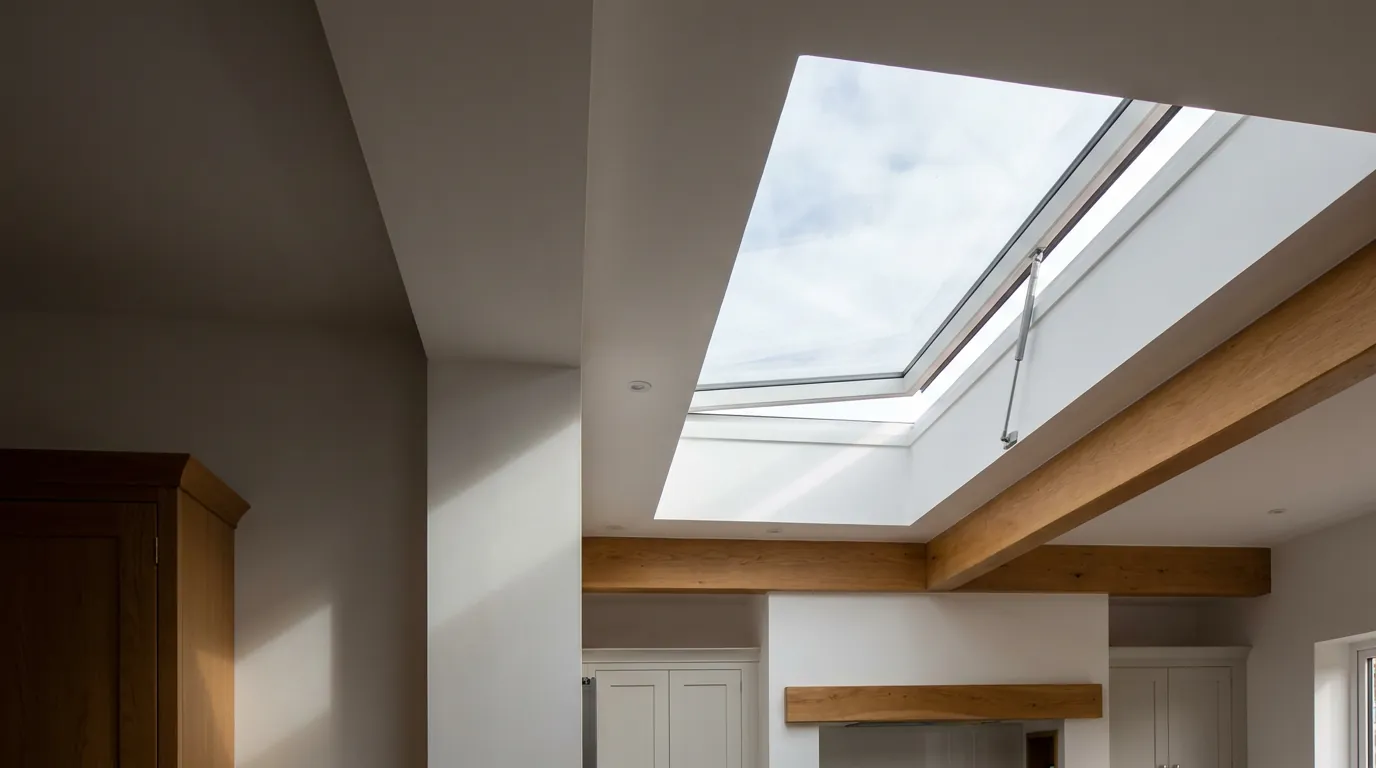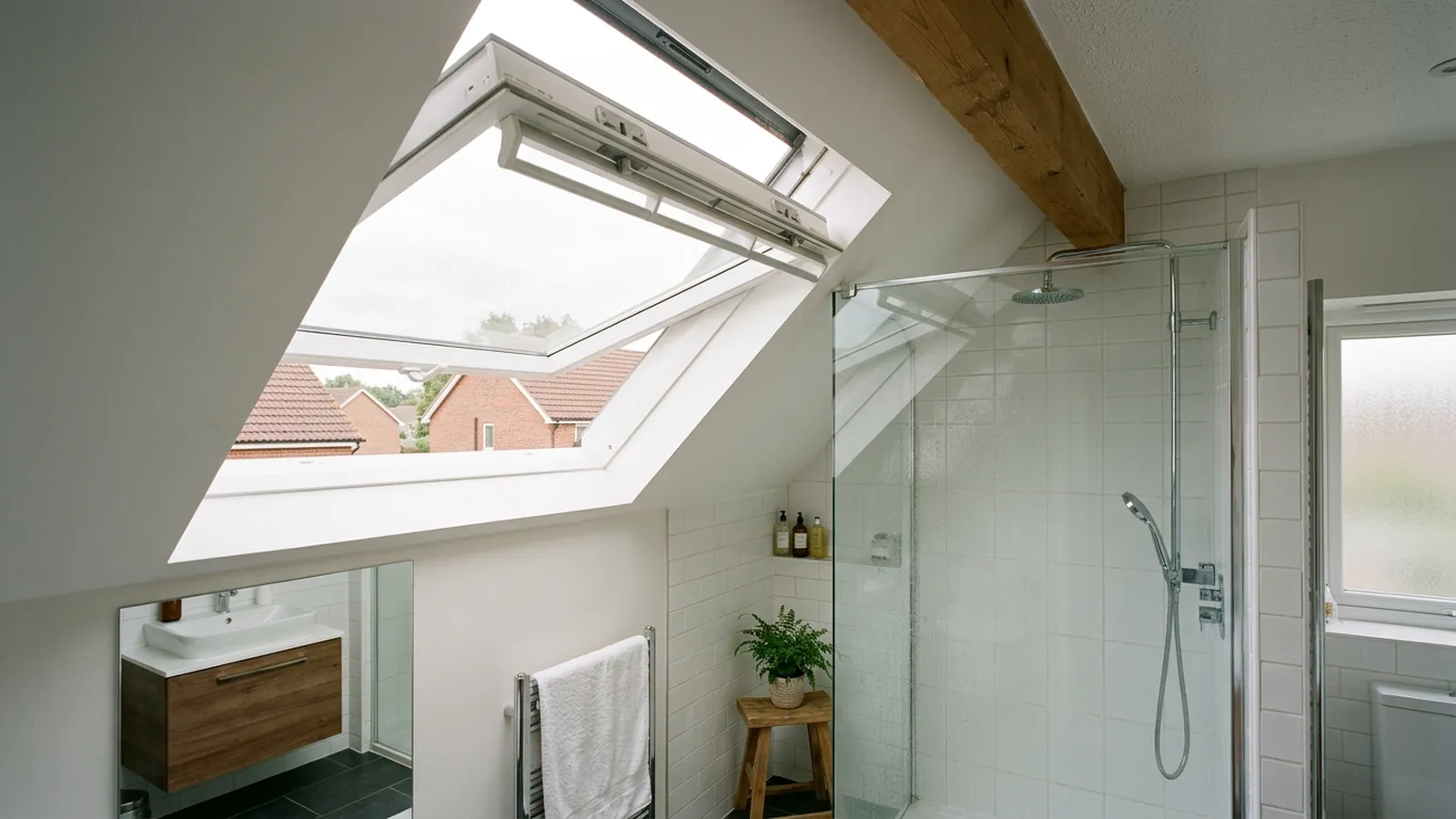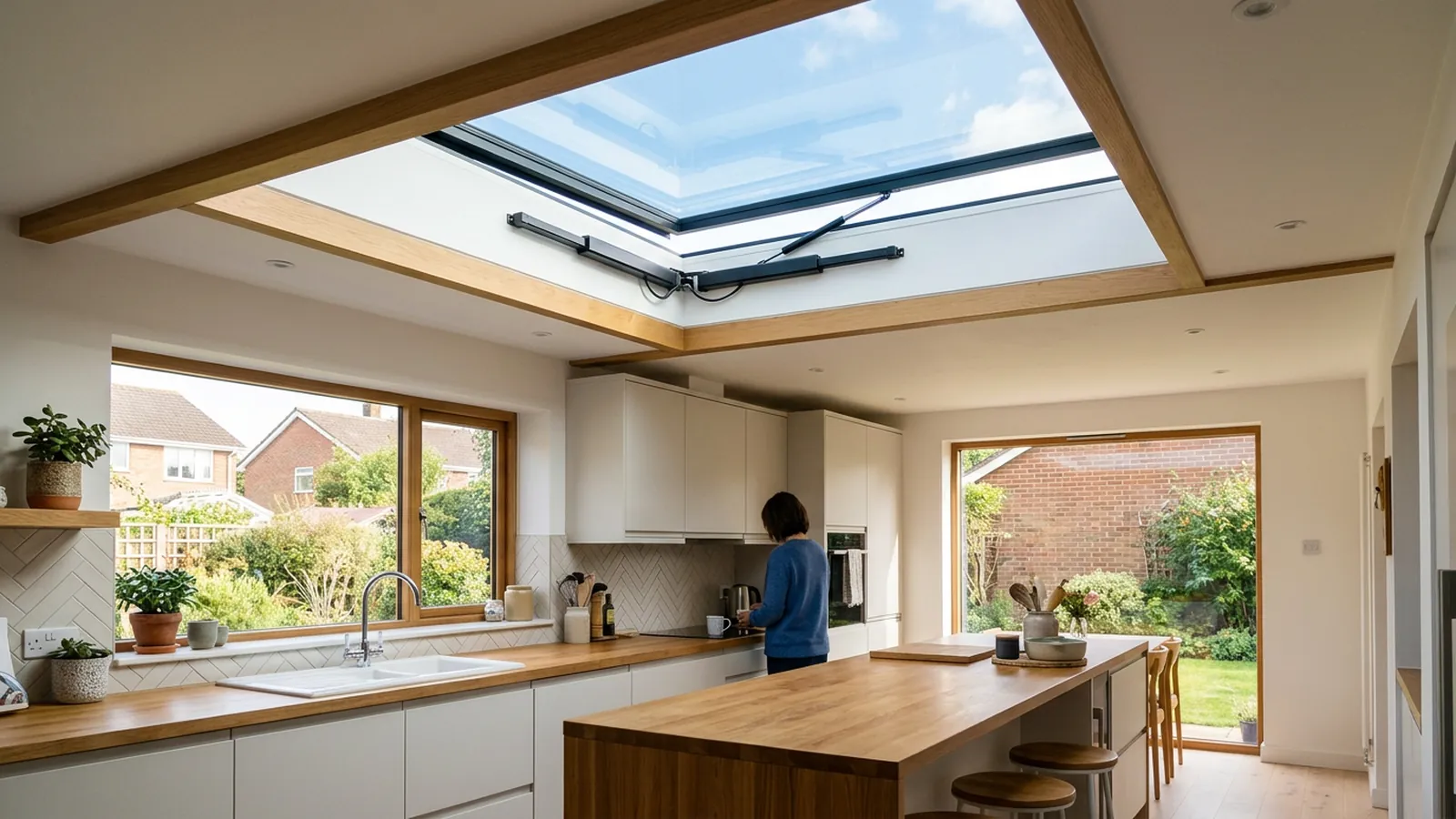
Nobody worries much about a window they can barely reach. Put a motor on it, give it a remote and let it open while the house is empty, though, and the first sensible question from a homeowner is whether that opening has become the easiest way in. For most electric rooflights the answer is reassuring, but it depends on three things: how high the rooflight sits, what physically holds the sash closed, and how the controls behave when nobody is home. This guide works through each one so you can judge rooflight security on your own roof rather than on a brochure.
It belongs to our wider page on electric and opening rooflight installation, which covers the choice of unit and the fitting itself. Here the focus is narrower: locking, glass, reach and the habits that keep an opening skylight as secure as a fixed one.
What keeps a motorised sash shut
A manual roof window is locked by its handle. Turn it to closed and a bolt or catch engages in the frame. An electric unit usually has no handle to turn, so the job passes to the drive. The chain or spindle that pushes the sash open is the same part that pulls it back and holds it down, and when the motor stops it does not freewheel. A closed electric sash is therefore held against its seals by the mechanism itself, and on many units by additional locking points that engage as it reaches the frame.
That matters because it changes where the weak point is. With a handle, the risk is someone forgetting to lock it. With a motor, the sash is locked every time it closes, but it is only as secure as the fixing of the drive to the frame and the frame to the roof. Both are hidden once the lining is finished, which is why they are worth asking about before the plasterboard goes back. If you want to know what the drive unit actually is, our short answer on what a rooflight actuator does explains the part in plain terms.
An electric rooflight locks itself every time it shuts; the question is what it is fixed to.
How rooflights and roof windows open
- Centre-pivot sash, turns so the lower edge tips out and the top swings in, handy for cleaning from inside
- Pivot point, the hinge line across the middle of the sash
- Top-hung sash, swings outward clear of the opening for a wider view
- Top hinge, where the sash is hung from the head of the frame
- Fixed rooflight, glazing sealed to the upstand with no moving parts
- Electric opening rooflight, the glazed lid lifts from one edge for ventilation
- Motorised chain actuator, pushes the lid open and draws it closed
- Rain sensor, closes the rooflight automatically when it starts to rain
Height and reach decide most of the risk
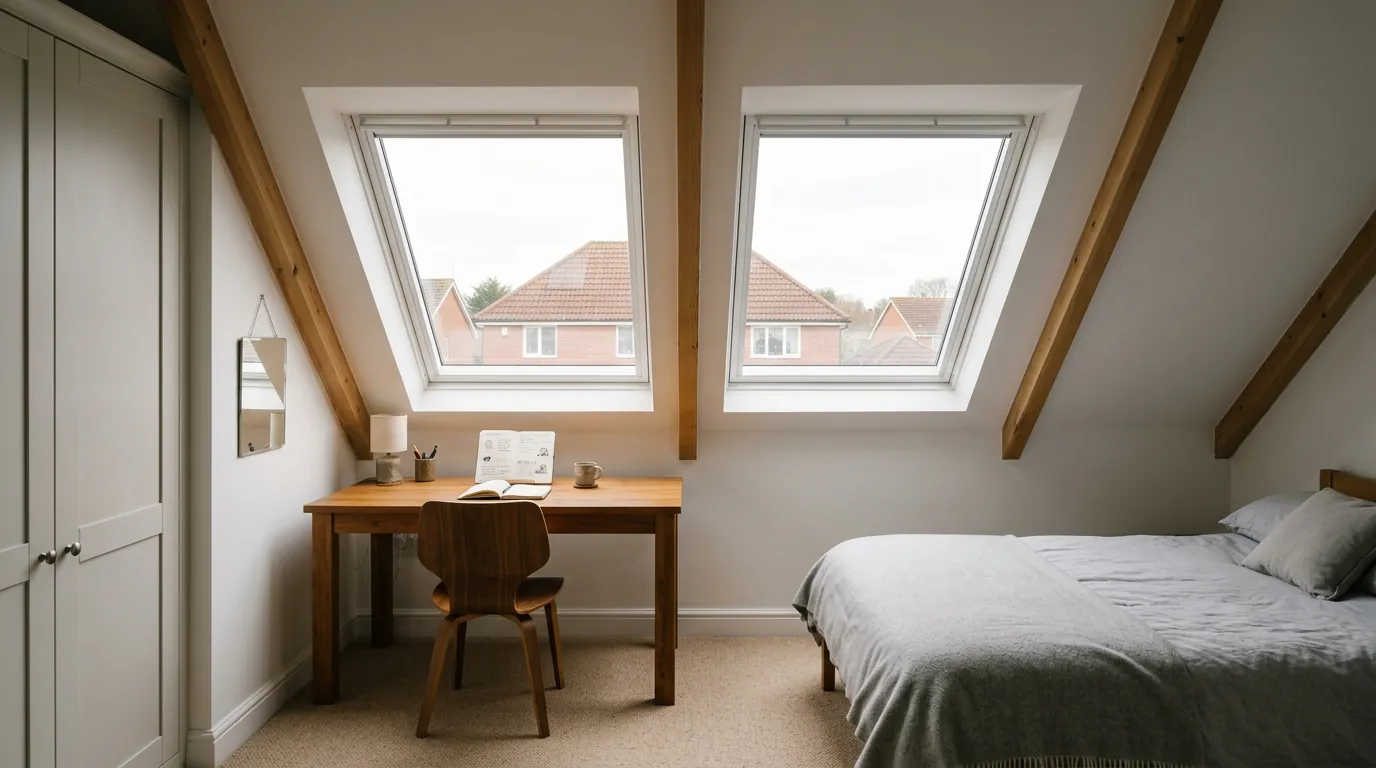
A pitched roof window in a loft bedroom on a two-storey house is a long way up a slope with no easy footing. Getting to it from outside means a ladder, a climb across tiles and then an attempt to force a sash that is held by a motor from inside. That combination puts most loft and stairwell rooflights well down the list of worries, which is also why the conversation about them tends to be about children and falls rather than intruders.
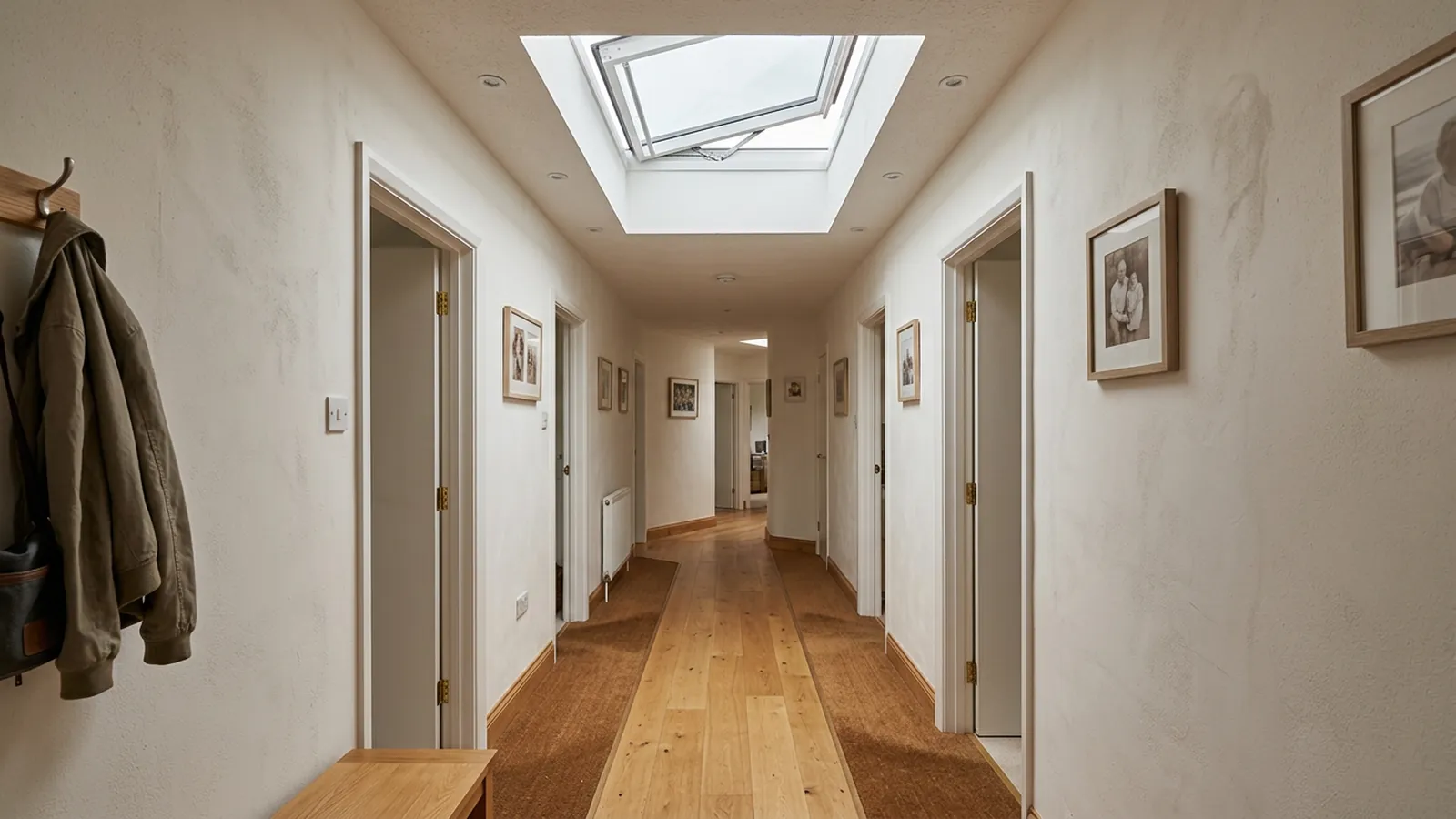
A flat rooflight on a single-storey rear extension is a different case. The roof may be low enough to reach from a garden wall, a bin store or a neighbouring outbuilding, and a flat roof is somewhere a person can kneel. Kitchen extensions across the estates around the town, from the 1970s semis in Brighton Hill to the newer family homes in Hatch Warren, can have exactly this arrangement, with an opening unit sitting over the dining table. Our guide to opening flat rooflights over a kitchen extension covers the layout; the points below cover how to keep that unit secure.
Comparing the locking arrangements
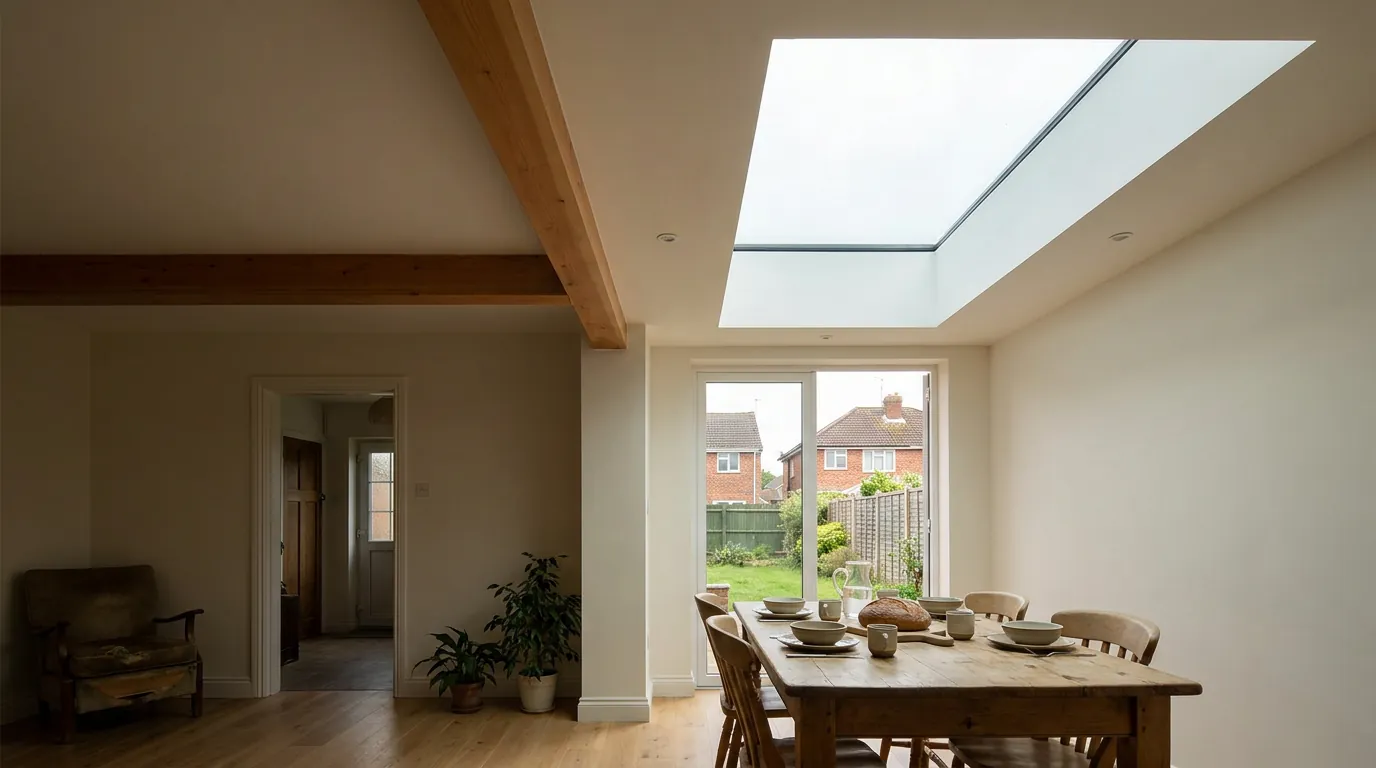
Opening rooflights reach the closed position in different ways, and each has its own strengths. The table sets out the common arrangements and what to check on each. It describes principles, not a particular maker; the product data for the exact unit is what to read before you choose.
| Arrangement | What holds it shut | What to check |
|---|---|---|
| Electric roof window (pitched) | The chain drive holding the sash, often with locking points in the frame | Whether the drive can be pushed back from outside and how the override is reached |
| Electric flat rooflight, hinged | One or more actuators pulling the lid down onto its kerb seals | Glass specification of the outer and inner panes; fixing of the actuator brackets |
| Sliding flat rooflight | A drive on the runners that stops the lid being slid back by hand | That the closed position is positively held rather than resting |
| Manual roof window with handle | A catch engaged by the handle, sometimes with a key-lockable handle | Whether the handle can be locked in the vent position |
| Access hatch rooflight | Internal latches or bolts operated from the room below | That the latches are lockable and cannot be released from the roof side |
The difference between hinged and sliding lids is covered in depth in our guide to hinged and sliding opening rooflights; from a security point of view, both are fine when the drive positively holds the closed position.
The glass matters as much as the lock
A sash that cannot be prised open is only half the story, because glass can be broken. Overhead glazing already has to be safe to sit beneath, so opening rooflights and roof windows are normally supplied with a laminated inner pane. Laminated glass has a tough interlayer bonded between two sheets; if it is struck, it cracks but tends to stay in one piece in the frame. That behaviour is what keeps shards off the people below, and it is also what makes a laminated pane slow and noisy to get through.
On a low extension roof it is worth asking whether the outer pane is toughened or laminated too, and whether a higher security glazing option is offered for that model. Manufacturers publish their glazing build-ups, so this is a question with a written answer rather than a matter of opinion. What a laminated pane will not do is make up for a poorly fixed frame, so the glass and the fixing should be judged together.
The rule: a rooflight is as secure as its weakest layer, so specify the glass, the drive and the fixings as a set. The exception: a loft window high on a two-storey pitched roof, where reach is the main protection and a standard laminated inner pane is usually the sensible choice.
Ventilation settings while you are out
The part of rooflight security that catches people out is not the lock; it is the gap. A sash left a hand's width open on a warm afternoon is ventilating nicely and is also not locked. With a pitched loft window that is rarely a concern. With a flat rooflight over a kitchen on a low roof, it is a gap within reach.
Many roof windows have a ventilation flap or slot in the frame that lets air through with the sash fully closed and locked. That is the setting to use when the house is empty. For purge ventilation or cooling a hot room, open the sash properly while someone is home, then close it before leaving. If a flat rooflight has no closed-position vent, the sensible habit is simply to shut it on the way out, and the controls described below make that easier to remember.
Controls that close the rooflight for you
Electric units have an advantage a manual window cannot match: they can close themselves. A rain sensor on the frame drives the sash shut when it detects water, which protects the room and, as a side effect, means a rooflight left open on a showery day does not stay open. The detail of how that works, and its limits, is in our guide to rain sensors and automatic closing.
Beyond the sensor, three control features help with security:
- A close-all button. Some control systems let one press shut every opening unit in the house, which suits a leaving-the-house routine by the front door.
- Timed closing. A unit can be set to close after a chosen period, so a vent opened in the morning does not stay open all day.
- Remote status. With an app, you can see whether a rooflight is open and close it from elsewhere. Our guide to app and smart home control of rooflights explains what the gateway does and what to set up.
Connected control does bring one thing to think about: the account that runs it. Use a strong, unique password for the app, keep the gateway's software updated, and remove old users when a household changes. That is ordinary home network care, and it applies to a rooflight as it would to a doorbell camera.
Power cuts and the manual override
It is easy to assume that a power cut leaves an electric rooflight free to open. It does not. A mains drive simply stops where it is when the supply goes, so a closed sash stays closed and held. The short answer on what happens to an electric rooflight in a power cut covers the open case, where the sash waits until power returns unless it is closed by hand.
Closing by hand is done through a manual override, and the reasonable follow-up question is whether that override is itself a way in. On electric roof windows the override is normally reached from inside the room, typically by releasing the chain or turning a spindle with a tool, so it gives nobody outside an easier route. It is still worth knowing where yours is and how it works; our answer on whether an electric rooflight has a manual override goes through it. Solar units with their own battery behave in the same way for locking purposes.
Children, falls and who can open it
Security inside the house is about who can open the rooflight, not who can get through it. A wall switch at adult height, a remote kept out of reach, and a control system with a child lock all keep a curious hand from opening a low sash over a landing or a stairwell. Rain sensors and timed closing help here too, because an opened unit will not stay open indefinitely.
The same thinking applies to loft rooms converted into bedrooms. A roof window in a child's room should be chosen and positioned with falls in mind, and the controls placed accordingly. Our answer on whether electric rooflights are safe with children sets out the practical steps; they overlap with the security habits in this guide more than you might expect.
Access hatches and new homes: two special cases
An access hatch rooflight is designed to be opened by a person climbing out onto a flat roof, so its locking has to work from below and resist being lifted from above. The latches should be lockable, and the hatch should not be something a person on the roof can release. Our guide to access hatch rooflights covers the type properly.
New homes raise a separate point. Approved Document Q of the Building Regulations sets security requirements for doors and windows that are easily accessible in new dwellings, and a low rooflight can fall within that. For an owner adding or changing a rooflight in an existing house, Approved Document Q is not the controlling document, but its thinking is a useful benchmark: if the unit is within reach, specify it as though it were a ground-floor window. The Building Regulations that do apply to installing a rooflight in an existing home are part of the job, and we notify Building Control on your behalf where the work calls for it.
How we look at security on the survey
Security is not a separate visit or an extra. It is part of looking at the roof before we write the quote, alongside the structure, the pitch and where the power will come from. The order is straightforward.
- Reach. We look at the rooflight position from outside: its height, the roof it sits on, and anything nearby that could be climbed.
- Unit and glass. We match the opening type to the room and, where the roof is within reach, recommend a glazing build-up and drive that suit that exposure.
- Controls. We agree where the switch goes, whether a rain sensor, timer or app control is wanted, and how the override is reached.
- Fixing. On the day, the frame and drive brackets are fixed to the structure as the maker specifies, before any lining hides them.
- Handover. We show you the closed-position vent, the override and the close-all or app settings, so the habits start on day one.
The workmanship on that fixing is covered by our 10-year guarantee, which is a workmanship guarantee and not insurance backed. If you are still at the stage of deciding between a fixed and an opening unit for the whole house, our home page on rooflight installation around Basingstoke is the place to begin.
A short checklist before you choose
Pulling the threads together, these are the questions worth having answered in writing before an electric rooflight is ordered. How does the drive hold the sash when it is closed, and are there extra locking points? What is the inner pane, and what is the outer pane? Is there a closed-position ventilation setting? Where is the manual override, and can it only be worked from inside? Does the control system offer timed closing, a close-all function or a child lock? For a rooflight on a low roof, would a higher security glazing option be sensible?
None of these makes a skylight complicated to live with. They simply make sure the opening you have added for fresh air is one you can walk away from without a second thought. For the rest of the choice, go back to the electric rooflight hub, or ask us to survey the roof and we will go through the security side on site.