Hold a sealed unit from a modern roof window up to the light and it looks like two plain sheets of glass. It is not. One of the inner faces carries a metal oxide layer so thin you cannot see it or feel it, and on many units a second layer is doing a different job on another face. Those coatings, not the thickness of the glass, are what separate a rooflight that keeps a loft room comfortable from one that turns it into a greenhouse in June and a cold spot in January. This guide explains the two families of coating, low-e and solar control, where each one sits in the unit, and how to choose between them for the roof you have around Basingstoke.
The question matters more overhead than in a wall. A skylight looks straight at the sky for most of the day, it catches high summer sun at a steep angle, and on a winter night it faces a clear, cold sky that pulls heat out of the room. The glass specification is therefore a bigger decision in the roof than it is in a bedroom window.
Two coatings, two different jobs
Both coatings work on radiation, but on different parts of it. A low-e (low emissivity) coating is aimed at long-wave heat: the warmth given off by radiators, people and warm walls inside the room. It reflects that heat back indoors instead of letting the glass absorb it and pass it outside. Its job is keeping heat in, and it is the main reason the centre-pane figure on current rooflight glass is so much better than the glass fitted in older units.
A solar control coating is aimed at the other direction and the other wavelength. It reflects a share of the incoming short-wave energy from the sun, including the near infrared you feel as heat on your skin, while letting as much visible light through as the specification allows. Its job is keeping heat out.
A single modern coating can combine both behaviours, and many rooflight units now use one. But it helps to think of them separately, because the balance between them is exactly what you are choosing. A unit tuned hard for solar control gives up some winter solar gain; a unit tuned purely for low emissivity lets more summer heat in. There is no setting that wins in every room, which is why the orientation and use of the room come into it later in this guide.
Low-e keeps the room's heat in; solar control keeps the sun's heat out. The right rooflight glass is the balance your room needs, not the most of either.
How a sealed rooflight unit works and fails
- Outer and inner glass panes, with the outer pane facing the weather
- Low-emissivity coating on one inner face, reflecting heat back into the room
- Warm-edge spacer bar holding the panes apart, filled with desiccant to soak up trace moisture
- Primary seal against each pane, backed by the secondary seal around the edge
- Dry sealed cavity, the insulating layer between the panes
- Broken edge seal: moist air gets in and the desiccant becomes saturated
- Mist and droplets trapped between the panes; they cannot be wiped off and the sealed unit needs replacing
- Inset: condensation on the room-side face of the glass is a ventilation or humidity issue, not a failed unit
What the numbers on the glass tell you
Three performance values describe a coated unit, and a rooflight specification sheet will list all of them. They measure different things, so none of them can be read on its own.
| Value | What it measures | Which coating moves it most |
|---|---|---|
| U-value (Ug for the glass, Uw for the whole window) | How fast heat passes through, lower is better at keeping warmth in | Low-e coating, helped by the gas fill and the number of panes |
| g-value (total solar energy transmittance) | The share of the sun's energy that reaches the room, lower means less solar heat | Solar control coating |
| Light transmittance (LT) | The share of visible daylight that passes through, higher means a brighter room | Both, slightly; a heavy solar control layer reduces it more |
The relationship worth watching is between light transmittance and g-value. A good solar control coating keeps LT high while pulling the g-value down, so the room stays bright but gathers less heat. Glass makers call that ratio selectivity. A cheap tint, by contrast, darkens light and heat together, and that is why a tinted dome from an earlier generation made a room gloomy without keeping it much cooler. If you want the U-value side explained properly, our plain guide to rooflight U-values covers the difference between the glass figure and the whole-window figure. The short answer on what a g-value means on rooflight glass is on its own page.
Where each coating sits inside the unit
Glass makers number the faces of a sealed unit from the outside in. In a double glazed rooflight, face one is the outer surface that sees the rain, face two is the inside of the outer pane, face three is the cavity side of the inner pane, and face four is the surface you can touch from the room. In triple glazing the count runs to face six.
Position is not a detail. A solar control coating belongs on face two, so the incoming energy is reflected before it crosses the cavity and warms the inner pane. A low-e coating for heat retention usually sits on face three, where it faces the warm side and reflects room heat back. A combined coating on face two can do both jobs from one position, which is common in rooflight units. In triple glazing there are two cavities and usually two low-e layers, one on each inner pane, which is a large part of why triple glazing reaches a lower U-value than double.
The rule: the soft metallic coatings used for the best performance must face into the sealed, gas-filled cavity, because they are too delicate to be exposed to air, cleaning or weather. The exception: some units add a hard, durable coating on face one or face four for a separate purpose, such as a self-cleaning outer surface or an extra low-e layer on the room side, and those are made to be touched.
Soft coat and hard coat low-e glass
There are two ways of putting a low-e layer onto glass, and they give different results.
Soft coat (sputtered)
Soft coat low-e is applied after the glass is made, in a vacuum chamber, as several ultra-thin layers built around silver. It gives the lowest emissivity and the best heat retention, and it is also the coating that allows a strong solar control effect without heavy tinting. The trade-off is that it is delicate and oxidises if exposed, so it only ever lives inside a sealed unit. Almost every high-performance rooflight glass unit uses a soft coat.
Hard coat (pyrolytic)
Hard coat low-e is fused onto the glass while it is still hot on the float line, so it becomes part of the surface. It is tough, it can be handled and cleaned, and it can be used on an exposed face. It does not reach the same thermal performance as a good soft coat, which is why it tends to appear as an extra layer on the room-side face of a unit, or in secondary glazing, rather than as the main coating.
You will rarely be asked to choose between these yourself. The rooflight maker picks the coating for each glazing option, and the choice you actually make is between their glazing options for a given frame. Knowing which coating sits where simply helps you read what those options are offering.
Solar control for loft rooms that face the sun
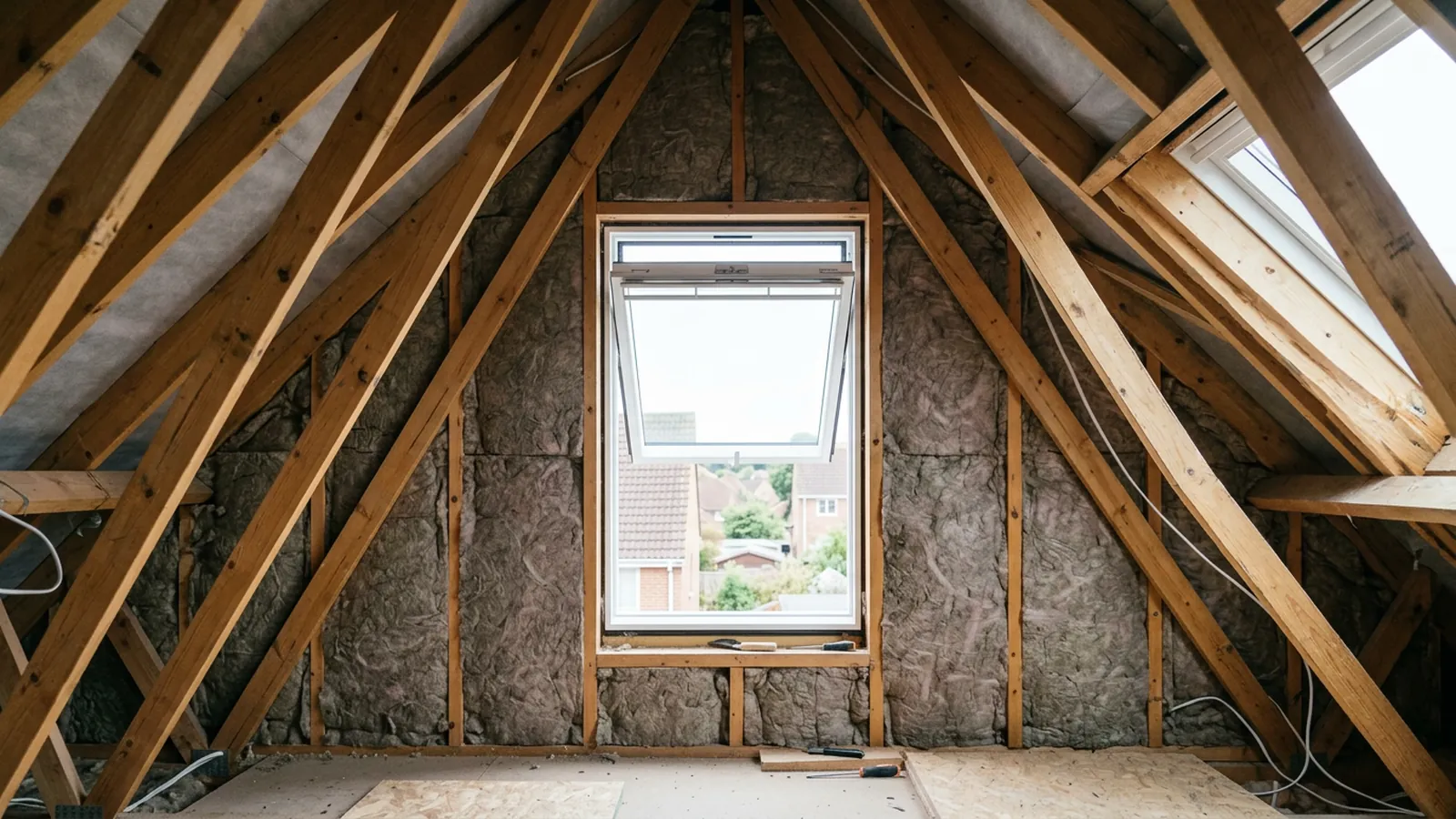
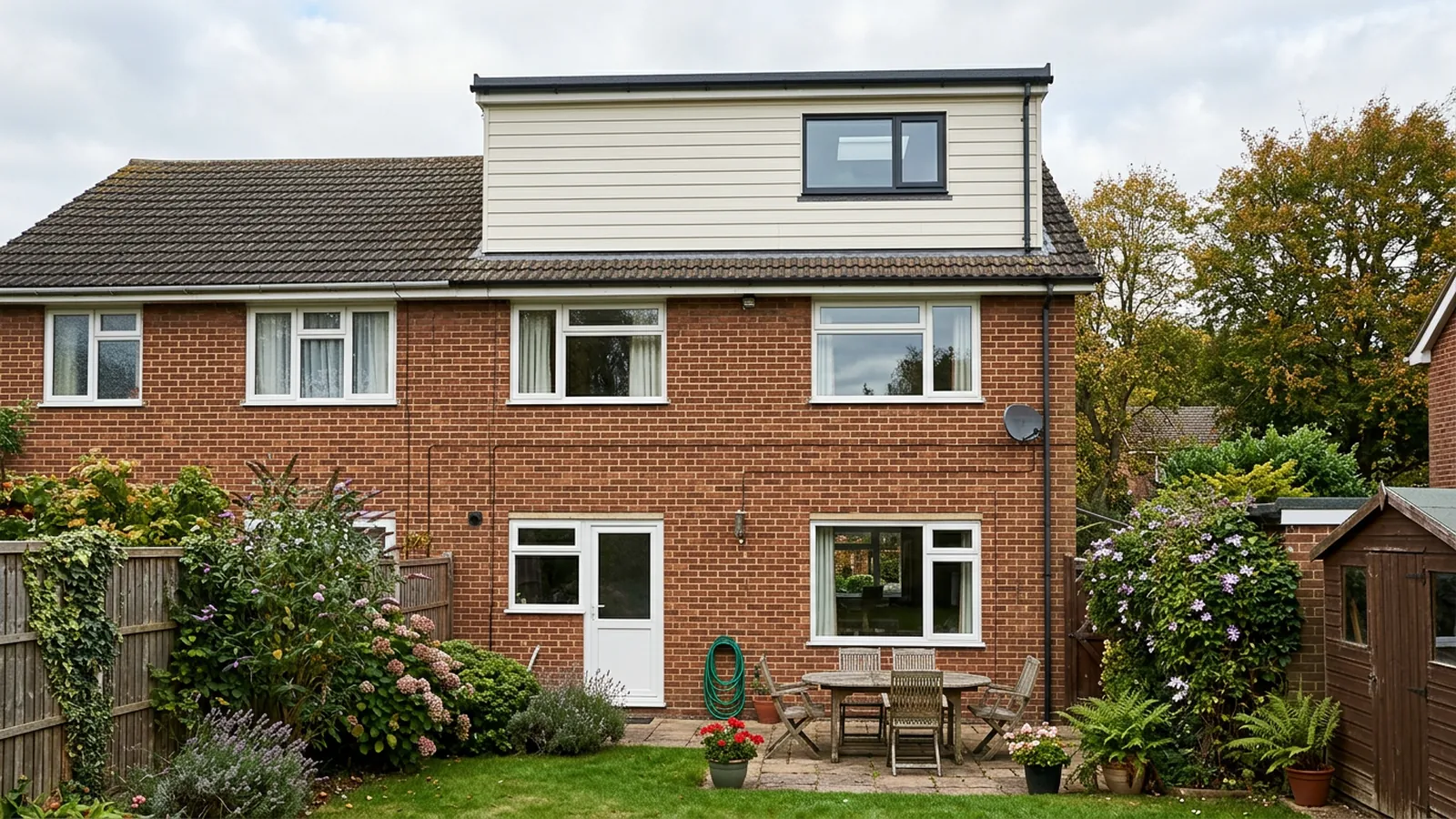
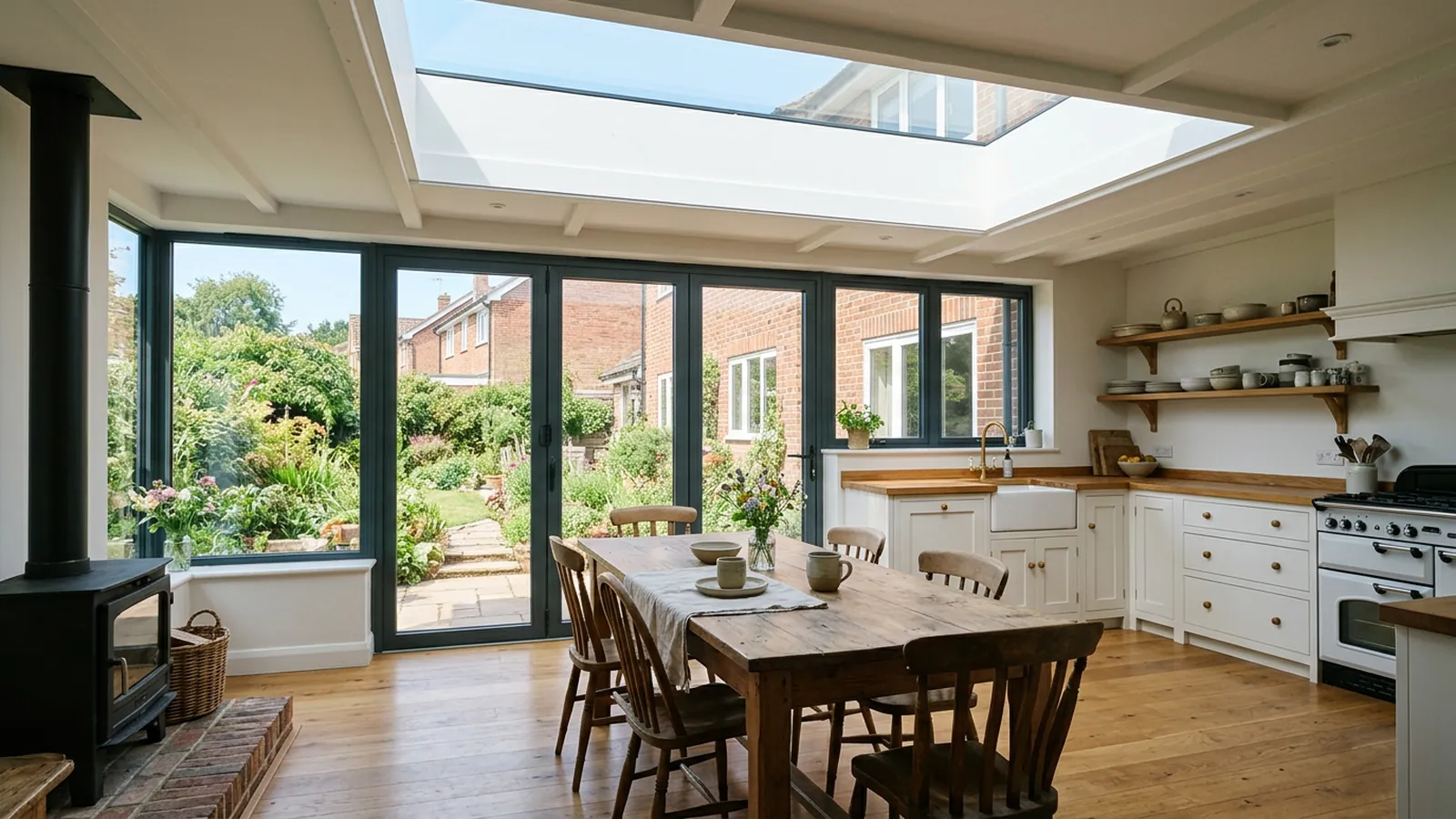
The places around Basingstoke where solar control earns its keep are easy to spot: a loft conversion on a trussed estate roof with its roof windows on the south or west slope, a flat-roofed kitchen extension with a rooflight overhead, a landing where the only light comes from a window in the slope. In each of those the glass sees the sun for long stretches, and the room below is small enough to warm up quickly.
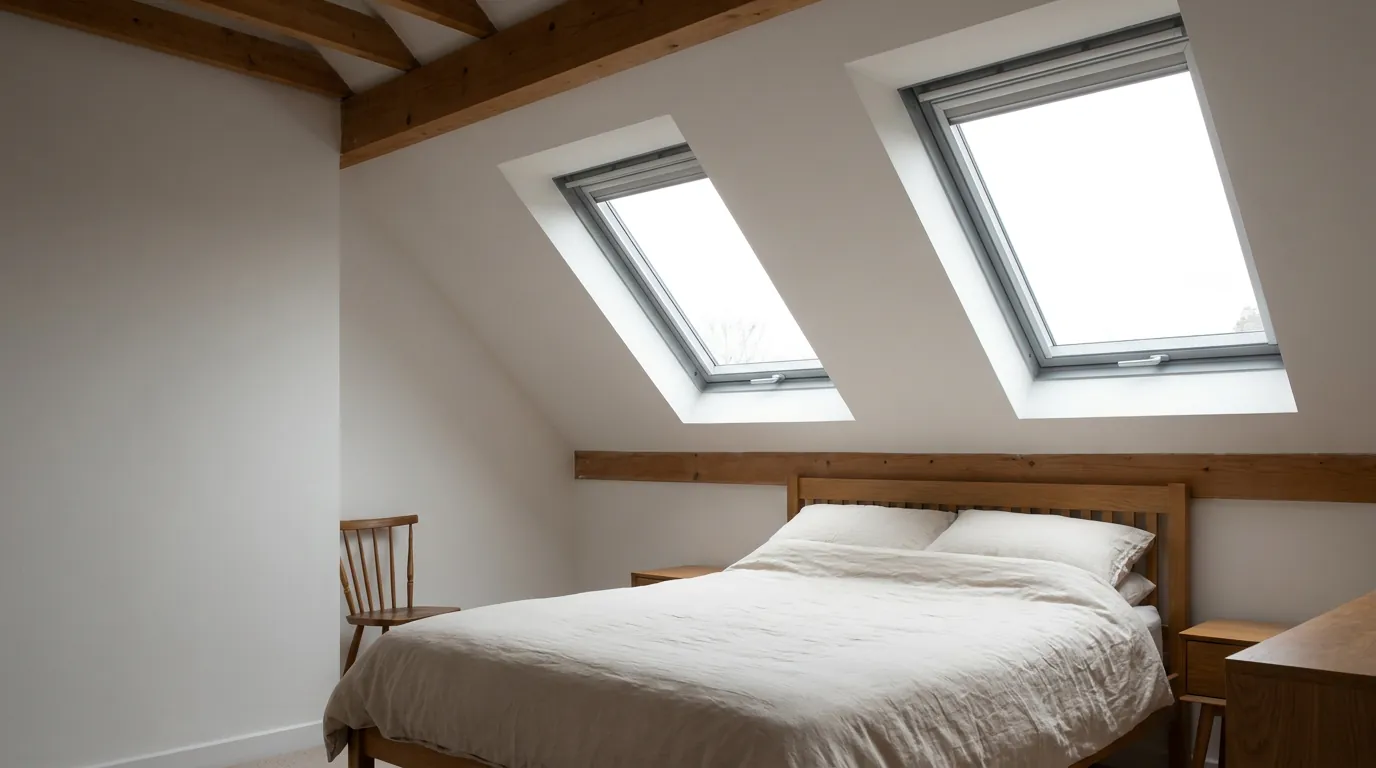
Solar control glass does not make that room cold or dark. It lowers the solar energy coming through while keeping most of the daylight, so the room stays bright but the heat builds more slowly. Whether that shift is noticeable depends on the coating chosen; the answer on whether solar control glass makes a room darker sets out what you would see. For a fuller picture of loft rooms that overheat, including ventilation and blinds as well as glass, read the guide on overheating in south-facing loft rooms.
On a north-facing slope the balance turns the other way. Direct sun rarely reaches the glass, so a strong solar control layer mostly costs daylight without much benefit, and a clear, high-light low-e unit is usually the better fit. That is why two roof windows in the same house can sensibly carry different glass.
Choosing the glass for your roof, step by step
The order below is how the glazing decision is worked through on a survey, and it is a useful order to think in before one.
- Find the orientation. Note which way the slope faces, or for a flat roof how much of the day it is in direct sun. South and west need the most thought.
- Consider the room. A small loft bedroom heats up faster than a large open-plan kitchen, and a room used in the afternoon feels the sun more than one used in the morning.
- Set the heat-retention floor. A new rooflight must meet the current energy rules for its U-value, so every sensible option starts with a good low-e unit. Part L and a new rooflight explains that baseline.
- Decide on solar control. Where the glass sees long sun, add a solar control coating and compare the g-value and light transmittance side by side, not just one of them.
- Add the other layers. Consider an external blind, a self-cleaning outer face, or a laminated inner pane for safety overhead, each of which interacts with the coatings.
- Confirm on the roof. The survey checks the actual pitch, orientation and shading from neighbouring roofs or trees before the glazing option is written into the quote.
How coatings work with gas fill and the number of panes
A coating does most of its thermal work in partnership with the cavity. Because the low-e layer cuts radiant heat transfer, the remaining heat moves by conduction and convection through the gas between the panes, and that is where an argon or krypton fill takes over. A low-e coating with an air-filled cavity performs noticeably worse than the same coating with argon. The detail on gas fills is in the guide to argon and krypton filled rooflight glazing.
Adding a third pane adds a second cavity and a second coated surface, which lowers the U-value again. It also lowers the g-value and the light transmittance a little, simply because there is more glass and more coating between the sky and the room. For a south-facing loft room that can be a welcome side effect; for a gloomy north slope it is a cost. If you are weighing the two, the answer to whether triple glazing is worth it in a rooflight puts the trade plainly.
Condensation, cold glass and the inner face
Condensation forms when warm, moist air touches a surface that is below its dew point. The inner pane of an old single glazed or uncoated double glazed rooflight runs cold on a winter night because it is losing heat to the sky, and a bathroom or kitchen skylight in that state drips. A low-e coating keeps the inner pane warmer by holding room heat back, which raises its surface temperature and reduces the conditions for condensation on the glass.
A coating cannot do it alone. The edge of the unit, the frame and the way the lining meets the frame all have cold spots of their own, and moisture in the room still needs somewhere to go. The answer to whether energy efficient rooflights reduce condensation covers the rest of that picture, including ventilation.
One side effect sometimes surprises owners. On a very high-performance unit the outer pane stays colder at night because less heat escapes to it, and on a still, clear morning it can carry dew or frost on the outside. That is a sign the glass is keeping the heat in, and it clears as the sun comes up.
Self-cleaning and other outer-face coatings
A self-cleaning coating sits on face one and is a different technology altogether. It is a hard, photocatalytic and hydrophilic layer: daylight breaks down organic dirt on the surface, and rain sheets across the glass instead of beading, carrying the loosened dirt away. On a shallow-pitched or flat rooflight, which drains more slowly than a steep roof window, that can keep the view clearer between cleans.
It does not replace low-e or solar control and it works alongside them, because it is on a different face. Its effect on the thermal and solar values is small, but it does rely on daylight and rainfall reaching the glass, so it suits an open roof better than a sheltered one. What self-cleaning rooflight glass is has its own short answer.
Replacing uncoated or early coated glass
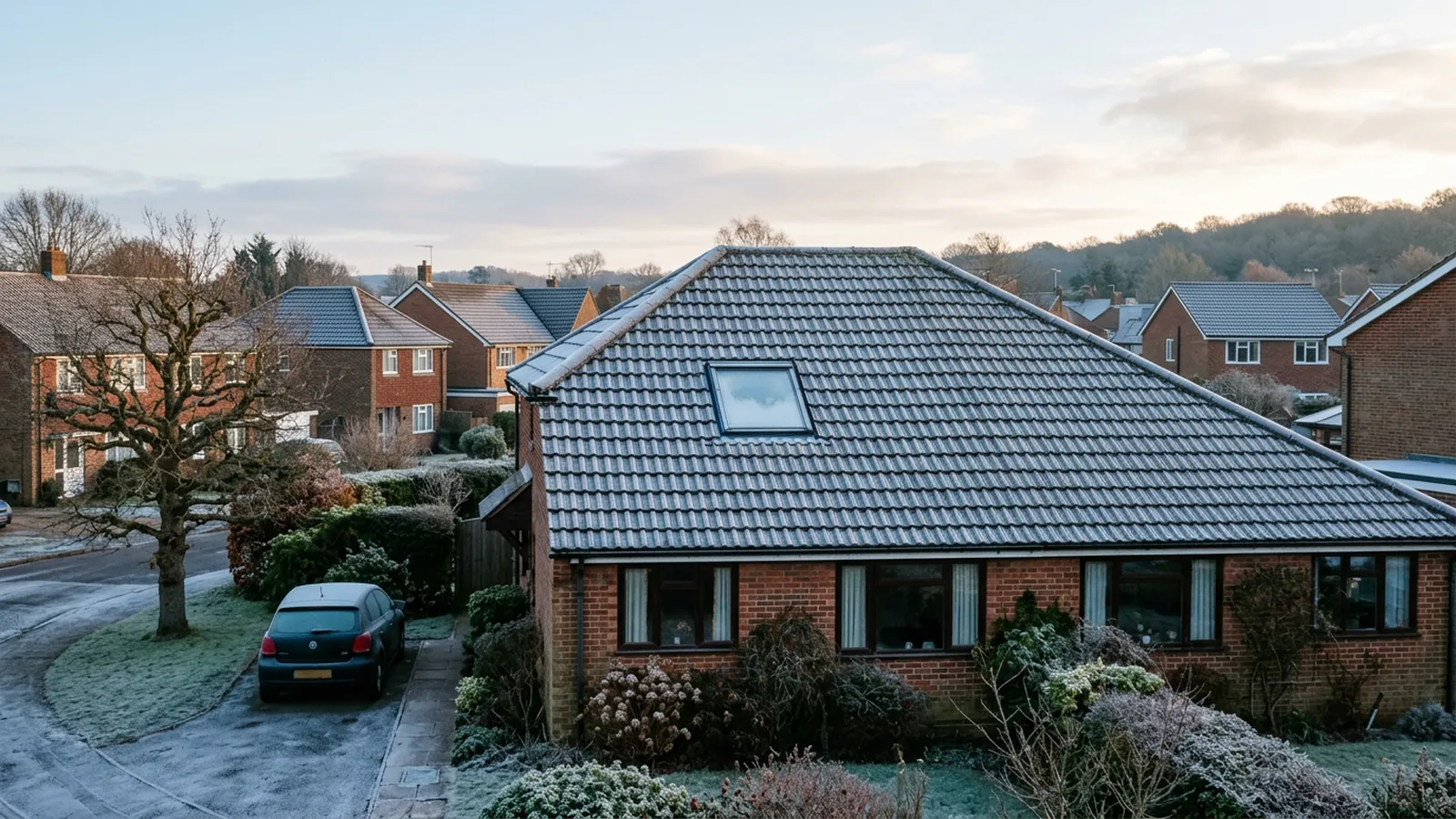
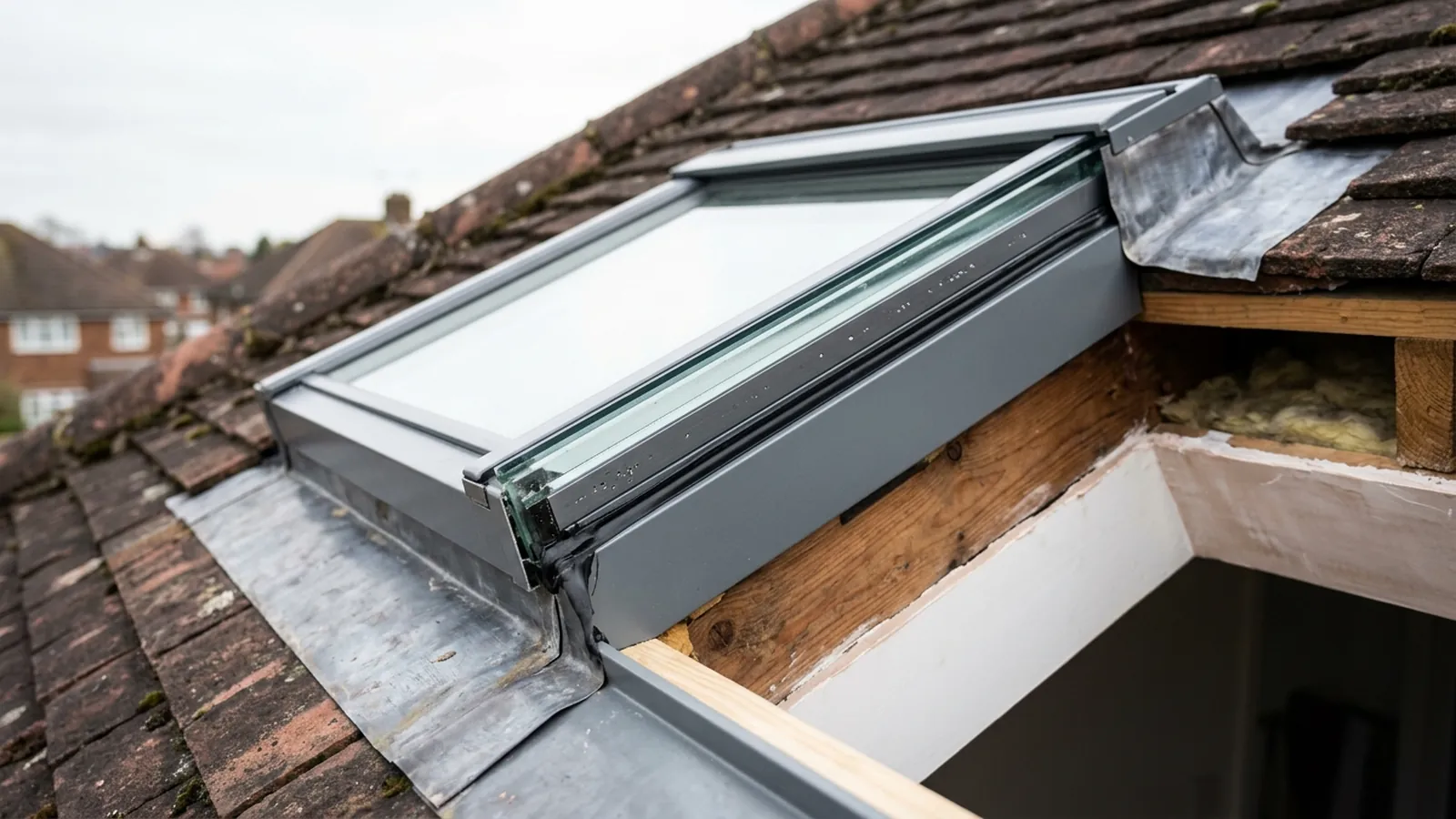
Many 1970s and 1980s houses around Basingstoke still have the roof windows or plastic domes they were built with, or early replacements. Those units were made before modern soft coat low-e was standard, so they lose heat freely in winter and, on a sunny slope, offer little control of summer gain. Where the frame is sound, some roof window makers offer a replacement glazing unit for their older models; where it is not, a full replacement brings the frame and flashing up to date as well as the glass. Either way the new unit is specified with the coatings that suit the room, and when the work is notifiable, Everlight deals with the Building Control notification as part of the job.
For a wider look at what an older unit costs a house in heat, the guide on heat loss through old rooflights in 1970s and 1980s homes goes into it. For how the coatings, frame and installation come together as a service, see our energy efficient rooflights service, and for the wider picture of rooflight and skylight installation around Basingstoke, start at the homepage.
Getting the glass specified for your roof
Coatings are chosen per window, not per house, and the right mix depends on things you can only confirm on the roof itself: which way each slope faces, what shades it, how big the room below is and how it is used. We survey before we quote, so the glazing option on the quote reflects that visit rather than a catalogue default. The installation carries a 10-year workmanship guarantee, which is not insurance backed.
If you are planning a loft room, a kitchen rooflight or a straight swap for an old unit, ask us to look at your roof and we will set out the glass that suits each window, with the g-value and light transmittance written down so you can compare. The energy efficient rooflights page has the rest of the specification.